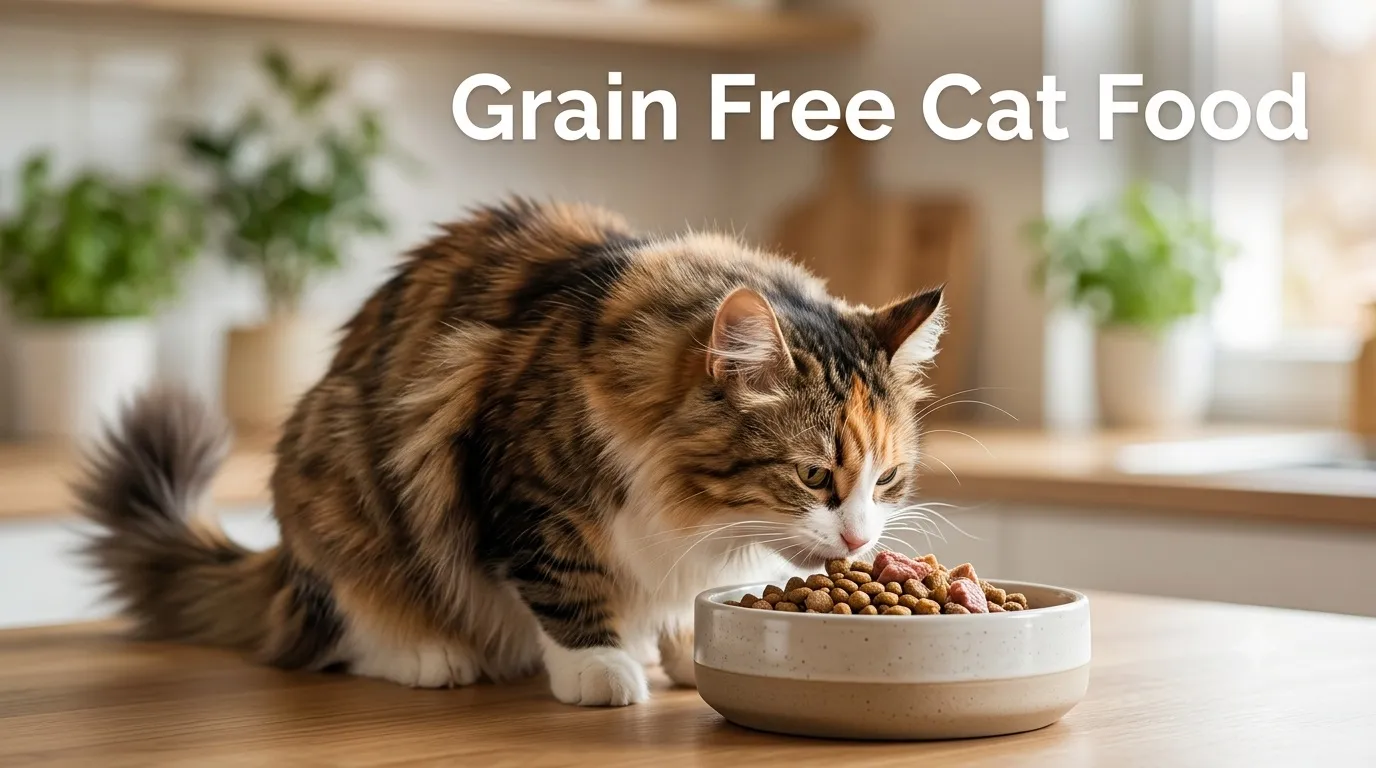

The biggest secret about grain free cat food is that "grain free" is not a magic nutrition label.
It tells you that certain grains are absent. That's all.
The better buying decision starts with your cat's actual nutritional needs. Check the life stage, complete-and-balanced statement, calories, protein, moisture, and overall formulation. If your cat needs a special diet, use the reason for that diet to guide your choice rather than following a general trend.
And if you're comparing grain free wet cat food or looking for high fiber cat food, use the same approach. Look past the front of the package and choose a formula that makes sense for your cat.
Ready to choose the next food for your cat? Start with the nutrition label, not the marketing claim.
Walk into any pet store and you will find plenty of grain free cat food options. They often sound appealing, especially when the label highlights meat, protein, or simple ingredients. But does leaving grains out actually make a cat's diet better?
Not necessarily.
Cats have unique nutritional needs, and the absence of grains does not automatically make a food healthier. What matters most is whether the complete diet provides the right nutrients for your cat's life stage and individual needs. Some cats may benefit from a specific diet for a medical reason, while others can eat a well-formulated food that contains grains without any problem.
So before choosing a bag simply because it says "grain free," let's look at what really matters.
What Does Grain Free Cat Food Actually Mean?
Grain free cat food simply means the recipe does not contain cereal grains such as corn, wheat, rice, barley, or oats.
That does not mean the food contains no carbohydrates.
This is where many cat owners get confused.
When grains are removed, manufacturers may use other ingredients to provide carbohydrates, starch, texture, or other functions. These can include potatoes, peas, lentils, chickpeas, tapioca, or other plant ingredients.
So "grain free" and "low carbohydrate" are not the same thing.
Likewise, grain free does not automatically mean higher protein.
A grain-free recipe can still have a nutritional profile that differs significantly from another grain-free recipe. The entire formulation matters.
Does Your Cat Need Grains?
No, cats do not have a specific requirement for grains as an ingredient.
But that does not mean grains are automatically bad for cats.
Cats can digest properly cooked grains, and grains can contribute carbohydrates, nutrients, and dietary fiber to a balanced diet. The important question is whether the finished food meets your cat's nutritional requirements.
Think about it this way: your cat needs nutrients, not specific marketing ingredients.
Is Grain Free Cat Food Better Than Regular Cat Food?
There is no simple yes-or-no answer.
For a healthy cat that does not have a diagnosed food allergy or another specific dietary need, there is no general rule that grain-free food is automatically superior to food containing grains.
A better way to compare foods is to ask:
- Is the food complete and balanced?
- Is it designed for your cat's life stage?
- Does it provide appropriate protein and essential nutrients?
- Does your cat maintain a healthy body condition on it?
- Does your cat enjoy eating it?
- Is the food from a manufacturer with good quality-control practices?
These questions tell you much more than the words "grain free" on the front of a package.
The Ingredient List Tells Only Part of the Story
It is tempting to look at the first few ingredients and make a quick decision.
For example, seeing chicken listed first might make one food appear better than another. But the nutritional value of a complete cat food depends on the entire formulation and the amounts of each ingredient.
A balanced diet is a carefully designed combination of nutrients.
That is why you should look beyond one ingredient or one front-of-package claim.
What About Grain Free Wet Cat Food?
Grain free wet cat food is another popular choice, especially among owners who want to provide more moisture at mealtime.
Wet food naturally contains much more water than dry food. This can make it a useful option for increasing moisture intake through meals.
But again, grain-free is not what makes wet food valuable.
The bigger questions are whether the food is nutritionally complete and balanced, appropriate for your cat's life stage, and suitable for its individual needs.
Why Moisture Matters
Cats can have different drinking habits. Some drink readily from a water bowl, while others may drink very little.
Wet food can contribute a significant amount of water to the daily diet.
For some cats, that can be a practical advantage.
However, wet food still needs to provide the nutrients your cat requires. A food should not be selected solely because it is wet or grain free.
Can You Mix Wet and Dry Food?
Yes, many cats can eat a combination of wet and dry food.
The important part is managing the total amount your cat eats.
If you add wet food to your cat's existing dry-food routine without adjusting portions, you may unintentionally increase daily calorie intake.
When Might Grain Free Cat Food Make Sense?
There are situations where a veterinarian may recommend a particular diet based on a cat's health or suspected food sensitivity.
For example, a cat with a diagnosed food allergy may need a carefully selected diet that avoids specific ingredients. But an allergy to a grain is not the same thing as simply preferring a grain-free label.
If your cat has recurring digestive problems, skin issues, chronic itching, or other signs that concern you, don't assume grains are the cause.
A veterinarian can help determine whether a dietary change makes sense and which ingredients should actually be avoided.
What About Food Allergies?
Food allergies in cats can involve different ingredients, and the solution depends on identifying the specific dietary trigger.
Simply switching to a grain-free food may not solve the problem if the ingredient causing the reaction is still present.
For cats with suspected food allergies, a veterinarian may recommend a structured elimination diet or another appropriate dietary trial.
That is much more useful than guessing based on a package label.
The Grain Free and Heart Health Question
You may have heard about concerns involving grain-free pet foods and heart disease.
This topic needs some context.
The U.S. Food and Drug Administration investigated reports of non-hereditary dilated cardiomyopathy, or DCM, primarily in dogs eating certain diets. Many reported diets were grain free and contained legumes such as peas or lentils, sometimes high in the ingredient list.
Importantly, the FDA has not concluded that grain-free diets themselves are inherently unsafe, and the investigation has involved multiple dietary factors.
This issue should not be turned into a simple statement that "grain free causes heart disease," especially when discussing cats.
Cats and dogs have different nutritional requirements and disease patterns.
The practical takeaway is much simpler: don't choose a pet food based on one marketing trend alone.
If your cat is eating a grain-free diet and you are concerned about its nutritional suitability, discuss the specific food with your veterinarian rather than making a sudden change.
What About High Fiber Cat Food?
Fiber is another area where cat food labels can become confusing.
High fiber cat food can be useful in certain situations because dietary fiber can affect digestion, stool quality, and satiety.
But more fiber isn't automatically better.
Different types of fiber behave differently in the digestive system. Some can help add bulk to stool, while others can influence fermentation and the intestinal environment.
That's why a high-fiber formula should have a purpose.
For example, a veterinarian may recommend a particular fiber level for a cat that needs help with a specific digestive or weight-management concern.
For a healthy cat with no special need, choosing the highest-fiber food you can find isn't necessarily a smart strategy.
Grain Free Does Not Mean High Fiber
This is another important distinction.
A grain-free food can contain relatively little fiber, while another grain-free recipe may contain considerably more.
The same applies to foods containing grains.
So if fiber is your goal, check the nutritional information and discuss the appropriate diet with your veterinarian rather than using "grain free" as a shortcut.
How to Choose a Better Cat Food
Instead of asking, "Is this food grain free?" try using this simple checklist.
1. Check the Life Stage
Kittens, adult cats, and senior cats can have different nutritional needs.
Choose a food designed for your cat's current life stage unless your veterinarian recommends another option.
2. Look for Complete and Balanced Nutrition
If the food is intended to provide your cat's main diet, check that it is formulated to be complete and balanced for the appropriate life stage.
This is one of the most useful pieces of information on a cat food package.
3. Look at Protein
Cats need adequate protein and essential amino acids.
However, don't assume that the highest protein percentage automatically makes one food better.
Consider the whole nutritional profile.
4. Check Calories
Two foods can look similar in a bowl but provide different amounts of energy.
Pay attention to the calorie content and feeding recommendations.
This becomes especially important for indoor cats or cats that gain weight easily.
5. Consider Moisture
If your cat enjoys wet food, a complete wet formula can be a useful part of the diet.
Fresh water should still be available at all times.
6. Don't Ignore Your Cat's Response
Your cat is part of the equation.
Watch for changes in:
- Appetite
- Body weight
- Stool quality
- Coat condition
- Energy level
- Vomiting or digestive upset
- Overall behavior
A food that looks excellent on paper still needs to work for your individual cat.
Common Grain Free Cat Food Mistakes
Mistake 1: Assuming Grain Free Means Healthier
This is probably the biggest misconception.
Removing grains does not automatically improve nutritional quality.
Mistake 2: Confusing Grain Free With High Protein
A grain-free recipe can still have a wide range of protein levels.
If protein is important to you, evaluate the actual nutritional information rather than relying on the label.
Mistake 3: Ignoring Alternative Ingredients
When grains are removed, other carbohydrate or starch sources may be added.
Always check the complete ingredient list.
Mistake 4: Changing Food Too Quickly
Cats can be creatures of habit.
A sudden food change can cause digestive upset or make some cats refuse the new food.
Unless your veterinarian advises otherwise, gradual transitions are usually easier for cats.
Mistake 5: Choosing Food Based Only on Price
The cheapest bag is not necessarily the best value.
Compare nutritional quality, calorie density, feeding amounts, and your cat's individual needs.
A Simple Grain Free Cat Food Decision Guide
Still unsure what to buy?
Use this quick decision process.
Does your cat have a diagnosed medical or dietary condition?
If yes, start with your veterinarian's recommendation.
Does your cat have a suspected food allergy?
Don't simply remove grains. Work with your veterinarian to identify the appropriate diet and ingredients.
Is your cat healthy with no special dietary requirement?
Focus on a complete and balanced food that meets your cat's life-stage needs. Grain free can be an option, but it does not need to be the goal.
Does your cat prefer wet food?
A complete and balanced grain free wet cat food can be part of the diet if it suits your cat.
Are you considering high fiber cat food?
Look at why you need additional fiber first. More fiber is not automatically better.
Frequently Asked Questions
Is grain free cat food healthier?
Not automatically. Grain free describes what the food does not contain. It does not, by itself, tell you whether the food is nutritionally better. Look at the complete nutritional profile and whether the food is appropriate for your cat.
Do cats need grains in their diet?
Cats do not require grains as an ingredient. However, properly prepared grains can be included in a nutritionally balanced cat food. The key is whether the complete diet supplies the nutrients your cat needs.
Is grain free wet cat food a good choice?
It can be. A complete and balanced grain free wet cat food can provide nutrition along with substantial moisture. But the "grain free" claim alone does not make it better than a nutritionally sound wet food containing grains.
Is high fiber cat food good for cats?
It can be useful for certain cats and specific nutritional goals. However, the appropriate amount and type of fiber depend on the individual cat. If you're considering a high-fiber diet for a digestive or weight concern, speak with your veterinarian.
Should I switch my cat to grain free food?
Not simply because the label sounds healthier. If your cat is doing well on its current complete and balanced diet, there may be no reason to change it. If you have a specific concern, discuss the best dietary option with your veterinarian.



















Sign in to leave a comment.