

If you've spent any time researching brow treatments in Dallas, you've probably noticed the options seem to multiply every year. Microblading, nano brows, ombré powder brows, combination brows — the names alone can feel overwhelming, especially when every studio website claims their technique is "the best."
Here's the truth: there is no single best technique. There's only the technique that's best for your skin type, your lifestyle, and the look you actually want to wake up to. And once you understand how each method works, choosing gets a lot easier.
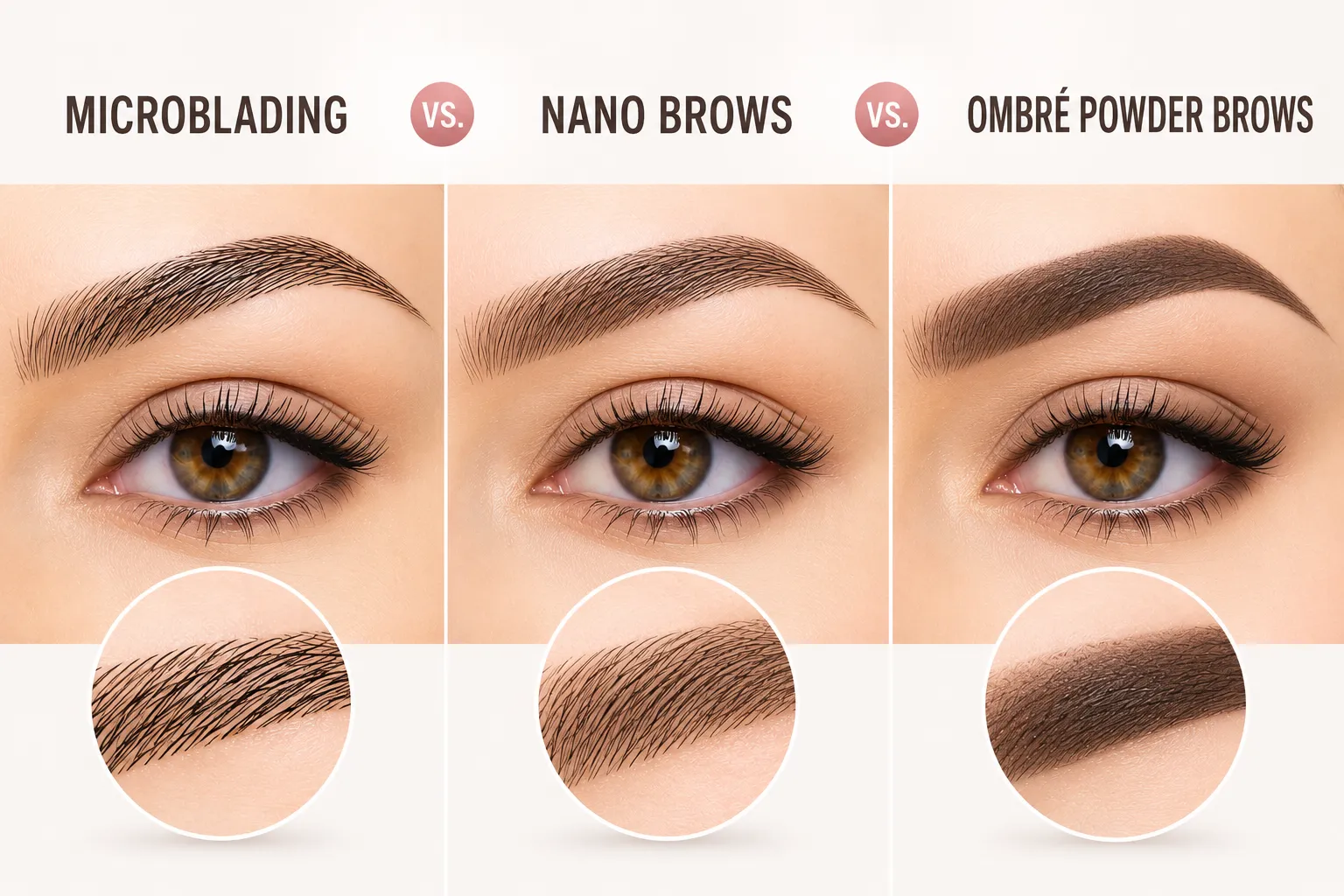
This guide breaks down the three most requested brow techniques of 2026 — what they are, how they differ, who they're suited for, what they typically cost in the Dallas area, and the one factor that matters more than personal preference: your skin.
Why Skin Type Matters More Than You Think
Before comparing techniques, it helps to understand why skin type is the deciding factor rather than just an afterthought.
Brow pigment is deposited into the skin in different ways depending on the technique — some methods create fine hair-like strokes, others deposit soft, powdery color. Oily skin behaves very differently from dry or normal skin once pigment is implanted. Oil production affects how quickly strokes blur, how evenly pigment settles, and how long results actually last before fading. Dallas summers are humid for months at a time, which can push oilier skin types to fade faster than the same technique would on drier skin in a milder climate.
This is why an experienced artist will always ask about your skin type before recommending a technique, rather than simply giving you whatever is trending that season.
Microblading: The Classic Hair-Stroke Technique
Microblading uses a hand tool with tiny needles to create thin, crisp strokes that mimic individual brow hairs. It's the technique most people picture when they hear "permanent makeup for brows," and for good reason — done well, it looks remarkably like natural hair growth.
- Best suited for: Normal to dry skin types. Because microblading relies on fine, precise lines, it holds its crisp definition best on skin that isn't producing excess oil.
How long it lasts: Typically 12 to 18 months, though this varies by skin type and how well the aftercare routine is followed.
- Typical Dallas pricing: Microblading generally starts around $600, with the touch-up session included in that price.
- Who tends to love it: Clients who want a natural, hair-like texture and have little to no existing brow hair to work with, or who simply want subtle definition rather than a fuller, filled-in look.
- The catch: On oily or combination skin, those fine strokes can blur into a softer, less defined shape faster than expected — sometimes within months rather than years. If your T-zone tends to shine by midday, this is worth discussing honestly with your artist before booking. Learn more about microblading in Dallas and how the process actually works from consultation to healed results.
Nano Brows: Microblading's More Precise Cousin
Nano brows use a fine-point machine (rather than a hand tool) to create even thinner, more precise hair-like strokes than traditional microblading. The technique deposits less pigment per stroke, which tends to create a softer healed result with slightly more longevity on a wider range of skin types.
- Best suited for: Normal, dry, and some combination skin types. Nano brows tend to hold their crispness a little longer than manual microblading, though they still aren't the top pick for very oily skin.
- How long it lasts: Around 12 to 24 months, depending on skin and aftercare.
- Who tends to love it: Clients who liked the concept of microblading but wanted an even more refined, less "drawn" appearance, or who have slightly oilier skin than ideal for classic microblading but still want a hair-stroke look rather than a filled-in one.
- The catch: Nano brows still rely on visible strokes, so on genuinely oily skin, the same blurring risk applies — just to a slightly lesser degree. Because nano brows are a newer, more specialized technique, it's worth asking directly whether your artist has hands-on experience with it, rather than assuming every studio offering microblading also offers true nano work.
Ombré Powder Brows: The Soft, Filled-In Look
Ombré powder brows work completely differently. Instead of individual strokes, a machine deposits pigment in a soft, gradient pattern — lighter near the front of the brow, deeper toward the tail — creating a look similar to perfectly filled-in brow powder or a soft pencil finish.
- Best suited for: Oily and combination skin. This is the technique that holds its shape and definition longest on skin types that tend to blur hair-stroke methods, which makes it a popular choice given how many Dallas clients deal with heat and humidity for a good part of the year.
- How long it lasts: Typically 18 to 24 months, often outlasting microblading by six to twelve months on oily skin specifically.
- Typical Dallas pricing: Ombré powder brows also generally start around $600, in line with microblading, with the touch-up included.
- Who tends to love it: Clients who want a fuller, more defined "made-up" brow look, people with sparse or patchy brows who want more coverage, and anyone whose skin type has made hair-stroke techniques fade unevenly in the past.
- The catch: The result is a soft, shaded look rather than a hair-like texture — some clients who specifically want that fine, natural strand-by-strand appearance may prefer microblading or nano brows instead, skin type permitting. For a closer look at how ombré powder brows are applied and how they heal, it helps to see the gradient technique explained step by step.
Quick Comparison at a Glance
- Microblading Best for: Normal to dry skin Lasts: 12–18 months Starting price: ~$600 Look: Fine, natural hair strokes
- Nano Brows Best for: Normal, dry, light combination skin Lasts: 12–24 months Starting price: Varies by studio Look: Ultra-fine, refined hair strokes
- Ombré Powder Brows Best for: Oily, combination skin Lasts: 18–24 months Starting price: ~$600 Look: Soft, filled-in, gradient shading
What About Combination Brows?
If you're torn between the hair-stroke look and the fuller shaded look, combination brows blend both techniques — strokes toward the front of the brow for a natural texture, with soft shading toward the tail for definition and depth. It's often recommended for clients with combination skin who want the best of both worlds, or anyone who wants a slightly more dramatic finish without losing that natural feel entirely.
So, Which One Is Actually Right for You?
Here's a simple way to think it through:
- If your skin is normal to dry and you want the most natural, hair-like result → microblading or nano brows are usually the better fit.
- If your skin leans oily or you've noticed makeup or brow products don't hold well through the day → ombré powder brows will likely give you longer-lasting, more even results.
- If you're not sure which category you fall into, or your skin changes with the seasons → combination brows or a professional consultation is worth the conversation before committing.
This is exactly why an in-person consultation matters so much more than picking a technique off a trending list. A skilled artist will actually assess your skin's oil production, your natural brow hair, and your face shape before recommending anything — because the "best" technique really does change from person to person.
Why Who Performs the Procedure Matters as Much as the Technique
It's worth saying plainly: the technique you choose only matters as much as the skill of the person performing it. Dallas has no shortage of permanent makeup studios that opened in just the last few years, often training staff quickly to meet demand.
BrowLady's founder, Silvia Young, has been doing this work for over 22 years, trained directly under Anastasia of Beverly Hills, and has spent years as a National Makeup Artist for Laura Mercier Cosmetics and Neiman Marcus. She personally performs every appointment herself — no junior artists, no handoffs — and Dallas physicians regularly refer patients to her for post-medical cosmetic work, including care for cancer survivors and clients with alopecia. That kind of experience is what allows an artist to look past trends and actually recommend the technique your specific skin needs. You can read more about Silvia's background and training if you'd like to understand who you'd be working with before booking.
A Note on Healing (No Matter Which You Choose)
Regardless of technique, healing follows a similar pattern: pigment appears darkest for the first few days, flakes lightly between days five and eight, looks unexpectedly faint around day ten, and then settles into its true healed tone by around week four. A touch-up appointment at six to eight weeks is standard across all three techniques, refining any spots where pigment healed unevenly.
If you want to see how each technique actually looks once fully healed — not just the day-of photos that flood social media — it's worth browsing real before-and-after results rather than relying on filtered inspiration photos alone.
Common Questions Before Choosing
Can my skin type change over time, and does that affect my results later? Yes. Skin tends to shift with hormones, seasons, and age — many women notice their skin becomes drier in their 40s and 50s than it was in their 20s and 30s. This is one reason a technique that suited you years ago may not be the best fit for a touch-up today. It's always worth mentioning any changes in your skin during a follow-up consultation.
- Is one technique more painful than another? Most clients describe the sensation as mild pressure or light scratching rather than sharp pain, and this is fairly consistent across microblading, nano brows, and ombré powder brows. A numbing cream is typically applied beforehand for all three techniques, so discomfort is minimal regardless of which method you choose.
- Will the color look too dark right after the appointment? Yes, and this is completely normal for every technique. Fresh pigment always appears noticeably darker and more saturated for the first several days before it softens into its true healed shade. Don't judge your final result until at least four weeks have passed.
- Can I switch techniques later if I don't love my first choice? In many cases, yes — though it depends on how your skin healed and how much pigment remains from the previous treatment. This is exactly the kind of situation where an experienced artist's judgment matters, since attempting the wrong technique over old pigment can sometimes create uneven results.
Final Thoughts
There's no universally "right" brow technique — only the right one for your skin, your routine, and the look you're genuinely drawn to. Microblading and nano brows reward dry-to-normal skin with fine, natural texture. Ombré powder brows reward oily and combination skin with longer-lasting, softly defined color. And combination brows offer a middle ground for anyone who wants a bit of both.
The most important step isn't picking a technique from a list like this one — it's finding an artist who takes the time to actually assess your skin before recommending anything. If you're still unsure which option fits you best, booking a consultation with BrowLady is the simplest way to get a clear, personalized answer instead of guessing from photos online. New clients also receive $100 off their first brow, eyeliner, or lip service. You can call or text (214) 454-5078 to schedule directly.






















Sign in to leave a comment.