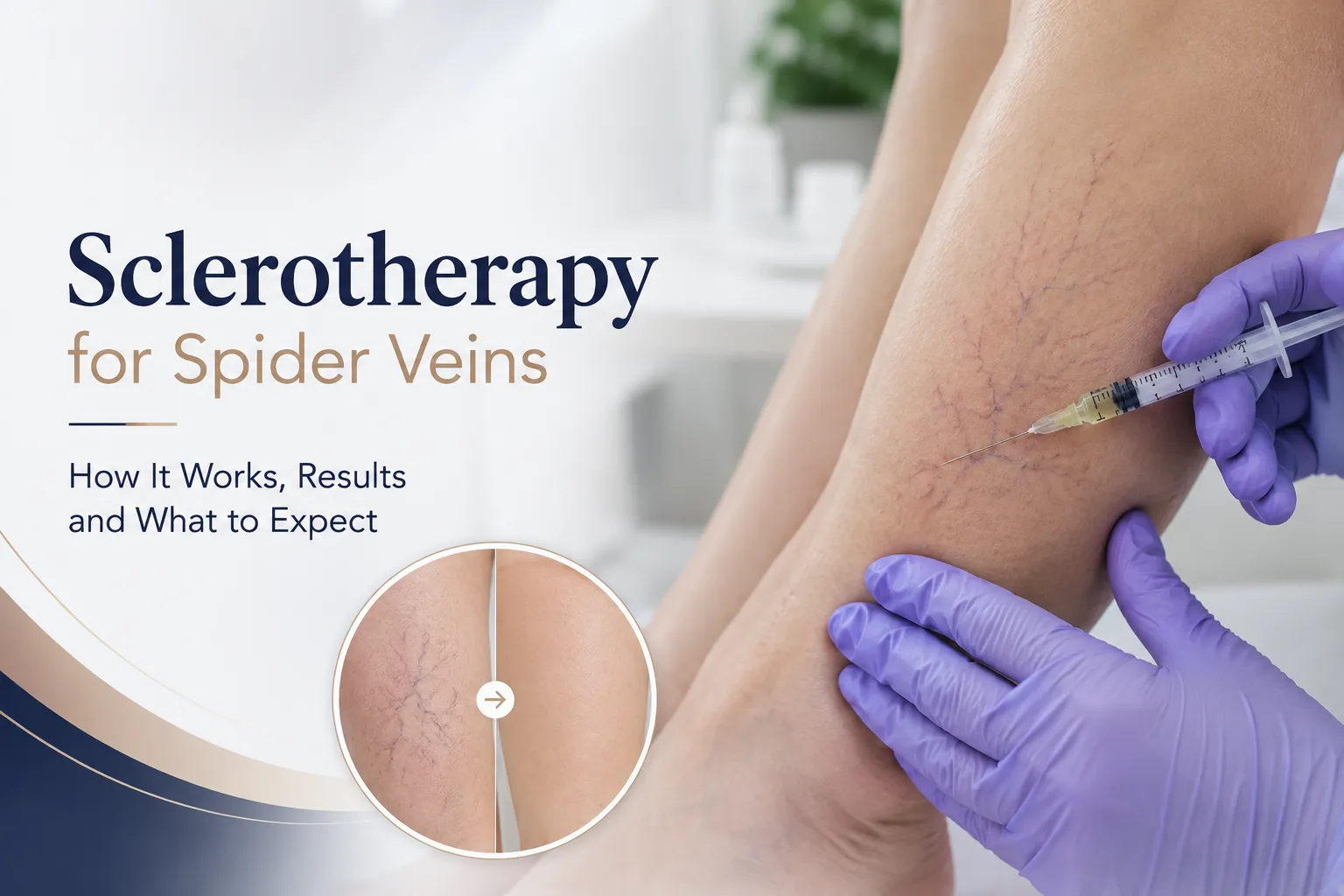
If visible spider veins are becoming more noticeable on your legs, you may be wondering whether they can be treated effectively without surgery. Spider vein removal can involve several approaches, but sclerotherapy is one of the established treatments used for selected visible veins. It works by injecting a solution into the targeted vein, causing it to close and gradually fade from view.
However, not every visible vein should be treated in the same way. The type, size and location of the veins should be assessed before deciding whether sclerotherapy is appropriate.
What Is Sclerotherapy?
Sclerotherapy is a minimally invasive treatment used to treat selected unwanted veins. During the procedure, a sclerosing solution is injected into the targeted vein.
The solution irritates the inside of the vein, causing it to close. Over time, the body naturally processes the treated vein and blood is redirected through healthier surrounding vessels.
The treatment is primarily aimed at improving the appearance of unwanted veins, although the suitability and expected outcome depend on the individual case.
If you are comparing different options, how sclerotherapy works for spider veins provides more detail about the treatment process and expected results.
Which Veins Can Be Treated?
Sclerotherapy is commonly associated with spider veins and smaller visible veins, but the most appropriate treatment depends on what is found during assessment.
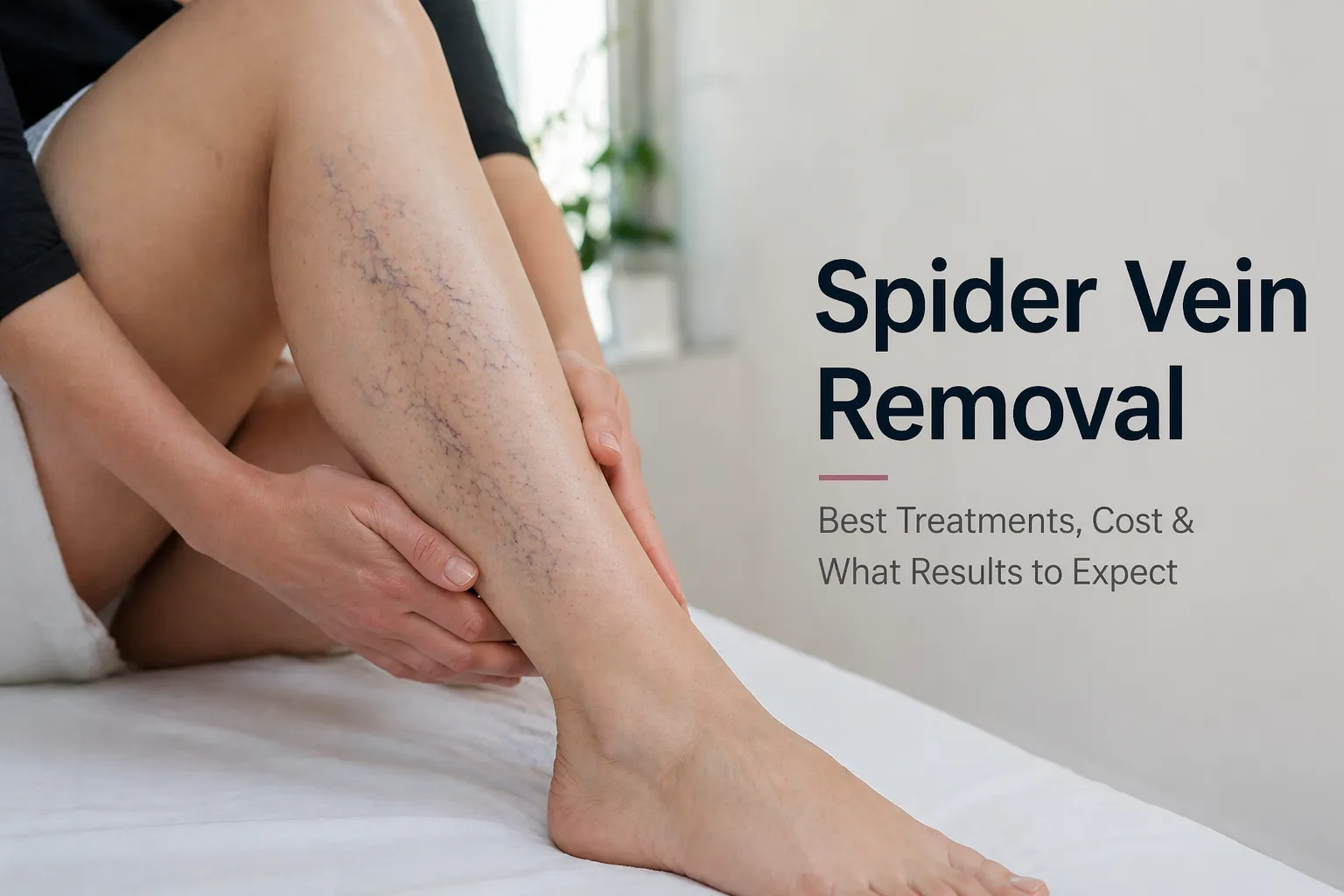
Spider veins are usually small, visible blood vessels that may appear red, purple or blue and can form branching or web-like patterns. Larger veins may require a different assessment and treatment approach.
This distinction is important because treating visible surface veins without considering the underlying venous pattern may not always provide the expected result.
For people considering varicose vein removal, the first step should therefore be an appropriate clinical assessment rather than choosing a treatment based solely on appearance.
How Is Sclerotherapy Performed?
Sclerotherapy is generally performed as an outpatient procedure.
The clinician first assesses the veins that are suitable for treatment. A very fine needle is then used to introduce the sclerosing solution into selected veins.
The number of injections required depends on the number and size of veins being treated. Several veins can sometimes be treated during the same appointment, depending on the individual treatment plan.
The procedure does not involve surgical removal of the vein. Instead, the treated vessel is closed and gradually becomes less visible as the body processes it.
Does Sclerotherapy Permanently Remove Spider Veins?
Sclerotherapy can significantly improve the appearance of treated veins, but it is important to understand that it does not prevent new spider veins from developing elsewhere.
Some treated veins may take weeks or longer to fade, and multiple sessions may sometimes be recommended depending on the extent of the veins and the response to treatment.
Results also vary between individuals. Factors such as the size and location of the veins, circulation and individual healing response can influence the outcome.
If you are deciding whether treatment is worthwhile, spider vein removal treatment options and costs can help you understand some of the factors involved in choosing an approach.
Sclerotherapy vs Laser Treatment
Laser treatment is another option that may be considered for certain visible veins. Whether laser treatment or sclerotherapy is more appropriate depends on the type and characteristics of the veins being treated.
Sclerotherapy involves injecting a solution directly into the vein, while laser treatment uses focused energy to target the blood vessel.
Neither option is automatically better for every patient. The appropriate treatment depends on the individual vein pattern, size, location and clinical assessment.
A comparison of laser treatment versus sclerotherapy can help explain why one approach may be more suitable than another in particular cases.
What Happens After Treatment?
You may be given specific aftercare advice following sclerotherapy. This can include guidance about normal activity, exercise and looking after the treated area.
The treated veins do not necessarily disappear immediately. It can take time for them to gradually become less visible, and some temporary changes may occur during the healing process.
It is important to follow the advice provided by your treating clinician and attend any recommended follow-up.
Is Sclerotherapy Suitable for You?
Sclerotherapy is not appropriate for every visible vein or every patient. A proper assessment is needed to understand the type of veins present and determine whether treatment is suitable.
At Dr Salim Aesthetic Medicine, sclerotherapy treatment is considered following an assessment of your concerns and the veins you would like treated. This allows the appropriate treatment approach to be discussed based on your individual circumstances.
If visible spider or varicose veins are affecting your confidence, book a consultation to discuss whether sclerotherapy may be suitable for your veins.

















Sign in to leave a comment.