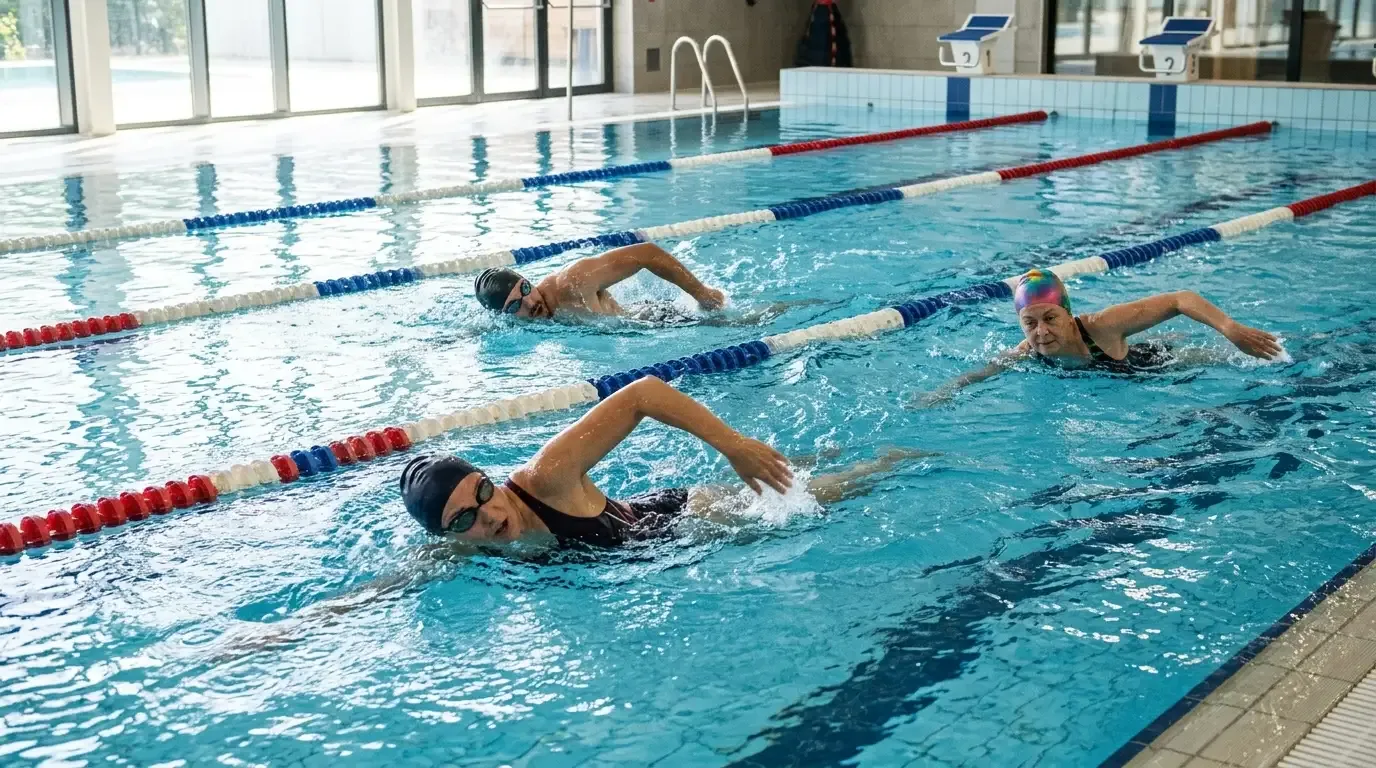

Yes, swimming is good for the body. It works most of the major muscle groups, raises your heart rate without pounding your joints, and suits people from toddlers to grandparents. Few other activities offer that range.
Having watched swimmers of every age and ability step into the water, I keep seeing the same pattern. Beginners worry they are not fit enough to start, while keen runners discover that a few lengths expose muscles they barely knew they had. This guide covers what swimming does for the body, where its limits lie and how to begin safely.
Quick answer: is swimming good for you?
For most healthy people, yes. In short:
- It uses the arms, shoulders, back, core and legs in a single session.
- It builds heart and lung fitness along with muscular endurance.
- Water supports your weight, so strain on the joints is low.
- It can ease stress and help some people sleep better.
- It is not weight-bearing, so it will not build bone density on its own.
Why swimming works the whole body
Water is roughly 800 times denser than air, so every pull and kick meets resistance. Your muscles push against it in every direction, which is why a gentle 20 minutes can leave you more tired than you expected.
Buoyancy does the opposite job. Standing chest-deep, you carry only around a third of your body weight, so the hips, knees and spine are relieved of much of their usual load. On land, running sends forces through the legs that can reach several times your body weight with every stride. In the pool, that impact largely disappears, which is one reason hydrotherapy is commonly used in rehabilitation.
The main benefits of swimming
Strength, tone and endurance
Swimming builds muscle through constant resistance instead of heavy loads. You will not gain the bulk that weight training brings, but the shoulders, back, core and legs become stronger and more resilient. Many adults notice their posture improving over time as the back and core muscles do more work.
Heart and lung health
Sustained swimming is aerobic exercise. Regular sessions can lower resting heart rate, support healthy blood pressure and improve how efficiently the body uses oxygen. Rhythmic breathing, especially the controlled exhale into the water, also trains the lungs and teaches useful breath control. Broader research links regular physical activity with a lower risk of heart disease and type 2 diabetes, and swimming counts towards that activity.
Weight management
Swimming burns a meaningful number of calories, but appetite often rises after a session too. Results depend on the whole picture, including diet, consistency and how hard you actually work in the water.
Gentle on the joints
People with arthritis, back pain or old injuries often find the pool the only comfortable place to exercise. Buoyancy allows a full range of movement with less pain. Responses vary from person to person, so anyone with a specific condition should seek medical advice first.
Flexibility, balance and mood
Reaching, rotating and kicking through water stretches the shoulders, hips and ankles. Rhythmic movement and focused breathing have a calming effect for many swimmers, and some report sleeping better too, though this differs from person to person.
How many calories does swimming burn?
As a very rough guide for a 70 kg adult over 30 minutes, relaxed swimming burns around 200 calories, steady freestyle or backstroke 250 to 350, and vigorous freestyle or butterfly 350 to 450 or more. Heavier swimmers burn more and lighter swimmers less. Technique plays a part as well, since efficient swimmers often use less energy at the same speed than beginners who splash and struggle. Treat every figure as an estimate.
Is swimming good for specific people?
Weight loss
Yes, as part of regular activity and balanced eating. Swimming alone rarely produces fast change, and it cannot target belly fat specifically, because the body decides where fat comes off.
Back pain
Many people with non-specific back pain find swimming comfortable, particularly backstroke and gentle freestyle. Breaststroke with the head held high can aggravate the neck and lower back, so technique matters. Anyone with persistent pain should speak to a doctor or physiotherapist first.
Children
Swimming develops coordination, strength and water confidence, and it is a life skill as well as exercise. Children progress at very different speeds, so steady, enjoyable practice with a qualified instructor matters more than quick milestones.
Older adults and late starters
The support of water makes swimming one of the more accessible options as we age, and plenty of people take it up for the first time in their fifties or beyond. If that is you, structured swimming programmes for adults give you coached, step-by-step progress in a supportive setting, which is far easier than teaching yourself.
How often should you swim?
The World Health Organization suggests adults aim for at least 150 minutes of moderate activity a week. In the pool, that could mean three sessions of 30 to 50 minutes. Beginners can start with two sessions of about 20 minutes and build up as breathing and technique settle. Warm up with easy lengths, finish with a relaxed cool-down, and give yourself rest days. If your shoulders feel sore, ease back before it becomes a problem.
Common swimming myths
Some people believe swimming gives you huge shoulders. That mostly applies to athletes training for hours every week, and recreational swimmers are very unlikely to see it. Another is that swimming is only for the young or already fit. In reality, pools are one of the few places where a 70-year-old beginner and a teenager can both get a good workout.
Conclusion
Swimming strengthens the heart, tones muscles, protects the joints and often lifts the mood, and it remains accessible across almost every stage of life. Its main gap is bone loading, which a little walking or resistance work can fill. Start gently, focus on technique and keep it regular. Most of the benefits come from simply turning up consistently.
FAQs
Is swimming good for the body every day?
For many healthy people, daily swimming is fine if you vary the intensity and rest when you feel sore or tired.
Is swimming better than the gym?
They suit different goals. Swimming is gentler on the joints, while the gym is better for heavy strength work and bone loading.
Does swimming build muscle?
It builds endurance and tone, and modest muscle size, but not the bulk of heavy lifting.
Can swimming reduce belly fat?
It supports overall fat loss when combined with sensible eating, but fat cannot be targeted from one area.
Is swimming good for the skin and hair?
Not directly. Chlorine can dry both, so rinse thoroughly and moisturise afterwards.
























Sign in to leave a comment.