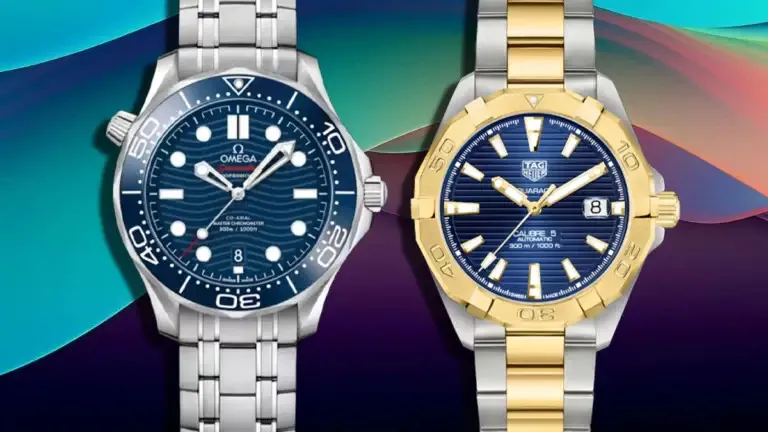

TAG Heuer attracts stronger opinions than most watch brands, largely because it sits at a price level where buyers expect a clear answer and the honest answer is conditional. What it delivers well is specific, and so is what it does not.
Quick Answer: TAG Heuer is an established Swiss brand with genuine motorsport and chronograph heritage, producing watches across quartz, automatic, and in-house movement tiers. It offers strong design and brand recognition, with the common criticism being that comparable movement specification is available for less from other brands.
What the brand genuinely has
Chronograph heritage that is real rather than constructed. The Heuer name has a documented history in motorsport timing and in the development of automatic chronograph movements. This is not marketing invention.
Design consistency. The main collections have recognisable identities that have evolved rather than been reinvented, which is less common than it sounds.
A wide tier structure. The range runs from quartz references at the entry point through automatics using widely available Swiss calibres to in-house movements at the top. That means there is a version of the brand at several price points.
Service infrastructure. An established Swiss brand with a global service network is a genuine advantage over a smaller brand with better specification and no support path.
The criticism, stated fairly
The common argument against TAG Heuer is that a substantial part of the price is brand rather than watch, and that comparable movement specification is available for less elsewhere.
This is largely accurate at the mid tier, where many references use widely available Swiss calibres also found in watches from brands with lower recognition. If you compare purely on movement specification, other brands offer more.
The counter-argument is that this is true of nearly every recognised brand at every level. Brand recognition is part of what you buy, and whether it is worth paying for is a personal judgment rather than a technical one.
The more useful question is not whether the extra cost exists but whether you want what it buys.
Where the quartz references make sense
At this price level buyers are routinely told that mechanical is the only serious option. That is a hobbyist position rather than a practical one.
Accuracy. Quartz holds time far more tightly than mechanical. Where an automatic drifts by seconds daily, quartz drifts by seconds across weeks.
Thickness. No mainspring barrel and no winding rotor means a noticeably thinner case, which determines whether a watch clears a shirt cuff.
Readiness. Pick it up after three weeks and it shows the correct time. An automatic will have stopped.
The cost is lower resale interest and a ticking rather than sweeping seconds hand. For a buyer who rotates watches or needs thinness, quartz is the better watch.
Who it suits
Someone who wants an established Swiss brand with recognisable design and a functioning service network, and who is comfortable that part of the price reflects the name.
Someone drawn specifically to the chronograph and motorsport design language, which the brand does distinctively.
Someone who values a watch that is widely recognised, which matters in some professional and social contexts and not at all in others.
Who should look elsewhere
Anyone optimising purely for movement specification per dollar. Several Swiss and Japanese brands deliver more mechanical watch for the same outlay, with less recognition attached.
Anyone buying as an investment. Watch values are not predictable, and treating any watch as an investment is a poor framing regardless of brand.
Anyone whose priority is a tool watch for hard use, where purpose-built dive and field brands offer more capability for less.
If specification is the priority, comparing across brands rather than within one is the sensible approach. The range at Creation Watches Singapore spans Swiss and Japanese alternatives at overlapping price points.
What to check on any reference
The calibre. Whether it is a widely available Swiss movement or an in-house one changes both the specification and the service picture considerably.
Crystal and anti-reflective treatment. Sapphire is standard at most levels; coating quality varies and affects legibility.
Water resistance and crown type, particularly on dive-styled references.
Case thickness and lug-to-lug, since chronograph cases run thick and diameter tells you less than either.
Service cost and interval for the specific movement, because in-house calibres and widely available ones differ substantially here.
What to compare before committing at this level
At this price point the useful exercise is a specification comparison across brands rather than within one.
Build five rows: movement calibre and whether it is in-house or widely available, crystal material and coating, water resistance and crown type, case thickness and lug-to-lug, and bracelet construction including clasp type.
Fill those rows for two or three candidates from different brands at the same price. The results are frequently surprising, and they turn a brand question into a specification question.
Then add a sixth row that the specification sheets do not cover: how much you want to wear it. A watch that wins on every specification and does not appeal to you is a worse purchase than one that loses a row and does.
That last row is where brand and design legitimately count, and there is nothing irrational about weighting it. The point of the exercise is to know what you are paying for rather than to eliminate preference. Compare candidates across the range at Creation Watches Singapore before deciding.
FAQ
Is TAG Heuer a luxury brand?
It sits in the accessible end of the Swiss market rather than at the high end. It has genuine heritage, an established service network, and recognisable design. Whether it counts as luxury depends on where you draw the line, which varies by market.
Do you pay for the name?
Partly, yes, particularly at the mid tier where many references use widely available Swiss calibres also found in less recognised brands. That is true of most recognised brands. Whether the recognition is worth paying for is a personal judgment.
Is a quartz TAG Heuer worth buying?
For the right buyer, yes. Quartz gives higher accuracy, a thinner case, and correct time after weeks unworn. The trade-offs are lower resale interest and a ticking seconds hand. If you rotate watches or need thinness, quartz is the better choice.
How does it compare to Japanese brands at the same price?
Japanese brands generally deliver more specification per dollar, since the major houses manufacture their own movements at scale. TAG Heuer delivers Swiss provenance, established design language, and recognition. Neither is better in the abstract.
Is it a good investment?
No watch should be bought as an investment. Values move with demand, condition, and market conditions, none of which are predictable. Buy a watch to wear and treat any future interest as incidental.
What should I compare before buying?
Calibre, crystal, water resistance, and case thickness against alternatives at the same price. Compare across brands rather than within one — the range at Creation Watches SG covers Swiss and Japanese options at overlapping levels.
Verdict
TAG Heuer is a legitimate brand with real heritage and a functioning service network, priced with a recognition uplift that is genuine and normal. Buy it if you want the design and the name and are comfortable with that. Buy something else if you are optimising specification per dollar. Either way, compare calibre, crystal, and case thickness across brands before deciding.


























Sign in to leave a comment.