
For anyone asking “ischial bursitis how long to heal”, there is no reliable recovery deadline without an assessment. Bursitis involves irritation of a cushioning, fluid-filled sac, often linked to repeated pressure or friction. Treatment depends on the location and cause, and may include activity changes, physiotherapy or an ultrasound-guided procedure where appropriate.
Ischial bursitis affects the area around a sitting bone beneath the buttock. However, pain there does not establish the diagnosis. Tendon, joint and nerve problems can produce overlapping symptoms.
See a GP promptly if you have:
• Fever, chills or a feeling of being unwell alongside the pain.
• Difficulty moving the affected joint.
• Very severe, sharp or shooting pain.
• Symptoms that worsen or fail to improve after one to two weeks of self-care.
These points follow NHS guidance on bursitis. Sudden severe joint pain with swelling or illness needs urgent assessment rather than a routine scan.
Ischial bursitis: how long to heal and what affects recovery?
The NHS describes uncomplicated bursitis as often settling within a few weeks. However, that general advice does not provide a specific healing deadline for ischial bursitis. Persistent buttock pain may need further investigation or a different treatment plan.
Recovery depends partly on whether the diagnosis is correct. Repeated pressure, work demands and an associated tendon problem may also complicate the picture. Therefore, judging progress involves more than counting days.
Consider whether sitting, walking and daily tasks are becoming easier. If your symptoms are worsening, seek reassessment rather than waiting for a predicted end date.
An overview of ischial bursitis explains its location near the sitting bone and the importance of considering other causes. The nearby hamstring tendons can produce similar pain.
Your clinician can help distinguish these conditions. They can also explain which activities to adjust whilst maintaining appropriate movement.
What is a bursa in the foot, ankle or hip?
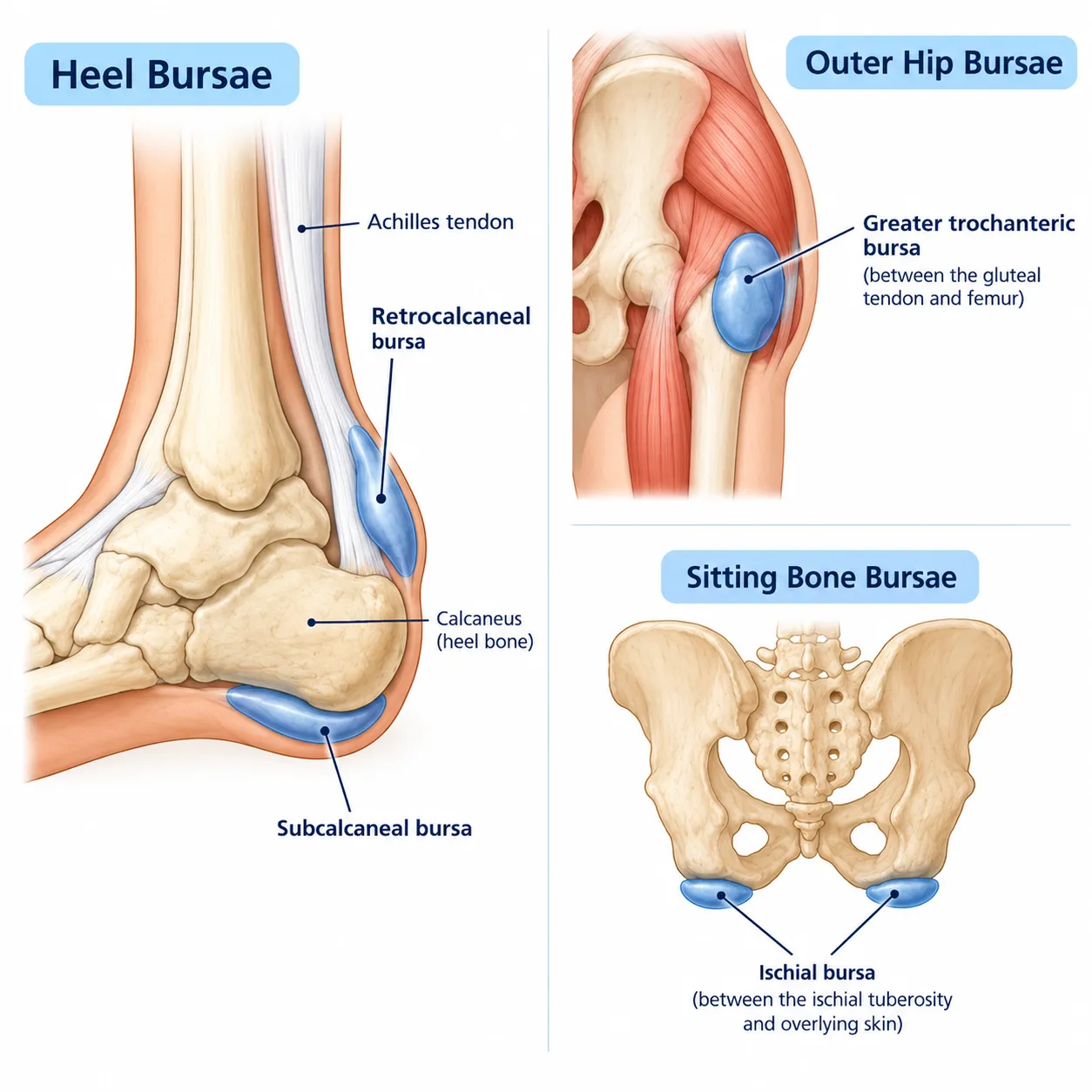
A bursa is a small sac containing fluid. It helps neighbouring tissues move against one another with less friction. Bursae sit near areas where tendons, skin or other soft tissues move over bone.
Bursitis means that a bursa has become irritated and inflamed. However, the presence of fluid on a scan does not automatically explain pain. The clinician must connect the finding with your symptoms and examination.
Around the heel, bursae lie close to the Achilles tendon and heel bone. Around the hip, bursae sit near tendons and bony surfaces. Their location helps explain why pressure or repeated movement can provoke discomfort.
What does bursitis look and feel like?
Symptoms may include a local ache, tenderness and swelling. Pressure or movement can make the area more uncomfortable. A deeper bursa may cause pain without an obvious surface lump.
Nevertheless, appearance alone cannot identify bursitis. A new swelling might have another explanation, including a cyst or a joint problem. Avoid squeezing it or trying to drain it yourself.
If you notice a change, describe its location and behaviour to your clinician. Explain whether it changes with footwear, sitting or activity.
What causes bursitis in the foot and ankle?
Repeated friction or pressure can irritate tissues around the foot and ankle. Footwear rubbing against the heel is one possible contributor. Changes in walking or sporting activity may also increase demands on the area.
However, not all swelling near the ankle bone represents a bursa. A ganglion cyst, tendon-sheath swelling or an injury can look similar. Your clinician may also consider inflammatory conditions when the history suggests them.
Gout is another possible explanation for an acutely painful, swollen area. Infection is a separate concern and requires prompt medical care. These causes need different management, even when the symptoms overlap.
What is bursitis of the ankle?
The term describes irritation of a bursa around the ankle region. It does not identify the precise structure involved. An examination helps establish whether pain arises from a bursa, tendon, joint or another tissue.
For example, symptoms behind the heel may involve structures near the Achilles tendon. Conversely, swelling over an ankle bone may reflect local pressure or a different problem.
Is a fluid-filled sac on the ankle bone always bursitis?
No. A soft or apparently fluid-filled swelling cannot confirm bursitis. Its position, tenderness and associated symptoms all matter.
MSK ultrasound can help examine appropriate superficial structures. However, your clinician may recommend another investigation if the finding or examination requires it.
How does hip bursitis differ from greater trochanteric pain syndrome?
Greater trochanteric pain syndrome, or GTPS, describes pain around the outside of the hip. It can involve the gluteal tendons, which connect buttock muscles to bone, as well as nearby bursae.
Therefore, describing every case as “hip bursitis” can oversimplify the problem. A treatment plan aimed only at a bursa may miss an important tendon component.
The Royal Devon guide to greater trochanteric pain syndrome explains this broader picture. Symptoms can affect lying on the painful side, walking and other daily activities.
Ischial bursitis occurs lower down, near the sitting bone. In contrast, GTPS concerns the outer hip. These locations help guide examination, but they cannot confirm either diagnosis on their own.
Greater trochanteric pain syndrome treatment commonly includes adjusting aggravating positions and gradually strengthening the relevant muscles. A physiotherapist can adapt the programme to your ability and symptoms.
When do you need urgent medical help?
Ask for an urgent GP appointment or contact NHS 111 for sudden severe joint pain with swelling or skin colour changes. Difficulty moving the joint, fever or feeling generally unwell also needs urgent advice.
These symptoms can occur with septic arthritis, a serious joint infection. Do not assume that a hot, swollen joint is simply bursitis.
If you cannot obtain an urgent GP appointment, NHS 111 can direct you to appropriate care. Do not wait for a private ultrasound appointment when urgent symptoms develop.
For a life-threatening emergency, call 999. Routine bursitis symptoms alone do not normally require an ambulance.
What happens when you get bursitis checked?
Your clinician asks about pain, swelling, injury and changes in activity. They will also consider your medical conditions and medicines. Mention any fever, recent infection or previous episodes.
The examination checks tenderness, movement and the surrounding structures. For hip or buttock symptoms, assessing the back and nearby tendons may help identify another source.
Ultrasound can support assessment of bursae and adjacent soft tissues. However, a scan is not necessary for every presentation. Sometimes examination provides enough information to begin an appropriate plan.
If infection or an inflammatory condition is suspected, blood tests or fluid sampling may be needed. Fluid sampling means taking a small amount for laboratory analysis. This follows an appropriate medical pathway.
Other imaging or specialist referral may be necessary when the diagnosis remains uncertain. A normal ultrasound does not exclude every cause of pain.
How to treat bursitis in the foot, ankle or hip
Treatment starts with understanding the cause. A pressure-related problem requires a different approach from infection or inflammatory disease. Avoid copying someone else’s treatment simply because their pain sounds similar.
Reduce aggravating pressure
Your clinician may suggest footwear changes, cushioning or temporary activity adjustments. For sitting-related pain, discuss your chair and work routine. For outer hip symptoms, consider whether your usual resting positions aggravate discomfort.
Aim for practical changes you can maintain. Complete inactivity is not a universal solution, so ask which movements remain appropriate.
Build function with physiotherapy
Physiotherapy can address movement, strength and activity tolerance. Where tendons contribute to pain, progressive exercise may form an important part of treatment.
The programme should match the diagnosis. An exercise recommended for one hip condition may not suit another. Report a sustained increase in symptoms so your physiotherapist can adjust it.
Discuss medicines and ultrasound-guided treatment
A pharmacist or clinician can advise whether pain relief is suitable for you. Your health conditions and other medicines affect that decision.
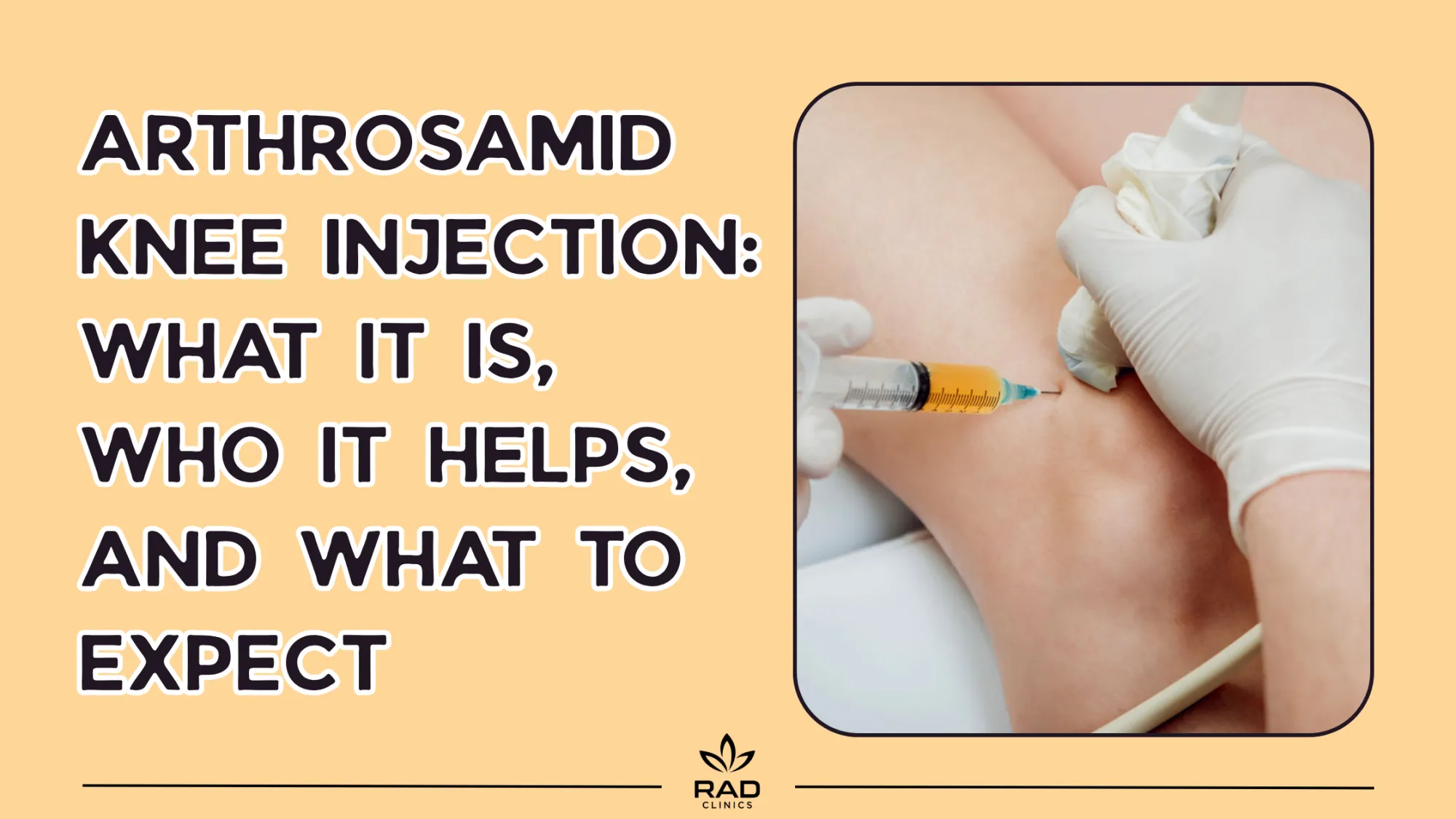
Where injection treatment is clinically appropriate, RAD Clinics offers ultrasound-guided cortisone injections as the primary non-surgical treatment. This follows assessment and does not replace physiotherapy or treatment of an underlying cause.
Risk and further assessment will be discussed before the treatment. Suspected infection requires appropriate medical investigation and treatment rather than routine ultrasound-guided cortisone treatment.
Frequently asked questions
Can sitting make ischial bursitis worse?
Pressure around the sitting bone may aggravate symptoms. However, sitting pain can also arise from other structures. Discuss persistent symptoms rather than assuming the diagnosis.
Does bursitis always produce a visible lump?
No. A deeper bursa may cause pain without visible swelling. Conversely, a visible lump does not prove bursitis and may need separate assessment.
Can I keep walking with bursitis?
It depends on the cause and severity. Ask which activities are suitable. Sudden severe pain or inability to bear weight needs urgent advice rather than an exercise plan.
Why does my hip hurt when I lie on it?
Pressure can aggravate outer hip pain, including GTPS. However, several conditions can cause this symptom. A clinician can examine the area and guide management.
Do I need fluid drained?
Not necessarily. Fluid sampling may help when infection or another diagnosis needs investigation. Your clinician decides whether it is appropriate; many presentations do not require it.
Why has the pain returned?
The original cause may still be present, or another structure may contribute. Reassessment can review activity demands and the diagnosis before deciding whether treatment should change.
How RAD Clinics can help
At RAD Clinics, MSK ultrasound supports assessment of appropriate muscle, tendon and soft-tissue problems. We interpret findings alongside your symptoms and examination. Our care does not replace GP assessment or urgent referral pathways.
We offer physiotherapy and ultrasound-guided treatment where clinically appropriate. Appointments are available in Milton Keynes, Northampton and St Neots.
If you are asking “ischial bursitis how long to heal” because pain is disrupting everyday life, call us to discuss assessment. Self-referral is accepted.
























Sign in to leave a comment.