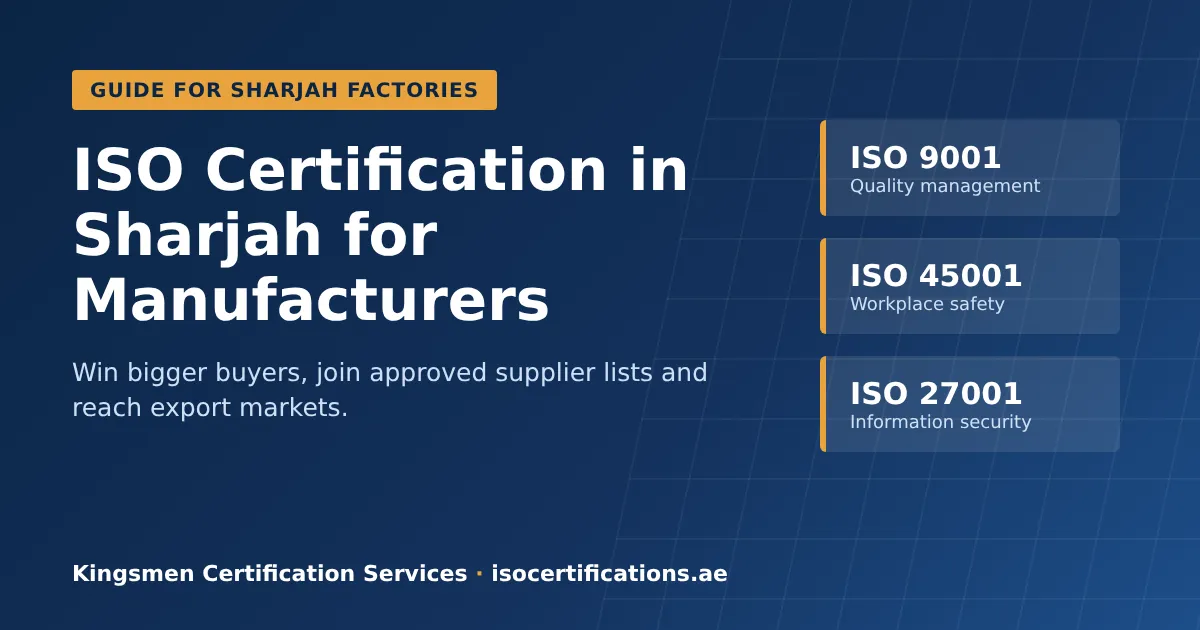

Sharjah is one of the busiest industrial hubs in the UAE. Its industrial areas, SAIF Zone and Hamriyah Free Zone host thousands of factories and workshops. They make everything from steel and plastics to food, furniture and building materials.
Many of these factories want to grow. They want to supply large contractors, government projects, retail chains and export buyers. But those buyers often ask one question first. "Is your factory ISO certified?"

This guide explains what ISO certification in Sharjah means for manufacturers. It covers which standards buyers ask for, how the process works and how to get certified without stopping production.
Why Buyers Ask Sharjah Manufacturers for ISO Certification
Big buyers take a real risk when they pick a new supplier. A faulty batch or a late shipment can delay a project or damage their brand. So they look for proof that your factory works in a controlled, reliable way.
An ISO certificate gives them that proof. It shows that an outside auditor checked your work and found it sound.
Here is where Sharjah factories usually meet ISO rules:
- Vendor registration. Contractors, developers and government entities often list ISO standards in their supplier forms.
- Export orders. Buyers in Europe, Africa and the GCC often ask for ISO 9001 before they place an order.
- Retail and hospitality. Supermarket chains and hotel groups audit their suppliers closely.
- Project tenders. Building material suppliers often need ISO certificates to join a contractor's approved list.
So ISO certification opens doors that stay closed to uncertified factories.
Which ISO Standards Do Sharjah Manufacturers Need?
The right standard depends on what you make and who you sell to. These five come up most often.
| Standard | What it covers | Who needs it in Sharjah |
|---|---|---|
| ISO 9001 | Quality management | Almost every manufacturer and supplier |
| ISO 14001 | Environmental management | Factories with waste, emissions or chemical use |
| ISO 45001 | Health and safety | Factories with machinery, heat, lifting or chemicals |
| ISO 22000 | Food safety | Food and beverage producers and packers |
| ISO 27001 | Information security | Firms that hold client designs, data or IT systems |
ISO 9001 certification in Sharjah is the usual first step. It covers how you plan production, control quality, manage suppliers and handle complaints.
ISO 14001 certification in Sharjah suits factories with waste, dust or chemical use. It helps you control your impact on the environment and meet client ESG demands.
ISO 45001 certification in Sharjah protects workers around machines, furnaces, forklifts and chemicals. Contractors and operators often ask for it.
ISO 27001 certification in Sharjah is growing fast. Many manufacturers now hold client drawings, designs and data on their systems. Buyers want to know that information stays safe. You can read more about ISO 27001 certification and how it protects company data.
Many factories combine ISO 9001, ISO 14001 and ISO 45001 into one integrated system. This saves time and cuts duplicate paperwork.
The Business Benefits for Your Factory
ISO certification helps you win buyers. But many factory owners value the inside benefits just as much.
Less waste and rework. Clear checks catch problems early. So fewer products fail inspection.
Steady quality. Every shift follows the same steps. Customers get the same result every time.
Better supplier control. You rate your raw material suppliers. That means fewer surprises on the production line.
Safer workplace. Clear safety controls cut injuries and lost hours.
Easier growth. When you add a new line or a second site, staff follow written steps. They do not rely on memory.
How the ISO Certification Process Works
A good consultant keeps the process practical, so your production keeps running.
| Step | What happens |
|---|---|
| 1. Gap analysis | A consultant visits your factory and compares current practice with the standard |
| 2. System design | Your team writes simple procedures that match how the factory really works |
| 3. Implementation | Staff use the system on live production and keep records |
| 4. Internal audit and review | You check the system and fix gaps |
| 5. Certification audit | An accredited certification body audits you in two stages |
A small factory often completes ISO 9001 in a few weeks. A larger plant with several lines or standards usually needs a few months.
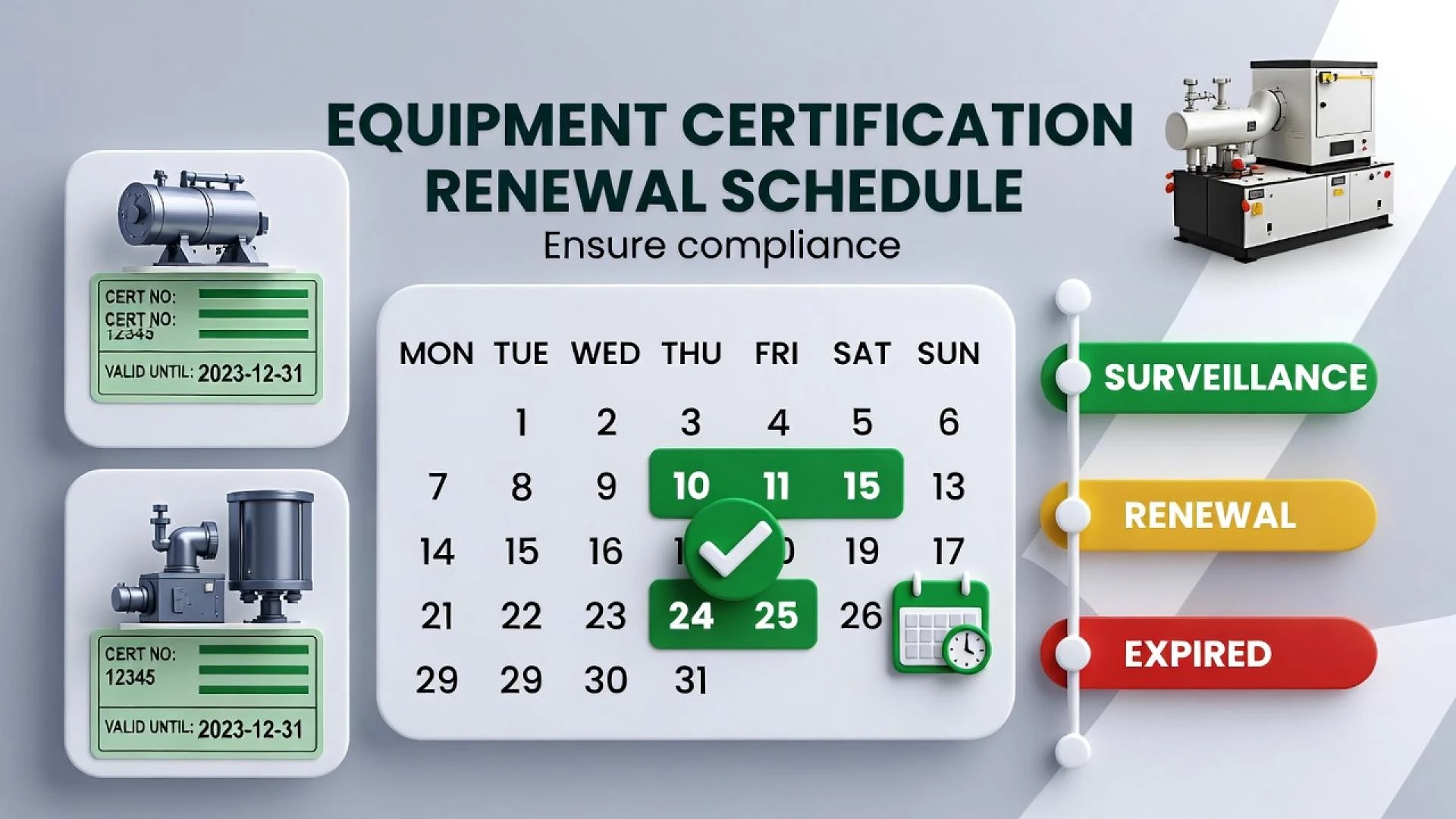
After certification, the certificate stays valid for three years. The certification body returns each year for a surveillance audit. So your system needs to stay in daily use on the factory floor.
What a Typical Factory Journey Looks Like
Take a typical metal fabrication workshop in a Sharjah industrial area. It has 40 staff, two shifts and a small office. A large contractor wants to add it to their approved list, but only with ISO 9001.
In week one, a consultant walks the shop floor. They see how jobs come in, how drawings reach the welders and how the team checks finished work. They also note what is missing, such as calibration records or a clear way to handle complaints.
Over the next few weeks, the team writes short, simple steps for each stage. The supervisor sets up a job card that follows every order. The store keeper starts a supplier list with simple ratings. Staff get short training on their part.
Then the team runs the system on live jobs. They keep records, hold an internal audit and fix the gaps. Finally, the certification body visits for the two audit stages.
At the end, the workshop has its certificate. More importantly, it has calmer shifts, fewer reworks and a place on the contractor's list.
What Auditors Check on the Factory Floor
Auditors do not only read documents. They walk the floor and talk to your people. So it helps to know what they look for.
- Clear job flow. Each order moves through set steps, with checks at key points.
- Trained staff. Operators know their tasks and the quality checks for their work.
- Calibrated tools. Gauges, scales and testers carry valid calibration labels.
- Clean, safe areas. Walkways stay clear, and safety signs and guards stay in place.
- Records that match. What the team says matches what the records show.
Free Zone or Mainland: Does It Matter?
Many Sharjah factories run from SAIF Zone or Hamriyah Free Zone. Others hold a mainland licence in the industrial areas. ISO certification works the same way for both.
Your licence lets you operate. Your ISO certificate shows buyers how well you operate. So a free zone factory that sells to mainland or export buyers needs ISO too.
Make sure your certificate scope matches your real work. It should name your products and list your production site. Buyers read the scope closely. If it does not match what you sell, they may reject it.
Common Mistakes Manufacturers Should Avoid
- Writing procedures in the office only. Production teams must help write them, or they will not follow them.
- Skipping calibration records. Auditors check that your measuring tools stay accurate.
- Weak supplier checks. Raw material quality affects your whole output. So rate suppliers from day one.
- Choosing an unaccredited body. A cheap certificate that buyers cannot check wastes your money.
How to Choose the Right ISO Partner in Sharjah
Look for ISO consultants in Sharjah who understand factories, not just the standard. The right partner visits your site and builds the system around your production flow.
Kingsmen Certification Services supports manufacturers and industrial firms in Sharjah, Dubai, Ajman and across the UAE. The team guides factories from gap analysis to certification. It also works only with accredited certification bodies. You can learn more about ISO certification in Sharjah and how Kingsmen supports local businesses.
Frequently Asked Questions
How do I get ISO certification in Sharjah?
Start with a gap analysis of your factory. Then build simple procedures, train your team and keep records. After an internal audit, an accredited certification body audits you in two stages. Once you pass, you receive your ISO certificate. A local consultant can guide each step.
Which ISO standard should a Sharjah manufacturer get first?
Most factories start with ISO 9001. Nearly every buyer asks for it, and it builds the base for other standards. After that, many factories add ISO 14001 for the environment and ISO 45001 for safety. You can combine all three into one simple system.
How long does ISO certification take in Sharjah?
A small factory can often finish ISO 9001 in a few weeks. A larger plant, or one that adds several standards, usually needs a few months. The timeline depends on how fast your team uses the system. The audit date also plays a part.
Do free zone companies in Sharjah need ISO certification?
The law does not require it. But buyers often do. A factory in SAIF Zone or Hamriyah Free Zone that supplies contractors, retailers or export markets usually needs ISO 9001. Your free zone licence and your ISO certificate do different jobs, so you may need both.
How long is an ISO certificate valid?
Your ISO certificate stays valid for three years. Each year, the certification body visits for a short surveillance audit. It checks that your system still works. In the third year, a renewal audit gives you a new certificate for three more years.
Grow Your Factory With ISO Certification
ISO certification helps Sharjah manufacturers win bigger buyers, join approved supplier lists and reach export markets. It also makes your factory run more smoothly every day. So if a big order or tender is on the horizon, start preparing now.
Talk to the Kingsmen team about ISO certification in Sharjah, and request a consultation for your factory today.




















Sign in to leave a comment.