
Introduction
Impact testing tells you how a material behaves under sudden force rather than gradual load, which matters enormously for plastics, packaging, and metals that face drops, knocks, or shocks in real use. Three methods dominate this space: Izod, Charpy, and Dart Impact testing. They sound similar and often get confused, but each measures something different and suits different materials and industries. Picking the wrong one means test results that don't actually reflect how your product will perform once it's in a customer's hands.
Side-by-Side Comparison
| Parameter | Izod Impact Test | Charpy Impact Test | Dart Impact Test |
|---|---|---|---|
| Specimen orientation | Vertical, notched, clamped at one end | Horizontal, notched, supported at both ends | Flat film or sheet, unclamped |
| Impact direction | Pendulum strikes above the notch | Pendulum strikes opposite the notch | Free-falling dart strikes the surface |
| Standard | ASTM D256, ISO 180 | ASTM D6110, ISO 179 | ASTM D1709, ISO 7765 |
| Best suited for | Rigid plastics, molded parts | Metals, rigid plastics, composites | Thin films, flexible packaging |
| Measures | Energy absorbed to break a notched sample | Energy absorbed to fracture a supported beam | Energy needed to puncture a film at failure |
| Typical industry use | Plastic housings, automotive components | Metallurgy, structural materials | Flexible packaging, food film |
When Should You Use Which
Go with Izod testing when you're evaluating rigid, molded plastic parts like enclosures, connectors, or automotive components. The test's clamped, cantilever setup mirrors how a notch or stress point in a rigid part would behave under a sudden knock, which is why it's become the default in plastics quality control across most manufacturing sectors.
Charpy testing fits better when the material in question is metal or a rigid composite, especially where temperature-dependent brittleness matters. It's the standard choice in metallurgy because the simply supported beam setup and the ability to run tests at controlled low temperatures reveal ductile-to-brittle transition points that Izod testing isn't designed to capture.
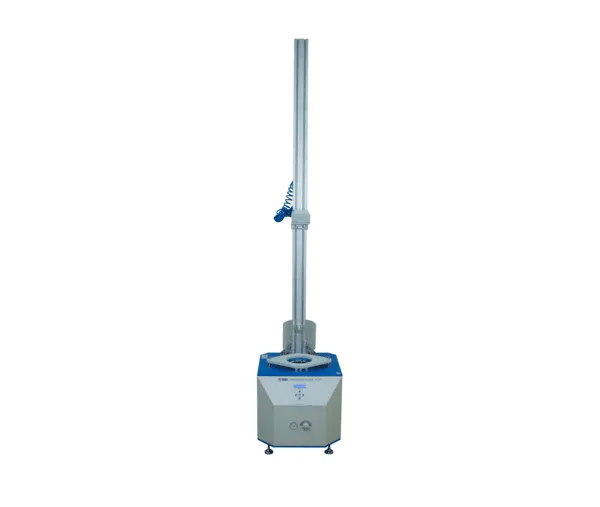
Dart impact testing belongs in a different category altogether, built specifically for thin films and flexible packaging. If you're testing shrink wrap, food pouches, or any flexible barrier film, neither Izod nor Charpy will give you a usable result, since both methods assume a rigid, clampable or supportable specimen. Dart testing instead drops a weighted dart from a set height onto a free film sample and measures the energy at which 50 percent of samples fail, giving packaging engineers a realistic picture of puncture resistance during handling and transit.
Common Mistakes Buyers and Engineers Make
A frequent mistake is treating Izod and Charpy as interchangeable just because both use a pendulum and a notched specimen. The clamping and impact geometry differ enough that results from one method don't translate directly to the other, so switching between them mid-project without re-validating against the applicable standard can produce misleading comparisons.
Another common error is applying a rigid-material test method to a flexible one. Trying to run a thin film through an Izod or Charpy setup simply doesn't work, since the specimen can't be clamped or supported the way the standard requires. Flexible materials need dart impact testing, full stop.
Buyers also sometimes overlook the effect of notch geometry and specimen thickness on Izod and Charpy results. Small deviations in notch radius or sample dimensions, if not controlled per the standard, can swing results significantly, leading to inconsistent data across batches even when the material itself hasn't changed.
FAQs
What's the main difference between Izod and Charpy impact tests?
Izod clamps the specimen vertically and strikes above the notch, while Charpy supports the specimen horizontally at both ends and strikes opposite the notch. The specimen orientation and support method change how the material fractures and what the result reflects.
Can dart impact testing be used on rigid plastics?
No. Dart impact testing is designed for thin, flexible films and sheets that can't be clamped or supported the way Izod and Charpy specimens are. Rigid plastics need Izod or Charpy testing instead.
Which test is better for automotive plastic components?
Izod is generally preferred for molded automotive plastic parts, since it closely simulates impact at a notch or stress concentration point common in housings and structural components.
Do these tests require different equipment?
Yes. Izod and Charpy testers share similar pendulum mechanisms but differ in specimen clamping and support fixtures, while dart impact testers use a completely different drop-weight mechanism suited to film and sheet materials.
Find the Right Impact Tester for Your Material
Presto offers Izod, Charpy, and dart impact testers built to ASTM and ISO standards, so you can match the test method to your actual material and application. Talk to our team to find the right fit for your lab.



























Sign in to leave a comment.