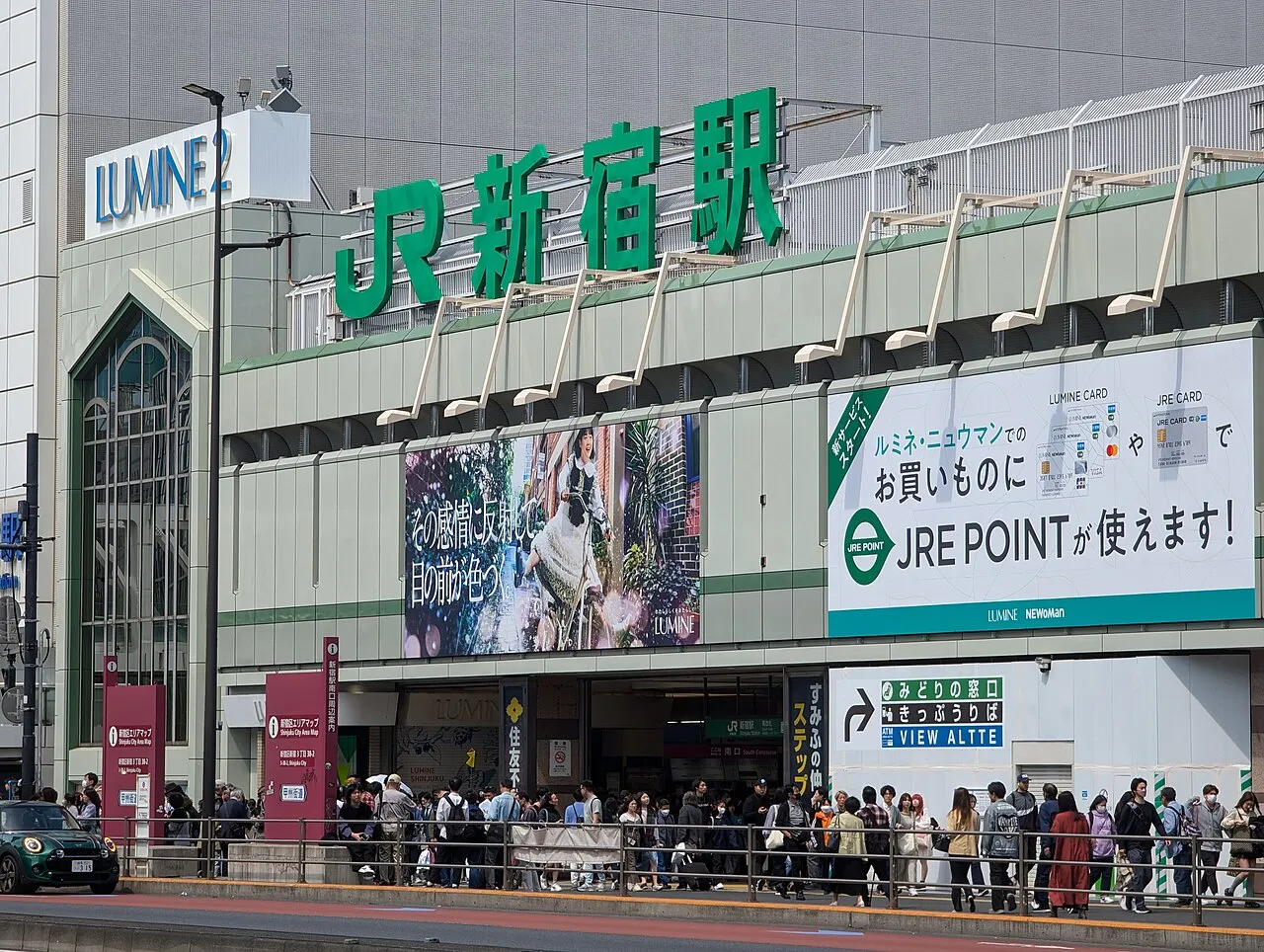

Stand at the east exit of Shinjuku Station at 8:30 on a weekday morning and you will understand why Japan's rail network is famous. Commuters flow in disciplined streams, platform announcements chime in two languages, and trains arrive within seconds of their scheduled times. Shinjuku is widely recognized as the busiest railway station on Earth, and for a first-time visitor it can feel like a maze. It is also one of the best places to learn how Japanese public transport really works.
This guide walks through the essentials: which lines and operators you will meet, which tickets and passes are worth considering, the mistakes that trip up most first-timers, and a few navigation habits that make everything easier. Every detail is a snapshot, so confirm current fares and pass rules on the official operator websites before you go.
Main transport options
Japan does not have one railway system; it has many, run by different companies that share stations and sometimes tracks. In and around Shinjuku you will mainly deal with four groups.
JR East operates the Yamanote Line, the green loop that circles central Tokyo and links Shinjuku with Shibuya, Ikebukuro, Ueno and Tokyo Station. It also runs the Chuo Line (a fast east-west route through the city), the Saikyo Line and the Shonan-Shinjuku Line. If you are only going to learn one line, make it the Yamanote: it is a simple loop, and every train stops at every station.
Tokyo Metro runs nine subway lines, and Toei runs four more. They cover the gaps JR does not. From Shinjuku, the Marunouchi Line (Tokyo Metro) and the Oedo and Shinjuku Lines (Toei) are the most useful. Metro lines are color-coded and lettered, so a station on the Marunouchi Line appears as M08, for example, which helps enormously when you cannot read the kanji.
Private railways such as Odakyu and Keio depart from Shinjuku for the western suburbs and popular day trips. Odakyu's Romancecar, for instance, heads toward Hakone, and Keio serves Mount Takao.
Shinkansen bullet trains do not leave from Shinjuku itself. You transfer to Tokyo or Shinagawa Station for long-distance routes to Kyoto, Osaka, Hiroshima and beyond, which is a short hop on the Yamanote or Chuo Line.
For most travelers, the practical rule is simple: use JR for the loop and for long-distance travel, use the subway for neighborhoods JR skips, and use private lines when a destination clearly calls for one.
Tickets and passes
The good news is that you rarely need to buy a paper ticket for each ride.
IC cards are the backbone of day-to-day travel. Suica and Pasmo are the best-known cards for the Tokyo area, and other regional cards such as ICOCA work across much of the country. You tap in at the gate, tap out at your destination, and the fare is deducted automatically. The same card also pays at vending machines, convenience stores and many lockers. Many visitors now add a Suica or similar card to their phone's wallet, which avoids queuing at a machine on arrival. Availability of physical cards for visitors has changed in recent years, so check the current situation before you land.
Tourist subway passes can be good value if you plan a heavy day of sightseeing. Tokyo Metro sells 24-, 48- and 72-hour tickets to foreign visitors, and there are combined options that also cover Toei lines. Do the math first: if your day involves only three or four rides, tapping an IC card is usually cheaper than buying an unlimited pass.
The Japan Rail Pass is the one people ask about most, and it deserves a hard look. After a significant price increase in 2023, the nationwide pass only pays off when you make several long Shinkansen journeys in a short period, such as Tokyo to Kyoto to Hiroshima and back within a week. If you are basing yourself in Tokyo with a day trip or two, individual tickets or a regional pass are typically cheaper. Price out your actual route before you commit.
Regional passes are often the smartest middle ground. The Hakone Free Pass, for example, bundles the Odakyu ride from Shinjuku with buses, cable cars and boats around the mountains, and it can be a better deal than piecing together tickets.
Shinkansen tickets come in two flavors: a base fare for the journey and a limited-express supplement for the fast service. Reserved seats cost a little more, but on busy holiday weekends they are worth it.
Common mistakes
Almost every first-time visitor repeats a handful of errors, and all of them are avoidable.
Choosing the wrong exit. Shinjuku Station has more than 200 exits. Walking out of the wrong one can leave you a twenty-minute walk from where you meant to be. Before you leave the platform, look at the signs that show exit numbers and nearby landmarks, and check your map to see which exit is closest to your destination.
Boarding the wrong type of train. Local, rapid, express and limited express services can all leave from the same platform, and only some stop at your station. Look for the color-coded stopping pattern on the display and confirm that your destination is served. A rapid train that sails past your stop can cost you 20 minutes.
Ignoring rush hour. From roughly 7:30 to 9:30 in the morning and again in the early evening, popular lines are packed. If you have luggage, avoid these windows completely. Trains also stop running around midnight, so a late dinner needs a plan.
Forgetting to tap out. With IC cards, the fare is calculated between tap-in and tap-out. If you skip it, gates may refuse you next time, and staff will have to fix the balance.
Carrying too much. Coin lockers exist at most large stations, but they fill up quickly. Consider using the luggage-forwarding services (called takkyubin) that hotels can arrange, so you travel light on the trains.
Talking on the train. Phone calls are considered rude on trains. Keep your phone on silent and speak quietly.
Navigation tips
A few habits will save you time on every trip.
Use an app that lists platform numbers, transfer times and the exact exit to take. Apps such as Google Maps and Japan-specific route planners will tell you not just which train to catch but which car to stand in for the shortest transfer. Pay attention to the departure platform, because the same line can leave from very different parts of a big station.
Learn the line colors and letter-and-number station codes. Even if the station name is in a script you cannot read, "M08" is unmistakable, and every sign along the way repeats it.
Allow buffer time for transfers in stations like Shinjuku, Shibuya and Tokyo. A "five-minute" change on paper can take fifteen if you must walk through crowds, climb stairs and find the right gate. Signs are generally excellent, and station staff are patient with visitors.
Finally, use platform edges wisely. Queue in the marked lines, let passengers exit first, and step aside once you are through the gates to check your phone.
Connectivity tip for live routes
Japan's rail network is precise, but plans change: a platform gets reassigned, a line runs late because of weather, or a transfer suddenly looks smarter through a different station. Live route checks, station maps and real-time delay notices all depend on a working data connection, and that matters most in the places where public Wi-Fi is least reliable, such as inside big stations and underground concourses.
That is why many travelers sort out mobile data for Japan before they leave home. With an eSIM, you can install the plan by scanning a QR code before departure and switch it on when you land, with no shop visit and no SIM card to swap. A flexible top-up option is particularly handy on map-heavy days: if you burn through data while hopping between Shinjuku, Shibuya and a day trip, you can add more when you run low instead of hunting for a store. It is a small piece of preparation, but it means your route app, translation tool and ticket reservations keep working when you need them.
Check that your phone supports eSIM and is carrier-unlocked before you buy, and remember that many plans are data-only, so you will use messaging apps rather than a local phone number.
Final thoughts
Japan's trains and metros reward a bit of preparation. Learn the main operators, tap with an IC card for most trips, buy a pass only when the numbers clearly favor it, and watch out for exits, train types and rush hour. Keep your phone connected so you can check routes and delays on the go. Do that, and even Shinjuku, the busiest station in the world, becomes an easy place to start every adventure.


























Sign in to leave a comment.