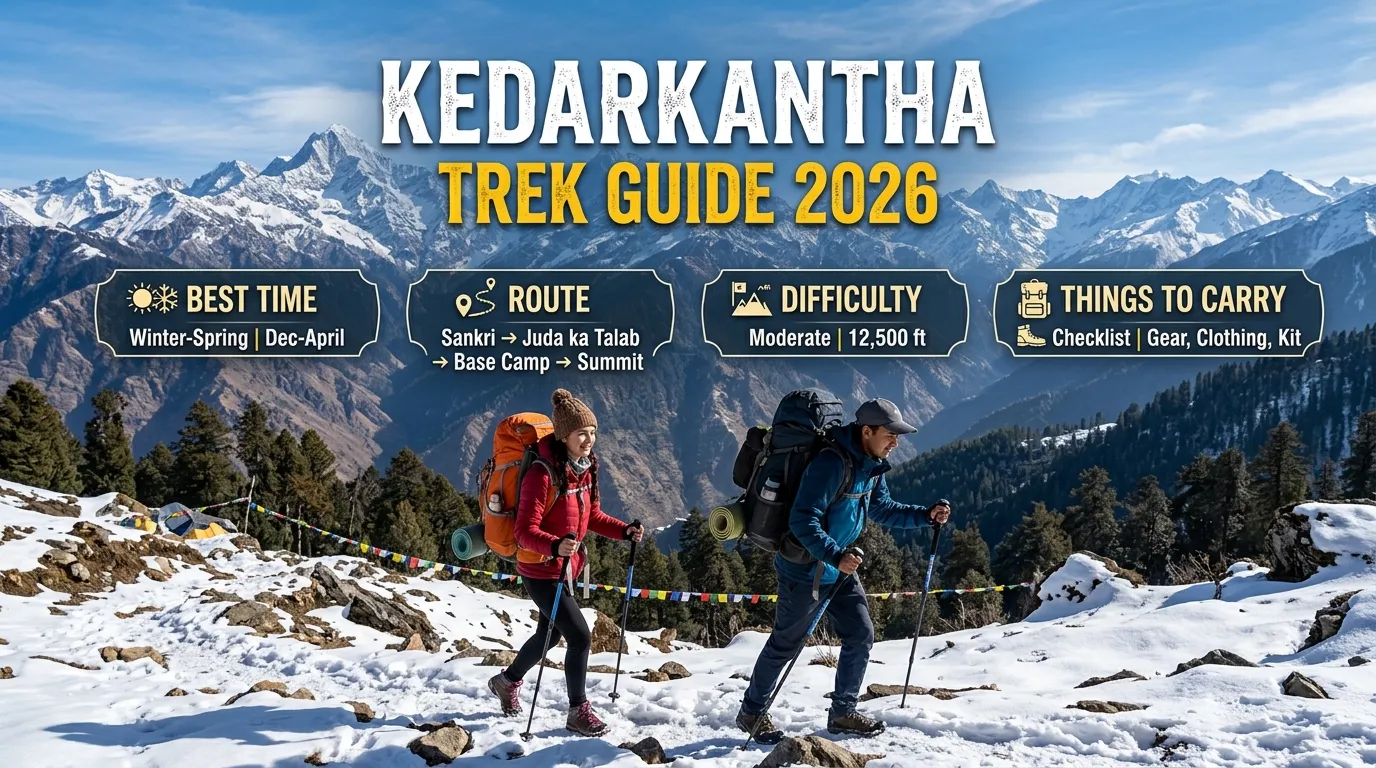

Why Kedarkantha Remains a Favourite Himalayan Trek
Imagine walking through a quiet pine forest covered in fresh snow, camping beneath a clear winter sky and watching the first rays of sunlight illuminate the Himalayan peaks from a summit.
This is the experience that makes the Kedarkantha trek one of the most popular winter trekking experiences in Uttarakhand.
Located in the Govind Wildlife Sanctuary and National Park region of Uttarkashi district, Kedarkantha is known for its snow-covered trails, dense forests, open meadows and rewarding summit views. The trek is also considered a suitable introduction to winter Himalayan trekking for people with reasonable fitness and preparation.
However, the beauty of the trail should not make you underestimate the mountains. Winter conditions can bring freezing temperatures, snow-covered paths and changing weather, making proper planning essential.
This Kedarkantha trek guide covers everything you need to know before planning your journey in 2026—from the best time to visit and route details to difficulty level, packing essentials and important safety considerations.
🏔️ Kedarkantha Trek at a Glance
Before getting into the details, here are the key things you should know about the trek:
- Location: Uttarkashi district, Uttarakhand
- Region: Garhwal Himalayas
- Approximate summit altitude: 3,810 metres
- Trek duration: Usually around 4–6 days, depending on the itinerary
- Difficulty: Easy to moderate, depending on weather and trail conditions
- Best known for: Snow, pine forests, campsites and summit views
- Best season: Winter for snow; spring and other seasons offer different landscapes
- Suitable for: Beginners with reasonable fitness as well as experienced trekkers
The exact route, duration and conditions can vary between trekking operators and seasons, so travellers should always verify the latest itinerary and local conditions before departure.
❄️ Why Choose the Kedarkantha Trek?
There are many Himalayan trails across Uttarakhand, so what makes Kedarkantha stand out?
The answer is its combination of accessibility, scenery and winter character.
Unlike some high-altitude treks that require extensive previous experience, Kedarkantha offers a relatively approachable way to experience snow trekking. At the same time, the trail provides enough variety to keep the journey interesting.
Some of its major attractions include:
- Snow-covered Himalayan landscapes during winter
- Beautiful pine and oak forests
- Scenic campsites
- Open mountain clearings
- A rewarding summit climb
- Panoramic views from higher sections
- A genuine winter trekking experience
For many first-time trekkers, it can serve as an introduction to the discipline, preparation and rhythm of Himalayan trekking.
🗓️ Best Time to Visit Kedarkantha
One of the most important decisions when planning Kedarkantha trekking is choosing the right season.
❄️ December to February: The Winter Experience
If your primary objective is to experience snow, winter is generally the most attractive period.
During suitable conditions, the trail can be covered in snow, transforming the forests, campsites and meadows into a classic Himalayan winter landscape.
You should be prepared for:
- Very low temperatures
- Snow-covered trails
- Shorter daylight hours
- Cold nights at camps
- Potential changes in trail conditions
Winter trekking requires appropriate layers, footwear and guidance.
🌸 March to April: A Different Side of Kedarkantha
As winter begins to recede, the landscape gradually changes.
Snow conditions can vary considerably, and the trail may reveal more greenery and forest landscapes. This can be a good option for travellers who want to experience Kedarkantha without making snow the sole focus of their trip.
☀️ Spring and Summer
The warmer months offer a different visual character, with clearer trails in many sections and greener surroundings.
However, if your main objective is specifically a winter trek in Uttarakhand, winter remains the more appropriate choice.
🍂 Autumn
Post-monsoon conditions can bring clearer skies and impressive mountain views. The trail may look very different from its winter appearance, which makes it attractive for travellers more interested in landscapes and views than snow.
Important: Weather patterns vary each year. Always check current conditions and trek availability before finalising your plans.
🥾 Kedarkantha Trek Route: What to Expect
The exact itinerary can differ depending on the operator, but a typical Kedarkantha journey follows a route through the Sankri region and several scenic campsites before reaching the summit.
Day 1: Arrival at Sankri
Sankri generally serves as the starting point for the trek.
The journey to Sankri itself is part of the adventure, as the road gradually takes travellers deeper into the Himalayan landscape.
Depending on the itinerary, the first day is generally used for arrival, preparation and acclimatisation.
Day 2: Sankri to Juda Ka Talab
The trek begins through forested terrain.
Pine and oak trees create a peaceful atmosphere, while the landscape gradually changes as you gain elevation.
Juda Ka Talab is one of the well-known camping points along the route.
During winter, the area can become particularly scenic when covered with snow.
Day 3: Juda Ka Talab to Kedarkantha Base
The trail continues towards higher altitude and more open terrain.
As the trees become less dense, trekkers begin to get broader views of the surrounding Himalayan landscape.
The base camp provides an important stopping point before the summit attempt.
This is also the stage where trekkers should focus on rest, hydration and preparation for the following day.
Day 4: Summit Day
This is the most anticipated part of the Kedarkantha trek.
The summit climb typically begins early, allowing trekkers to reach the higher sections around sunrise, depending on the itinerary and weather.
The landscape opens up as you climb, and clear conditions can provide impressive views of the surrounding mountains.
Reaching the summit is rewarding—but the descent is equally important. After spending time at the top, trekkers return towards the lower campsite according to the planned itinerary.
Final Days: Descent and Return
The remaining journey generally involves descending towards Sankri and completing the return journey.
While descending may feel easier physically, tired legs and slippery winter conditions still require attention.
Remember: The exact campsites and daily distances can change according to weather, route conditions and the trekking operator's itinerary.
📊 How Difficult Is the Kedarkantha Trek?
Kedarkantha is commonly described as an easy-to-moderate Himalayan trek, but the actual difficulty depends heavily on season, weather, snow conditions and your physical fitness.
For a beginner, walking several hours a day at altitude can still be demanding.
You should be comfortable with:
- Walking for several hours continuously
- Climbing and descending uneven terrain
- Carrying a daypack
- Walking in cold conditions
- Managing gradual altitude gain
- Maintaining a steady pace
Winter conditions can increase the difficulty considerably.
Fresh snowfall, icy sections and freezing temperatures may slow your pace even if the route is otherwise considered moderate.
How should beginners prepare?
Start preparing several weeks before the trek.
Useful activities include:
- Regular walking or jogging
- Stair climbing
- Cardiovascular exercises
- Leg-strengthening exercises
- Basic endurance training
- Practising with a backpack
The objective is not to become an athlete.
It is to make sure your body is comfortable with long hours of walking and elevation gain.
🎒 What to Carry for the Kedarkantha Trek
Packing correctly is especially important for a winter trek.
Your clothing and equipment should be selected according to the expected weather conditions.
Essential Clothing
- Thermal inner layers
- Warm fleece or mid-layer
- Insulated jacket
- Waterproof outer layer
- Trekking trousers
- Warm socks
- Gloves
- Woollen cap or beanie
- Extra clothing for emergencies
Trekking Equipment
- Comfortable trekking shoes with good grip
- Backpack
- Rain cover
- Headlamp
- Trekking poles
- Water bottle
- Sunglasses
- Sunscreen
- Lip balm
- Personal toiletries
Health & Personal Essentials
- Personal medicines
- Basic first-aid supplies
- Prescription medication if required
- Energy snacks
- Personal identification
- Power bank
- Emergency contact information
One important rule:
Do not overpack.
Carrying unnecessary items can make the trek considerably more tiring.
At the same time, never compromise on essential winter protection simply to reduce backpack weight.
🧤 Why Proper Shoes Matter on Kedarkantha
Footwear deserves special attention during winter trekking.
Snow and ice can make sections of the trail slippery, while wet feet can quickly become uncomfortable in freezing temperatures.
Choose trekking shoes that provide:
- Good ankle support
- Strong grip
- Comfortable fit
- Adequate insulation for the season
- Resistance to moisture
Avoid wearing brand-new shoes directly on the trek.
Break them in before your journey.
Blisters may seem like a small problem at home, but they can become a major issue during a multi-day trek.
🛡️ Kedarkantha Trek Safety Tips
Beautiful mountains require responsible preparation.
Before beginning your journey, keep these points in mind:
Check the Weather
Mountain weather can change quickly. Monitor forecasts and follow local advice before and during the trek.
Respect Altitude
Do not ignore symptoms such as unusual breathlessness, severe headache, dizziness or extreme fatigue. Inform your trek leader immediately if you feel unwell.
Stay Hydrated
Cold weather can reduce your sense of thirst, but your body still needs adequate fluids.
Maintain Your Pace
There is no benefit in rushing ahead of the group. A steady pace helps conserve energy.
Follow the Marked Route
Avoid taking shortcuts or wandering away from the established trail, particularly when visibility is poor.
Respect the Environment
Carry your waste back with you, avoid disturbing wildlife and minimise your impact on the surrounding ecosystem.
A successful trek is not simply reaching the summit. It is returning safely while leaving the mountains as you found them.
📸 What Makes Kedarkantha a Photographer's Delight?
Kedarkantha offers a variety of landscapes within a relatively compact trekking experience.
Depending on the season, you may photograph:
- Snow-covered pine forests
- Golden morning light
- Mountain campsites
- Open alpine clearings
- Himalayan peaks
- Star-filled night skies
- Sunrise from higher elevations
However, remember that photography should never come at the expense of safety.
A perfect photograph is not worth leaving the marked trail or taking unnecessary risks.
🌲 Responsible Trekking in Kedarkantha
The popularity of the Kedarkantha trek also means that responsible tourism is increasingly important.
Mountain ecosystems are fragile. Even small amounts of waste can have a lasting impact.
As a responsible trekker:
- Avoid single-use plastic whenever possible.
- Carry reusable water bottles.
- Never leave wrappers or food waste behind.
- Avoid damaging plants.
- Do not disturb wildlife.
- Respect local communities.
- Follow instructions from guides and authorities.
- Use designated camping and waste-disposal facilities where provided.
Leave only footprints and take only memories.
👨👩👧 Who Should Consider the Kedarkantha Trek?
Kedarkantha can be suitable for a broad range of travellers, but everyone should evaluate the trek according to their own fitness and experience.
It can be a good option for:
- First-time Himalayan trekkers
- Winter adventure enthusiasts
- Young travellers and groups
- Nature photographers
- Outdoor enthusiasts
- Experienced trekkers seeking a relatively accessible winter route
Extra preparation may be necessary for:
- People with limited walking experience
- Travellers unfamiliar with cold-weather conditions
- Anyone with concerns about altitude or strenuous physical activity
If you have any health concerns that could affect your ability to trek, seek appropriate professional advice before planning a high-altitude journey.
💰 How Much Does a Kedarkantha Trek Cost?
The total cost can vary depending on the operator, season, group size, inclusions and duration of the itinerary.
A trekking package may include some combination of:
- Transportation from a designated meeting point
- Accommodation
- Meals during the trek
- Trek leader or guide
- Camping equipment
- Permits or forest-related charges where applicable
Additional expenses may include personal equipment, travel to the meeting point, insurance, personal purchases and other services not included in the package.
Instead of selecting a trek solely on price, compare the quality of inclusions, safety arrangements, itinerary, experience of the operator and overall support.
🌟 Why Choose The Infinite Routes for Kedarkantha?
Planning a Himalayan trek involves much more than simply selecting a destination.
The right travel partner can make the experience more organised, practical and comfortable.
The Infinite Routes can be a valuable choice for travellers looking to explore Uttarakhand through thoughtfully planned travel experiences.
🥾 A Trek Planned Around the Traveller
Every trekker has a different level of fitness, experience and expectation. Choosing the right itinerary should therefore begin with understanding the traveller rather than simply selling a fixed package.
🗺️ Well-Organised Travel Planning
A successful trek involves multiple elements, including transportation, accommodation, trekking schedules, meals and route coordination.
Careful planning helps reduce unnecessary complications during the journey.
🏔️ Experience Uttarakhand Beyond the Trail
The journey to Kedarkantha is not limited to the summit.
The forests, villages, roads, landscapes and local surroundings all contribute to the overall experience.
The Infinite Routes aims to help travellers experience Uttarakhand as a destination rather than simply checking a trek off their list.
🛡️ Emphasis on Responsible Travel
Mountain travel requires respect for nature and local communities.
Following responsible trekking practices helps preserve these destinations for future generations while making the experience safer and more sustainable.
❤️ Focus on the Complete Journey
From the first planning conversation to the final descent, every part of a trekking trip contributes to the overall experience.
The objective is to make your Kedarkantha trekking experience organised, memorable and enjoyable.
❓ Frequently Asked Questions About Kedarkantha Trek
Is Kedarkantha suitable for beginners?
Yes, Kedarkantha is often considered a suitable introduction to Himalayan trekking for beginners with reasonable fitness. However, winter snow and cold conditions can increase the difficulty, so proper preparation is essential.
What is the best time for the Kedarkantha trek?
Winter is generally preferred by travellers looking for a snow-covered trekking experience. December through February can offer winter conditions, although actual snowfall and trail conditions vary each year.
How many days are required for Kedarkantha?
Most itineraries take approximately 4–6 days, depending on the starting point, route, weather and trekking operator.
What is the difficulty level of Kedarkantha?
The trek is generally considered easy to moderate. However, snow, altitude, cold temperatures and daily walking distances can make the experience more demanding.
What should I wear for Kedarkantha in winter?
Layering is essential. Thermal innerwear, fleece or insulating layers, a warm jacket, waterproof outerwear, gloves, warm socks and appropriate headgear are recommended.
Is Kedarkantha worth visiting without snow?
Yes. Although Kedarkantha is particularly famous as a winter destination, the landscape changes significantly throughout the year. Travellers interested in forests, meadows and Himalayan scenery can enjoy a different experience outside peak winter conditions.
Do I need previous trekking experience?
Previous experience is not always necessary, but you should have reasonable physical fitness and be prepared for several hours of walking each day.
🏔️ Final Takeaway
The Kedarkantha trek offers a balanced combination of adventure, natural beauty and accessibility, which explains its popularity among Himalayan trekking enthusiasts.
For beginners, it can provide an introduction to high-altitude trekking. For experienced travellers, it offers an opportunity to enjoy the distinctive beauty of Uttarakhand's winter landscapes.
But a memorable trek begins long before you reach the summit.
Choose the right season, prepare your fitness, carry appropriate equipment, understand the route and respect the mountains.
Most importantly, don't treat the Himalayas as just another travel destination.
Travel responsibly. Trek prepared. And let the journey be as memorable as the summit.
With thoughtful planning and the right travel partner, your Kedarkantha trekking experience can become much more than a winter holiday—it can become one of your most memorable Himalayan journeys.
Plan your Kedarkantha adventure with The Infinite Routes and experience the mountains with preparation, purpose and a spirit of exploration.
























Sign in to leave a comment.