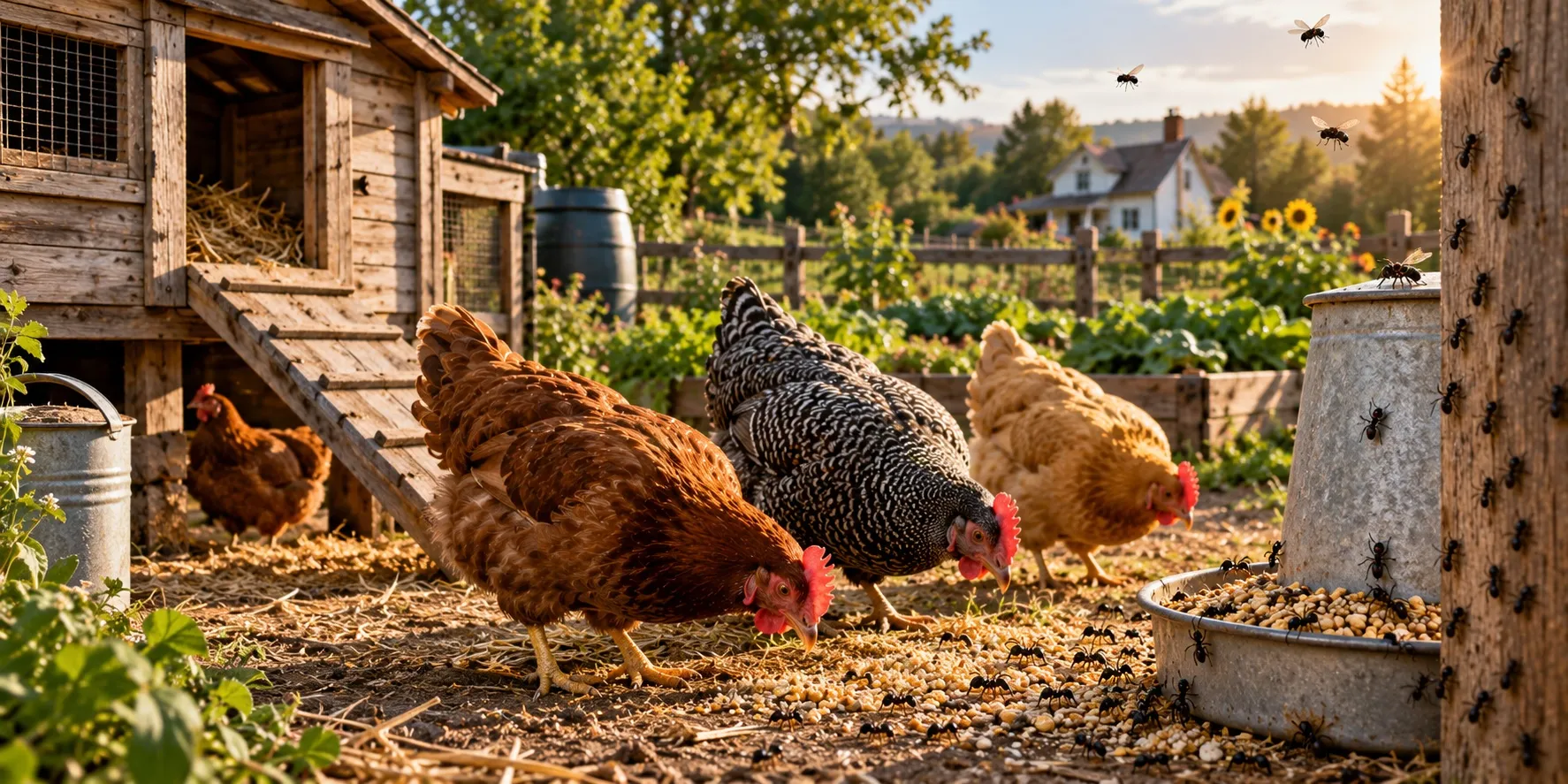

Why Coops Attract So Many Insects
A chicken coop offers everything an insect could want: warmth, spilled feed, moisture, and organic bedding material that breaks down slowly over time. It is little surprise that ants, flies, and mites gravitate toward coops far more than most other structures on a homestead.
Left unmanaged, these pests do more than annoy your flock. Ants can overwhelm feed stations, flies spread bacteria, and mites cause genuine health problems for chickens that are already stressed by heat or overcrowding.
The Feed Spillage Problem
Almost every ant problem in a coop traces back to spilled or exposed feed. Chickens are messy eaters, and grain scattered across the coop floor is essentially an open invitation for ant colonies to move in.
Switching to a treadle feeder, which only opens when a chicken steps on the platform, dramatically reduces spillage and cuts off the food source that draws ants in the first place. Sweeping up spilled feed daily, even with a good feeder, closes the remaining gap.
Managing Moisture and Bedding
Damp bedding creates ideal conditions for a wide range of pests, including ants, which are often drawn to moisture as much as to food. Ensuring your coop has adequate ventilation and a dry floor goes a long way toward making the space less attractive to insects overall.
Deep litter bedding, changed and refreshed on a regular schedule rather than left to become soggy, keeps the environment inhospitable to pests while still composting effectively over time. Checking corners and edges of the coop, where moisture tends to collect first, catches problems before they spread.
Safe Ant Control Options Around Poultry
Chickens are curious and will peck at almost anything new placed in or near their coop, which rules out many standard pest control products. Anything toxic enough to kill insects on contact is often toxic enough to harm a bird that pecks at the bait station.
A homemade Borax ant killer, placed inside a covered bait station where chickens cannot access it directly, offers a practical middle ground. The slow-acting nature of borax means worker ants carry it back to the colony before dying, addressing the source of the infestation while the covered container keeps curious hens away from the bait itself. Placing these stations along coop foundations and known ant trails, rather than inside the run where birds forage, adds another layer of safety.
Diatomaceous Earth in the Coop
Food-grade diatomaceous earth is widely used by poultry keepers because it is safe if accidentally ingested by chickens in small amounts, unlike many chemical alternatives. Dusting it lightly into bedding and dust bath areas helps control mites and lice directly on the birds themselves.
Around the coop perimeter, it also discourages crawling insects from establishing trails into the structure. As with garden applications, it needs to stay dry to remain effective, so reapplication after rain is necessary.
Fly Control Strategies
Flies thrive on manure and decomposing organic matter, both of which are unavoidable in any coop. Regular manure removal, rather than letting it accumulate, is the single most effective step toward reducing fly populations.
Fly traps using simple bait, hung a short distance from the coop rather than inside it, can catch significant numbers without exposing chickens to any chemical residue. Predatory wasps that specifically target fly larvae are also available commercially and integrate well into an organic coop management plan.
Building Pest Prevention Into Your Routine
The most effective coop pest control happens through consistent daily habits rather than occasional large interventions. Quick daily checks for spilled feed, damp spots, and manure buildup catch small problems before they become infestations.
A weekly deeper clean, combined with seasonal adjustments for heat, humidity, and insect activity, keeps most coops running smoothly with minimal pest pressure. Chickens that live in a well-maintained, pest-controlled coop are healthier, lay more consistently, and require far less intervention overall.
Seasonal Adjustments for Coop Pest Control
Insect activity in a coop shifts dramatically with the seasons, and a static pest management approach rarely works equally well year-round. Spring and summer bring the highest ant, fly, and mite activity, requiring more frequent bedding checks and manure removal than the relatively quiet winter months.
Adjusting your cleaning schedule seasonally, rather than sticking to a fixed routine regardless of weather, keeps pest pressure manageable without wasting effort during naturally slower periods. Many experienced keepers find that a more intensive weekly clean from late spring through early fall, tapering to biweekly in cooler months, strikes the right balance for most backyard flocks.
Recognizing Early Signs of a Pest Problem
Catching a coop pest problem early makes an enormous difference in how much effort it takes to resolve. Chickens that suddenly seem more agitated, spend unusual amounts of time preening, or show reduced egg production can all be signaling an insect problem before it becomes visually obvious to you.
Regular hands-on inspection, checking under wings and around the vent area for mites, along with a close look at bedding corners for ant activity, catches these early warning signs. Addressing a small, early infestation takes a fraction of the time and effort that an established, widespread problem requires later.
Seasonal Coop Deep Cleans
Beyond daily and weekly maintenance, a thorough seasonal deep clean resets the coop environment in ways that routine upkeep alone cannot achieve. Removing all bedding, scrubbing roosts and nesting boxes, and allowing the structure to air out and dry completely disrupts pest life cycles that may have been quietly building over several months.
Many keepers schedule these deep cleans around spring and fall, timing them to interrupt pest populations right before or after their most active seasons. Pairing a deep clean with a fresh application of diatomaceous earth in nesting areas gives the coop a genuinely clean start heading into the next season.
Working With Free-Range Versus Enclosed Flocks
Free-range chickens naturally forage for insects, which provides a degree of built-in pest control that fully enclosed flocks do not benefit from. If your setup allows for at least partial free-ranging, this natural foraging behavior can meaningfully reduce insect pressure around the coop and surrounding yard without any additional effort on your part.
A Quick Word on Consistency
None of these coop pest management steps work as a one-time fix, since insects and ants will keep testing the same opportunities as long as they exist. Consistency in your daily and weekly habits matters far more than any single dramatic intervention.
A Healthier Flock Starts With a Cleaner Coop
Insect problems in a coop rarely resolve themselves and tend to compound quickly once established. Addressing feed spillage, moisture, and manure buildup removes the root causes that attract most pests in the first place.
Combining these habits with safe, targeted treatments when needed gives your flock a genuinely comfortable, low-stress environment. That foundation pays off in better health, better egg production, and far less frustration for you as the keeper.


















Sign in to leave a comment.