

Chemistry is a discipline built around precision. A small variation in a measurement, temperature, reaction condition, or handling method can influence an entire experiment. The same principle applies to the environment where that work takes place. A laboratory needs to be carefully planned so that people, equipment, chemicals, utilities, and safety systems can function together without unnecessary obstacles.
For universities, research institutions, pharmaceutical organizations, testing facilities, and industrial laboratories, creating the right environment requires more than installing a few benches and cabinets. A modern Chemical lab needs infrastructure designed around its specific activities, users, and long-term requirements.
Kewaunee brings extensive experience in laboratory infrastructure, helping organizations create functional and durable environments where scientific work can be carried out efficiently and with appropriate attention to safety.
The Foundation of an Effective Chemical Laboratory
A laboratory should support the work taking place inside it.
Consider a typical experiment. A researcher might retrieve chemicals from storage, prepare a sample at a workstation, use a fume cupboard for a particular procedure, transfer the sample to an analytical instrument, record results, and clean the working area afterward. Each stage has different requirements, yet they are all part of the same workflow.
If the laboratory is planned without considering these connections, users may encounter unnecessary movement, congested work areas, difficult equipment access, or insufficient storage.
Effective laboratory planning looks at the complete process before deciding where individual components should go.
Designing Around Workflow
Workflow is one of the most practical considerations when developing a laboratory.
Frequently performed activities should be supported by conveniently positioned workstations, storage, sinks, equipment, and utilities. Areas that require specialized infrastructure can be located according to their operational and safety requirements.
This approach can help reduce unnecessary movement and make better use of available floor space.
For an educational facility, workflow planning can also make practical sessions easier to organize. Students can have clearly defined work areas, while instructors can maintain appropriate visibility and access. In a research environment, the same principle can support more specialized processes involving samples, instruments, and multiple stages of analysis.
The right layout should make the laboratory feel intuitive to use.
Safety Should Be Part of the Initial Plan
Chemical activities can involve substances with different levels of hazard. Volatile solvents, corrosive chemicals, reactive materials, fumes, heat, and other laboratory conditions require appropriate controls.
Safety considerations should therefore influence the laboratory layout from the beginning.
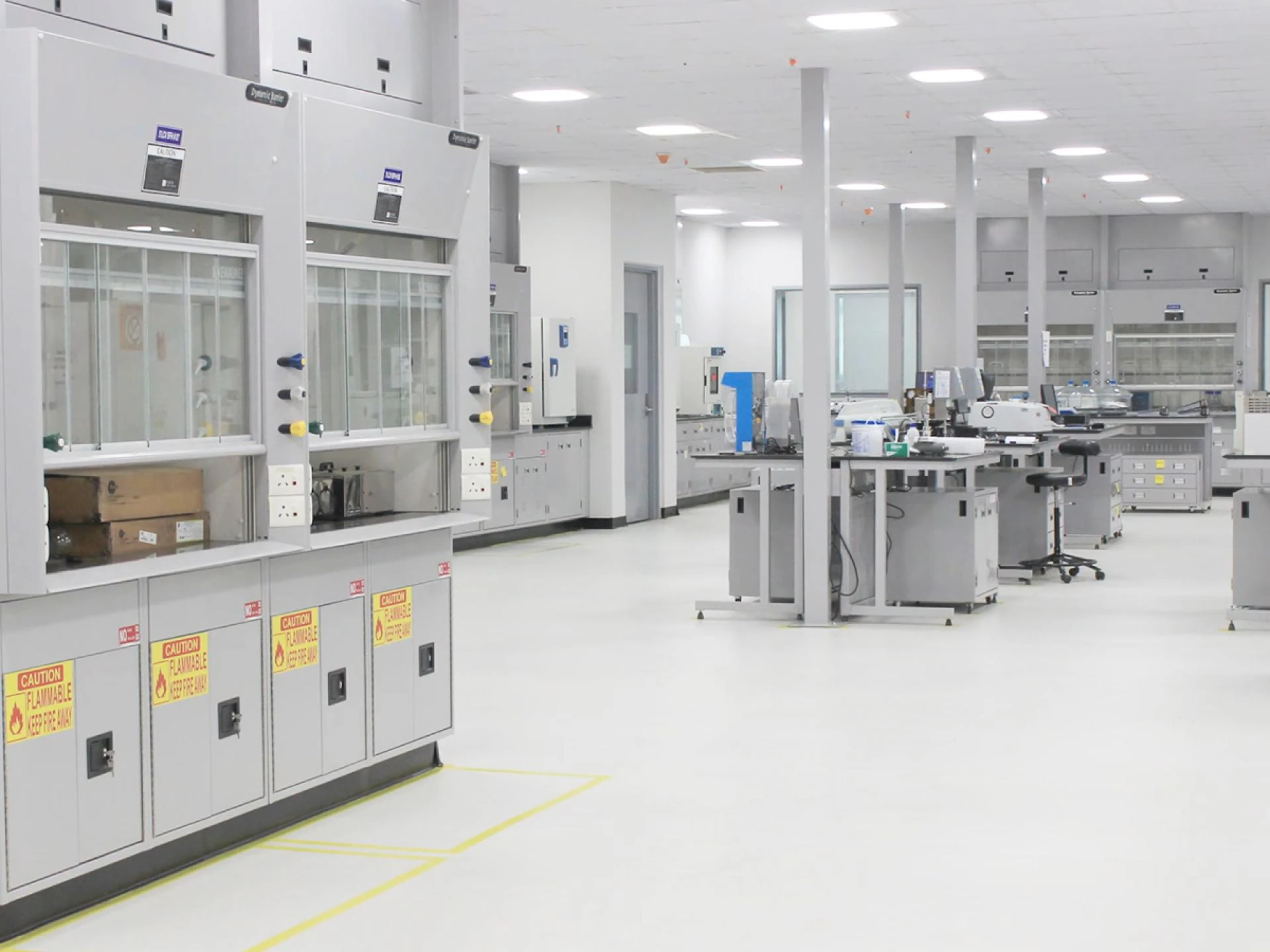
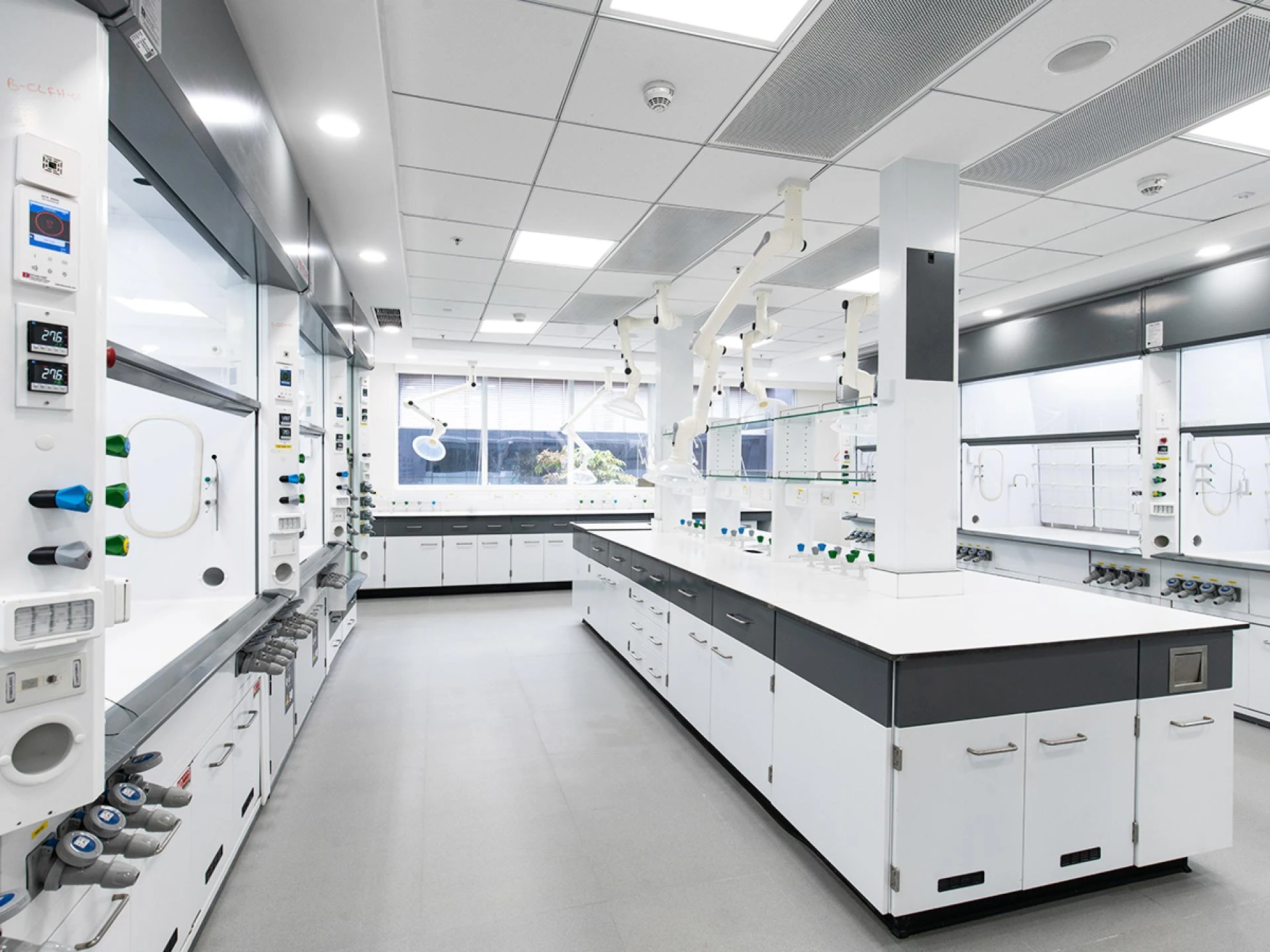
Depending on the application, a Chemical lab may incorporate fume cupboards, ventilation provisions, chemical storage systems, suitable work surfaces, emergency equipment, and designated work zones. These features need to be positioned carefully so they support both safe practices and efficient workflows.
Physical infrastructure is only one part of laboratory safety. Proper training, personal protective equipment, chemical risk assessments, labeling, operating procedures, inspections, and emergency planning remain essential.
Good design provides the environment in which those practices can be carried out effectively.
Choosing Work Surfaces for the Application
Laboratory worktops experience conditions that ordinary furniture is not designed to handle.
Chemical exposure, heat, moisture, cleaning agents, stains, and repeated daily use can all affect the performance of a work surface. The appropriate material therefore depends on the activities expected to take place in the laboratory.
For example, an educational chemistry facility may require surfaces that can withstand frequent practical sessions and cleaning, while a specialized research environment may need materials suited to particular chemical processes.
Durability should be considered alongside chemical resistance, maintenance, usability, and the overall requirements of the facility.
Kewaunee focuses on laboratory infrastructure designed around practical applications, helping organizations consider long-term performance when selecting furniture and surfaces.
Storage Is More Than a Convenience
A well-organized laboratory depends heavily on effective storage.
Chemicals, glassware, samples, consumables, tools, and protective equipment all need appropriate locations. Without sufficient storage, valuable work surfaces can become crowded, and users may spend additional time searching for materials.
Storage should therefore be considered as part of the overall laboratory layout.
Chemical storage also requires careful attention because substances can have different compatibility and handling requirements. Appropriate segregation, labeling, access, and ventilation where necessary should be considered according to the materials involved and applicable safety requirements.
Well-planned storage can help create a more orderly environment while supporting everyday workflow.
Integrating Equipment With Laboratory Infrastructure
Advanced equipment is now a central part of many chemical facilities.
Analytical instruments, testing systems, heating equipment, digital technologies, and specialized devices may require dedicated electrical supplies, water, drainage, gases, ventilation, or data connections.
These requirements should be reviewed before the final layout is established.
Positioning an instrument without considering its utility connections or maintenance clearance can create problems after installation. Coordinating equipment and infrastructure during planning can make the final environment more practical.
Kewaunee's experience in laboratory environments supports an integrated approach in which furniture, equipment, utilities, and user movement are considered together.
Making Better Use of Available Space
Laboratory floor space can be expensive, particularly in established institutions where expansion may not be practical.
The solution is not simply to add more furniture.
An overcrowded laboratory can make movement difficult and reduce accessibility. A better strategy is to create a layout where every component has a clear purpose.
Workstations can be positioned strategically, storage can make use of vertical space, and equipment can be arranged to preserve sensible circulation. Shared resources can be located where they are convenient for multiple users without creating unnecessary congestion.
Good space planning balances capacity with comfort and usability.
Flexibility for Future Requirements
Scientific facilities are rarely static.
Research priorities change. New instruments are introduced. Academic programs expand. Industrial testing procedures evolve. A laboratory designed around a fixed set of requirements may eventually become restrictive.
Flexible infrastructure can provide valuable room for change.
Modular furniture, adaptable workstations, and carefully planned utility arrangements can make future modifications more manageable. Facilities can then respond to new equipment or processes without requiring a complete redesign of the laboratory.
For organizations making a significant investment in laboratory infrastructure, planning for future adaptability can provide long-term value.
Ergonomics and User Comfort
Laboratory users often spend several hours standing, preparing samples, operating equipment, or recording results.
Poorly positioned work surfaces or inaccessible storage can make these activities unnecessarily tiring. Ergonomic planning can address practical details such as worktop height, storage access, equipment positioning, legroom, and circulation.
These considerations are valuable for everyone.
Students can benefit from comfortable and clearly organized work areas during practical classes. Researchers and technicians can benefit from workstations that support repeated daily activities.
A laboratory designed around its users is more likely to remain practical throughout the working day.
Creating Environments for Different Experience Levels
Not everyone entering a laboratory has the same level of experience.
Students and new users may need a straightforward environment where work areas, storage, equipment, and safety features are easy to understand. Experienced researchers may require specialized infrastructure capable of supporting complex procedures and advanced instruments.
Good laboratory planning can accommodate both groups.
Clear organization can help beginners develop responsible laboratory habits, while flexible and application-specific infrastructure can give experienced professionals the working environment they need for advanced scientific activities.
This balance is particularly important in universities and research institutions where laboratories may serve multiple user groups.
Quality and Durability Matter
Laboratory infrastructure is a long-term investment.
Furniture, storage systems, worktops, and supporting infrastructure need to withstand demanding conditions while continuing to serve their intended purpose. Selecting quality components at the beginning can help organizations reduce avoidable replacements and disruptions over the life of the facility.
Kewaunee brings laboratory expertise to this process, with a focus on practical design, durable infrastructure, and solutions suited to different scientific applications.
The emphasis should not simply be on how a laboratory looks when it is newly installed. Its real value becomes apparent through years of daily use.
Why Choose Kewaunee?
Developing a laboratory involves numerous interconnected decisions. Furniture selection, equipment positioning, storage, ventilation, utilities, workflow, safety, and future adaptability all influence the final result.
Kewaunee's experience in laboratory infrastructure allows organizations to approach these requirements from a broader perspective.
Rather than treating each component as an isolated purchase, the laboratory can be considered as a complete working environment. This can help create greater consistency between different areas while keeping the facility aligned with its intended application.
For organizations planning new construction, laboratory modernization, or expansion, an experienced infrastructure provider can add value throughout the planning process.
Building a Laboratory Ready for Tomorrow
The role of a laboratory is constantly evolving alongside science. New technologies and research methods will continue to change what users expect from their working environments.
That makes thoughtful planning essential.
A well-developed Chemical lab can provide organized work areas, suitable storage, coordinated utilities, durable surfaces, appropriate ventilation provisions, and flexibility for future changes. When these elements are planned together, the laboratory becomes easier to operate and better equipped to support scientific activities over the long term.
Kewaunee combines laboratory experience with a focus on quality, functionality, and application-oriented infrastructure. Its approach helps organizations create spaces that support students, researchers, technicians, and other laboratory professionals.
The strongest laboratories are not simply rooms filled with equipment. They are carefully considered environments where every workstation, cabinet, utility, and safety feature contributes to a larger purpose. With the right planning and infrastructure, a laboratory can provide a dependable foundation for experimentation, learning, research, and the discoveries that shape the future.

























Sign in to leave a comment.