

Investing in a Computer Numerical Control (CNC) machine is a key decision for manufacturing businesses, engineering workshops, and industrial production facilities. The right CNC machine can improve machining accuracy, increase production efficiency, reduce material waste, and deliver consistent results across repeated jobs.
However, with different machine types, automation capabilities, control systems, and machining specifications available, choosing the right equipment requires careful planning. A machine that suits a small workshop producing custom components may not meet the requirements of a high-volume manufacturing operation.
Before investing in CNC machining equipment, businesses should evaluate their production needs, material requirements, budget, and long-term growth plans. Understanding a CNC machine's key features can help you select equipment that delivers reliable performance and long-term value.
1. Machining Accuracy and Repeatability
Accuracy is one of the most important features to consider when purchasing a CNC machinery. It determines how closely the finished component matches the dimensions and tolerances specified in the design.
Repeatability refers to the machine's ability to produce consistent results when performing the same operation multiple times. Both are essential for manufacturers producing precision components or working with tight engineering tolerances.
Why Accuracy Matters
Poor machining accuracy can result in rejected components, material wastage, additional finishing work and production delays. Industries such as automotive manufacturing, aerospace, medical equipment and precision engineering often require particularly tight tolerances.
When comparing CNC machines, review the manufacturer's specifications for positioning accuracy, repeatability and machining performance. Remember that actual results also depend on tooling, workholding, machine calibration, material properties and operating conditions.
Choose a machine that meets your component specifications rather than paying for precision levels your applications do not require.
2. Machine Type and Machining Capabilities
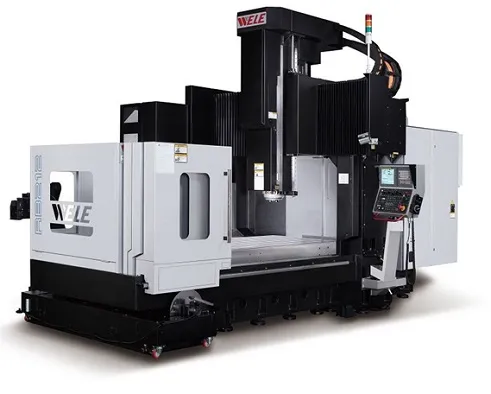
CNC machines are available in different configurations, each designed for particular manufacturing tasks. Selecting the appropriate machine type is essential for achieving efficient production.
Common options include:
- CNC milling machines: Used to machine flat surfaces, slots, pockets and complex three-dimensional features.
- CNC lathes: Designed primarily for turning cylindrical components and producing rotational parts.
- CNC routers: Commonly used for cutting and shaping materials such as wood, plastics and certain non-ferrous materials.
- CNC machining centres: Combine multiple machining operations and may include automatic tool changers for greater productivity.
Match the Machine to Your Applications
Consider the components you manufacture, their dimensions, material types and geometric complexity. A CNC milling machine may suit businesses producing brackets, housings and precision parts, while a CNC lathe may be more appropriate for shafts, bushings and other rotational components.
For workshops handling varied production requirements, a machine with suitable multi-axis capabilities may provide greater flexibility. However, additional axes can increase equipment costs, programming complexity and operator training requirements.
3. Spindle Speed, Power and Cutting Performance
The spindle is a critical component of a CNC machine because it drives the cutting tool or workpiece, depending on the machine configuration. Spindle power and speed influence the materials, tools and machining operations the equipment can handle.
What Should You Check?
Review the spindle's power rating, available speed range, torque characteristics and compatibility with the tooling you plan to use.
Higher spindle speeds can benefit certain operations involving smaller cutting tools or suitable materials. Higher torque may be more important for heavy cutting and machining applications that require substantial cutting force.
The ideal specifications depend on the material being processed, tool diameter, depth of cut and required surface finish.
Do not select a machine based on maximum spindle speed alone. The spindle must provide appropriate power and torque across the operating range required by your applications.
4. CNC Controller and Programming Compatibility
The CNC controller is responsible for interpreting machining instructions and coordinating machine movements. Its capabilities can influence programming efficiency, operator usability and overall production performance.
A user-friendly controller can simplify setup, reduce programming errors and help operators manage complex machining operations.
Evaluate Software Compatibility
Before purchasing, confirm that the machine supports the programming methods and Computer-Aided Manufacturing (CAM) software used by your business.
Consider whether it supports the required G-code formats, tooling libraries, simulation workflows and data transfer methods. Compatibility with existing design and manufacturing systems can reduce integration costs and simplify production planning.
Other useful features may include graphical toolpath displays, program simulation, collision checking and onboard diagnostics.
If your team has limited experience with a particular control system, ask about training, technical documentation and ongoing support.
5. Work Envelope and Material Handling
The work envelope defines the space available for machining. Depending on the machine type, this may include X, Y and Z axis travel, turning diameter, turning length or table dimensions.
A machine with an insufficient work envelope may restrict the size of components you can produce. Conversely, purchasing equipment that is significantly larger than necessary may increase costs and consume valuable workshop space.
Consider Your Current and Future Production Needs
Measure your largest typical components and account for fixtures, tooling and workholding arrangements. Check whether the machine can accommodate your materials safely and efficiently.
Material handling is another important consideration. Depending on production requirements, features such as automatic loading systems, pallet changers, suitable worktables and chip conveyors may reduce manual handling and improve workflow.
For businesses planning to manufacture larger components or expand their product range, allowing for realistic future requirements can help avoid premature equipment replacement.
6. Automation and Productivity Features
Automation can help manufacturers increase output, improve consistency and reduce repetitive manual tasks. However, the most appropriate automation level depends on production volume, component variety and available labour.
Useful CNC machine features may include:
- Automatic tool changers.
- Automatic tool measurement and tool-setting systems.
- Workpiece probing and measurement.
- Pallet-changing systems.
- Robotic loading and unloading.
- Automatic chip removal.
- Remote machine monitoring.
Is Automation Worth the Investment?
For repetitive production runs, an automatic tool changer or pallet system may reduce setup interruptions and improve machine utilisation. Robotic handling may be beneficial for operations involving large production volumes or frequent repetitive tasks.
Smaller workshops producing one-off components may benefit more from flexible programming, straightforward setup and easy tool access.
Evaluate the expected productivity gains against the cost of automation, integration, maintenance and training before deciding which features justify the investment.
7. Machine Construction, Rigidity and Reliability
Machine construction influences stability, vibration resistance and long-term machining performance. A rigid machine structure can help maintain dimensional consistency, particularly during demanding cutting operations.
When comparing CNC machines, consider the frame construction, guideways, drive systems, thermal management and overall engineering quality.
Reliability is equally important. Unexpected breakdowns can interrupt production schedules, delay customer orders and increase operating costs.
Ask the supplier about expected maintenance requirements, service intervals, component availability and machine warranty coverage. Where possible, review performance information relevant to your intended applications.
A machine's long-term value depends not only on its initial specifications but also on its ability to maintain dependable performance under normal operating conditions.
8. Safety Features and Operator Protection
CNC machines contain moving components, rotating tools and potentially hazardous cutting operations. Safety should therefore be a key consideration when selecting equipment.
Depending on the machine design, useful protective features may include enclosed machining areas, interlocked access doors, emergency stops, suitable guarding and systems for managing chips and coolant.
Also consider the visibility of the machining process, accessibility of controls and ease of performing routine maintenance safely.
In Australia, verify that the machine and its installation meet applicable work health and safety requirements. Operators should receive appropriate training, and maintenance procedures should include suitable isolation and energy-control practices.
Safety features should never be bypassed to improve production speed.
9. Maintenance, Technical Support and Spare Parts
Regular maintenance helps preserve machining accuracy, minimise downtime and extend equipment service life. Before investing in a CNC machine, understand the support available from the supplier or manufacturer.
Check the availability of replacement parts, servicing, troubleshooting assistance, software updates and operator training.
Ask whether local technicians are available and how quickly service requests can be addressed. For production-critical equipment, prompt access to technical support can significantly reduce the impact of unexpected problems.
You should also consider the accessibility of routine maintenance points, the availability of diagnostic information and the manufacturer's recommended preventive maintenance schedule.
10. Total Cost of Ownership and Return on Investment
The purchase price is only one part of the overall cost of operating a CNC machine. Businesses should consider the total cost of ownership over the equipment's expected working life.
Relevant expenses include:
- Purchase, delivery and installation.
- Tooling, fixtures and workholding equipment.
- Software licences and programming systems.
- Electricity, coolant and consumables.
- Maintenance and replacement components.
- Operator training and labour.
- Downtime and production interruptions.
Compare these costs with expected improvements in output, quality, labour efficiency and material utilisation.
A machine with a higher initial price may deliver better value if it meets your production requirements more effectively and reduces recurring operating costs. However, any return-on-investment estimate should be based on realistic production volumes and measurable business benefits.
CNC Machine Investment Checklist
Before making your final decision, confirm that the machine:
- Meets your machining accuracy and repeatability requirements.
- Supports your materials and component dimensions.
- Provides suitable spindle power, torque and speed.
- Is compatible with your CNC programming and CAM software.
- Offers the required work envelope and tooling capacity.
- Includes appropriate automation and safety features.
- Fits your workshop layout and utility requirements.
- Has reliable servicing, training and spare parts support.
- Meets your budget and long-term production objectives.
Conclusion
Investing in the right CNC machine can help your business improve manufacturing precision, streamline production and remain competitive. However, the best machine is not necessarily the one with the highest specifications or the most advanced automation features.
Start by identifying your machining requirements, production volume, material types and accuracy targets. Then compare machine capabilities, controller compatibility, construction quality, safety provisions and ongoing support.
By evaluating these factors alongside the total cost of ownership, you can make a more informed investment and select CNC equipment that supports your workshop's current operations and future manufacturing goals.


















Sign in to leave a comment.