Kidney Stone Not Passing? Why Home Remedies May Not Be Enough

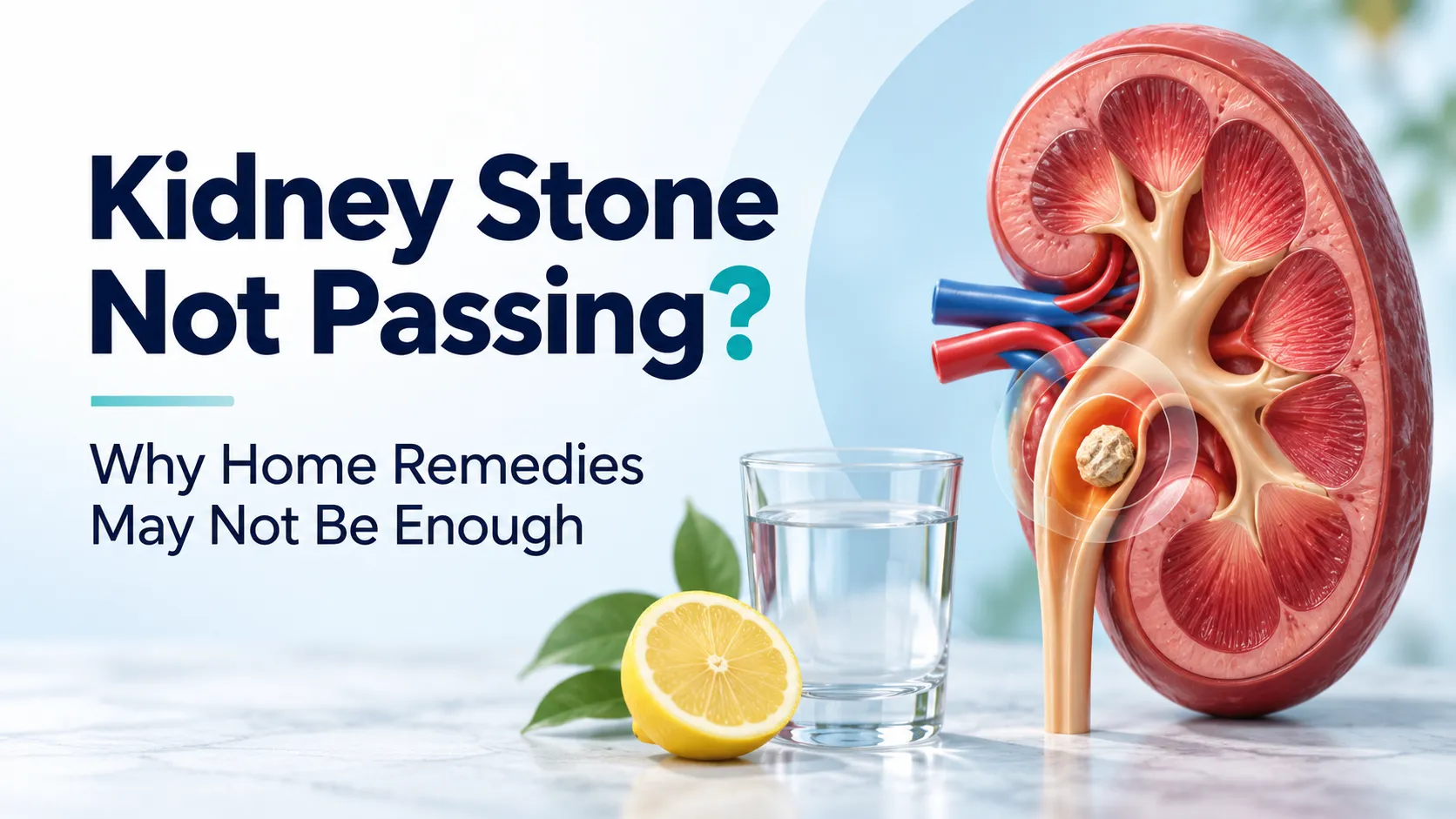
A kidney stone may not pass because of its size, location, or an obstruction in the urinary tract. Drinking water and trying home remedies cannot guarantee its removal. If a stone remains stuck, the next step is medical reassessment rather than repeatedly trying different drinks or supplements.
Some small stones pass naturally, while others need medication or a procedure. Understanding why passage has stalled helps you make a safer decision and avoid delaying necessary treatment.
Why Is Your Kidney Stone Not Passing?
A stone must travel through the ureter, the narrow tube connecting the kidney to the bladder, before it can leave the body. Its position and size influence whether this journey is possible.
A stone still inside the kidney may remain there rather than immediately enter the ureter. Once inside the ureter, a larger stone may struggle to move through.
This explains why two people with similarly sized stones can have different experiences. Your scan findings matter more than another person’s success with a particular remedy.
Doctors assess stone size, location, symptoms, and urine drainage before deciding whether continued observation is appropriate.
Can Drinking More Water Flush Out a Stuck Stone?
Adequate hydration helps prevent dehydration and supports stone prevention by keeping urine less concentrated. However, drinking more water does not guarantee that an existing stone will pass.
A stone blocking the urinary tract needs assessment. It should not be treated simply by increasing fluid intake.
Drink regularly according to your doctor’s advice instead of forcing excessive quantities at once. Fluid needs vary, particularly for people with kidney failure or prescribed fluid restrictions. If vomiting prevents you from keeping fluids down, you may need hospital treatment for dehydration.
Hydration is useful, but it cannot replace a treatment plan for a stone that remains stuck.
Do Kidney Detox Drinks Remove Stones?
Online recipes often suggest that juices, herbal mixtures, or special cleansing drinks can remove stones. These claims can make a persistent stone seem like something you can manage entirely at home.
When researching kidney detox drinks, distinguish ordinary hydration from promises of cleansing or stone removal. Evidence supporting detox programmes is limited, and some products or practices can cause harm.
A drink advertised as a cleanse does not tell you whether your stone has moved or whether urine drainage is blocked. Avoid using testimonials as confirmation that a remedy will work for your scan findings.
Can Cystone Help When a Stone Is Not Passing?
Cystone is an Ayurvedic herbal formulation marketed for urinary tract support. Patients exploring cystone tablet uses often want to know whether it can clear a stone and help them avoid a procedure.
However, its effectiveness should not be assumed. A small study involving ten people with recurrent calcium oxalate stones found no significant improvement in urinary composition or reduction in stone burden. The findings do not support promising reliable calcium oxalate stone clearance.
Discuss the exact product with your doctor. Continuing a herbal tablet while symptoms persist should not replace reassessment or delay recommended treatment.
How Do Doctors Check Whether Waiting Is Safe?
A review may involve imaging, urine testing, and blood tests, depending on your symptoms and previous results. These help assess the stone’s position, infection, obstruction, and kidney function.
Bring your earlier scan and a list of medicines or supplements you have taken. Explain whether pain has changed, whether you have noticed fever, and whether you can eat, drink, and pass urine normally.
Ask clear questions: Is the stone moving? Is waiting still reasonable? When should I return? What changes require urgent care?
Feeling better does not always confirm passage. Follow-up helps establish what has happened.
What Treatment Might Be Needed Next?
Selected ureteral stones may benefit from prescribed medication that assists passage. Other stones require treatment to break them into smaller pieces or remove them.
Options include shock-wave lithotripsy, which uses externally generated waves, and ureteroscopy, which uses a thin instrument passed through the urinary tract. Larger stones may require removal through a small opening in the back.
The appropriate option depends on your stone and clinical condition. Needing a procedure does not automatically mean major open surgery.
When Should You Seek Urgent Help?
Seek urgent medical assessment if you experience:
- Fever or chills with kidney stone symptoms.
- Severe pain despite prescribed treatment.
- Repeated vomiting or inability to drink.
- Difficulty passing urine or markedly reduced urine output.
An infected, obstructed urinary system is an emergency. It may require urgent drainage and antibiotics rather than continued attempts at home treatment.
What Should You Do Now?
If your stone has not passed, contact your treating doctor and follow the planned review schedule. Do not extend a waiting period simply because a new home remedy sounds promising.
Keep your reports available and note changes in symptoms. A reassessment can clarify whether observation remains safe or treatment needs to change.
The goal is to manage the stone safely, protect kidney function, and confirm the outcome—not simply to reduce discomfort temporarily.








Sign in to leave a comment.