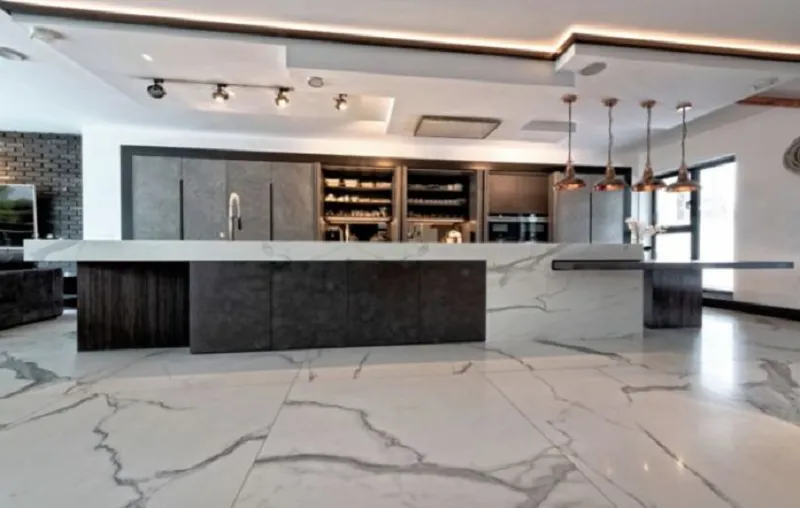

Picking new kitchen worktops is one of those decisions that feels simple until you actually stand in a stone yard staring at forty slabs of grey. Suddenly you're weighing up heat resistance, price per metre, and whether you can live with a surface that needs sealing once a year.
If you're renovating a UK kitchen in 2026, here's a proper, no-nonsense guide to the stone options worth considering and how to land on the one that actually suits how you cook, live, and entertain.
Why the Worktop Matters More Than You Think
Cabinets set the tone of a kitchen, but the worktop is what you touch, chop on, and lean against every single day. It's also one of the most expensive single elements of a kitchen refit, so getting it wrong is a costly mistake. Before you fall for a slab because it looks stunning under showroom lighting, think about your actual household:
- Do you bake often?
- Do teenagers leave wet glasses everywhere?
- Is this a forever-home kitchen or a five-year flip?
Quartz Worktops (The Practical Favourite)
If there's one material that keeps coming up in nearly every UK kitchen renovation conversation, it's quartz worktops. Engineered from crushed natural quartz bound with resin, quartz gives you around 90-95% of the look of natural stone with a fraction of the maintenance headache. It's non-porous, so it resists staining and bacterial growth without ever needing to be sealed a genuine advantage over granite or marble if you want a wipe-and-go surface.
Pricing in the UK typically sits somewhere between £250 and £600 per square metre installed, though budget ranges start lower and premium veined designs (think Calacatta-style patterns) can push well past £700 per metre. For a typical kitchen needing 3-5 linear metres of worktop, expect a total project cost somewhere in the £1,500-£4,000 bracket, fabrication and cut-outs included.
The one thing quartz doesn't love is direct, sustained heat. Resin isn't as heat-tolerant as pure stone, so trivets are still your friend even on a "practically indestructible" surface.
Granite (Old-School Toughness)
Granite has been the benchmark of hardwearing kitchen surfaces for decades, and for good reason. It's a genuinely tough natural stone, resistant to scratching and capable of taking a hot pan straight from the hob without flinching. Because it's quarried rather than manufactured, no two slabs are identical — which is either the whole appeal or a dealbreaker, depending on how much you like consistency.
The trade-off is porosity. Granite needs sealing on installation and then resealing roughly every one to three years depending on the specific stone, its finish, and how heavily the kitchen is used. Darker granites tend to be denser and less porous than lighter ones, so if low-maintenance matters to you, ask your supplier which colours in their range need the least attention.
Marble and Quartzite (The Beautiful Trade-Offs)
Marble is the material most people picture when they imagine a genuinely luxurious kitchen: a soft, veined, almost liquid pattern running through a slab. It's also naturally cool to the touch, which is why pastry chefs and keen home bakers love working directly on it. But marble is comparatively soft and porous. Acidic spills like lemon juice or wine can etch the surface, and it will need more frequent sealing and gentler day-to-day care than any other stone on this list.
Quartzite is often mistaken for marble because it shares that same elegant veining, but geologically the two are quite different. Quartzite forms from sandstone compressed under extreme heat and pressure, which makes it significantly harder and more scratch- and heat-resistant than marble, while still delivering a similar high-end look. It's increasingly the choice for homeowners who want the marble aesthetic without quite as much of the maintenance anxiety, though genuine quartzite still benefits from periodic sealing.
How to Actually Choose?
A few practical questions worth asking before you commit:
- How much daily wear will the worktop take? Busy family kitchens generally do better with quartz or granite.
- Do you want zero maintenance, or occasional resealing? If zero, quartz wins outright.
- Is budget or aesthetics the priority? Marble and quartzite sit at the premium end; quartz and granite offer more mid-range flexibility.
- Have you seen the actual slab? Stone varies between slabs; always view before you buy, especially for granite and marble.
Getting Expert Help
Choosing between these materials isn't something you need to figure out alone. Specialist stone fabricators such as Koliqi work with homeowners across the UK to source, template, and install natural and engineered stone worktops, offering guidance on which material genuinely suits a household's cooking habits rather than just pushing the most expensive slab in the showroom.
A good fabricator will also flag practical details (like which granite finishes hide watermarks best, or which quartz colours show scratches least) that you'd never think to ask about until you're living with the worktop.
At last, there's no single "best" kitchen worktop, only the best worktop for your kitchen, your budget, and your tolerance for maintenance. Quartz suits busy households wanting durability without fuss. Granite rewards those happy with occasional sealing in exchange for real heat resistance.
Marble and quartzite are for anyone chasing that natural, high-end look and willing to treat the surface with a bit more care. Visit a stone yard, take samples home, live with them in your actual kitchen light for a few days, and the right choice usually becomes obvious.






















Sign in to leave a comment.