
The Himalayas have a funny way of making you forget about your phone.
You start a trek thinking about photographs, messages and work. A few hours later, you're standing in an oak forest wondering why you ever thought scrolling through Instagram was a good use of your evening.
The Kuari Pass Trek is one of those Himalayan journeys.
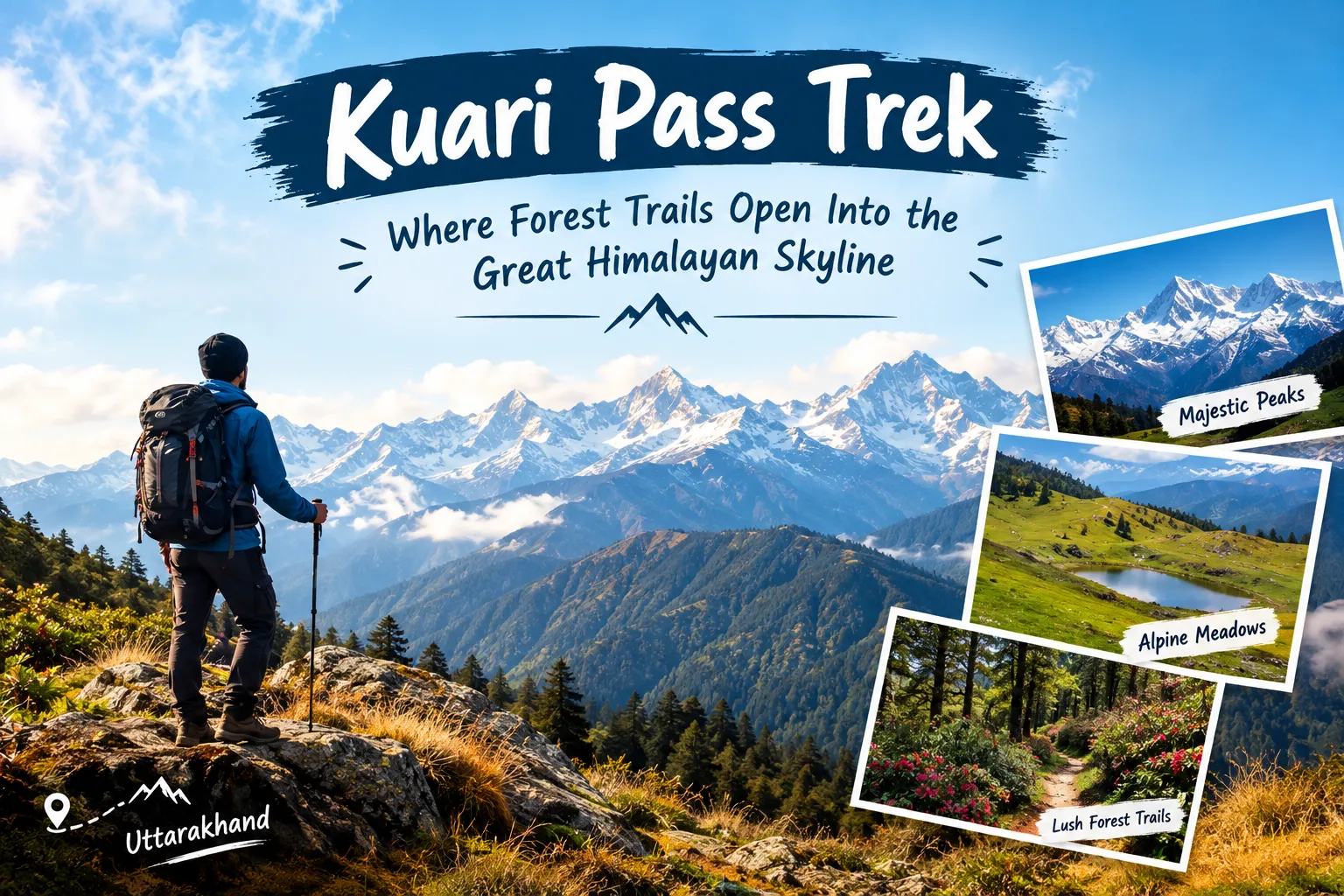
Located in Uttarakhand's Garhwal Himalayas, the trek combines oak and rhododendron forests, open meadows, ridge walks and impressive views of some of the region's best-known peaks.
The trail reaches about 12,516 feet (3,815 metres) at Kuari Pass on the commonly followed route. Himalayan Dream Treks currently classifies it as a moderate trek suitable for fit beginners, although the route includes steep sections and high-altitude terrain.
What makes Kuari Pass particularly attractive is the variety.
You don't spend the entire trek staring at the same landscape.
The trail changes from forest to meadow, from narrow mountain paths to open ridges, and finally to the high-altitude pass.
And then there are the mountains.
Nanda Devi, Dronagiri, Kamet, Chaukhamba, Trishul and other Himalayan peaks can appear across the skyline when weather conditions are clear.
What Is the Kuari Pass Trek?
Kuari Pass is a high-altitude trekking route in Uttarakhand's Garhwal Himalayas.
The name Kuari Pass is commonly associated with the historic Curzon Trail, named after Lord Curzon, who travelled through this region in the early 20th century. Today, trekkers follow established routes through forests, meadows and mountain ridges to reach the pass.
The trek is not famous because of one giant summit climb.
Instead, its attraction comes from the entire route.
You get forests.
You get meadows.
You get ridge walks.
And you get long views of the Greater Himalayas.
That's a pretty solid combination.
Kuari Pass Trek Height and Distance
The maximum altitude of the commonly followed Kuari Pass route is around 12,516 feet.
Himalayan Dream Treks currently lists the trek at around 22 km over four trekking days, while its detailed day-wise itinerary gives individual distances that add up to roughly this figure.
However, trekkers should be careful when comparing distance figures online.
Different operators use different starting points, campsites and approach routes. Some itineraries also include additional sections around Auli or Gorson Bugyal.
So don't book a trek simply because one website says “22 km” and another says a different number.
Look at the actual day-wise itinerary.
That tells you much more about the trek than one number on a booking page.
Kuari Pass Trek Route
A commonly followed modern route starts around Karchi/Dhak and finishes around Auli, with the route passing through forested areas, Khullara, Kuari Pass, Tali and Gorson Bugyal.
A current Himalayan Dream Treks itinerary follows:
Rishikesh → Dhak/Karchi → Akhrotghetta → Khullara → Kuari Pass → Tali → Auli → Dhak/Karchi → Rishikesh.
The exact route can change depending on the trekking company and weather.
That last part matters.
Rain and snowfall can affect trails, campsites and route accessibility, so a responsible trek operator may modify an itinerary when conditions become unsafe.
Kuari Pass Trek Itinerary
Day 1: Rishikesh to Dhak or Karchi
The journey begins with a long mountain drive from Rishikesh towards the trek's roadhead.
Himalayan Dream Treks currently lists the drive at approximately 255 km, taking around 9–10 hours on its itinerary. The base area is around 7,785 feet.
This is primarily a travel day.
Don't expect to arrive and immediately conquer the Himalayas.
The mountains prefer introductions.
You drive through the Garhwal region and gradually gain altitude before reaching the base area.
Day 2: Karchi to Akhrotghetta
The actual trek begins.
The route climbs through forested terrain towards Akhrotghetta.
Himalayan Dream Treks lists this section at around 2.75 km, with the trail climbing from approximately 7,785 feet to 9,264 feet.
The distance looks short.
The altitude gain tells a different story.
There is a steep section early in the trail, so this is a good reminder that Himalayan trekking cannot be judged only by kilometres.
A two-kilometre climb can feel very different from a two-kilometre walk around your neighbourhood.
The forest includes oak and other Himalayan trees, while Mt Dronagiri becomes an important visual feature along the route.
Day 3: Akhrotghetta to Khullara
The trail continues climbing through the forest towards Khullara.
Himalayan Dream Treks lists this section at about 2.5 km, reaching approximately 11,014 feet.
Oak forests dominate much of this section.
As you gain altitude, the mountain views become more prominent.
This is also when you begin to feel that the pass is getting closer.
And if you're trekking in colder months, the temperature becomes another part of the experience.
At this altitude, proper layering isn't optional fashion.
It's survival common sense.
Day 4: Khullara to Kuari Pass and Tali
This is the major day of the trek.
The trail climbs from Khullara towards Kuari Pass, reaching the maximum altitude of around 12,516 feet.
Himalayan Dream Treks lists this section at approximately 7.65 km and around 8–9 hours, depending on conditions and pace.
The climb is followed by a ridge walk and descent towards Tali.
This section provides some of the most dramatic mountain views of the trek.
From the ridge, trekkers can see peaks and ranges including Chaukhamba, Dronagiri, Trishul and Nanda Devi, subject to weather and visibility.
This is the day when the camera gets more attention than usual.
Just remember to actually look at the mountains too.
The camera roll will survive without another 47 photographs of the same peak.
Day 5: Tali to Auli
The final trekking section takes you towards Auli.
Himalayan Dream Treks lists this day at approximately 8.1 km, followed by a short drive back towards the roadhead.
The trail includes Tali Lake, an ascent towards the Gorson Bugyal area and a descent through forest.
The scenery changes again.
After spending days among forests and high ridges, the open meadow landscape around Gorson adds another visual dimension to the route.
Day 6: Return to Rishikesh
The final day is mainly the return journey.
After the trek, the group drives back towards Rishikesh.
Your legs may be tired.
Your clothes may have collected enough dust to qualify as geological samples.
But the views will probably stay with you for much longer.
How Difficult Is the Kuari Pass Trek?
The Kuari Pass Trek difficulty is generally rated moderate.
Himalayan Dream Treks currently describes it as a moderate trek suitable for fit beginners. However, that doesn't mean it is effortless.
The route includes steep climbs, descents, altitude gain and some narrow sections.
One notable challenge comes during the ascent from Karchi towards the higher camps. Himalayan Dream Treks notes an approximately 1,500-foot climb over the first 2.75 km on its current itinerary.
Another section near Gorson Bugyal can become tricky because of the narrow trail and changing weather.
Snow and rain can also change the trail conditions.
So the right question isn't simply:
“Is Kuari Pass easy?”
A better question is:
“Am I fit enough to handle several hours of uphill and downhill walking at altitude?”
If the answer is yes, proper preparation can make the experience much more manageable.
Is Kuari Pass Suitable for Beginners?
Kuari Pass can be a good option for fit beginners who have some basic trekking preparation.
But beginners should not confuse “moderate” with “easy.”
You will still gain substantial altitude.
You will walk for several hours on some days.
And weather can make the route harder.
A few weeks of regular walking, jogging or stair climbing can help prepare your legs and lungs.
Strengthening your calves, thighs and core can also help with uneven mountain terrain.
The goal isn't to become an Olympic athlete before the trek.
The goal is to arrive with enough fitness that the mountain remains enjoyable instead of becoming a personal argument between your lungs and your legs.
Best Time for Kuari Pass Trek
Kuari Pass offers a different experience in different seasons.
Himalayan Dream Treks currently lists the trek as accessible for much of the year outside the peak monsoon months of July and August, with winter, spring, summer and autumn offering distinct experiences.
Kuari Pass in Winter
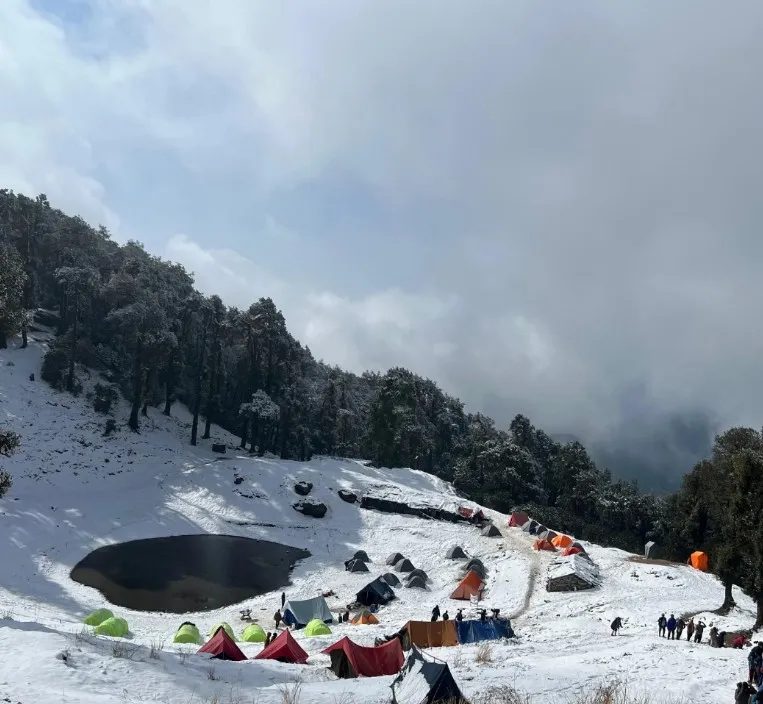
Winter brings snow to the higher sections.
The forests, meadows and mountain ridges can take on a completely different appearance.
But snow also increases the difficulty.
Frozen streams can become slippery, trails can become harder to identify and cold winds can make exposed sections uncomfortable.
So winter trekking requires proper clothing, footwear and preparation.
Kuari Pass in Spring
Spring brings a gradual change to the landscape.
The forests become livelier, and rhododendrons can add colour to the route.
The higher areas may still hold snow depending on the season and weather.
Spring is also attractive for trekkers who want a mixture of snow and emerging greenery.
Kuari Pass in Summer
Summer offers greener landscapes and generally more comfortable conditions than winter.
The meadows become an important part of the visual experience, while the high mountain views remain a major attraction when the weather is clear.
Kuari Pass in Autumn
Autumn is popular for mountain views and clear landscapes.
The monsoon has passed, and the trail can offer crisp Himalayan scenery.
Himalayan Dream Treks currently lists September and October among its recommended seasonal windows.
Kuari Pass Trek Weather
Mountain weather doesn't follow your Google Calendar.
Conditions can change quickly.
Rain can make forest trails slippery.
Snow can cover existing tracks.
Fog can reduce visibility.
Strong winds can make exposed ridges uncomfortable.
Himalayan Dream Treks notes that snowfall and prolonged rainfall can affect the route and may require itinerary changes.
That's why you should check current weather and trail conditions before leaving.
And always listen to your trek leader when weather conditions become unsafe.
A summit is never more important than returning safely.
What Are the Major Attractions on the Kuari Pass Trek?
The scenery is the biggest attraction.
But the trek offers several different highlights.
Himalayan Mountain Views
Kuari Pass is especially known for views towards major Garhwal Himalayan peaks.
Depending on weather and location, trekkers can see Nanda Devi, Dronagiri, Kamet, Chaukhamba, Trishul and other peaks.
Oak and Rhododendron Forests
The lower and middle sections pass through Himalayan forests.
These forest sections provide shade, changing scenery and a very different experience from the open ridges above.
Khullara
Khullara is one of the important campsites on the commonly followed route.
From here, the trail heads towards the high ridge and Kuari Pass.
Gorson Bugyal
Gorson Bugyal adds another wide-open meadow landscape to the route.
The contrast between forest and meadow is one of the trek's biggest strengths.
Tali
Tali offers a memorable forest-and-meadow setting and acts as an important campsite on the route.
The area around Tali also connects the high trail towards Gorson Bugyal and Auli.
How to Reach Kuari Pass
Most organised trekking itineraries use Rishikesh as the transport starting point before driving towards the roadhead.
On the current Himalayan Dream Treks route, trekkers travel from Rishikesh to Dhak/Karchi, with the drive taking around 9–10 hours.
Travellers coming from Delhi can first reach Rishikesh by road or rail and then continue towards the trek's starting point.
Because road conditions and operator pick-up points can change, check the latest instructions from your trekking company before departure.
Kuari Pass Trek Packing List
Your packing should change according to the season.
However, some basics remain useful:
- Good trekking shoes with strong grip
- Warm layers
- Waterproof jacket or rain protection
- Trekking trousers
- Woollen socks
- Gloves
- Warm cap
- Sunglasses
- Sunscreen
- Headlamp
- Personal medicines
- Reusable water bottles
- Basic toiletries
- Small daypack
For winter, add suitable protection against snow and freezing temperatures.
Don't overpack.
You don't need to carry your entire bedroom into the Himalayas.
But don't underpack either.
The mountain has very little interest in your minimalist lifestyle.
Responsible Trekking on the Kuari Pass Trail
Beautiful Himalayan trails need responsible visitors.
Carry your waste back.
Avoid throwing plastic along the trail.
Stay on established paths where possible.
Don't damage plants or disturb wildlife.
Respect local villages and communities.
And avoid making unnecessary noise in quiet mountain areas.
The goal isn't just to complete the trek.
It's to leave the trail in good condition for the people who walk it after you.
Kuari Pass Trek With Himalayan Dream Treks
For travellers who prefer organised trekking, a Kuari Pass Trek package by Himalayan Dream Treks (HDT) can be an option for exploring the route with planned trek support.
When comparing packages, don't look only at the headline price.
Check the actual itinerary, transportation, meals, accommodation, guide support, equipment, permits and exclusions.
Most importantly, compare the route.
A lower price doesn't automatically mean a better deal, and a higher price doesn't automatically mean better service.
The details matter.
Is Kuari Pass Trek Worth It?
For trekkers who want a combination of forests, meadows, ridge walking and major Himalayan views, Kuari Pass is a strong choice.
It doesn't rely on one attraction.
The entire route contributes to the experience.
You start among forests.
You climb towards open terrain.
The mountains become larger as you gain altitude.
Then you reach Kuari Pass and stand among some of the most impressive peaks of the Garhwal Himalayas.
That progression is what makes the trek special.
Kuari Pass also offers a useful balance for trekkers who want a serious Himalayan experience without choosing an extreme technical climb.
But preparation still matters.
The pass reaches more than 12,000 feet, and weather can change quickly.
Train beforehand, pack according to the season and respect the mountain conditions.
Because the Himalayas don't care how many trekking reels you've watched.
Kuari Pass Trek: Quick Facts
| Detail | Information |
|---|---|
| Location | Garhwal Himalayas, Uttarakhand |
| Maximum altitude | About 12,516 ft |
| Difficulty | Moderate; suitable for fit beginners on established routes |
| Common trek duration | Around 6 days including travel |
| Trekking distance | Around 22 km on the commonly followed route |
| Main starting area | Dhak/Karchi |
| Major areas | Akhrotghetta, Khullara, Kuari Pass, Tali, Gorson Bugyal and Auli |
| Main attractions | Himalayan views, forests, meadows and ridge walks |
| Famous mountain views | Nanda Devi, Dronagiri, Kamet, Chaukhamba, Trishul and others |
| Peak monsoon caution | July and August |
| Best seasons | Varies by experience desired; winter, spring, summer and autumn each offer different conditions |























Sign in to leave a comment.