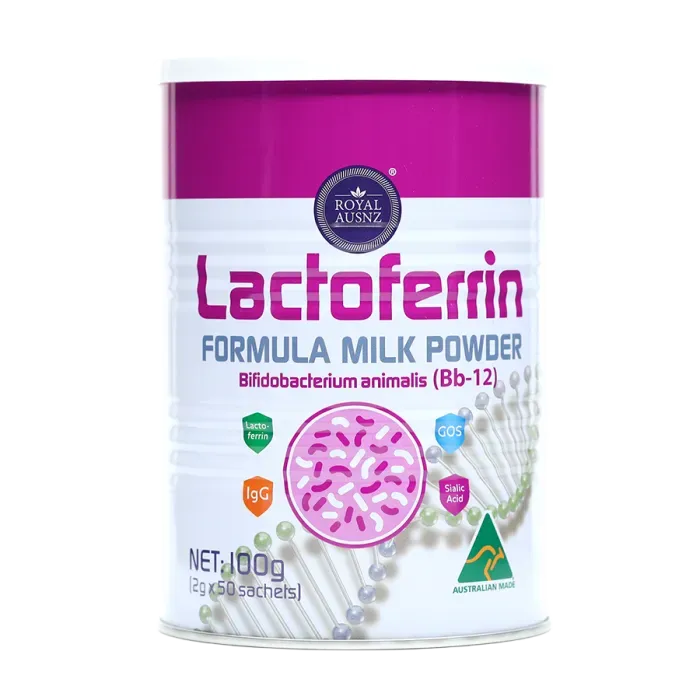

When I first heard the word "lactoferrin" from another mom at a playgroup, I nodded along like I knew exactly what she was talking about. I didn't. I went home and spent way too long googling it, sifting through research papers that were way over my head, trying to figure out if this was something worth caring about or just another buzzword on a formula tin.
Turns out, it's worth caring about. But it took a while to get past the jargon and find answers that actually made sense. So here's the version I wish someone had just told me straight — the real questions parents ask, answered plainly.
"Is lactoferrin some kind of additive, or is it natural?"
Completely natural. Lactoferrin is a protein that's already present in milk — it's not something synthesized in a lab and added artificially. It's especially concentrated in colostrum, that very first milk babies get right after birth, which is often described as nature's own immune boost. When it's added to formula, it's essentially being reintroduced or concentrated back to levels closer to what's found in breast milk.
"What does it actually do for my baby?"
In simple terms, lactoferrin has a hand in three main areas:
- Immune support — it interacts with the immune system in ways that help support the body's natural defenses, which matters a lot in the early months when babies are exposed to new environments, people, and germs constantly.
- Gut health — it helps shape a healthier balance of bacteria in the gut, which is why it's often paired with probiotics in modern formulas.
- Iron handling — instead of just dumping iron into the system, lactoferrin binds to it and helps the body use it more efficiently, which is gentler on a baby's developing digestive system.
"Why is it paired with probiotics so often?"
Because they work as a team rather than solo. Lactoferrin helps create a more balanced gut environment, and probiotics — like the commonly used strain Bifidobacterium animalis (BB-12) — add beneficial bacteria into that environment. Individually they're both useful; together, the idea is that they reinforce each other.
"Do I need to switch formulas immediately if mine doesn't have it?"
No, not necessarily. Standard infant formula is designed to meet a baby's core nutritional needs on its own. Lactoferrin-enriched formula is more about added support, not a requirement. If your baby is thriving on their current formula, there's no urgent need to switch just because a different tin has a trendier ingredient list. That said, if you're already formula shopping, comparing, or your baby seems to need extra digestive or immune support, it's a reasonable thing to bring up with your pediatrician.
"What should I actually check before buying one?"
A few practical things:
- Where the milk is sourced from — countries with strict dairy and food safety regulations (Australia and New Zealand come up a lot in this space) tend to be a safer bet.
- The format that fits your life — pre-measured sachets (like 2g x 50 packs) are convenient for travel or daycare, while a larger tin is usually more practical for everyday home use.
- A clear feeding guide — legitimate products always come with proper preparation instructions and a real nutrition panel, not just marketing copy.
"Is this just a trend that'll fade out?"
Doesn't look like it. Lactoferrin has been studied for decades, and its role in milk isn't new — what's new is how accessible it's become in commercial formula. Unlike a lot of nutrition trends that come and go, this one is rooted in something that's always been part of how mammals naturally nourish their young. It's less "new discovery" and more "finally figured out how to bottle it."
The Real Takeaway
You don't need a science degree to make a good choice here — you just need to know what to look for and why it matters. Lactoferrin formula isn't about chasing the newest thing on the shelf; it's about giving your baby something closer to what nature already intended, with a little modern convenience built in. And if you're ever unsure, your pediatrician is always going to be the best resource for what's right for your specific baby.
Sometimes the best parenting move isn't finding the "perfect" answer — it's just understanding enough to make a confident one.



























Sign in to leave a comment.