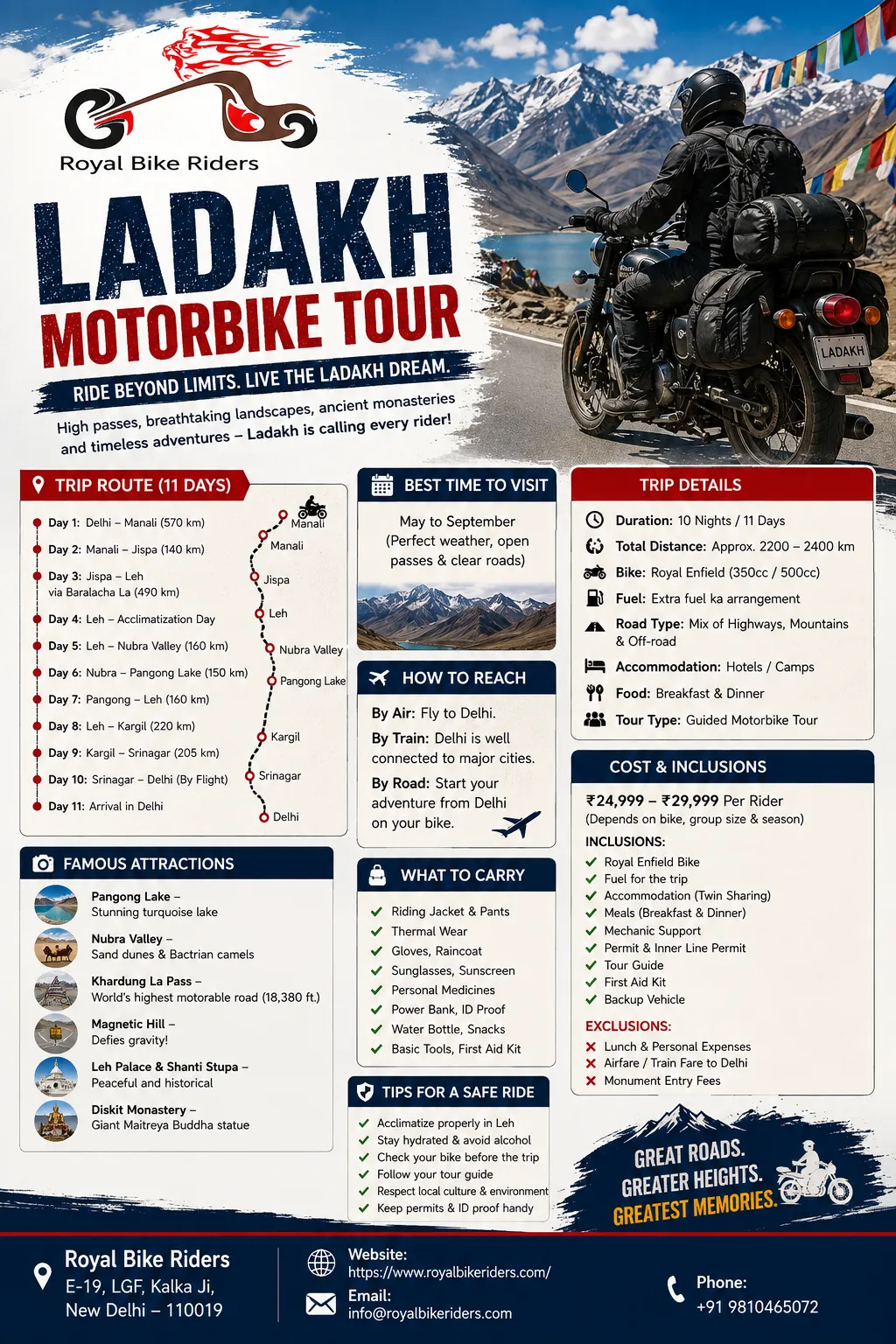

There's a particular kind of quiet that settles in once you cross Khardung La or round a bend and see Pangong Tso open up in front of you. No brochure photo prepares you for it, and no highway ride back home compares to it either. A Ladakh motorbike tour isn't just another entry on a travel bucket list; it's a genuine test of grit, planning, and patience that ends with some of the most rewarding riding memories you'll ever collect.
This guide breaks down exactly what a Ladakh motorbike tour involves, from choosing the right season and route to sorting permits, packing correctly, and staying safe at altitude. We'll also look at why more riders are choosing to travel with an experienced operator like Royal Bike Riders rather than piecing the trip together entirely on their own.
What Exactly Is a Ladakh Motorbike Tour?
At its core, a Ladakh motorbike tour is a multi-day ride through the high-altitude region of Ladakh in northern India, typically covering Leh, Nubra Valley, Pangong Tso, and a mix of mountain passes connected by the Manali or Srinagar highways. Unlike a typical road trip, this journey involves riding at altitudes that can exceed 17,000 feet, crossing unbridged rivers, and navigating stretches where the nearest town might be hours away.
It's this combination of remoteness, scenery, and physical challenge that makes Ladakh so different from anywhere else you might have ridden. Riders come back describing it less as a holiday and more as an experience that reshapes how they think about travel altogether.
Why Riders Keep Coming Back to Ladakh
Ask anyone who's done a Ladakh bike tour more than once, and they'll usually struggle to pin down a single reason they returned. It's rarely just one thing.
- The scenery shifts constantly. Within hours, you can go from green valleys to barren cold deserts to snow-covered passes.
- The roads carry a certain reputation. Khardung La, Chang La, and Baralacha La are names riders talk about long before they ever get there.
- It's a genuine personal challenge. Handling thin air, rough terrain, and unpredictable weather builds a kind of confidence that's hard to replicate elsewhere.
- The culture adds another layer entirely. Buddhist monasteries perched on cliffs, Ladakhi hospitality, and a noticeably slower pace of life offer a contrast to the physical demands of the ride.
Whether it's your first big tour or your fifth trip north, a Ladakh motorbike tour tends to leave a mark that few other rides manage.
When to Plan Your Ladakh Motorbike Tour
Ladakh's riding season is short and dictated almost entirely by snow. Getting the timing right matters more here than on nearly any other route in India.
The Riding Window: June to September
- June sees most high passes reopening after winter, though patches of snow can still linger, particularly on Khardung La and Baralacha La.
- July and August mark peak season, with roads fully open and infrastructure running at full capacity. Ladakh sits in the rain shadow of the Himalayas, so while the rest of India deals with monsoon, this region stays comparatively dry, though occasional cloudbursts can still affect the Manali route.
- September is a favourite among riders who've done the trip before. Crowds thin out, the light turns golden in the evenings, and the roads are generally drier, though nights get considerably colder.
Why the Rest of the Year Doesn't Work
Outside this four-month window, most high passes close due to snow, and the few operators still running trips typically rely on specially equipped vehicles rather than standard motorcycles.
Choosing Your Route Into Ladakh
There's no single correct way to ride into Ladakh. Most riders pick between two classic highways, or combine both into a loop.
Manali to Leh
Shorter in distance but tougher in terrain, this route runs through Rohtang Pass (or the Atal Tunnel bypass), Baralacha La, and the striking Moore Plains. Long stretches sit above 13,000 feet, and fuel or food stops can be far apart.
Srinagar to Leh
Generally considered the gentler entry point, this highway passes through Sonamarg, Zoji La, Kargil, and the dramatic Moon Land near Lamayuru. Roads here tend to be better maintained, making it a sensible choice for easing into high-altitude riding.
The Complete Loop
Most experienced riders enter via one highway and exit through the other, adding detours to Nubra Valley and Pangong Tso along the way. This full circuit is generally what people picture when planning a complete Ladakh motorbike tour.
Key Stops on Every Ladakh Itinerary
Leh Town
The natural base for the entire trip, sitting at roughly 11,500 feet, and where most riders spend at least a day acclimatising before heading higher.
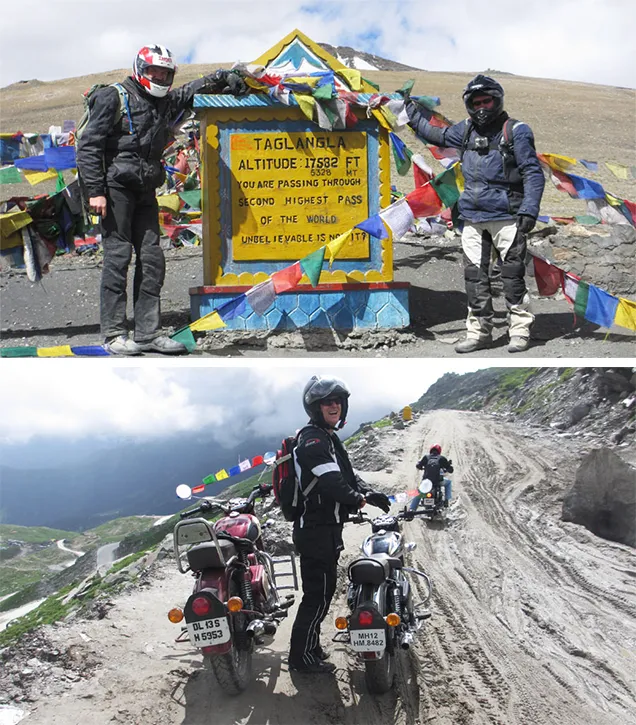
Khardung La
Long promoted as one of the highest motorable passes in the world, this remains a rite of passage for anyone heading toward Nubra Valley.
Nubra Valley
Sand dunes, double-humped Bactrian camels, and the monasteries of Diskit and Hunder make this valley feel like an entirely different landscape from the rest of Ladakh.
Pangong Tso
The lake famous for shifting colour throughout the day, from deep blue to green to grey, remains one of the most photographed stops on the entire route.
Tso Moriri
Quieter and less visited than Pangong, this high-altitude lake rewards riders willing to take the extra detour with a noticeably calmer experience.
Magnetic Hill and the Moon Land of Lamayuru
An optical illusion that appears to pull vehicles uphill, paired with an eroded, barren landscape that genuinely resembles the surface of the moon.
Monasteries of Leh
Thiksey, Hemis, and Shey monasteries offer a cultural counterbalance to the rugged terrain, built into cliffsides with centuries of Buddhist history behind them.
Motorcycle and Riding Requirements
Not every motorcycle belongs on Ladakh's roads, and not every rider should attempt this trip without adequate preparation.
Picking the Right Bike
Royal Enfield's Himalayan and Classic 350 remain the most common choices among riders, largely because of their long-travel suspension, low-end torque, and the widespread service network along the route. Adventure bikes like the Himalayan 450 or KTM's Adventure range suit riders who want more off-road capability. Whatever you ride, insist on a thorough mechanical check before departure, since brakes, chains, tyres, and clutch cables take a serious beating on these roads.
Riding Skill and Physical Readiness
This isn't a beginner's trip. Riders should be comfortable handling long daily riding stints, often six to eight hours, along with river crossings, loose gravel, and the general fatigue that comes with riding at high altitude.
Permits and Documents for a Ladakh Bike Tour
Permit requirements in Ladakh have shifted in recent years, so it's worth confirming the latest rules close to your travel dates.
- Indian citizens generally no longer need a separate Inner Line Permit for most of Ladakh, including Nubra Valley, Pangong Tso, and Tso Moriri. Instead, travellers pay a Ladakh Environment/Development Fee online through the official portal and carry proof of payment, which may be checked at certain checkpoints.
- Foreign nationals typically still require a Protected Area Permit for restricted border zones, usually arranged through a registered travel agency.
- Carry your driving licence, vehicle registration certificate, insurance, and pollution certificate at all times, since these are checked frequently at police and army checkpoints.
- Riders on a rented motorcycle should carry a copy of the rental agreement along with an authorisation letter from the owner.
Booking through an experienced operator like Royal Bike Riders typically means permits and paperwork are handled well in advance, saving considerable time and stress once you're on the road.
Handling Altitude and Ladakh's Unpredictable Weather
This is the part of a Ladakh motorbike tour that catches even seasoned riders off guard.
Acute Mountain Sickness
Leh sits at roughly 11,500 feet, and several passes on the standard route exceed 17,000 feet. AMS can affect anyone regardless of fitness level, with symptoms including headaches, nausea, dizziness, and breathlessness.
- Spend at least one full day acclimatising in Leh before heading to higher altitude.
- Avoid alcohol and heavy meals during the first 24 to 48 hours.
- Stay hydrated and ascend gradually rather than jumping straight to the highest points on your route.
Sudden Weather Changes
Temperatures can swing from pleasant daytime sun to near-freezing conditions within hours, particularly on passes like Chang La or Baralacha La. Riders should carry layered clothing and rain gear regardless of what the forecast says that morning.
What to Pack for a Ladakh Motorbike Tour
Riding Gear
A full-face helmet, riding jacket and pants with armour, gloves, and waterproof riding boots are essential, along with thermal base layers for cold mornings and high passes.
Personal Essentials
Sunscreen, lip balm, and sunglasses or riding goggles help manage intense UV exposure at altitude, alongside a basic first-aid kit, any personal medication, and a consultation with your doctor about Diamox for altitude sickness prevention.
Practical Extras
Cash in smaller denominations is important, since ATMs are limited outside Leh. A basic tool kit, puncture repair kit, spare clutch and brake cables, a power bank, and enough snacks and water for long stretches without dhabas round out a solid packing list.
Safety Tips for a Ladakh Bike Tour
- Never ride alone on remote stretches if you can help it. A riding partner or group adds a real safety margin in case of breakdowns.
- Check fuel levels constantly. Petrol pumps are widely spaced, so top up whenever you get the chance rather than waiting until the tank runs low.
- Ride slowly through gravel, slush, and river crossings, where speed is consistently the biggest risk factor.
- Respect army and border checkpoints, and be mindful of photography restrictions in sensitive areas.
- Watch fellow riders for early signs of altitude sickness, particularly during the first two days after arriving in Leh.
- Avoid riding after dark. Poor visibility and unmarked road edges make night riding genuinely risky in this terrain.
How to Plan Your Ladakh Motorbike Tour
- Decide your entry and exit points, whether that's Manali, Srinagar, or a full loop combining both.
- Block at least 10 to 14 days, including acclimatisation days and buffer time for potential weather delays.
- Book your motorcycle and accommodation well ahead of peak season, especially for July and August travel dates.
- Sort your permits and documents early instead of leaving it to sort out in Leh.
- Build in rest days at Leh and Nubra Valley rather than pushing your body too hard, too quickly.
- Have a backup plan ready for weather disruptions, since landslides and snow can close passes with little warning.
If managing all of this feels like a lot to coordinate on your own, joining a guided group ride removes most of the guesswork.
Why Choose Royal Bike Riders for Your Ladakh Motorbike Tour
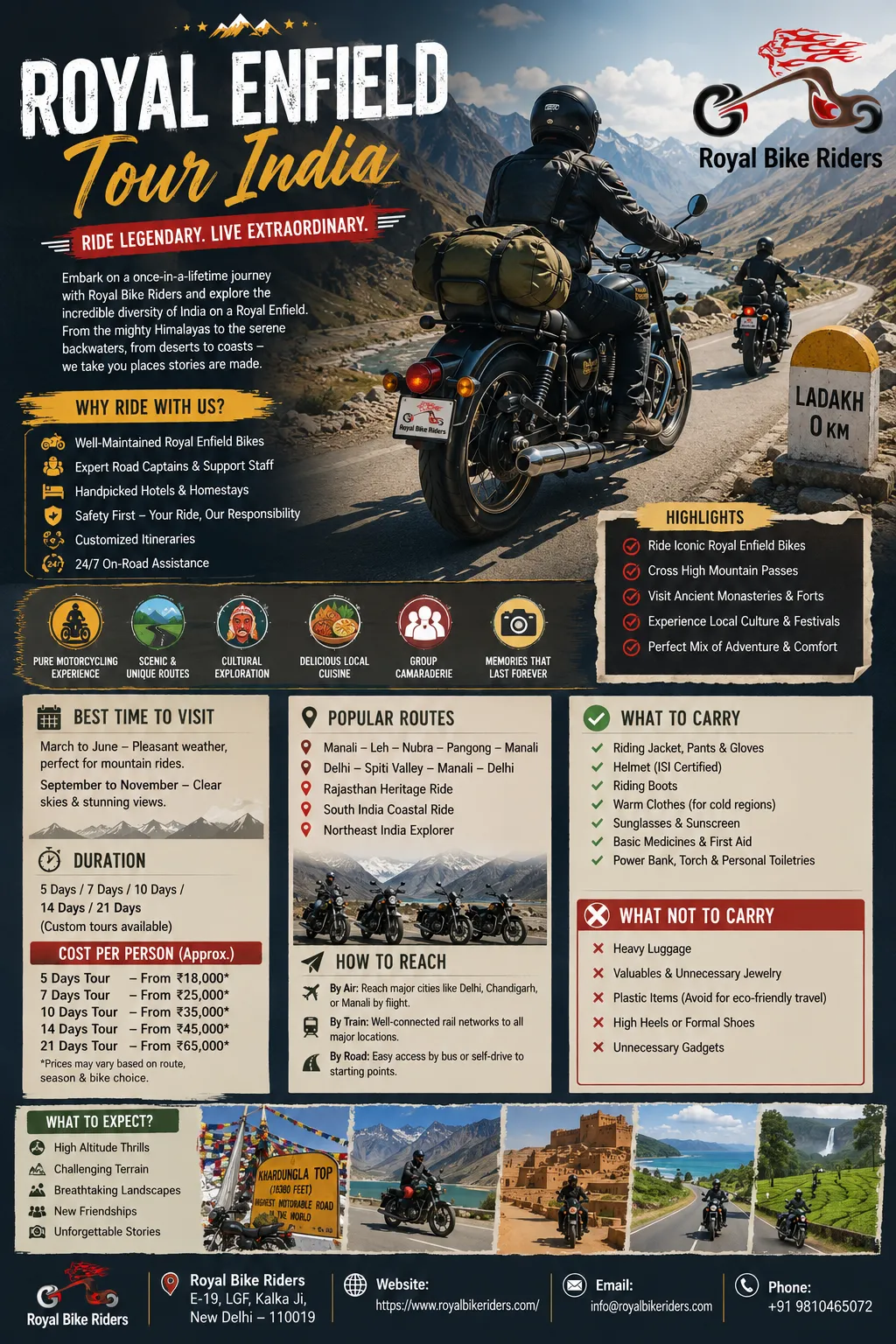
Planning an independent Ladakh motorbike tour is entirely possible, but there's plenty that can go wrong: mechanical trouble in remote areas, permit confusion, or simply misjudging how demanding the altitude really is. This is where Royal Bike Riders makes a genuine difference.
- Well-maintained motorcycles suited to Ladakh's terrain, checked thoroughly before every departure
- Experienced ride leaders who understand the route, seasonal weather patterns, and proper acclimatisation pacing
- Permit and documentation support, so you're not stuck at a checkpoint sorting paperwork mid-ride
- Backup vehicles and mechanical support for breakdowns or emergencies on isolated stretches
- Thoughtfully structured itineraries that balance riding time with rest, sightseeing, and acclimatisation
Riders who've completed a Ladakh motorbike tour with Royal Bike Riders often point out how much smoother the experience felt compared to going it alone, not because the terrain gets any easier, but because the safety net and local knowledge are already built in.
Conclusion
A Ladakh motorbike tour asks a lot from you: early starts, thin air, long riding days, and constantly shifting weather. But it gives back in equal measure, rewarding riders with landscapes and moments that are genuinely hard to find anywhere else. Whether you plan your own route or join a structured group with Royal Bike Riders, the fundamentals stay the same: the right motorcycle, the right gear, sorted permits, and realistic expectations about altitude and weather. Get those right, and the road takes care of the rest.
Frequently Asked Questions
1. What is the best time for a Ladakh motorbike tour? The ideal window runs from mid-June to mid-September, when most high passes are open and weather conditions are relatively stable.
2. How many days does a Ladakh bike tour usually take? Most riders need 10 to 14 days to comfortably cover the Manali-Leh-Srinagar loop along with side trips to Nubra Valley and Pangong Tso, including acclimatisation time.
3. Which motorcycle is best suited for a Ladakh motorbike tour? Royal Enfield's Himalayan and Classic 350 remain the most popular choices due to reliability and widespread service availability, though adventure bikes suit experienced off-road riders well too.
4. Do Indian citizens need a permit for Ladakh? Most areas no longer require a separate Inner Line Permit for Indian citizens, though you'll need to pay the Ladakh Environment/Development Fee online and carry the receipt.
5. Do foreign tourists need special permits to ride in Ladakh? Yes, foreign nationals typically require a Protected Area Permit for restricted zones, usually arranged through a registered travel agency or tour operator.
6. Is a Ladakh motorbike tour safe for someone with no high-altitude riding experience? It's possible with proper preparation, but riders should acclimatise carefully, pace themselves, and ideally travel with a group or guided operator for added safety.
7. What's the biggest health risk during a Ladakh bike tour? Acute Mountain Sickness is the most common concern, and gradual ascent along with adequate rest days significantly reduces the risk.
8. Which route is better for entering Ladakh, Manali or Srinagar? The Srinagar route offers a gentler altitude gain and generally smoother roads, while the Manali route is shorter but more physically demanding.
9. What should I pack for a Ladakh motorbike tour? Full riding gear, thermal layers, sunscreen, a basic first-aid kit, a power bank, and enough cash are all essential, since ATMs are scarce outside Leh.
10. Why book a Ladakh motorbike tour with Royal Bike Riders instead of riding independently? Royal Bike Riders provides well-maintained motorcycles, experienced ride leaders, permit assistance, and mechanical backup, which significantly reduces the risks that come with planning an independent expedition.
Royal Bike Riders
E-19, LGF, Kalka Ji, New Delhi – 110019
Website: https://www.royalbikeriders.com/
Email: [email protected]
Phone: +91 9810465072





















Sign in to leave a comment.