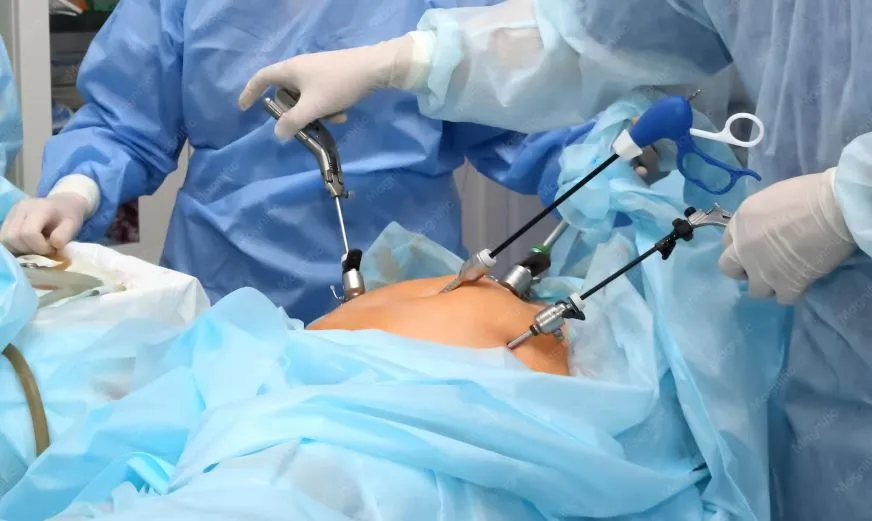

A hernia occurs when tissue or part of an organ pushes through a weakened area in the surrounding muscle or connective tissue. Hernias commonly develop in the groin, abdomen, or around the belly button and may cause a visible bulge, discomfort, or pain, particularly when coughing, lifting, or straining.
For suitable patients, laparoscopic hernia repair is a minimally invasive surgical approach that uses small incisions and a camera to access and repair the affected area. If you are considering Laparoscopic Surgery in Dubai, understanding how laparoscopic hernia repair works, its potential benefits, recovery process, and possible risks can help you have a more informed discussion with your surgeon.
What Is Laparoscopic Hernia Repair?
Laparoscopic hernia repair, also called keyhole surgery, is a technique used to repair certain types of hernias through several small incisions rather than one larger incision.
During the procedure, the surgeon inserts a laparoscope, a thin instrument with a camera, through one of the small incisions. The camera provides a view of the inside of the abdomen while specialized surgical instruments are introduced through additional openings.
The hernia is repositioned, and the weakened area is usually reinforced with surgical mesh or, in selected cases, repaired using sutures. The exact technique depends on the type, location, size, and characteristics of the hernia.
What Types of Hernias Can Be Repaired Using Laparoscopic Surgery?
Laparoscopic techniques may be considered for several types of hernias, depending on the individual patient's condition and the surgeon's assessment.
These can include:
- Inguinal hernias
- Femoral hernias
- Some umbilical hernias
- Certain ventral or abdominal wall hernias
- Recurrent hernias in selected cases
Not every hernia is suitable for a laparoscopic approach. Previous abdominal surgery, the size and location of the hernia, the patient's overall health, and other factors may influence which surgical technique is appropriate.
How Does Laparoscopic Hernia Repair Work?
Although the exact technique varies, the procedure generally involves several stages.
1. Anaesthesia
Laparoscopic hernia repair is generally performed under general anaesthesia, meaning the patient is asleep during the procedure.
2. Small Incisions
The surgeon makes a few small incisions in the abdomen to allow the laparoscope and surgical instruments to be inserted.
3. Examination of the Hernia
The camera provides a magnified view of the abdominal area, allowing the surgeon to identify the hernia and surrounding structures.
4. Repair of the Weak Area
The hernia is returned to its appropriate position, and the weakened area is reinforced. Mesh is commonly used in many laparoscopic hernia repairs, although the approach depends on the individual case.
5. Closing the Incisions
After the repair is completed, the instruments are removed and the small incisions are closed.
What Are the Potential Benefits of Laparoscopic Hernia Repair?
The potential benefits depend on the type of hernia and the individual patient. Compared with some open surgical approaches, laparoscopic repair uses smaller abdominal incisions.
Potential advantages may include:
- Smaller incisions
- Less disruption to surrounding tissues
- Reduced wound size
- Earlier return to light activities in some patients
- Ability to assess certain areas of the abdominal wall through the laparoscopic view
However, laparoscopic surgery is not automatically the best option for every patient. The choice between laparoscopic and open repair should be based on the patient's condition, the type of hernia, previous surgeries, and the surgeon's clinical assessment.
What Can Patients Expect After Surgery?
Some discomfort, bruising, swelling, or tenderness around the surgical sites can occur after laparoscopic hernia repair. Some patients may also experience temporary shoulder discomfort because of the gas used during laparoscopic surgery.
Many laparoscopic hernia repairs are performed as day-case procedures, although the length of hospital stay depends on the procedure and the patient's individual circumstances.
Your surgeon will provide specific instructions regarding wound care, medication, physical activity, driving, and returning to work.
How Long Does Recovery Take?
Recovery varies from person to person and depends on the type and complexity of the hernia repair, the surgical technique used, and the individual's overall health.
Light activity and walking are generally encouraged during recovery, while strenuous activity and heavy lifting should be avoided until the surgical team confirms that it is safe to resume them. Return-to-work recommendations can also vary depending on whether your job involves office work or physical labour.
Rather than following a fixed recovery timeline, patients should follow the specific instructions provided by their surgeon.
Are There Risks Associated with Laparoscopic Hernia Repair?
As with any surgical procedure, laparoscopic hernia repair carries potential risks. These can include infection, bleeding, pain, swelling, difficulty passing urine, injury to nearby structures, blood clots, or recurrence of the hernia. Some patients may experience persistent groin pain or numbness following inguinal hernia repair.
In some circumstances, it may also be necessary to change from a laparoscopic approach to open surgery during the procedure. Your surgeon should discuss the potential risks and alternatives with you before surgery.
When Should You See a Doctor About a Hernia?
A hernia should be assessed by a qualified medical professional, particularly if you notice a new or growing lump, persistent discomfort, or pain in the abdomen or groin.
Urgent medical assessment is important if a hernia becomes associated with severe or worsening pain, significant abdominal swelling, persistent vomiting, or other symptoms that could indicate complications.
Choosing Laparoscopic Surgery in Dubai
If you are looking for Laparoscopic Surgery in Dubai, the first step is to have your condition assessed by an experienced surgeon. The appropriate surgical approach depends on factors such as the type and location of the hernia, its size, your medical history, previous abdominal procedures, and your overall health.
HealthBay provides specialist medical care in Dubai, with its current medical team including consultants offering advanced laparoscopic and minimally invasive surgery as well as hernia surgery and abdominal wall reconstruction.
A consultation allows the surgeon to evaluate your symptoms, determine whether surgery is appropriate, and discuss the available surgical options based on your individual condition.
Conclusion
Laparoscopic hernia repair is a minimally invasive technique that can be used to treat selected types of hernias. The procedure involves small incisions, a camera-assisted surgical approach, and reinforcement of the weakened area when appropriate.
While laparoscopic surgery can offer advantages for suitable patients, it is not appropriate for every hernia or every patient. A detailed evaluation by a qualified surgeon is important before deciding which surgical approach is right for you.
If you are considering Laparoscopic Surgery in Dubai for hernia treatment, consult a specialist to understand your diagnosis, treatment options, expected recovery, and potential risks.
























Sign in to leave a comment.