

A lawn rarely stays in the same condition for long. One week it may require frequent mowing because of rainfall, while a period of heat can slow growth considerably. Areas beneath trees may behave differently from sections exposed to full sunlight, and frequently used parts of the yard can develop wear even when the rest of the lawn looks healthy.
For homeowners and property managers comparing lawn care services toronto, the important question is not simply how often the grass can be cut. It is how the entire maintenance routine should respond to the property's conditions.
A consistent lawn routine can include mowing, trimming, edging, observation, and seasonal adjustments.
A Lawn Maintenance Plan Starts With Observation
Before deciding how frequently a lawn should be maintained, look at the property itself.
Important factors include:
- Lawn size
- Grass type
- Sunlight
- Shade
- Soil condition
- Irrigation
- Foot traffic
- Nearby trees
- Garden borders
- Property use
Two neighbouring lawns can require different maintenance schedules even when they are similar in size.
One may receive regular rainfall and direct sunlight, while the other may be partially shaded and grow more slowly.
This is why a property-specific approach can be more useful than a standard schedule.
Mowing Is About Consistency
The main purpose of mowing is to keep grass at a manageable height.
However, mowing should not simply be delayed until the lawn becomes significantly overgrown.
When grass is allowed to grow too tall, removing a large amount at once can create a less consistent appearance and may place additional stress on the lawn.
Regular mowing helps maintain a more predictable growth pattern.
The exact frequency can change according to weather and seasonal growth.
What Happens When Rainfall Increases?
Rain can significantly change lawn growth.
During periods of regular rainfall, grass may grow faster and require more frequent mowing.
If the lawn remains wet, however, mowing conditions also need to be considered. Cutting very wet grass can make the work less effective and may leave uneven results.
This means weather conditions can affect not only how quickly grass grows but also when maintenance should take place.
A flexible schedule allows the service to respond to these changes.
Managing Lawns During Dry Weather
Hot and dry periods can produce the opposite situation.
Grass growth may slow, and some lawns can show signs of stress.
During these conditions, mowing should be approached differently from periods of rapid growth.
The lawn should not necessarily be cut simply because a calendar says it is time for service.
Observing the actual growth and condition of the grass can provide a better basis for deciding when maintenance is appropriate.
Why Different Parts of the Same Lawn Behave Differently
A single property can contain several micro-environments.
Grass near a large tree may receive significant shade, while another section may receive direct sunlight throughout most of the day.
Areas beside buildings may also experience different moisture and temperature conditions.
This can create differences in:
- Growth rate
- Colour
- Moisture
- Density
- Wear
A lawn maintenance routine should recognize these differences rather than treating every section as identical.
Trimming Is Often the Finishing Step
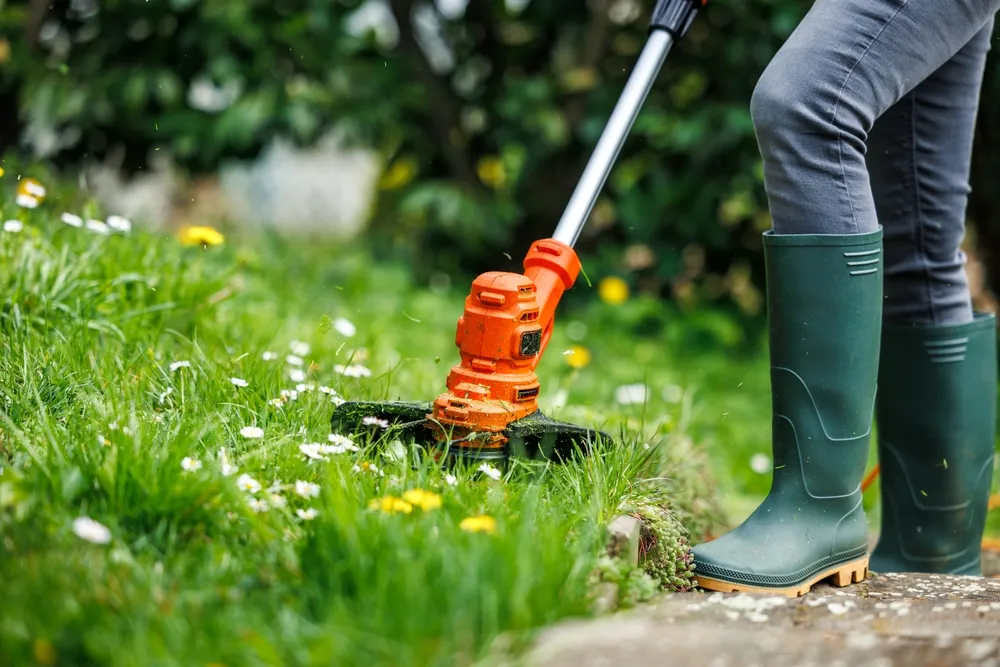
Mowing handles the larger open areas, but grass can remain around features that equipment cannot reach effectively.
Trimming may be required around:
- Trees
- Fence lines
- Garden beds
- Posts
- Steps
- Walls
- Landscape structures
Without trimming, the lawn can look uneven even when the central areas have been cut properly.
This is why homeowners comparing lawn care providers should understand whether trimming around obstacles forms part of the expected service.
Edging Defines the Landscape
Edging is another task that can make a noticeable difference.
Grass naturally spreads toward neighbouring surfaces over time.
Regular edging can maintain the separation between lawn and:
- Driveways
- Sidewalks
- Patios
- Walkways
- Garden beds
This creates a clearer visual structure and can also make future mowing easier.
Lawn Care and Outdoor Living
A lawn is often part of a larger outdoor living space.
It may surround a patio, play area, garden, pool, or seating space.
The way the lawn is used can influence maintenance requirements.
For example, heavy activity can create worn paths or compacted areas, while furniture can temporarily prevent grass from receiving sunlight.
Property owners should therefore consider lawn maintenance together with the way the rest of the yard is being used.
Managing Lawns Around Trees
Trees can make lawn maintenance more complicated.
Their roots, shade, fallen leaves, and low branches can all affect grass growth and mowing access.
Grass may also be more difficult to cut evenly around tree bases.
Trimming and careful mowing around these areas can help maintain a consistent appearance without treating the entire lawn as an uninterrupted surface.
Spring Through Fall: How the Routine Changes
A lawn maintenance routine should evolve through the growing season.
Spring
Inspect for winter debris and observe when active grass growth begins.
Early Summer
Growth may become more consistent, making regular mowing increasingly important.
Mid-Summer
Rainfall and heat can produce significant differences in growth rates. The schedule may need adjustment.
Fall
Growth gradually slows while leaves become a major maintenance consideration.
This seasonal approach is more practical than assuming the same frequency will work throughout the entire year.
One-Time Lawn Care vs. Recurring Maintenance
Not every property requires year-round recurring service.
A one-time visit may be useful when:
- Grass has become overgrown
- The property has been vacant
- The owner needs temporary assistance
- A property is being prepared for an event
- A regular maintenance routine has been interrupted
Recurring service is more appropriate when consistent lawn maintenance is required throughout the growing season.
The choice depends on the property's condition and the owner's ability to maintain it independently.
Lawn Care for Different Property Sizes
A small urban lawn may require relatively little time to maintain, while a larger suburban property can have extensive grass areas and more obstacles.
Size alone, however, does not determine maintenance complexity.
A smaller yard containing multiple garden beds, trees, pathways, and slopes may require more detailed work than a larger open lawn.
The layout should therefore be considered alongside square footage.
MapleScape and Lawn Care Services
MapleScape Property Solutions Inc. provides lawn care and mowing services for residential and commercial properties in Toronto and surrounding GTA communities.
Its outdoor maintenance work can be considered alongside other property care requirements, including landscaping and seasonal maintenance.
For property owners considering MapleScape or another provider, it is useful to discuss the lawn's layout, current condition, access, desired frequency, and whether trimming and edging are required alongside mowing.
A clearly defined scope makes it easier to establish a practical maintenance routine.
How to Compare Lawn Care Providers
When comparing lawn care services, price should not be the only consideration.
Review:
- Mowing frequency
- Cutting approach
- Trimming
- Edging
- Cleanup
- Seasonal flexibility
- One-time service availability
- Recurring scheduling
- Areas included
It is also useful to explain any special circumstances, such as steep sections, gates, pets, garden beds, or difficult access.
These factors can affect the time and equipment required.
Conclusion
Lawn care services in Toronto work best when they are based on the actual condition and use of the lawn.
Weather, sunlight, rainfall, grass growth, property layout, foot traffic, trees, and landscaping can all change maintenance requirements. A flexible routine can respond to these differences more effectively than a rigid calendar.
Mowing forms the foundation of lawn care, but trimming, edging, seasonal observation, and appropriate scheduling also contribute to a consistently maintained outdoor space.
For homeowners and property managers, understanding these factors makes it easier to define the right service and maintain the lawn throughout the growing season.



























Sign in to leave a comment.