Best Lawn Watering and Irrigation Practices for Indiana Homes

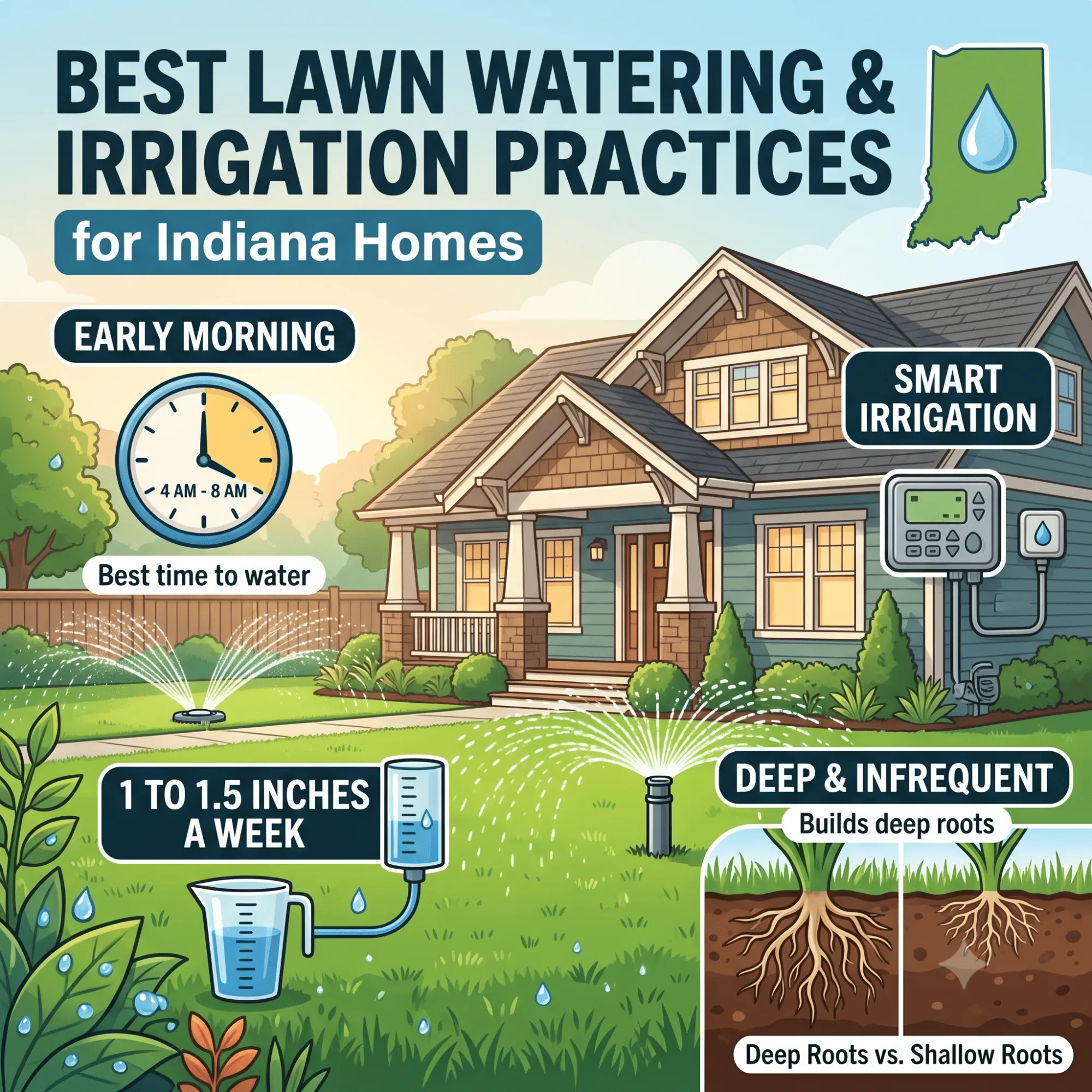
The best lawn watering practices in Indiana help grass grow deep roots, stay green, and handle hot weather. Most lawns need less water when rain is frequent and more during dry spells. The right amount depends on grass type, soil, sun, and weather. Good watering habits can also help reduce water waste and prevent lawn damage. With a few simple steps, Indiana homeowners can keep their lawns healthy through the growing season.
How Often Should You Water Your Lawn in Indiana?
Most established lawns need about 1 inch of water per week, including rainfall. This is a general guide, not a fixed rule. Your lawn may need less in cool or rainy weather and more during hot, dry periods.
Use these tips to set a good watering routine:
- Check the weather: Skip watering if rain has already soaked the soil.
- Water deeply: Give the soil time to absorb water and help roots grow deeper.
- Avoid daily light watering: Frequent shallow watering can lead to weak, shallow roots.
- Watch your grass: If footprints remain visible or grass blades fold, your lawn may need water.
Best Time to Water Grass
Early morning is usually the best time to water your lawn. Cooler air and lower wind help more water reach the soil. Watering early also gives grass blades time to dry during the day.
Try to avoid watering in the heat of the afternoon. More water may be lost to evaporation. Late evening watering can leave grass wet overnight, which may raise the risk of some lawn diseases.
How to Water Your Lawn the Right Way
1. Measure How Much Water Your Lawn Gets
Place a few straight-sided cans around your yard while your sprinkler runs. Check how long it takes to collect about half an inch of water. Use that time to plan future watering sessions, then adjust for soil and weather.
2. Adjust for Soil Type
- Sandy soil: Water may drain quickly, so shorter sessions may work better.
- Clay soil: Water enters slowly. Use shorter cycles with breaks to reduce runoff.
- Compacted soil: Aeration may help water reach the roots.
3. Check Sprinkler Coverage
Make sure each part of your lawn gets enough water. Look for dry spots, leaking heads, and areas where water runs onto paths or driveways. Adjust sprinkler heads so they cover grass, not pavement.
Common Lawn Watering Mistakes
- Watering on a fixed schedule: Adjust for rainfall and seasonal changes.
- Overwatering: Too much water can waste resources and weaken lawn health.
- Ignoring dry spots: Check sprinkler coverage and soil conditions.
- Watering during strong winds: Wind can move water away from the lawn.
- Forgetting local rules: Follow any water use limits in your area.
Frequently Asked Questions
Should I water my lawn every day in Indiana?
Usually, no. Established lawns often do better with deeper watering less often. Change your routine based on rainfall, heat, and soil conditions.
How do I know if my lawn needs water?
Grass may look dull or bluish green, blades may fold, and footprints may stay visible. Check the soil before watering.
Is an automatic irrigation system worth it?
It can save time and improve coverage when set up well. Use a rain sensor or smart controller where possible, and check the system often for leaks.
Can I water my lawn during a hot spell?
Yes, if the lawn needs it. Water early in the morning and avoid adding more water than the soil can absorb.
Final Thoughts
Healthy grass starts with smart watering, good sprinkler coverage, and care that fits the weather. For more lawn and landscape support, Best Lafayette Lawn Care can help homeowners maintain an attractive yard. If you need local service options, visit our landscaping Romney IN page to learn more about services for properties in the Romney area.
Source:- https://tinyurl.com/2z9kc2tt



Sign in to leave a comment.