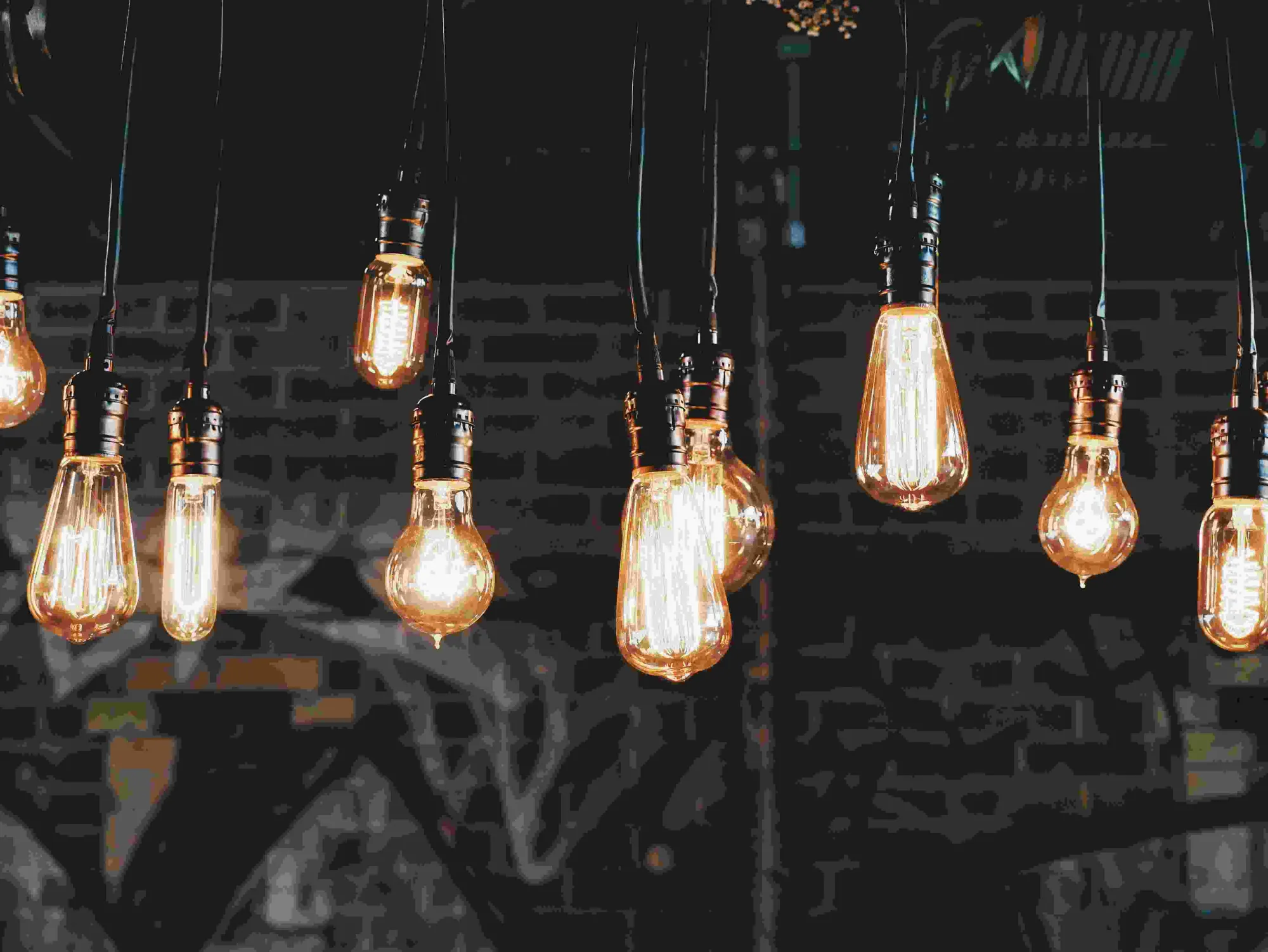


If your parking lot poles or warehouse yard lights still hum and flicker for a minute before they warm up, you are running metal halide. It was the standard for decades, and for a long time it was the only real option for lighting large outdoor areas. That is no longer true. Anyone planning an outdoor lighting installation today is choosing between two very different technologies, and the gap between them has grown wider every year as LED prices have dropped and performance has climbed.
This guide compares the two head to head: what each one costs to install, what it costs to run, and what actually changes on the day a crew shows up with ladders and conduit.
What Makes Metal Halide Different from LED for Outdoor Lighting Installation
Metal halide bulbs create light by passing electricity through a gas filled tube, which needs a heavy magnetic ballast to regulate the current. That ballast is the source of most of metal halide's problems. It adds weight to the fixture, it draws extra power on top of the bulb's rated wattage, and it fails on its own schedule separate from the bulb, which means two different parts to maintain instead of one.
LED fixtures skip the ballast entirely. Light comes from solid state diodes that turn on instantly at full brightness, with no warm up delay and no flicker while the gas inside heats up. That single difference changes a lot about how each system behaves once it is installed, especially for security lighting that needs to respond the moment a motion sensor trips.
Installing Outdoor LED Lighting: What Changes on Installation Day
A metal halide swap usually means replacing the bulb and, eventually, the ballast, while leaving the housing and wiring in place. Installing outdoor LED lighting can go one of two ways depending on the fixture. A retrofit kit fits into the existing housing and reuses the pole and wiring, which keeps labor and disruption to a minimum. A full fixture replacement removes the old housing entirely and mounts a purpose built LED unit, which usually delivers better light distribution and a cleaner final result.
Either approach still calls for a licensed electrician, since outdoor circuits often run at higher voltage and any exposed wiring near a parking lot or loading dock needs to meet code. Crews also check pole and mounting condition during the visit, since a fixture upgrade is a good time to catch a base bolt or a cracked mounting arm before it becomes a bigger repair.
How Much to Install Permanent Outdoor Lights: LED Versus Metal Halide
On paper, metal halide fixtures usually cost less to buy. In practice, that gap closes fast once you add up the full picture. LED fixtures often run two to three times higher on the sticker price, but metal halide lamps typically last between 6,000 and 20,000 hours before they need replacing, while LED fixtures commonly reach 50,000 to 100,000 hours with barely any drop in brightness.
That difference means a property running metal halide may go through three or more lamp and ballast replacements in the time a single LED installation is still running strong, and each of those replacements adds labor cost on top of the parts themselves, especially for fixtures mounted high on a pole or building wall. When contractors calculate how much to install permanent outdoor lights, they are increasingly presenting LED as the lower total cost option once five years of ownership are factored in, even with the higher price at installation.
Energy and Maintenance Costs Side by Side
| Factor | Metal Halide | LED |
|---|---|---|
| Typical lifespan | 6,000 to 20,000 hours | 50,000 to 100,000 hours |
| Warm up time | 2 to 5 minutes | Instant, full brightness |
| Ballast required | Yes, adds draw and a failure point | No |
| Energy use versus LED | Baseline | 50 to 75 percent less |
| Color consistency over time | Shifts and dims with age | Stable for most of its life |
A 400 watt metal halide fixture rarely pulls exactly 400 watts from the meter either. The ballast typically adds another 15 percent on top, so it draws closer to 455 watts once you account for the whole circuit. That hidden draw does not show up on a spec sheet, but it shows up every month on the utility bill.
LED Light Controller Options You Only Get with LED
Metal halide does not pair well with dimming or motion controls. The bulb needs a stable current to stay lit and cannot cycle quickly without shortening its life, so most metal halide fixtures simply run at full output on a timer or photocell for the entire night.
An LED light controller opens up options that metal halide cannot match. Motion based dimming lets a fixture idle at low output and jump to full brightness only when someone approaches. Daylight harvesting adjusts output based on ambient light. Networked controls let a facility manager change schedules across an entire property from one dashboard instead of walking to each panel. These controls are a major reason LED keeps closing the gap on total cost, since a fixture that only runs at full power when it needs to uses noticeably less energy over a full year.
Choosing a Commercial Outdoor Lighting Installation Service for a Retrofit
Not every contractor bidding on a metal halide to LED conversion has handled large scale outdoor work before. A commercial outdoor lighting installation service worth hiring will walk the property first, measure existing light levels, and check what local code requires at property lines and loading areas before quoting a fixture count. Ask whether they handle utility rebate paperwork, since many programs cover a meaningful share of a commercial retrofit and reduce the real cost well below the sticker price on the fixtures alone.
Frequently Asked Questions
Is it worth switching from metal halide to LED before the old fixtures fail?
For most commercial properties, yes. Waiting until a fixture fails often means paying emergency labor rates and losing the chance to plan a full property layout at once, which usually costs less per fixture than doing it piecemeal.
Can I replace metal halide bulbs with LED without changing the fixture?
Sometimes. Retrofit kits exist for many common housings and let you keep the existing pole and wiring. Whether it works depends on the fixture type and its condition, which a site visit can confirm quickly.
How much less energy does LED use compared to metal halide?
Most commercial LED installations cut energy use by 50 to 75 percent compared to an equivalent metal halide setup, largely because LEDs waste far less power as heat and do not carry a ballast load.
Do LED outdoor lights work in cold weather as well as metal halide?
Better, in most cases. LEDs reach full brightness instantly regardless of temperature, while metal halide can take longer to warm up in cold conditions and is more prone to flickering during startup.
Vision Line handles metal halide to LED conversions for warehouses, distribution centers, and commercial properties, from the initial site audit through rebate processing and financing. Projects typically start within two weeks of approval, backed by an in house fleet of lifting equipment and a track record of successful rebate applications.

























Sign in to leave a comment.