


Key Takeaways
- Independent legal guidance helps buyers understand their rights and responsibilities during a Spanish property purchase.
- A lawyer can check ownership, registered debts, mortgages and other charges before you commit.
- Planning permissions and building documentation should be checked, especially for rural homes and new-build properties.
- Contracts and deposit conditions should be reviewed before you sign or transfer money.
- Legal guidance is particularly useful for international buyers who may be unfamiliar with Spanish property procedures.
Introduction
Buying property in Spain involves more than finding a home and agreeing on a price. Buyers also need to understand ownership records, purchase contracts, taxes, planning permissions and other legal requirements. This is why independent legal guidance is important when buying property in Spain.
The Spanish property purchase process may be unfamiliar to international buyers. Documents may be written in Spanish, regional rules can differ, and a property that looks suitable during a viewing may have legal or administrative issues that are not immediately visible.
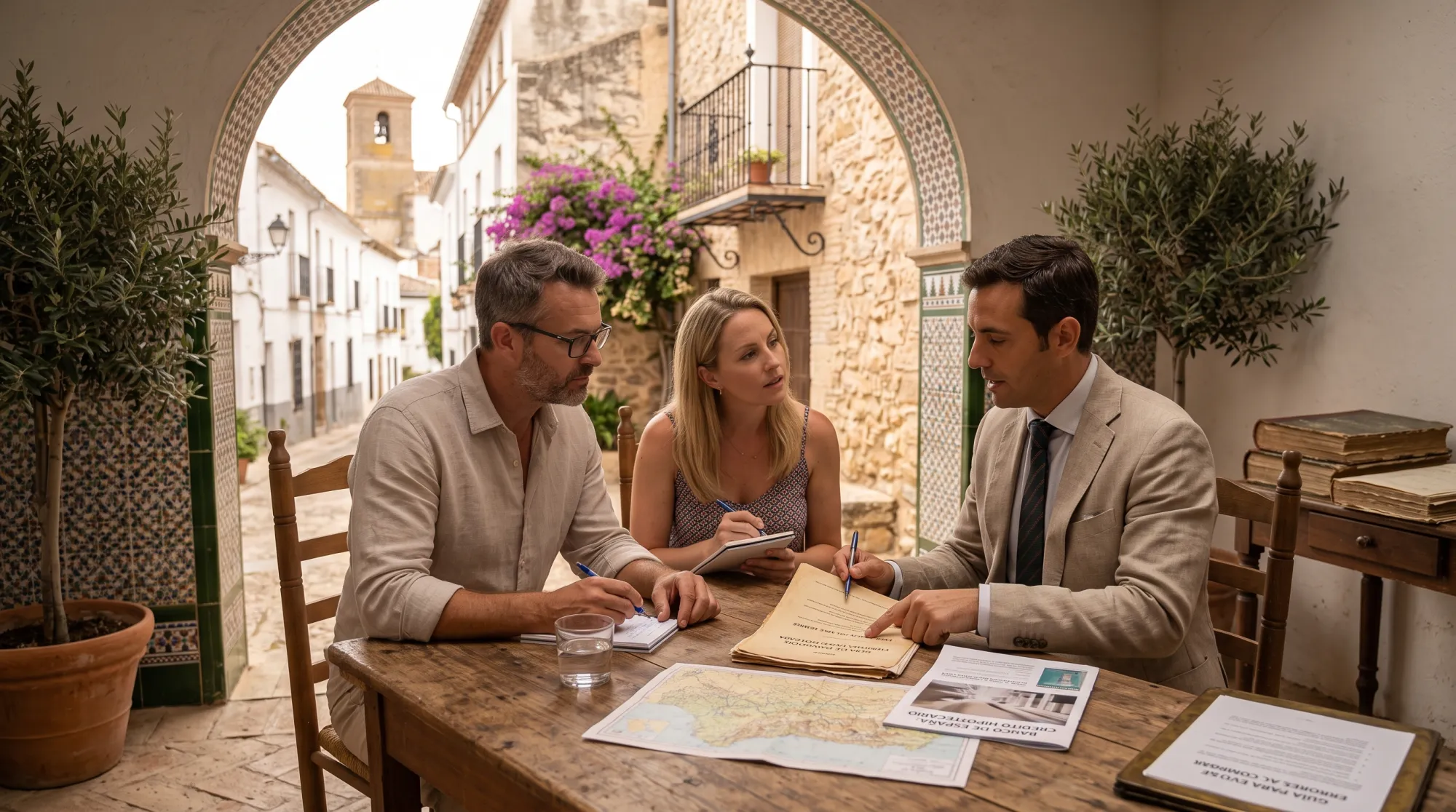
An independent Spanish property lawyer can review the transaction, explain important documents and identify issues that need attention before completion. At Woning in Spanje Kopen, international buyers can learn about the purchase process and the support available when searching for a property in Spain.
1. Why Do You Need an Independent Property Lawyer in Spain?
An independent property lawyer works on your behalf and looks after your legal interests during the purchase.
This is important because the seller, developer and estate agent may have their own responsibilities and commercial interests. Their role is not necessarily to provide independent legal advice to the buyer.
A Spanish property lawyer can help you:
- Review the legal status of the property.
- Confirm who owns the property.
- Check for registered mortgages, charges and other restrictions.
- Review reservation and purchase agreements.
- Check relevant planning and building documentation.
- Explain tax and completion requirements.
- Coordinate legal procedures leading up to the notary appointment.
Choose a lawyer who regularly handles Spanish property transactions and has experience working with international buyers. You should also check their professional registration and agree on their fees and responsibilities in writing.
The UK government's guidance for British nationals buying property in Spain recommends using an independent lawyer who specialises in Spanish property and land law. Although this guidance is written for British citizens, the principle of obtaining independent legal advice is relevant to international buyers generally. Read the official guidance.
2. Verify Property Ownership and Registered Debts
One of the first legal checks is confirming that the seller has the right to sell the property.
Your lawyer can request a document called a nota simple from the Spanish Land Registry, known as the Registro de la Propiedad.
This document provides important information, including:
- The registered owner or owners.
- The property's registered description.
- Existing mortgages.
- Registered liens or other charges.
- Certain restrictions affecting the property.
The information should be compared with the property being advertised and the details in the proposed purchase agreement.
For example, if a property has an existing mortgage, your lawyer should explain how it will be dealt with during the sale. The buyer should understand whether the charge will be cancelled or whether another arrangement is being proposed.
A nota simple is an important starting point, but it does not replace all other legal checks. Planning matters, physical condition and some outstanding expenses require separate investigation.
The Spanish government's public administration website explains how buyers can obtain a Land Registry report and what information it contains. Read the official information about property registers.
3. Check Planning Permissions and Building Legality
A property may appear complete and ready to use, but that does not automatically mean every part of it has the required permissions.
This is particularly important when buying:
- Rural houses.
- Older villas.
- Properties with extensions.
- Homes with swimming pools or additional buildings.
- New-build properties.
- Land intended for construction.
Your lawyer should investigate the property's planning and administrative status with the relevant authorities where necessary.
For example, an extension may not appear correctly in the official records. A swimming pool or separate building may have been constructed without the required permission. Rural properties can also have specific restrictions on residential use and future building work.
For a new-build property, legal checks may include the developer's registration, ownership of the land, building licence and relevant completion documentation.
Do not assume that a building is legal simply because it has electricity, water or has been used as a home for many years.
Practical tip: Ask your lawyer to confirm which planning documents apply to the property and whether any outstanding issues need to be resolved before completion.
4. Understand the Purchase Contract Before Signing
Property purchases in Spain can involve several agreements and payment stages.
Depending on the transaction, you may encounter a reservation agreement, a private purchase contract and the final public deed of sale.
Each document can have different legal and financial consequences.
Reservation Agreement
A reservation agreement may be used to take a property off the market for an agreed period. It normally includes the property details, agreed price, reservation payment and conditions.
Before paying, understand whether the payment is refundable and what happens if either party does not proceed.
Private Purchase Contract
A private purchase contract, often called a contrato de arras when it includes an earnest-money deposit, can establish important obligations for both buyer and seller.
Some contracts include a deposit arrangement under which the buyer may lose the deposit if they withdraw without a valid contractual reason. In certain circumstances, the seller may have to return double the deposit if they withdraw under the relevant legal arrangement.
However, the consequences depend on the contract wording and the applicable law. Not every deposit agreement has the same terms.
Final Public Deed
The final purchase deed, known as the escritura pública de compraventa, is signed before a Spanish notary.
It records the agreed transfer of the property and the terms of the sale.
Practical tip: Have your independent lawyer review every agreement before you sign or transfer money. Do not rely on a verbal explanation of important contract conditions.
5. Understand the Role of the Spanish Notary
A Spanish notary is a public official who performs an important role in formalising property transactions.
The notary prepares or authorises the public deed and verifies relevant formal requirements, including the identity and capacity of the parties involved.
The notary also provides impartial legal information about the deed and explains its formal contents.
However, the notary's role is not the same as having a lawyer who works exclusively for you.
For example, a notary does not replace a full independent investigation into every planning issue, building defect, community debt or technical problem.
This is why buyers should arrange independent legal checks before reaching the final signing stage.
6. Check Taxes, Fees and Outstanding Property Expenses
Legal guidance can also help you understand the financial obligations connected to the purchase.
The cost of buying property in Spain may include:
- Property Transfer Tax (ITP) for many resale purchases.
- VAT (IVA) and Stamp Duty (AJD) for qualifying new-build purchases.
- Notary fees.
- Land Registry fees.
- Legal fees.
- Mortgage-related expenses, where applicable.
The applicable taxes can vary depending on the region and type of property.
Your lawyer or tax adviser should also check relevant outstanding property expenses. These may include:
- Local property tax, known as IBI.
- Community of owners fees.
- Utility bills.
- Other registered or property-related debts.
Ask for recent receipts and certificates where appropriate. The lawyer should explain which outstanding amounts must be settled and whether any obligations could affect you after completion.
You can also read our guide on how to avoid unexpected costs when buying a house in Spain.
7. Why Are Legal Checks Important for New-Build Properties?
Buying a new-build property in Spain can involve a different set of legal checks from buying a resale home.
When purchasing directly from a developer, you should understand the developer's legal position and the status of the land and construction.
Important checks may include:
- Whether the developer is properly registered.
- Whether the developer owns the land or has the legal right to develop it.
- Whether the necessary building licence has been issued.
- Whether the construction follows the approved plans.
- Whether payments are protected as required by law.
- Whether the relevant completion and occupancy documents will be available.
For off-plan purchases, buyers should pay particular attention to payments made before construction is completed. Spanish law provides protections for qualifying advance payments, including requirements relating to guarantees or insurance and designated accounts. Your lawyer should confirm how these protections apply to your contract and payment schedule.
Before accepting the keys, the buyer should also understand what completion documents are required and whether the property is ready for legal occupation.
The Spanish government's guidance on buying property explains several of the checks relevant to off-plan purchases. Read the official property purchase information.
8. What Should Foreign Buyers Prepare Before Purchasing?
International buyers may need to complete additional administrative steps before they can finalise a purchase.
One important document is the NIE (Número de Identidad de Extranjero), which is a Spanish identification number used for tax and other administrative purposes.
Depending on your circumstances, you may also need:
- A valid passport or other accepted identification.
- A Spanish bank account or suitable payment arrangements.
- Proof of funds.
- Mortgage and income documentation, if financing the purchase.
- Documents explaining the source of funds.
- A power of attorney if a representative will complete certain procedures for you.
Your lawyer can explain which documents are required and help coordinate the process.
If you do not understand Spanish well, ask for important contracts and legal documents to be translated or explained by an independent qualified professional. Do not sign documents you do not understand.
9. How Can an Independent Buyer's Agent Support the Process?
A buyer's agent and a property lawyer have different responsibilities, but they can work alongside each other during a purchase.
An independent buyer's agent can help you organise the property search, compare suitable homes and coordinate viewings. They may also assist with communication and negotiations.
A lawyer focuses on the legal aspects of the transaction, including contracts, ownership checks and relevant legal documentation.
At Woning in Spanje Kopen's purchase guidance service, international buyers can learn more about support with finding and purchasing property in Spain.
The buyer's agent does not replace independent legal advice. You should appoint a lawyer who represents your interests and can review the transaction separately.
Frequently Asked Questions
Do I need a lawyer when buying property in Spain?
Using an independent Spanish property lawyer is strongly recommended, particularly for international buyers. A lawyer can review the property records, contracts, planning documentation and legal requirements before you commit.
Can I use the seller's lawyer when buying a house in Spain?
You should appoint your own independent lawyer. The seller's legal representative is not necessarily responsible for protecting your interests as the buyer. Independent representation helps avoid conflicts of interest.
What is a nota simple in Spain?
A nota simple is a report from the Spanish Land Registry. It provides information about registered ownership, property details and recorded charges such as mortgages or liens.
Does a Spanish notary check everything about the property?
No. The notary performs important formal and legal duties when authorising the public deed, but this does not replace all independent legal, planning or technical checks.
Should a lawyer review the reservation agreement?
Yes. A lawyer should review the reservation agreement before you sign or pay a deposit. The document may contain conditions affecting refunds, deadlines and your obligations.
Do foreign buyers need an NIE to buy property in Spain?
Foreign buyers generally need an NIE for tax and administrative procedures connected with purchasing property. It is sensible to check the application process and timing before you plan to complete the transaction.
Is legal guidance necessary when buying a new-build property?
Yes. New-build and off-plan purchases involve specific checks relating to the developer, land ownership, building permissions, payment protections and completion documents.
Conclusion
Legal guidance is an important part of buying property in Spain because it helps buyers understand the transaction before making a financial commitment. Ownership records, planning permissions, contracts, taxes and payment conditions all need careful attention.
For international buyers, independent legal advice can also make an unfamiliar process easier to understand. A property viewing may help you decide whether you like a home, but legal checks help you understand what you are actually purchasing.
Taking time to review the documents and obtain professional advice can help you make a more informed property decision.
Book a Strategy or Discovery Call
If you are considering buying property in Spain and would like to understand the search and purchase process, you can discuss your plans with Woning in Spanje Kopen.
Book a Strategy or Discovery Call to talk about your preferred location, property requirements and the buyer guidance available. There is no obligation to proceed.


























Sign in to leave a comment.