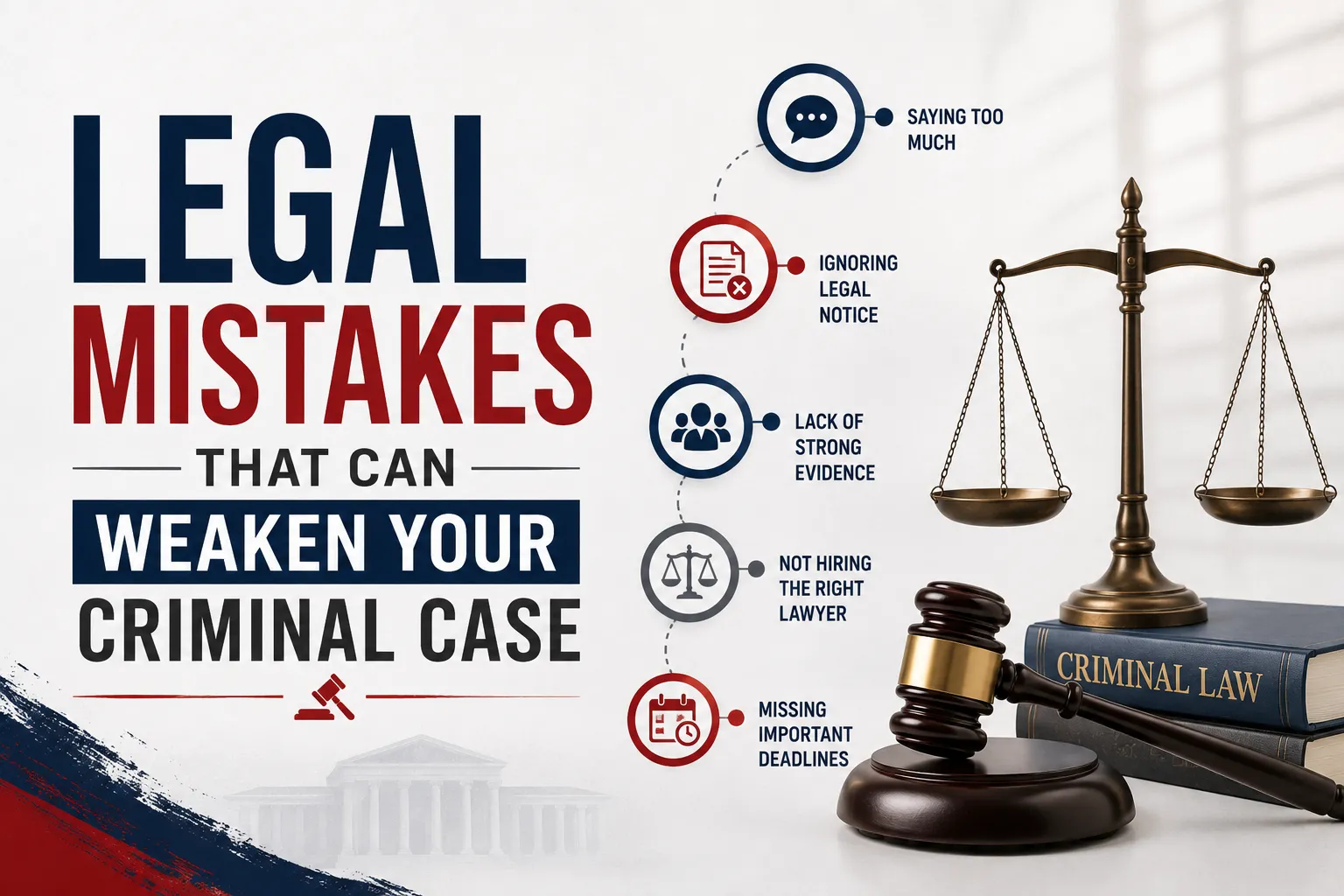

Facing a criminal investigation or prosecution can be overwhelming. In such situations, decisions made in haste or without proper legal guidance can have lasting consequences. While every case is decided on its own facts, certain mistakes can unnecessarily weaken an individual's legal position and complicate the proceedings.
Here are some of the most common mistakes to avoid.
1. Delaying Legal Consultation
One of the most significant mistakes is waiting too long to seek legal advice. Early legal guidance can help you understand your rights, avoid procedural errors, and make informed decisions from the very beginning of the case.
2. Making Statements Without Legal Advice
Many individuals believe they should immediately explain their side of the story. However, statements made during an investigation can have legal implications. It is important to understand the consequences before making any statement or signing any document.
3. Ignoring Police Notices or Court Summons
Failing to respond to a lawful notice or court summons can adversely affect your case. Timely compliance demonstrates respect for the legal process and helps avoid additional legal complications.
4. Tampering With Evidence
Attempting to destroy documents, delete electronic records, or conceal evidence can seriously damage your credibility and may result in additional legal consequences. Courts expect parties to preserve relevant evidence throughout the proceedings.
5. Discussing the Case Publicly
Sharing details of an ongoing criminal case with the media or on social media is generally unwise. Public statements can be misinterpreted and, in certain circumstances, may become relevant during the investigation or trial.
6. Contacting Witnesses Improperly
Any attempt to influence, threaten, or persuade witnesses outside the legal process may raise serious concerns before the investigating agency or the court. Witnesses should be allowed to participate in the proceedings without interference.
7. Assuming Bail Is Guaranteed
Bail is not granted automatically. Courts consider several factors, including the nature of the allegations, the available evidence, the possibility of absconding, and the likelihood of influencing witnesses. Every bail application is decided on its own merits.
8. Relying on Informal Legal Advice
Advice received from friends, relatives, or social media may not accurately reflect the law or the facts of your case. Criminal matters often involve complex legal issues, making professional legal advice essential.
A criminal case is influenced not only by the evidence presented but also by the decisions made throughout the legal process. Acting responsibly, respecting legal procedures, and obtaining timely legal advice can help protect your rights and ensure that your case is handled appropriately.
If you are involved in a criminal matter, understanding the legal process at an early stage is often the most effective way to avoid unnecessary complications. For more information on criminal law, bail, FIRs, and legal procedures, visit : https://sheokandlegal.com/criminal-lawyers-in-chandigarh/





















Sign in to leave a comment.