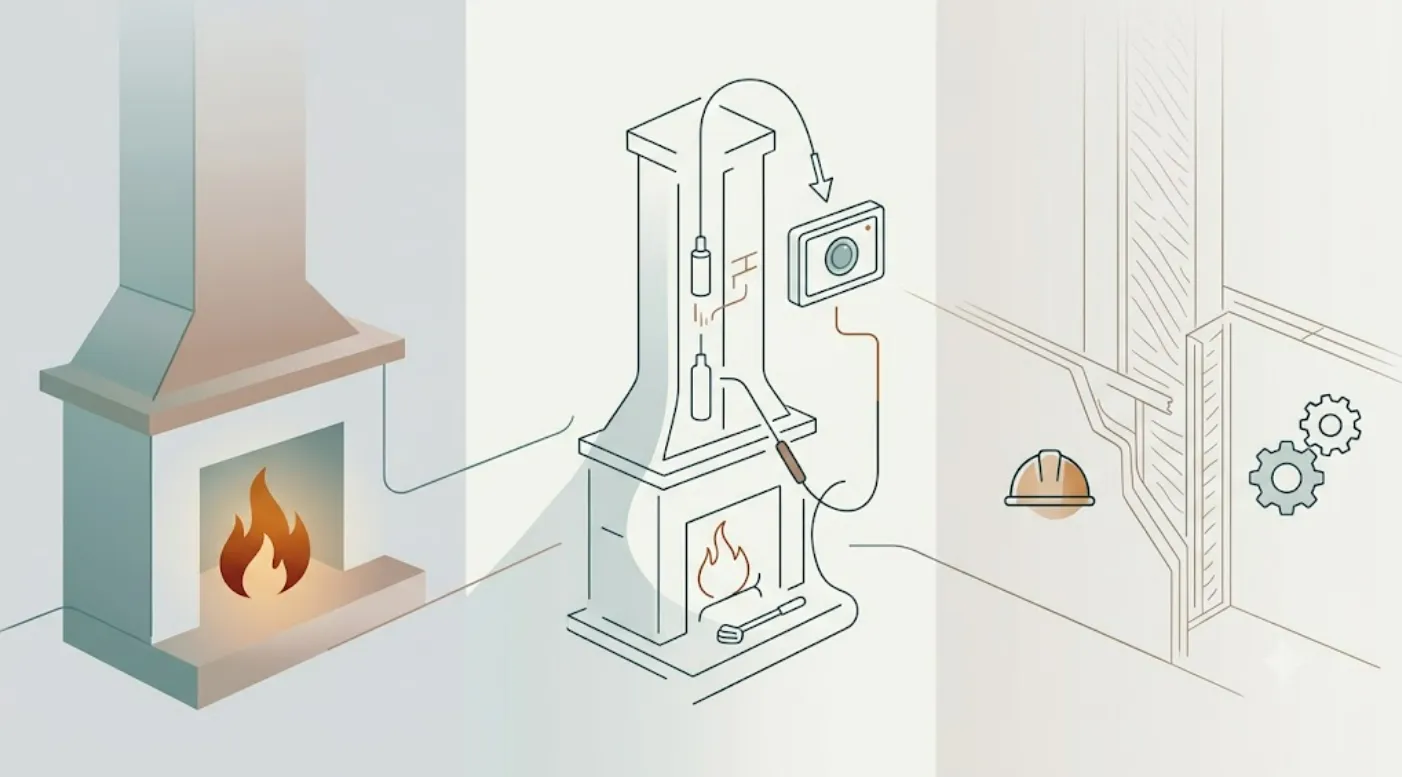

A chimney inspection is more than simply looking inside the fireplace. Chimneys can develop cracks, blockages, damaged liners, clearance problems, or hidden structural issues that are not always visible from the fireplace opening. That is why NFPA 211 defines different levels of chimney inspections based on the condition and use of the chimney.
The three inspection levels—Level 1, Level 2, and Level 3—are designed for different situations. Understanding the difference can help homeowners know what type of inspection may be appropriate and why a professional recommends a more detailed inspection.
What Is an NFPA Chimney Inspection?
NFPA 211 is a standard covering chimneys, fireplaces, vents, and solid-fuel-burning appliances. It establishes inspection requirements and identifies three levels of inspection.
The inspection level depends on factors such as whether the chimney is being used normally, whether the appliance or fuel type is changing, whether the property is being sold, and whether there are signs of damage or hidden problems.
A higher inspection level does not necessarily mean that the chimney is more dangerous. Instead, it generally means that more areas need to be examined because the circumstances require a deeper evaluation.
Level 1 Chimney Inspection
A Level 1 inspection is the basic inspection level and is commonly used when there have been no significant changes to the chimney, fireplace, or heating appliance.
It is generally appropriate when the appliance and chimney will continue to be used under the same conditions. For example, if you have been using the same fireplace with the same fuel type and there are no known problems, a Level 1 inspection may be suitable.
What Does a Level 1 Inspection Include?
A Level 1 inspection focuses on readily accessible portions of the chimney, fireplace, appliance, and chimney connection.
The inspector looks for issues such as:
- Visible structural damage
- Blockages inside the flue
- Excessive creosote or combustible deposits
- Accessible cracks or deterioration
- Problems with the appliance connection
- Obvious clearance concerns
- Conditions that could prevent the chimney from operating safely
The chimney interior may be examined visually using a light, and additional methods may be used when necessary to identify obstructions or other concerns.
A Level 1 inspection is also commonly associated with routine annual chimney maintenance. CSIA guidance notes that Level 1 is generally appropriate for routine chimney cleanings and annual inspections when nothing significant about the system has changed.
Level 2 Chimney Inspection
A Level 2 inspection is more comprehensive than Level 1. It is generally needed when something about the chimney, appliance, property, or conditions of use has changed.
Examples include installing a new appliance, changing the type of fuel, replacing an appliance with a different type, selling or transferring a property, or following an event that may have damaged the chimney.
For example, switching from a wood-burning appliance to a gas appliance can change the venting requirements. Simply assuming that an existing chimney is suitable for the new system may not be enough.
What Does a Level 2 Inspection Include?
A Level 2 inspection includes the areas covered by Level 1 but expands the inspection to accessible portions of the chimney and surrounding structure.
This can include:
- Attics
- Crawl spaces
- Basements
- Accessible chimney exteriors
- Accessible chimney interiors
- Appliance connections
- Flue liners
- Clearances from combustible materials
One of the most important differences is the use of video scanning or another appropriate imaging method to examine accessible areas of the chimney interior.
A Level 2 inspection is particularly useful for identifying defects that may not be visible during a basic inspection.
When Should You Consider Level 2?
A Level 2 inspection may be appropriate when:
- Buying or selling a home
- Installing a new fireplace or heating appliance
- Changing fuel types
- Replacing an appliance with a different type
- Relining or modifying a chimney
- A chimney fire has occurred
- Severe weather may have caused damage
- The chimney has experienced an operating malfunction
- A Level 1 inspection cannot adequately determine its condition
The goal is to determine whether the chimney remains suitable for continued use under the new or changed conditions.
Level 3 Chimney Inspection
Level 3 is the most extensive inspection level. It is used when a suspected problem cannot be fully evaluated through Level 1 or Level 2 inspection.
The key word is concealed.
Some chimney components are hidden behind walls, ceilings, insulation, enclosures, or other building materials. If there is evidence of a potentially serious problem in one of these areas, gaining access may require limited removal of building components.
NFPA materials describe Level 3 inspections as being used for concealed areas that cannot be properly evaluated through Level 1 or Level 2 methods.
What Can a Level 3 Inspection Involve?
Depending on the suspected problem, a Level 3 inspection may involve:
- Accessing concealed portions of the chimney
- Removing limited building materials when necessary
- Examining hidden flue components
- Investigating suspected fire damage
- Checking concealed clearances
- Evaluating suspected structural defects
The purpose is not to tear apart a chimney unnecessarily. The additional access should be limited to the areas needed to investigate the suspected problem.
For example, if a Level 2 inspection suggests that a hidden section of the chimney may have experienced a chimney fire or structural failure, a Level 3 inspection may be necessary to determine what is actually happening behind the finished surfaces.
Does Every Chimney Need a Level 3 Inspection?
No.
Level 3 is not the standard inspection homeowners should automatically request every year. It is generally reserved for situations where concealed areas require investigation and cannot be adequately evaluated through less invasive inspection methods.
For normal annual maintenance where nothing has changed, Level 1 may be appropriate. When the system or property circumstances change, Level 2 may be required or recommended. Level 3 becomes relevant when a suspected hazard remains hidden after the earlier inspection levels.
Why Video Inspection Matters
Video inspection is particularly valuable during a Level 2 evaluation because the camera can provide a closer look at the internal surfaces of the flue.
A professional may identify:
- Cracked flue tiles
- Damaged liner sections
- Gaps or deteriorated mortar
- Obstructions
- Separation between chimney components
- Signs of previous overheating or fire damage
CSIA also recommends internal video inspection following a chimney fire because heat can damage flue tiles, mortar joints, or metal chimney components in ways that may not be obvious from a basic visual examination.
Inspection Level Depends on the Situation
One of the biggest mistakes homeowners can make is assuming that every chimney inspection is the same.
A routine inspection of an unchanged fireplace is different from an inspection performed before installing a new appliance. Likewise, evaluating a suspected hidden defect requires a different approach from routine maintenance.
The appropriate level should be determined based on the condition of the system, its intended use, and the circumstances surrounding the inspection.
Choosing a Chimney Professional
When scheduling an inspection, ask the chimney professional which NFPA inspection level they recommend and why. A reputable technician should be able to explain what will be inspected and identify any areas that require additional evaluation.
It is also worth asking whether the inspection includes documentation of findings and photographs or video when appropriate. A written inspection report can make it easier to understand existing problems and decide what repairs, cleaning, or further investigation may be necessary.
For homeowners in the Dallas–Fort Worth area, ALC Chimney Service can be a practical option for professional chimney inspections and related chimney and fireplace services.
Final Thoughts
Level 1, Level 2, and Level 3 chimney inspections serve different purposes.
Level 1 is generally for routine evaluation when the chimney and appliance are continuing under the same conditions. Level 2 provides a more detailed inspection when there are changes, property transactions, suspected damage, or when Level 1 is not enough. Level 3 is reserved for situations where concealed areas must be investigated to identify a suspected hazard.
Understanding these differences can help you ask better questions and make informed decisions about chimney maintenance. Most importantly, the goal of any inspection is to determine whether the chimney and venting system are suitable for safe continued use.






























Sign in to leave a comment.