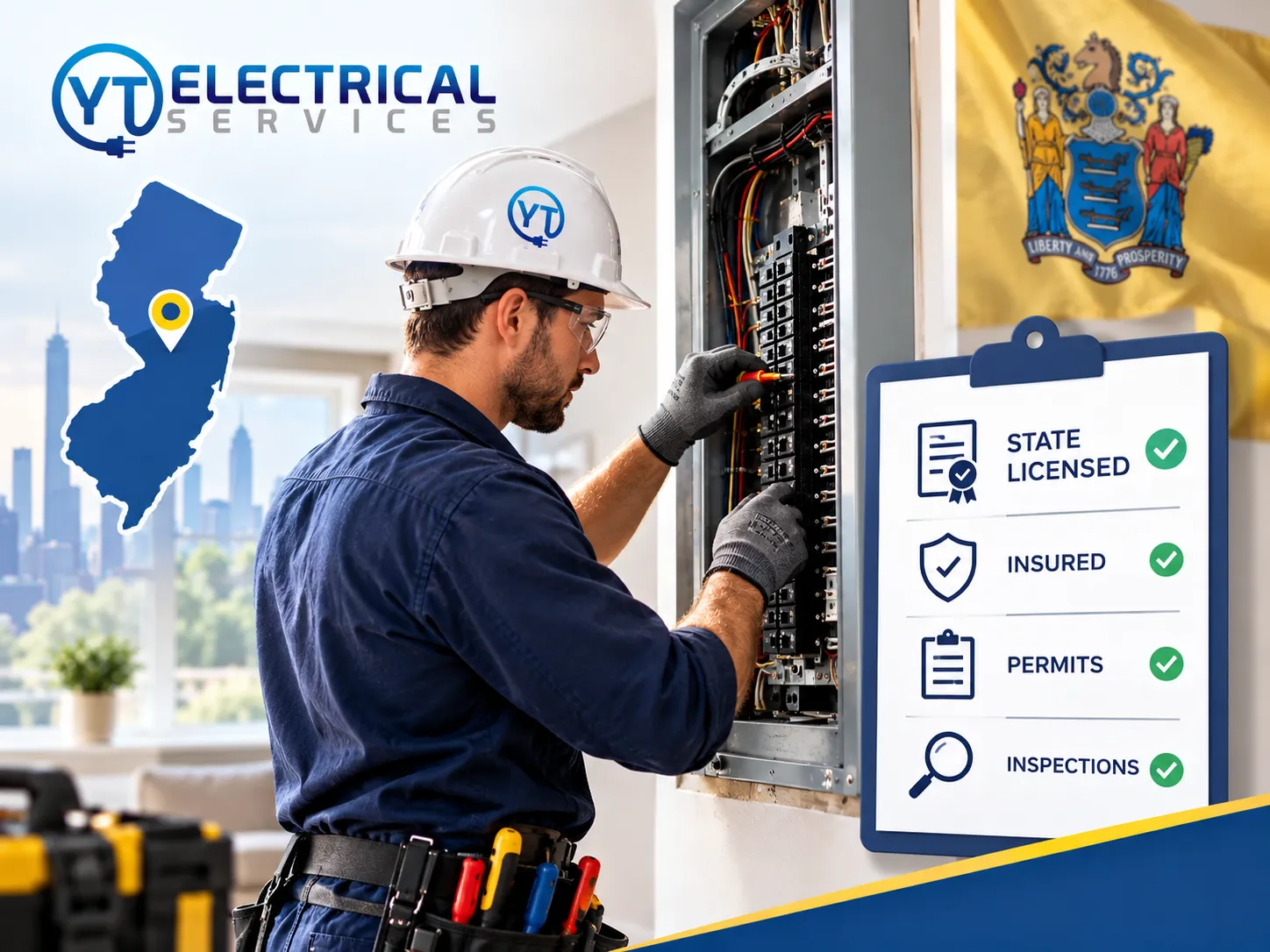

If you have searched for a licensed residential electrician in New Jersey, you may have noticed something odd. Few local pros advertise as a "master electrician," a title common in other states. That is not because New Jersey lacks standards. The state simply uses a different system, and many homeowners never learn how it works.
That gap in knowledge can be costly. Electrical work touches everything in a home, from the panel in the basement to the smoke alarm in the hallway. Hiring the wrong person can mean failed inspections, insurance trouble, or worse, a fire.
This guide explains how New Jersey handles electrical credentials, what the terms really mean, and how to confirm that the person at your door is qualified to work on your home.

Where the "Master Electrician" Title Comes From
The master, journeyman, and apprentice ladder is a trade tradition that reaches back to medieval guilds. Craftsmen learned under a master, proved their skill, and eventually earned the right to teach others. Many states and cities still use those labels in their electrical licensing.
A master electrician is generally someone who has completed years of supervised work and passed a demanding exam. Some jurisdictions require this title before a person can run an electrical business or pull permits.
New Jersey took another path. There is no credential in the state that carries the exact name "master electrician." That does not mean anyone can wire a house.
How New Jersey Actually Licenses Electrical Work
In New Jersey, the key credential is the electrical contractor license. The State Board of Examiners of Electrical Contractors, which operates under the Division of Consumer Affairs, oversees it. In general, a business that performs electrical work for the public must hold this license, and the person named on it must meet the state's experience and testing requirements.
Here is how that differs from the master model:
- The license is tied to the contracting business, not just an individual title.
- The license holder is responsible for the work performed under it.
- Employees and apprentices work under that contractor's supervision.
In practical terms, the accountability sits with the contractor. If something goes wrong, there is a licensed party who answers to the state board.
Why the Difference Matters for Homeowners
Because the labels differ, homeowners can be misled. Some people use phrases like "master electrician" in ads without any state credential behind them. Others may be skilled but unlicensed, which puts you at risk.
Here is a simple example. Suppose a neighbor recommends a handyman who "knows electrical." He replaces a panel, skips the permit, and the work looks fine. Two years later, you sell the house, and the buyer's inspector flags the panel as unpermitted. Now you are paying a licensed professional to redo the job, plus any fines or delays.
Titles are marketing. A verified state license is proof. That is the difference worth remembering.
How to Verify a Licensed Residential Electrician in New Jersey
Checking a license takes only a few minutes. Do it before you sign anything.
- Ask for the contractor's license number and the business name on it.
- Look the license up through the state's official license verification tool on the Division of Consumer Affairs website.
- Confirm the license is active and the name matches the company on the estimate.
- Ask for proof of liability insurance and workers' compensation coverage.
- Request a written estimate that describes the scope of work.
A reputable professional will not be bothered by these requests. In fact, they will expect them. If someone dodges the license question or offers a discount for "skipping the paperwork," treat that as your answer.
Permits and Inspections: The Second Layer of Protection
Licensing is only one part of the safety net. Most significant electrical work in New Jersey also requires a permit from your municipal construction office, followed by an inspection by a local electrical inspector.
That inspection is valuable because it gives you an independent set of eyes. It confirms the installation follows the National Electrical Code as adopted in the state, along with any local rules.
Jobs that commonly require a permit include:
- Panel upgrades and service changes
- New circuits for kitchens, basements, or additions
- EV charger installations
- Whole-home generator hookups
- Rewiring older homes
A licensed contractor normally handles the permit process for you. If a contractor suggests you pull the permit yourself to "keep things simple," be careful. That arrangement can shift responsibility onto you.
What Good Residential Electrical Work Looks Like
Credentials open the door, but workmanship builds trust. Good electricians explain what they see, show you the problem, and offer options instead of pressure. Experienced firms such as YT Electrical Services Inc. approach jobs this way because clear communication prevents most misunderstandings.
Expect a careful professional to test circuits, label the panel, and leave the work area clean. They should also tell you when a repair is urgent and when it can wait.
Many of the residential electricians in New Jersey who earn long-term customers do so by being honest about scope. If a small fix will solve the problem, they say so. If an older home needs deeper upgrades, they lay out the reasons and let you decide.
There is an old proverb that says a house is built by wisdom and established by understanding. Wiring is a perfect example. The work hidden behind the drywall deserves the most care, because you will never see it again.
Know the System, Then Ask the Right Questions
New Jersey may not use the master electrician title, but its system still protects homeowners when you know how to use it. The real markers of quality are an active state contractor license, proper insurance, permits, and passed inspections.
So before your next project, whether it is a panel upgrade, new lighting, or a troubleshooting call, take five minutes to verify. Hiring a licensed residential electrician in New Jersey is not about chasing a fancy title. It is about making sure a qualified, accountable professional stands behind every wire in your home.
Ask for the license number, look it up, and confirm the permit plan. Who would you rather trust with your family's safety: the person with a catchy title, or the one who can show you proof?

























Sign in to leave a comment.