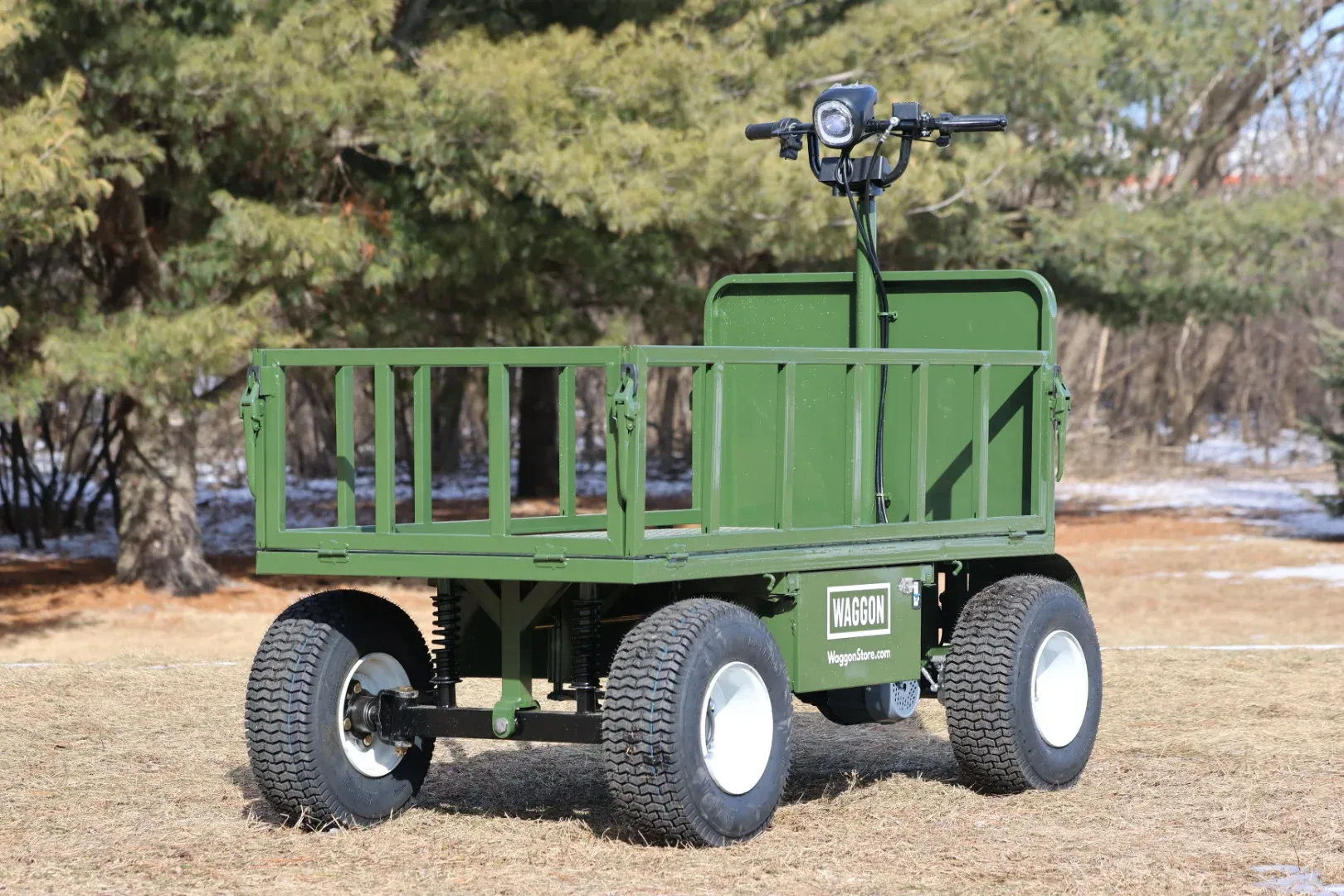

Ask anyone who looks after a large yard what takes the most effort, and the answer is rarely the mowing. It is the hauling: mulch to the flower beds, soil to the vegetable patch, pavers to the patio, firewood to the porch and branches to the burn pile. A wheelbarrow can handle small jobs, but when the loads get heavy or the distances get long, powered haulers make a real difference. Here is how to decide whether one suits your property and what to compare before you choose.
Where Yard Work Gets Heavy
Bulk landscaping materials are denser than they look. A modest pile of wet soil, gravel or stone can weigh hundreds of pounds, and moving it by hand means repeated lifting, pushing and balancing. Uneven ground makes it worse, since a loaded barrow tips easily and soft turf slows every step.
A powered hauler changes the equation. The motor does the pushing, the flat bed holds the load steady, and you guide the machine along the route. Instead of making ten tiring trips, you can make a few easy ones and save your energy for the planting, edging and finishing that actually need your attention.
What to Compare Before You Buy
Whether you are browsing motorized utility carts for sale online or visiting a local dealer, it helps to bring a short checklist. Start with the jobs you do most often, then judge each option against them.
Capacity and Bed Size
Choose a rated capacity that comfortably exceeds your typical load, and check that the bed is large enough for the materials you move, such as bagged mulch, long boards or stacked pavers. Remember that capacity is a limit, not a target.
Battery and Range
Look at voltage, battery type and the manufacturer’s stated range, then think about how that compares with your yard. A long property with hills will use more energy than a flat suburban lot. Also check how long a full charge takes, and whether a charger is included.
Controls, Braking and Comfort
Stand-on and seated machines handle differently, so try the controls if you can. Look for a clear forward and reverse switch, adjustable speed settings and brakes that feel secure, particularly if your yard has slopes.
Support and Warranty
Ask about warranty terms, parts availability and who handles repairs. Reliable support matters just as much as the machine itself, because a hauler you cannot service quickly will end up parked when you need it.
Matching a Hauler to Your Seasonal Jobs
Yard work changes with the calendar, and a good hauler earns its keep all year. In spring it moves mulch, compost and bagged soil. In summer it carries plants, tools and irrigation supplies. Autumn brings leaves, branches and firewood, and winter can mean hauling salt, kindling or snow-clearing gear, depending on the machine and the conditions.
Make a quick list of the three heaviest jobs you do each year and the distance each one covers. If one task dominates, such as moving firewood every week, let it guide your choice. If your jobs vary, prioritise versatility: a flat bed that is easy to load and unload will suit most of what you throw at it.
Protecting the Lawn While You Work
The biggest concern for most homeowners is what a machine will do to the grass. Weight concentrated on narrow tires can leave ruts, especially on wet or soft ground. For people who maintain lawns or landscaped grounds, an electric garden wagon with turf-friendly tires can spread its weight across a wider contact area and avoid the aggressive tread that tears or marks the surface.
A few habits protect your lawn further:
- Work when the ground is dry, and avoid driving over saturated soil.
- Use gentle, wide turns instead of sharp pivots.
- Vary your route so you do not wear a single track into the grass.
- Carry moderate loads when the turf is soft.
Safe Habits for Yards and Slopes
Even a compact machine can cause problems if it is used carelessly. Keep these basics in mind:
- Stay within the rated capacity, and spread weight evenly.
- Slow down on slopes and avoid crossing them sideways with a heavy load.
- Keep children and pets clear of the work area.
- Do not carry passengers unless the machine is designed for it.
- Check tires, brakes and connections before each use.
- Read the owner’s manual and follow the charging instructions.
Conclusion
The right hauler turns the heaviest part of yard work into a simple, repeatable routine. Know your loads, test your terrain and compare options honestly, and you will end up with a machine that earns its space in the garage. Waggon, for example, describes its Lawn and Turf edition as developed for lawns, maintained properties, sports fields, parks and landscaped areas, which is the kind of positioning worth looking for when your priority is protecting finished surfaces.

















Sign in to leave a comment.