

Have you noticed unusual changes in the appearance of your thighs, legs, or buttocks and wondered whetherLipedema or Cellulite they are caused by lipedema or cellulite? Although these two conditions can look similar, they have different causes, symptoms, and treatment approaches. Understanding the differences is important because choosing the right approach starts with identifying what is actually happening beneath the skin.
Lipedema is a chronic condition involving an abnormal accumulation of fat, usually in the lower body, while cellulite is a common cosmetic concern that creates a dimpled or uneven skin appearance. Both can affect the thighs and buttocks, making it difficult to distinguish between them based on appearance alone.
In this guide, we will explore the differences between lipedema and cellulite, their common causes, noticeable symptoms, and available treatment options to help you better understand these conditions.
What Is Lipedema?

Lipedema is a chronic disorder characterized by an abnormal and often symmetrical accumulation of fatty tissue, primarily in the legs, thighs, hips, and buttocks. In some cases, it can also affect the arms.
Unlike ordinary weight gain, lipedema-related fat accumulation does not typically respond to diet and exercise in the same way as regular body fat. The condition occurs predominantly in women and may become noticeable or worsen during hormonal changes such as puberty, pregnancy, or menopause.
Common characteristics of lipedema include:
- Disproportionate fat accumulation in the lower body.
- Symmetrical enlargement of both legs.
- Pain or tenderness when affected areas are touched.
- A feeling of heaviness or pressure in the legs.
- Easy bruising without significant injury.
- Nodular or uneven tissue beneath the skin.
- Feet that are generally unaffected, even when the lower legs are enlarged.
The exact cause of lipedema is not fully understood. However, hormonal influences and genetic factors are considered possible contributors. Having excess body weight does not cause lipedema, and people at different body weights can experience the condition.
What Is Cellulite?

Cellulite is a common cosmetic condition that causes the skin to appear dimpled, bumpy, or uneven. It most frequently develops around the thighs, buttocks, hips, and sometimes the abdomen.
It occurs when fat deposits push against the connective tissue beneath the skin, creating an irregular surface appearance. The condition is particularly common in women because of differences in fat distribution, connective tissue structure, and hormonal influences.
Cellulite can affect people of different body shapes and sizes. It is not necessarily associated with being overweight, and even individuals who exercise regularly and maintain a healthy body weight can develop it.
Some common characteristics include:
- Small dimples or depressions in the skin.
- An orange-peel or uneven skin texture.
- Visible changes around the thighs and buttocks.
- Skin irregularities that become more noticeable when standing or pinching the skin.
- Generally no significant pain or tenderness.
Unlike lipedema, cellulite is generally considered a cosmetic concern rather than a chronic medical disorder.
Lipedema vs. Cellulite: Key Differences
Although lipedema and cellulite can affect similar areas of the body, several characteristics can help distinguish between them.
Understanding these differences is important because each condition requires a different management approach.
| Feature | Lipedema | Cellulite |
|---|---|---|
| Main concern | Abnormal fat accumulation | Uneven skin appearance |
| Common areas | Thighs, hips, buttocks, and lower legs | Thighs, buttocks, and hips |
| Symmetry | Usually affects both sides equally | May appear symmetrically or asymmetrically |
| Pain | Often painful or tender | Usually painless |
| Bruising | Easy bruising is common | Easy bruising is not a typical feature |
| Feet | Usually unaffected | Not specifically affected |
| Response to weight loss | Affected tissue may remain disproportionate | Appearance may change, but cellulite can persist |
| Medical classification | Chronic medical condition | Cosmetic skin concern |
One important distinction is that lipedema can involve painful, disproportionate fat accumulation, whereas cellulite primarily affects the appearance and texture of the skin.
However, these conditions are not mutually exclusive. A person can have both lipedema and cellulite at the same time.
What Causes Lipedema and Cellulite?
Understanding the possible causes of each condition can help explain why they develop and why their management strategies differ.
Causes of Lipedema
The exact mechanisms behind lipedema are still being investigated. However, several factors may contribute to its development.
1. Hormonal Changes
Lipedema often becomes noticeable or worsens during periods of hormonal fluctuation, including puberty, pregnancy, and menopause. This pattern suggests that hormones may play a role in the condition.
2. Genetic Factors
Lipedema sometimes runs in families. Having close relatives with similar symptoms may increase the likelihood of developing the condition.
3. Changes in Fat Tissue
Lipedema involves abnormal changes in subcutaneous fat tissue, which can contribute to disproportionate enlargement, discomfort, and tenderness in affected areas.
4. Possible Inflammatory and Vascular Factors
Research has explored the potential involvement of inflammatory processes and changes in small blood vessels. However, the exact contribution of these mechanisms is not yet fully established.
Causes of Cellulite
Cellulite develops through a combination of structural, hormonal, and individual factors.
1. Connective Tissue Structure
The connective tissue beneath the skin plays an important role in cellulite formation. When fibrous bands pull downward while underlying fat pushes upward, dimples can become visible on the skin's surface.
2. Hormonal Influences
Hormones, particularly estrogen, may influence fat distribution and connective tissue characteristics, contributing to the development of cellulite.
3. Genetics
Genetic factors can influence skin structure, fat distribution, and other characteristics associated with cellulite.
4. Age and Skin Elasticity
As skin ages, it may lose some of its elasticity and firmness. This can make existing dimples and irregularities more noticeable.
5. Body Composition and Lifestyle
Changes in body composition can affect how visible cellulite appears. Physical activity, nutrition, and maintaining a stable weight may support overall skin and body health, although they cannot guarantee the elimination of cellulite.
How to Tell Whether You Have Lipedema or Cellulite
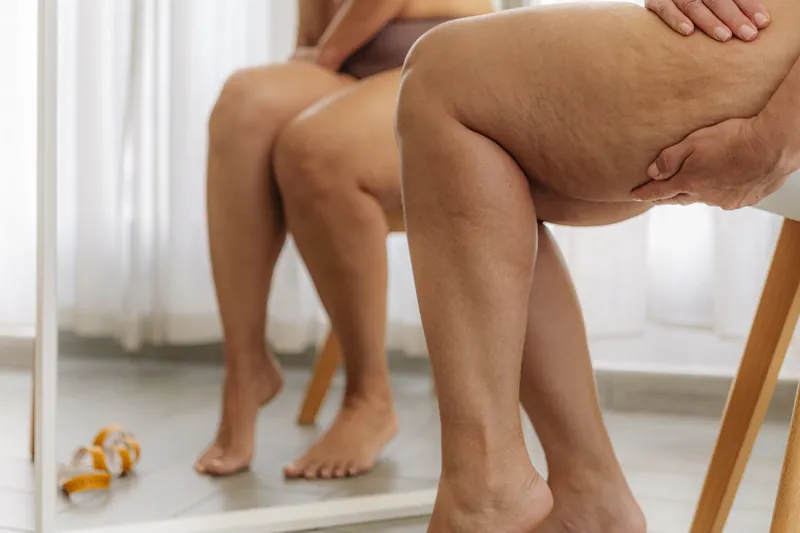
Since both conditions can create an uneven appearance around the thighs and buttocks, looking at skin texture alone may not be enough to identify the problem.
Instead, pay attention to the combination of symptoms and how your body has changed over time.
1. Pay Attention to Pain and Tenderness
One of the most useful differences is the presence of pain.
Lipedema commonly causes tenderness, discomfort, or pain when pressure is applied to affected areas. Some people also experience heaviness in their legs, particularly after standing or walking for extended periods.
Cellulite, on the other hand, is generally painless and does not typically cause significant discomfort.
2. Look at Fat Distribution
Lipedema usually causes symmetrical enlargement of the legs, meaning both sides are affected in a similar way.
The feet are generally spared, which can create a noticeable difference between the size of the lower legs and feet.
Cellulite does not necessarily follow this distribution pattern. It commonly appears on the thighs and buttocks without causing disproportionate enlargement of the entire lower body.
3. Notice Whether You Bruise Easily
Frequent bruising without an obvious injury can be an important symptom of lipedema.
Although bruising can occur for many reasons, it is not considered a typical defining feature of ordinary cellulite.
4. Consider How Your Body Responds to Weight Changes
People with lipedema may notice that the affected areas remain disproportionately large even after losing weight.
Cellulite can become more or less noticeable as body composition changes, but it may remain visible regardless of weight.
5. Seek a Professional Assessment
If you experience persistent leg pain, tenderness, easy bruising, or disproportionate fat accumulation, consult a healthcare professional familiar with lipedema.
There is currently no single definitive test that confirms lipedema in every case. Diagnosis generally relies on medical history, physical examination, and sometimes additional investigations to exclude other conditions.
Treatment Options for Lipedema and Cellulite
Although both conditions can affect the appearance of the lower body, their treatment goals are different.
Lipedema management focuses on reducing discomfort, improving mobility, and supporting daily function. Cellulite treatments primarily aim to improve the appearance and texture of the skin.
Treatment Options for Lipedema
There is currently no established cure for lipedema. However, several approaches may help manage symptoms and improve quality of life.
Compression Therapy
Compression garments may help reduce discomfort and support mobility. A healthcare professional should recommend the appropriate type and level of compression.
Regular Physical Activity
Low-impact activities such as walking, swimming, and cycling can support mobility and general physical health.
Healthy Nutrition
A balanced eating pattern can help support overall health and weight management. However, dietary changes should not be presented as a cure for lipedema.
Skin Care
Keeping the skin moisturized and protecting it from irritation can help maintain skin health, particularly in areas affected by swelling or skin folds.
Surgical Management
In selected cases, specialized liposuction techniques may be considered to remove abnormal fatty tissue. This option requires careful evaluation by an experienced medical specialist.
Ways to Improve the Appearance of Cellulite
For people primarily concerned about uneven skin texture and dimpling, several approaches may help improve the appearance of affected areas.
1. Regular Strength Training
Strength training can help build muscle and improve body composition. Developing the muscles beneath the skin may make the affected areas appear firmer.
Exercises targeting the glutes, thighs, and legs can be particularly useful for improving lower-body muscle strength.
2. Maintaining a Balanced Diet
Eating a balanced diet that includes adequate protein, vegetables, fruits, and healthy fats supports overall health.
Maintaining a stable body weight may also help prevent changes in body composition that make skin irregularities more noticeable.
3. Staying Physically Active
Regular physical activity supports circulation, muscle function, and general fitness. Walking, cycling, swimming, and resistance exercises can all contribute to a healthier lifestyle.
4. Professional Skin Treatments
Some cosmetic procedures, including laser-based treatments, radiofrequency, and subcision, are used to improve the appearance of cellulite.
The effectiveness, duration of results, risks, and recovery time vary depending on the treatment method and individual characteristics. A qualified dermatologist or aesthetic specialist can help determine which options are appropriate.
5. Understanding Your Treatment Options
Not every approach works equally well for everyone. The best treatment plan depends on the severity of the skin changes, individual goals, and overall health.
If your main concern is improving the appearance of your thighs and buttocks, explore these ways to improve the appearance of your legs and buttocks to learn about different methods that may help reduce visible skin irregularities.
Can You Have Both Lipedema and Cellulite?
Yes. Having lipedema does not mean that a person cannot also develop cellulite.
Lipedema involves abnormal fat accumulation in the affected areas, while cellulite results from structural changes involving subcutaneous fat and connective tissue.
Because both conditions can affect the thighs, hips, and buttocks, their visible characteristics may overlap.
For example, someone with lipedema may experience disproportionate fat accumulation, tenderness, and easy bruising while also having the dimpled skin texture commonly associated with cellulite.
This distinction is important because improving the appearance of cellulite does not necessarily address the underlying symptoms of lipedema. Similarly, treatments designed for lipedema should not automatically be considered cosmetic treatments for cellulite.
When Should You See a Doctor?
Although cellulite generally does not require medical treatment, certain symptoms may indicate an underlying medical condition that needs professional evaluation.
Consider consulting a healthcare professional if you notice:
- Persistent pain or tenderness in your legs.
- Unexplained or frequent bruising.
- Disproportionate enlargement of both legs.
- A feeling of heaviness that affects daily activities.
- Progressive changes in the size or shape of your legs.
- Swelling that does not improve over time.
Sudden swelling accompanied by redness, warmth, or significant pain should be assessed urgently, as it may indicate an infection or another acute medical problem.
Getting an accurate assessment can help prevent confusion between lipedema, cellulite, lymphedema, and other conditions that affect the lower body.
Frequently Asked Questions
Is lipedema the same as cellulite?
No. Lipedema is a chronic condition involving abnormal fat accumulation, usually in the legs and lower body. Cellulite is a common cosmetic condition that causes dimpling and uneven skin texture.
Can cellulite turn into lipedema?
No. Cellulite does not develop into lipedema. They are separate conditions with different underlying mechanisms, although both can occur in the same person.
Does losing weight get rid of lipedema?
Weight loss does not typically eliminate the abnormal fat tissue associated with lipedema. However, maintaining a healthy weight can support general health and help manage other contributing factors.
Can exercise improve the appearance of cellulite?
Exercise, particularly strength training, may improve muscle tone and body composition, making cellulite less noticeable in some individuals. However, exercise cannot guarantee complete removal.
Is lipedema painful while cellulite is not?
Lipedema commonly involves pain, tenderness, and heaviness in affected areas. Cellulite is generally painless, although the appearance of the skin may cause cosmetic concerns.
Can lipedema affect the buttocks and thighs?
Yes. The buttocks, hips, and thighs are among the most commonly affected areas. The lower legs may also become enlarged, while the feet are generally spared.
Conclusion
Lipedema and cellulite may look similar, particularly when they affect the thighs and buttocks, but they are two distinct conditions that require different approaches.
Lipedema is a chronic disorder associated with disproportionate fat accumulation, pain, tenderness, and easy bruising. Cellulite, in contrast, primarily affects skin texture and creates a dimpled appearance.
Understanding these differences can help you identify when professional medical evaluation is necessary and when cosmetic approaches may be appropriate.
Whether your goal is managing discomfort or improving the appearance of your skin, choosing an approach based on the underlying cause is essential. An accurate assessment and realistic expectations are the best starting points for making informed decisions about your health and appearance.



















Sign in to leave a comment.