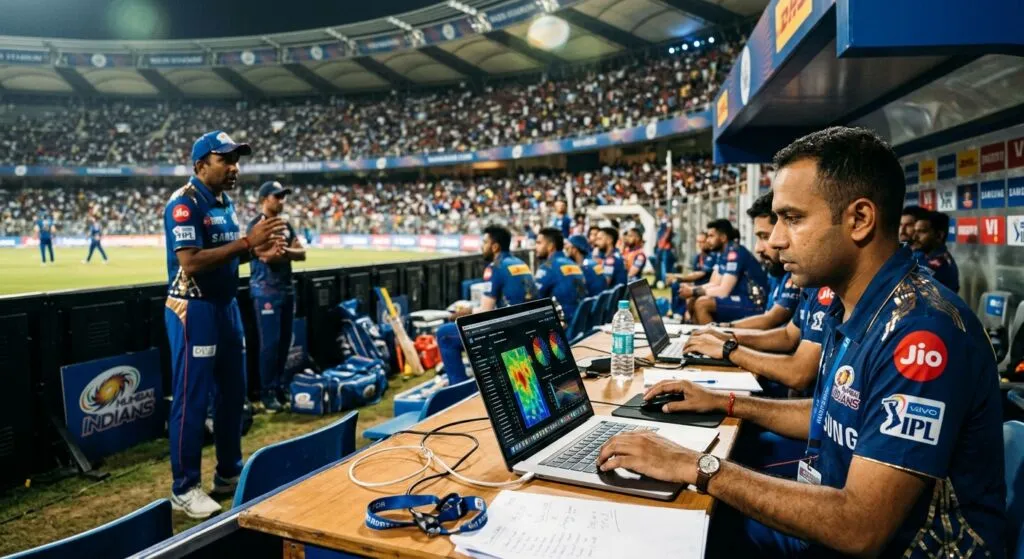

Cricket has become increasingly data-driven, with fans able to follow live scores, ball-by-ball updates, player statistics, match situations, and performance trends while a game is still underway. This information adds context to the action and helps explain why a match changes direction from one over to the next.
For readers exploring Cricket Exchange, the most useful approach is to treat live information as a way to understand the sport rather than simply focusing on the final score. Modern cricket data can reveal patterns that are easy to miss when watching the match casually.
Why Live Cricket Data Matters
A final score provides the outcome, but it does not tell the complete story. Live information can show the number of wickets lost, current run rate, required run rate, partnerships, recent deliveries, and changes in momentum.
Modern cricket score services commonly combine these details with ball-by-ball commentary and complete scorecards, giving fans a more detailed view of an ongoing match.
This is particularly useful in shorter formats, where a few deliveries can significantly change the balance of a game.
Key Statistics to Follow During a Match
Run Rate and Required Run Rate
Run rate indicates how quickly a team is scoring, while required run rate shows the pace needed by a chasing side to reach its target.
Looking at both numbers together provides a clearer picture of the pressure involved in a chase. A team may still have plenty of wickets but face increasing difficulty if the required rate continues to rise.
Wickets and Partnerships
Wickets provide important context. Losing several batters early can restrict a team's options later in the innings, while a strong partnership can stabilize the score and rebuild momentum.
Partnership statistics can therefore explain developments that are not immediately obvious from the overall team total.
Recent Overs
Looking at the previous few overs can help identify short-term changes in momentum. A sequence of boundaries may increase the scoring rate, while consecutive wickets can quickly put the batting side under pressure.
How Pitch Conditions Influence Analysis
The pitch is another important part of understanding a cricket match. A surface may offer movement to fast bowlers early in the innings, while a dry pitch can become more helpful for spin.
Venue history can also provide useful background, but it should not be treated as a guarantee of future performance. Current weather, playing XI, pitch preparation, and match conditions can all be different.
Some modern cricket information platforms also provide venue details, pitch information, playing XI data, and historical statistics alongside live scores.
Player Form Adds Another Layer of Context
Individual performance can have a major influence on match development. Recent batting consistency, bowling economy, strike rate, workload, and performances against particular opponents can all contribute to a broader analysis.
However, statistics should always be interpreted carefully. A player's previous record does not guarantee how they will perform in the next match.
Understanding Momentum Without Overreacting
Cricket momentum can change quickly. One over can produce multiple boundaries, while a single wicket can create pressure across the following overs.
This makes live information useful for understanding the sequence of events. Instead of assuming that one strong over determines the result, it is better to consider how that moment fits into the wider match situation.
For example, an expensive over may matter less if the bowling side has several wickets in hand to attack later. Similarly, a fast start may lose significance if a team subsequently loses key batters.
Cricket Exchange and the Value of Match Information
The term “cricket exchange” can refer to services that bring together live match information and, in some cases, exchange-related market data. Different platforms provide different combinations of scores, commentary, statistics, fixtures, and other information.
For readers, the important point is to distinguish factual match data from interpretation. Live scores and statistics describe what is happening; analysis attempts to explain why it is happening.
Keeping those two ideas separate can lead to a more balanced understanding of cricket.
A More Informed Way to Follow Cricket
Following a match does not require studying every available statistic. A few key indicators can provide substantial context: current score, wickets, run rate, required rate, partnerships, recent overs, and playing conditions.
Combining these details with reliable commentary can help fans understand tactical changes and important turning points without becoming overwhelmed by data.
Conclusion
Modern cricket is easier to understand when the final result is viewed alongside the events that produced it. Live scores, player statistics, partnerships, run rates, pitch conditions, and recent match patterns can explain how momentum develops throughout an innings.
A cricket exchange or live-score platform can bring many of these details together, but the real value comes from interpreting them carefully. Numbers provide evidence; context turns that evidence into meaningful cricket analysis.
Frequently Asked Questions
What is a cricket exchange?
A cricket exchange generally refers to a platform or service associated with cricket information and, depending on the service, exchange-style market data. Features vary between platforms.
Why are live cricket scores important?
Live scores provide real-time information about runs, wickets, overs, and other match developments, allowing fans to follow how the game is progressing.
What is required run rate in cricket?
Required run rate is the average scoring rate a team needs to maintain to reach a target during a run chase.
Which cricket statistics are most useful?
Runs, wickets, run rate, required run rate, partnerships, strike rate, bowling economy, and recent-over performance are useful indicators when considered together.
Can cricket statistics predict the final result?
No. Statistics can highlight trends and provide context, but they cannot guarantee an outcome. Cricket remains influenced by changing conditions, individual performances, tactics, and unexpected events.


























Sign in to leave a comment.