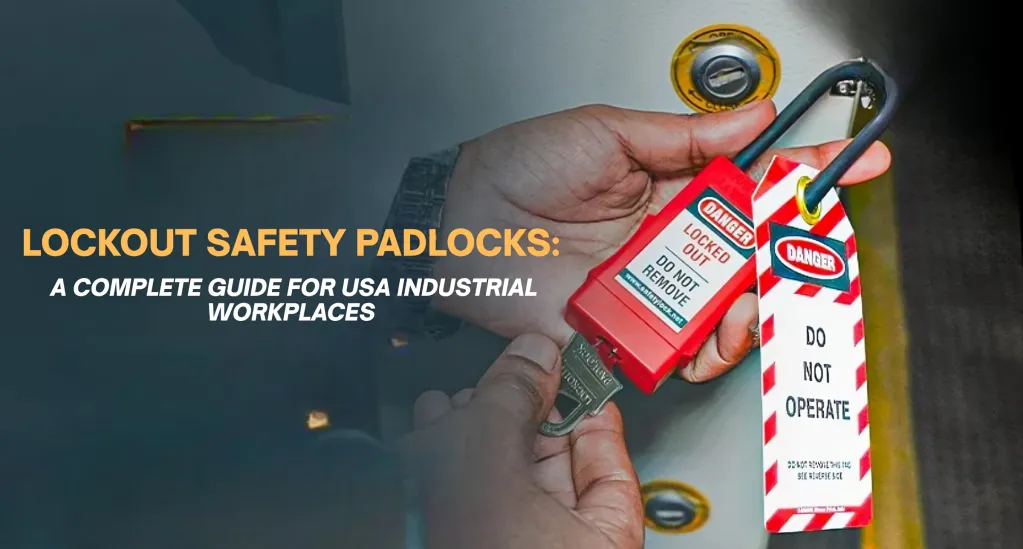

Lockout safety padlocks are an essential part of an effective Lockout Tagout (LOTO) program. They are used to help control access to energy-isolating devices during equipment servicing, maintenance, inspection, and repair.
Unlike ordinary security padlocks, LOTO padlocks are designed around workplace energy-isolation procedures. Their colour options, keying systems, identification features, shackle materials, and configurations can help organizations establish a controlled and identifiable lockout system.
For USA facilities, selecting the right lockout safety padlock is not simply a purchasing decision. The padlock needs to fit the facility's lockout procedures, equipment, environment, employee responsibilities, and energy-control program.
This guide explains the major types of lockout safety padlocks, keying options, applications, and important factors to consider when selecting LOTO padlocks for industrial workplaces.
What are Lockout Safety Padlocks?
A lockout safety padlock is a padlock intended for use as part of a Lockout/Tagout procedure to help prevent unauthorized operation of energy-isolating equipment.
During servicing or maintenance, an authorized employee may apply a personal safety padlock to an energy-isolating device or lockout device. The lock helps communicate that the equipment should remain isolated while work is being performed.
LOTO padlocks are commonly used in:
- Manufacturing facilities
- Electrical maintenance
- Industrial plants
- Warehouses
- Utilities
- Processing facilities
- Construction and maintenance operations
- Machine maintenance
- Facility management
- Equipment servicing
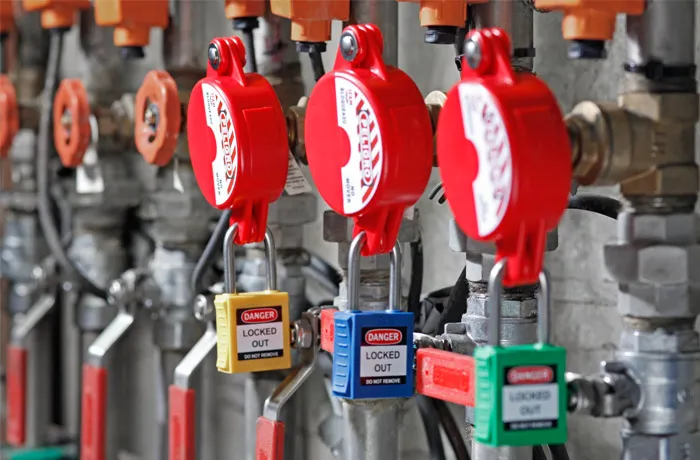
A dedicated lockout safety padlock can also be easier to identify than a conventional commercial padlock because it can be supplied in highly visible colours and dedicated LOTO configurations.
Why are Dedicated LOTO Padlocks Important?
A lockout program depends on more than simply placing a lock on equipment.
Workers need to be able to identify:
- Who applied the lock
- Which equipment is being isolated
- Whether the lock is part of the LOTO system
- Which key operates the lock
- Whether individual or group lockout is being performed
Dedicated lockout safety padlocks can support these requirements through colour coding, identification labels, keying systems, and application-specific designs.
The lock should be selected as part of the facility's overall energy-control procedure rather than as an isolated product purchase.
Types of Lockout Safety Padlocks
Different industrial environments require different padlock configurations. The most appropriate type depends on the application, operating environment, shackle requirements, keying system, and facility procedures.
1. Steel Shackle Lockout Padlocks
Steel-shackle padlocks are commonly selected for industrial applications where a durable shackle is required.
They can be suitable for:
- Manufacturing equipment
- Mechanical isolation
- Maintenance applications
- General industrial LOTO
- Valve and machine lockout
Steel shackles are available in different diameters and lengths, allowing facilities to select a configuration appropriate for their lockout devices.
2. Long-Shackle Lockout Padlocks
Long-shackle padlocks provide additional shackle clearance where a standard shackle may not provide enough space.
They can be useful when:
- Lockout devices have larger attachment points
- Multiple components need to be secured
- Access around the isolation point is restricted
- Additional shackle clearance is required
The required shackle length and diameter should be checked before purchasing.
3. Nylon Shackle Lockout Padlocks
Nylon or non-conductive shackle padlocks are commonly considered for electrical lockout applications where reducing the risk associated with conductive metal shackles is important.
These padlocks may be useful around:
- Electrical panels
- Electrical disconnects
- Switchgear
- Control equipment
- Electrical maintenance
The exact suitability should always be evaluated against the facility's electrical safety procedures and the manufacturer's product specifications.
4. Stainless Steel Lockout Padlocks
Stainless steel padlocks can be considered for demanding environments where corrosion resistance is important.
Potential applications include:
- Outdoor equipment
- Moist environments
- Processing facilities
- Chemical environments
- Industrial maintenance areas
The appropriate material depends on the environmental conditions and the required service life.
5. Aluminium Lockout Padlocks
Aluminium lockout padlocks can provide a lightweight option for facilities that need dedicated safety locks.
They can be considered for general LOTO programs where weight, handling, colour identification, and application requirements are important.
Keyed Different vs. Keyed Alike Lockout Padlocks
One of the most important decisions when establishing a lockout padlock system is the keying configuration.
Keyed Different
With key different lockout padlocks, each padlock has its own individual key.
This configuration can help support individual employee control because one worker's key is not normally intended to operate another worker's lock.
Keyed-different systems can be appropriate when individual lock ownership and control are important parts of the facility's LOTO procedure.
Keyed Alike
With keyed alike padlocks, multiple padlocks can be operated by the same key.
This configuration can be useful when an organization requires one key to operate a defined group of locks.
The facility should establish clear procedures for key control and lock assignment when using keyed-alike systems.
Master-Keyed Systems
Some organizations may require master-key arrangements for administrative or supervisory purposes.
Any master-key system should be incorporated into the facility's documented lockout procedures and controlled carefully.
The key objective is to maintain effective control of hazardous energy while ensuring that the lockout system is practical for the workplace.
How to Choose the Right Lockout Safety Padlock
Before ordering LOTO padlocks, consider the following factors.
1. Identify the Application
Before selecting a lockout safety padlock, determine the specific application and energy source involved. Consider whether the padlock will be used for electrical isolation, mechanical isolation, valve lockout, machine maintenance, general equipment lockout, or group lockout procedures. The application should guide the choice of padlock design, shackle size, material, keying system, and durability requirements. Selecting the right padlock for each application helps support consistent and effective lockout/tagout practices.
2. Select the Shackle Material
Consider the material required for the application, such as steel, nylon, stainless steel, or aluminium. Each material offers different characteristics for durability, electrical isolation applications, corrosion resistance, weight, and environmental exposure. The choice should be based on where and how the lockout safety padlock will be used. Environmental conditions, workplace hazards, and the facility’s established lockout/tagout procedures should all be considered when selecting the most suitable padlock material.
3. Check Shackle Dimensions
Before selecting a lockout safety padlock, measure the required shackle diameter, shackle length, and opening clearance. The padlock must physically fit the lockout device and provide sufficient clearance for proper installation and removal. Choosing the correct dimensions helps ensure the padlock can be securely applied to the isolation point without interference. A padlock that does not fit the lockout device cannot perform its intended lockout function effectively.
4. Select the Keying System
Choose the appropriate keying configuration based on your facility’s lock ownership and key-control procedures. Common options include keyed different, keyed alike, and master-keyed systems. Keyed-different locks support individual lock ownership, while keyed-alike systems allow multiple locks to operate with the same key. Master-keyed configurations may be used where controlled supervisory access is required. The selected system should align with your facility’s LOTO procedures and responsibilities.
5. Consider Identification
Colour coding, engraving, labels, and other identification methods can help distinguish individual locks and improve visual identification.
For example, a facility may assign different colours to departments or use employee identification on individual locks.
6. Consider the Environment
Evaluate the operating environment before selecting a lockout safety padlock. Consider exposure to moisture, dust, chemicals, extreme temperatures, outdoor conditions, and corrosive environments. The padlock’s material, coating, and construction should be suitable for the conditions in which it will be used. Choosing a padlock designed for the operating environment can help maintain durability, reliable operation, and effective lockout/tagout performance over time.
7. Consider Quantity
For larger facilities, plan padlock quantities based on individual employee locks, spare locks, departmental requirements, group lockout applications, and supervisor or administrative needs. Purchasing the appropriate quantity in bulk can help maintain consistency across the facility and support standardized lockout/tagout procedures. Facilities with multiple departments or locations should also consider future workforce growth, additional equipment, and replacement requirements when planning their lockout safety padlock orders.
Lockout Safety Padlocks and OSHA Requirements
In the United States, employers should develop and maintain energy-control procedures appropriate to their operations.
OSHA's Control of Hazardous Energy standard, 29 CFR 1910.147, establishes requirements for controlling hazardous energy during servicing and maintenance of machines and equipment.
A lockout safety padlock is one component of a broader energy-control system.
A compliant LOTO program also involves elements such as:
- Energy-control procedures
- Employee training
- Identification of hazardous energy
- Shutdown procedures
- Isolation of energy sources
- Lockout or tagout application
- Verification of isolation
- Release from lockout/tagout
- Periodic inspection
Therefore, purchasing a padlock alone does not make a workplace OSHA compliant. The lock must be used as part of an appropriate energy-control program.
Facilities should review OSHA requirements and their own documented procedures when selecting and implementing LOTO equipment.
Lockout Padlocks for Group Lockout
Large maintenance operations may involve several authorized employees working on the same equipment.
In these situations, facilities may use:
- Lockout hasps
- Group lockout boxes
- Multiple padlocks
- Personal employee locks
- Group lockout procedures
Each worker should follow the facility's established LOTO procedure and maintain control of their personal lock and key.
The objective is to prevent equipment from being returned to service while workers remain exposed to hazardous energy.
Common Lockout Safety Padlock Mistakes
Choosing the wrong padlock can create practical problems in a LOTO program. Common issues include:
Common Lockout Safety Padlock Mistakes
- Using ordinary security padlocks: Conventional padlocks may not provide the identification, durability, or key-control features required for a facility’s LOTO procedure.
- Choosing the wrong shackle size: An incorrect shackle diameter or length may prevent the padlock from fitting properly onto a lockout device.
- Ignoring the operating environment: Selecting a padlock without considering moisture, corrosion, chemicals, temperature, or outdoor exposure can reduce its suitability and service life.
- Using inconsistent keying systems: Poorly managed keyed-different, keyed-alike, or master-key systems can create confusion and weaken effective lock control.
- Buying without checking quantities: Facilities should account for employees, departments, spare locks, group lockout applications, and future expansion before placing a bulk order.
Lockout Safety Padlock Selection Checklist
Before purchasing,
- What equipment will the padlocks be used on?
- Is the application electrical or mechanical?
- What shackle material is appropriate?
- What shackle diameter is required?
- What shackle length is required?
- Do we need keys different or keyed alike?
- Are master-key arrangements required?
- How will individual locks be identified?
- Are colour-coded locks required?
- What environmental conditions will the locks face?
- How many employees require individual locks?
- Do we need spare locks?
- Will the padlocks be used with hasps or group lockout boxes?
- Does the product fit our documented energy-control procedure?
Answering these questions before purchasing can help organizations select a more suitable lockout padlock system.
Why Choose E-Square Alliance for Lockout Safety Padlocks?
E-Square Alliance manufactures and supplies a broad range of Lockout/Tagout products for industrial applications.
Its lockout safety padlock range includes different materials, shackle configurations, keying options, and product designs intended for different workplace requirements.
The company provides LOTO products for industrial customers and supports bulk and customized requirements.
For organizations sourcing lockout safety padlocks for USA facilities, the product selection should be matched to the application's technical requirements, quantity, keying configuration, and facility procedures.
Frequently Asked Questions
What is a lockout safety padlock?
A lockout safety padlock is a dedicated padlock used as part of a Lockout/Tagout procedure to help control access to isolated energy sources during servicing and maintenance.
What is the difference between a safety padlock and a regular padlock?
LOTO safety padlocks are designed for use within an energy-control system and can provide features such as visible colours, identification options, dedicated keying configurations, and compatibility with lockout devices.
Are lockout padlocks required by OSHA?
OSHA's hazardous-energy requirements establish requirements for controlling hazardous energy. The specific lockout equipment used should be selected and implemented as part of the employer's documented energy-control procedures.
Should LOTO padlocks be keyed differently?
Keyed-different padlocks can support individual lock ownership because each lock has its own key. Whether this is appropriate depends on the facility's LOTO procedures.
What are nylon-shackle lockout padlocks used for?
Nylon-shackle padlocks may be selected for applications where a non-conductive shackle is desirable, including certain electrical lockout applications.
Can lockout safety padlocks be purchased in bulk?
Yes. Industrial facilities may purchase LOTO padlocks in bulk for employee lock programs, department-wide standardization, spare inventory, and group lockout applications.
Final Thoughts
Selecting the right lockout safety padlocks is an important part of building a practical Lockout/Tagout system. The correct choice depends on the application, shackle material, dimensions, keying configuration, environmental conditions, identification requirements, and number of employees using the system.
For USA industrial workplaces, padlocks should be selected as part of the facility's overall hazardous-energy control program rather than as a standalone safety product.
Explore the lockout safety padlock range from E-Square Alliance to compare available configurations and identify the products that best match your industrial LOTO requirements.
Request a quote or discuss your lockout safety padlock requirements with E-Square Alliance at Safetylock.net.


















Sign in to leave a comment.