

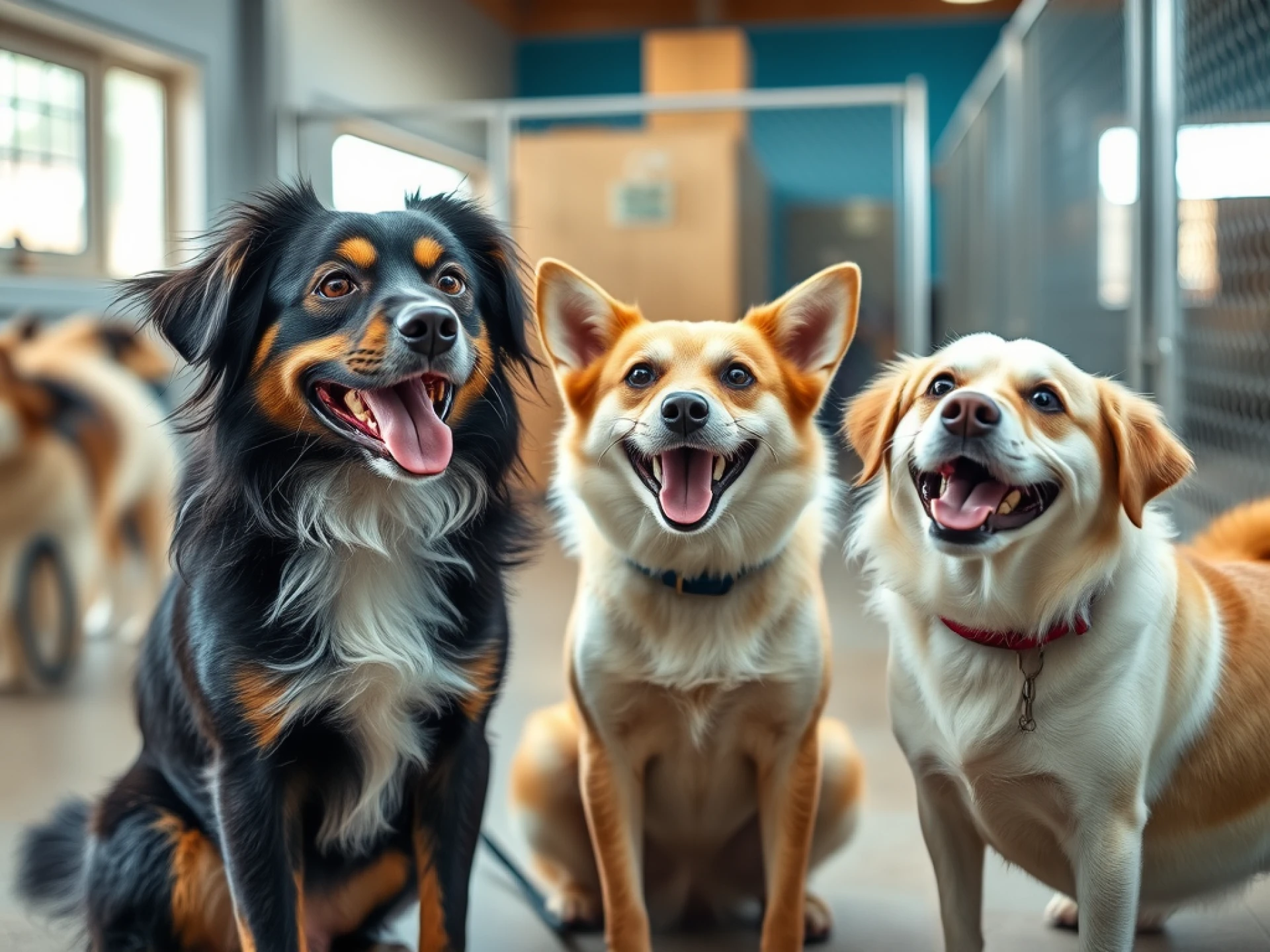
Finding the right Long Term Dog Boarding arrangement can be challenging when your dog does not feel comfortable sharing space with other dogs. Some dogs are naturally selective about their social interactions. Others may become tense, overwhelmed, protective of their resting area, or simply uncomfortable when unfamiliar dogs are nearby.
That does not automatically mean a dog is aggressive or unable to stay at a boarding facility.
It means their environment and care routine need to be thoughtfully managed.
For dogs that struggle with shared spaces, successful long-term boarding is often less about increasing social interaction and more about creating predictable routines, appropriate boundaries, individualized care, and enough opportunities for the dog to decompress.
Why Some Dogs Struggle With Shared Spaces
Dogs have different personalities and different levels of social tolerance.
While some dogs enjoy being around other dogs throughout the day, others prefer limited interaction. A dog may be perfectly friendly during a controlled introduction but become uncomfortable when another dog enters its resting area or remains nearby for an extended period.
Several factors can contribute to this behavior, including:
- Previous negative experiences with other dogs
- Lack of early socialization
- Strong territorial tendencies
- Resource guarding
- Fear or insecurity
- Overstimulation
- Previous stressful boarding experiences
- Preference for personal space
- Difficulty reading or responding appropriately to canine signals
It is important to understand that a dog does not need to enjoy constant group interaction to have a positive boarding experience.
Shared Space Does Not Have to Mean Constant Social Interaction
One of the biggest misconceptions about dog boarding is that dogs need to spend most of their time together to have a fulfilling stay.
That is not necessarily true.
A good boarding environment should consider what each individual dog needs.
Some dogs thrive with group play and frequent social interaction. Others are happier with structured one-on-one activities, private rest periods, and carefully managed exposure to other dogs.
For a dog that struggles with shared spaces, forcing prolonged interaction can increase stress rather than improve social behavior.
Instead, the objective should be to help the dog remain comfortable while maintaining appropriate boundaries.
Why Long Term Dog Boarding Can Be Different
A short boarding stay may only give a dog a few days to adjust.
With Long Term Dog Boarding, there is more time to understand the dog's behavior, identify patterns, establish a routine, and determine what environmental conditions help the dog settle.
The first few days may involve observation.
Caregivers can learn:
- Where the dog prefers to rest
- How the dog responds when another dog passes nearby
- Whether certain situations increase tension
- What activities help the dog relax
- How much social interaction the dog actually enjoys
- Which routines help the dog transition between activities
This information can then be used to create a more individualized daily experience.
Dogs Need Personal Space Too
Imagine being placed in a room where unfamiliar people are constantly entering your personal space.
Even if none of them intended to cause harm, the lack of privacy could become exhausting.
Dogs can experience something similar.
A dog may become uncomfortable when another dog approaches its bed, food bowl, toys, crate, or resting area.
Respecting personal space is particularly important during long-term boarding because a dog needs opportunities to completely relax.
A private or appropriately separated resting area can give the dog a place where they do not have to monitor other dogs constantly.
That ability to switch off and rest is valuable.
Predictable Routines Can Reduce Stress
Dogs often cope better with challenging environments when they know what comes next.
A predictable boarding routine might include:
Morning: Wake-up, bathroom break, feeding, and outdoor activity.
Midday: Structured exercise, individual interaction, and rest.
Afternoon: Additional outdoor time or enrichment followed by quiet time.
Evening: Dinner, bathroom break, calm interaction, and overnight rest.
The exact routine should be adapted to the dog's age, temperament, energy level, and individual needs.
For a dog that becomes tense around other dogs, predictable transitions can make the environment feel less uncertain.
Instead of constantly wondering what another dog might do, the dog begins to recognize familiar patterns.
Decompression Is Especially Important
Some dogs need time to decompress after entering a new environment.
This is especially relevant for dogs that are uncomfortable around other animals.
During the early part of a long-term stay, the priority may be allowing the dog to settle rather than immediately introducing them to numerous new dogs.
Decompression can involve:
- Quiet rest
- Calm walks
- Individual attention
- Sniffing and exploring at an appropriate pace
- Familiar feeding routines
- Reduced environmental pressure
- Consistent handling
The objective is to lower unnecessary stimulation and give the dog time to understand their surroundings.
Once a dog is relaxed, caregivers can better evaluate how they respond to different situations.
Individualized Activities Can Replace Forced Group Play
A dog does not need group play to have an enriching day.
For dogs that struggle with shared spaces, individual activities may be more appropriate.
Depending on the dog's needs, enrichment can include:
- One-on-one walks
- Sniffing opportunities
- Basic obedience exercises
- Food-based enrichment
- Calm outdoor exploration
- Training games
- Human interaction
- Structured play with a caregiver
These activities provide mental and physical stimulation without requiring the dog to remain in a crowded social environment.
This is particularly useful for dogs that become overwhelmed when several dogs are active at the same time.
Learning to Coexist Is Different From Learning to Play
There is an important distinction between socializing a dog and teaching a dog to comfortably coexist around other dogs.
Not every dog needs to become a social butterfly.
A more realistic goal for some dogs may be:
“I can see another dog nearby without feeling that I need to react.”
That is a valuable skill.
A dog may learn to walk past another dog calmly, relax while another dog is in a separate area, or focus on their caregiver despite another animal being nearby.
This type of neutral behavior can be much more useful than simply encouraging dogs to interact.
Long Term Dog Boarding Can Provide Repeated, Controlled Experiences
One advantage of extended boarding is repetition.
Dogs learn through repeated experiences.
If a dog repeatedly sees another dog at a safe distance and nothing negative happens, the presence of another dog can gradually become less significant.
However, this should never mean deliberately putting a dog into situations that cause extreme stress.
Good management involves recognizing the dog's threshold and avoiding unnecessary escalation.
For example, if a dog can calmly observe another dog from a distance but becomes tense when the distance decreases, maintaining the comfortable distance may be more productive than forcing a close interaction.
Recognizing Signs of Stress
Caregivers should pay close attention to body language.
Signs that a dog may be uncomfortable can include:
- Stiff posture
- Avoidance
- Lip licking
- Excessive panting
- Pacing
- Freezing
- Growling
- Repeated barking
- Raised hackles
- Hiding
- Intense staring
These behaviors are communication.
A growl, for example, should not simply be punished because the dog is uncomfortable. It can be an important warning that the dog needs more space or a change in the situation.
Understanding these signals allows caregivers to respond before the dog's discomfort escalates.
Why Punishment Is Not the Solution
When a dog reacts negatively around other dogs, it can be tempting to punish the behavior.
But punishment alone does not teach the dog what to do instead.
A dog that is frightened or overwhelmed may need distance, structure, and guidance.
For long-term boarding, the emphasis should be on management and appropriate behavior rather than repeatedly placing the dog in stressful situations.
The goal is to create successful experiences that build confidence rather than experiences that repeatedly reinforce fear or frustration.
A Farm-Style Environment Can Offer More Flexibility
The physical environment can make a significant difference for dogs that struggle with shared spaces.
A busy kennel environment may involve frequent noise, movement, barking, and close proximity to unfamiliar dogs.
A farm-style boarding environment can provide opportunities for a different rhythm.
At Dancing Creek Farm, the focus is on creating a more relaxed, structured experience where dogs can receive individualized attention and enjoy appropriate outdoor time while still having opportunities for quiet rest.
The goal isn't to eliminate every interaction with other dogs.
Instead, it is to manage the environment so that each dog can experience the appropriate amount of social exposure, activity, and personal space.
A Practical Example From Long-Term Care
Consider a dog that becomes tense whenever another dog approaches its resting area.
During a short stay, the behavior might simply look like avoidance or occasional growling.
During a longer stay, caregivers have more opportunity to observe when the behavior occurs.
Perhaps the dog is comfortable seeing another dog outdoors but becomes uncomfortable when another dog comes too close while resting.
That distinction is important.
Instead of treating the dog as generally “bad with other dogs,” caregivers can recognize that the issue is specifically connected to personal space during rest.
The daily routine can then be structured accordingly.
The dog receives a designated resting area, individual outdoor activities, and carefully managed exposure to other dogs.
Over time, the dog may become more relaxed because it learns that its space is respected and that it does not need to constantly defend itself.
This is one of the benefits of observing a dog over an extended period rather than judging its behavior from a single interaction.
How Owners Can Prepare Before Long Term Dog Boarding
Owners can make the transition easier by providing detailed information about their dog's behavior.
Before boarding, tell the caregiver:
- Whether your dog has lived with other dogs
- Whether they guard food or toys
- How they behave around unfamiliar dogs
- Whether they prefer individual activities
- What situations have caused problems in the past
- How they normally respond to stress
- What helps them calm down
- Their normal feeding and sleeping routine
Honest information is extremely valuable.
Do not feel embarrassed if your dog does not enjoy group environments. The more accurately you describe your dog's behavior, the better prepared the caregiver can be.
What to Ask Before Choosing Long Term Dog Boarding
If your dog struggles with shared spaces, ask potential boarding providers specific questions.
For example:
Will my dog be required to participate in group activities?
Your dog may not need group play to have a fulfilling stay.
How do you handle dogs that become uncomfortable around other dogs?
Look for an answer focused on management, observation, boundaries, and individualized care.
Does every dog follow the same schedule?
Individual needs should be considered.
Where does my dog rest?
A suitable quiet space can be especially important for dogs that become overwhelmed.
How do you monitor changes in behavior?
Long-term care should involve ongoing observation rather than a one-time assessment.
Long Term Dog Boarding Should Be About the Individual Dog
There is no universal boarding routine that works perfectly for every dog.
A young, highly social dog may want more activity and interaction.
An older or easily overwhelmed dog may prefer a slower schedule.
A dog that struggles with shared spaces may need more individual attention and carefully managed exposure.
That is why Long Term Dog Boarding should be viewed as individualized care rather than simply an extended version of overnight boarding.
The longer a dog stays, the more important it becomes to understand what helps that particular dog feel comfortable.
Final Thoughts
Dogs that struggle with shared spaces can still have successful experiences in Long Term Dog Boarding. The key is recognizing that comfort does not always come from more social interaction.
For some dogs, comfort comes from boundaries.
For others, it comes from routine.
For others, it comes from quiet time, individual attention, or having a predictable place to rest.
With thoughtful management, a consistent routine, and caregivers who understand canine body language, long-term boarding can give these dogs the time and space they need to adjust.
At Dancing Creek Farm, the goal is to give each dog an environment where they can be understood as an individual—not simply expected to fit into a one-size-fits-all boarding routine.
For owners of dogs that struggle around other dogs, that individualized approach can make the difference between simply finding a place for their dog to stay and finding a place where their dog can genuinely settle.























Sign in to leave a comment.