


Key Takeaways
- Lung cancer treatment in the Philippines depends on the cancer type, stage, molecular findings, and the patient's overall clinical situation.
- NSCLC treatment can involve surgery, radiation therapy, chemotherapy, immunotherapy, targeted therapy, or combinations of these approaches.
- Molecular testing can identify alterations that may open specific targeted-treatment options.
- Patients with EGFR-mutated NSCLC may be considered for EGFR-targeted medicines when they meet the relevant treatment criteria.
- Access to a medicine involves more than finding it online; patients should consider legitimate sourcing, prescription requirements, medical supervision, and follow-up care.
Understanding Lung Cancer Treatment in the Philippines
A lung cancer diagnosis can raise two different questions for patients and families:
What treatment is appropriate?
And:
How can that treatment be accessed?
These questions are closely connected but are not the same.
Treatment decisions are based on the patient's diagnosis, cancer stage, pathology, molecular characteristics, previous treatment, and other clinical factors. The National Cancer Institute notes that NSCLC treatment can include surgery, radiation therapy, chemotherapy, targeted therapy, and immunotherapy, with treatment plans varying according to the disease and individual circumstances.
For patients in the Philippines, practical access can also involve finding appropriate healthcare facilities, completing diagnostic testing, obtaining prescribed medicines, arranging follow-up appointments, and understanding the financial aspects of treatment.
What Determines NSCLC Treatment?
There isn't one standard treatment for every person diagnosed with non-small cell lung cancer.
Doctors generally consider several factors, including:
- NSCLC subtype
- Cancer stage
- Tumor location
- Lymph-node involvement
- Whether the cancer has spread
- Molecular or biomarker findings
- Previous treatments
- Overall health
- Treatment goals
Cancer staging is particularly important because it helps determine how extensive the disease is and which treatment approaches may be considered.
However, stage isn't the entire picture.
For some patients, molecular testing can be equally important when selecting systemic treatment.
Why Molecular Testing Matters
Modern NSCLC treatment increasingly uses information about the molecular characteristics of the tumor.
Depending on the patient's cancer, testing may identify alterations involving genes or proteins such as:
- EGFR
- ALK
- ROS1
- BRAF
- MET
- RET
- KRAS
- NTRK
- HER2
The purpose of this testing is to determine whether the cancer has a characteristic that could influence treatment selection.
For patients with advanced NSCLC, the NCI identifies molecular and immunologic features as important factors when selecting systemic treatment.
This is why a patient searching for lung cancer medicine in the Philippines should first understand the diagnosis and test results rather than choosing a medicine based solely on its name or online availability.
EGFR-Mutated Lung Cancer Treatment
EGFR is particularly relevant to some NSCLC patients.
Certain EGFR mutations can make a patient eligible for EGFR-targeted therapy.
One example is osimertinib, which is used in several approved treatment settings for NSCLC involving specific EGFR mutations.
The U.S. FDA has approved osimertinib with platinum-based chemotherapy for certain patients with locally advanced or metastatic NSCLC whose tumors have EGFR exon 19 deletions or exon 21 L858R mutations.
The FDA has also approved osimertinib for certain adults with unresectable stage III EGFR-mutated NSCLC following platinum-based chemoradiation when the disease has not progressed.
These examples show why EGFR testing and cancer staging need to be considered together.
A patient should not assume that osimertinib is appropriate simply because they have been diagnosed with NSCLC.
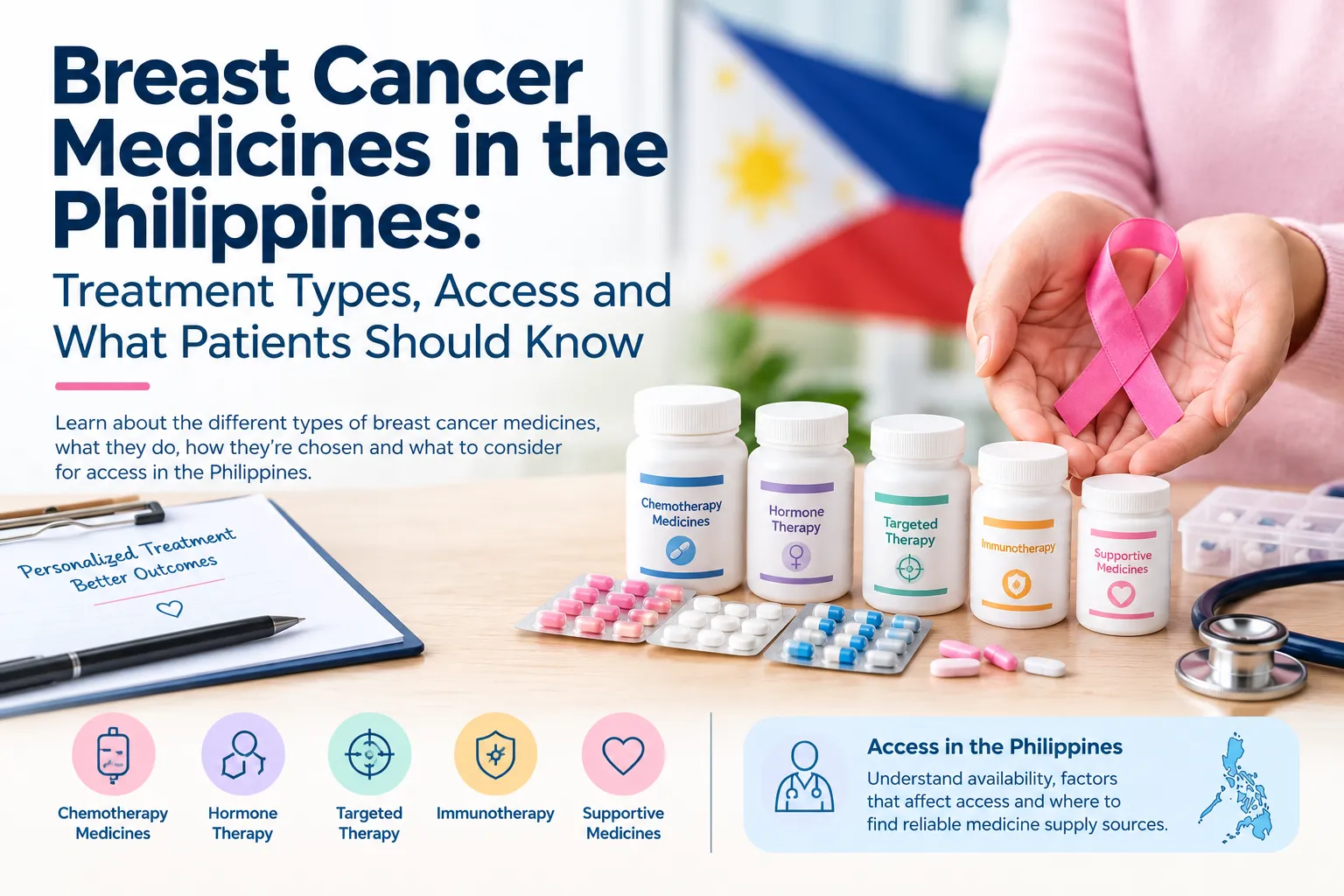
Accessing Cancer Medicines in the Philippines
For many patients, treatment access isn't simply about whether a medicine exists.
They may also need to consider:
- Whether the medicine has been prescribed
- Whether the product is legitimately sourced
- Whether the required strength is available
- Manufacturer and product information
- Packaging and labeling
- Storage requirements
- Delivery arrangements
- Follow-up with the treating healthcare professional
This becomes particularly important with prescription cancer medicines.
Patients should avoid making treatment decisions based solely on an online product listing or price comparison.
A legitimate pharmaceutical source can help with medicine sourcing and availability, but it does not replace the role of an oncologist in deciding which treatment a patient should receive.
What Patients in the Philippines Can Discuss With Their Doctor
If you or a family member has recently been diagnosed with NSCLC, consider asking the oncology team:
- What type of lung cancer is it?
- What is the current stage?
- Has the cancer spread?
- Has molecular testing been completed?
- Was an EGFR mutation identified?
- Are additional biomarker tests needed?
- What treatment options are available?
- Is targeted therapy appropriate?
- What monitoring will be required?
- How frequently will treatment response be evaluated?
These questions can help patients understand why a particular treatment has been recommended.
Finding Targeted Therapy in the Philippines
Patients searching for terms such as targeted therapy Philippines, EGFR lung cancer treatment Philippines, or osimertinib Philippines may find information from hospitals, pharmacies, pharmaceutical suppliers, and online medicine providers.
However, these sources serve different purposes.
A hospital or oncology clinic provides medical assessment and treatment decisions.
A diagnostic laboratory may provide molecular testing.
A licensed or legitimate pharmaceutical source may help with medicine procurement.
These roles should not be confused.
For patients researching medicine availability, LetsMeds provides pharmaceutical wholesaler, distributor, and third-party medicine-provider services, including sourcing options for international markets such as the Philippines.
Availability can depend on the specific medicine, strength, manufacturer, and current supply requirements.
What About the Cost of Lung Cancer Treatment?
Cancer treatment costs can vary substantially.
The total expense may involve more than the medicine itself.
Patients may also encounter costs related to:
- Diagnostic testing
- Molecular testing
- Specialist consultations
- Imaging
- Hospital services
- Surgery
- Radiation therapy
- Infusion or treatment administration
- Prescription medicines
- Follow-up monitoring
For targeted therapies, the cost of the medicine can also depend on the product, manufacturer, strength, supply source, and treatment duration.
Rather than relying on a single online price, patients should ask their healthcare provider or legitimate medicine source for current, applicable information.
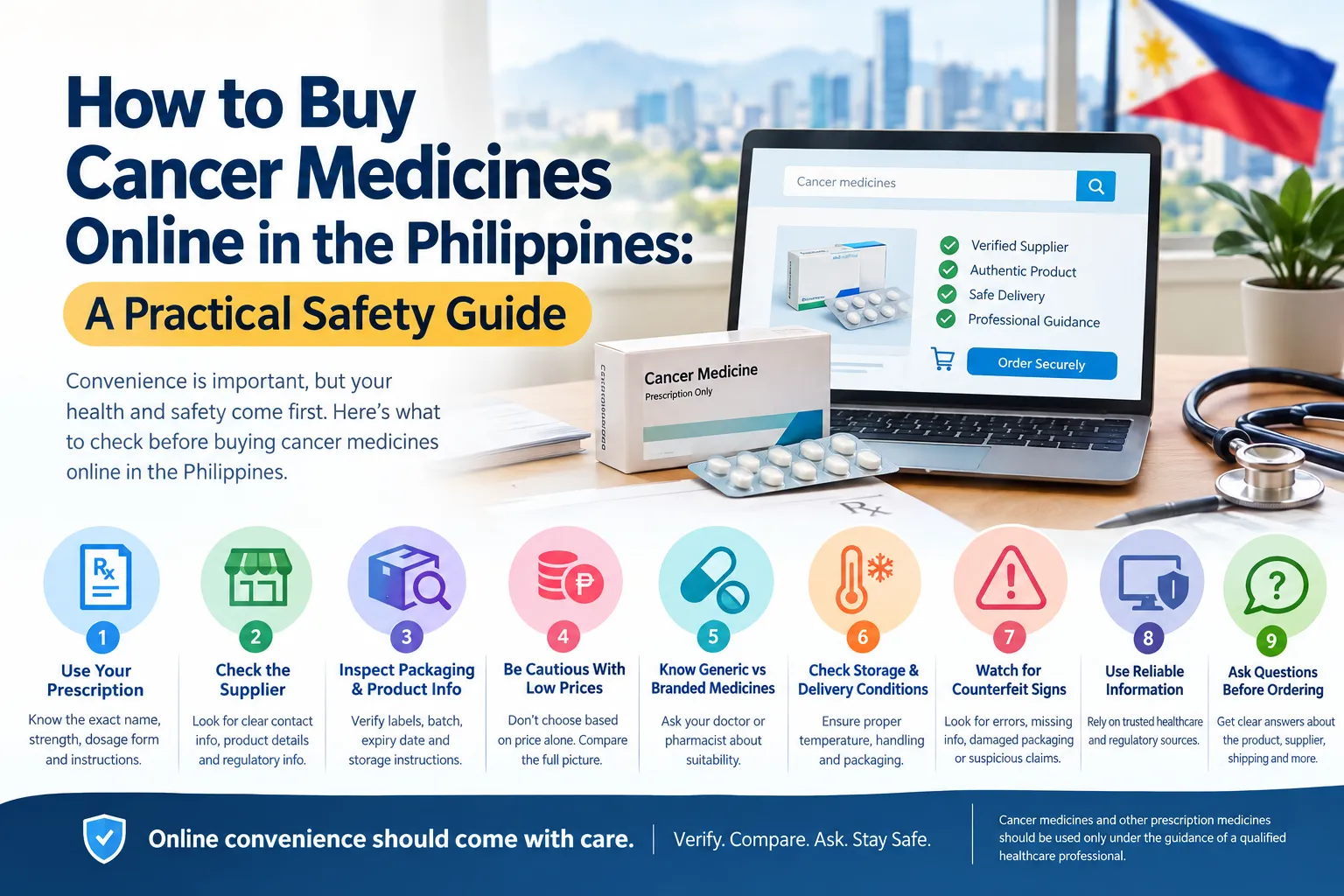
Questions to Ask When Researching an Online Medicine Source
Patients comparing medicine suppliers can consider checking:
1. Is the provider clearly identified?
Look for clear business and contact information.
2. Is the medicine information complete?
The product name, strength, manufacturer, and packaging information should be clear.
3. Does the provider make unrealistic medical claims?
Be cautious of websites promising that a cancer medicine will cure cancer or guaranteeing treatment results.
4. Is medical advice being confused with sales information?
A medicine supplier should not replace a qualified healthcare professional.
5. Can the supplier explain the sourcing process?
Patients should be able to understand where the medicine is coming from and how it will be supplied.
These checks can help patients make more informed decisions when researching medicines online.
What Patients Should Know About Osimertinib
For patients with EGFR-mutated NSCLC, osimertinib may be an important treatment option in specific clinical settings.
Its role has expanded across different stages and treatment situations. For example, the FDA approved it in 2024 for certain unresectable stage III EGFR-mutated NSCLC following chemoradiation, and earlier approvals cover other EGFR-mutated NSCLC settings.
If you are specifically researching osimertinib in the Philippines, see our our guide to osimertinib in the Philippines for more information about the medicine, EGFR-mutated NSCLC, availability considerations, and questions patients may want to discuss with their healthcare team.
Improving Treatment Access Starts With Better Information
For someone diagnosed with lung cancer, finding reliable information is an important first step.
Patients need to understand:
- Their exact diagnosis
- Cancer stage
- Molecular test results
- Available treatment options
- Expected monitoring
- Medicine requirements
- Legitimate sourcing options
For NSCLC, treatment has become increasingly personalized. Molecular testing can identify changes that may make targeted therapies appropriate for selected patients.
For patients in the Philippines, combining appropriate medical care with reliable information about medicine access can make the treatment process easier to navigate.
Frequently Asked Questions
What is the treatment for lung cancer in the Philippines?
Treatment depends on the type and stage of lung cancer, molecular findings, previous treatment, and the patient's clinical situation.
Is targeted therapy available in the Philippines?
Targeted medicines may be available through appropriate healthcare and pharmaceutical channels. Availability varies by medicine and current supply.
What is EGFR-mutated NSCLC?
It is NSCLC containing a specific EGFR gene alteration that may influence treatment options.
Is osimertinib used for EGFR-positive lung cancer?
Osimertinib is used for certain NSCLC patients with specific EGFR mutations and in particular treatment settings.
Does every lung cancer patient need targeted therapy?
No. Targeted therapy depends on the molecular characteristics of the tumor and the patient's clinical situation.
Can I buy cancer medicine online in the Philippines?
Patients should verify the legitimacy of the source, applicable prescription requirements, product details, and regulatory considerations before obtaining prescription cancer medicines.
Why is molecular testing important?
Molecular testing can identify genetic or biomarker changes that may influence which targeted or other systemic treatments are appropriate.
Medical Disclaimer
This article is provided for educational and informational purposes only and does not replace professional medical advice, diagnosis, or treatment. Lung cancer treatment must be individualized according to the patient's diagnosis, stage, molecular findings, medical history, and treatment goals. Prescription cancer medicines should only be used under appropriate medical supervision.



























Sign in to leave a comment.