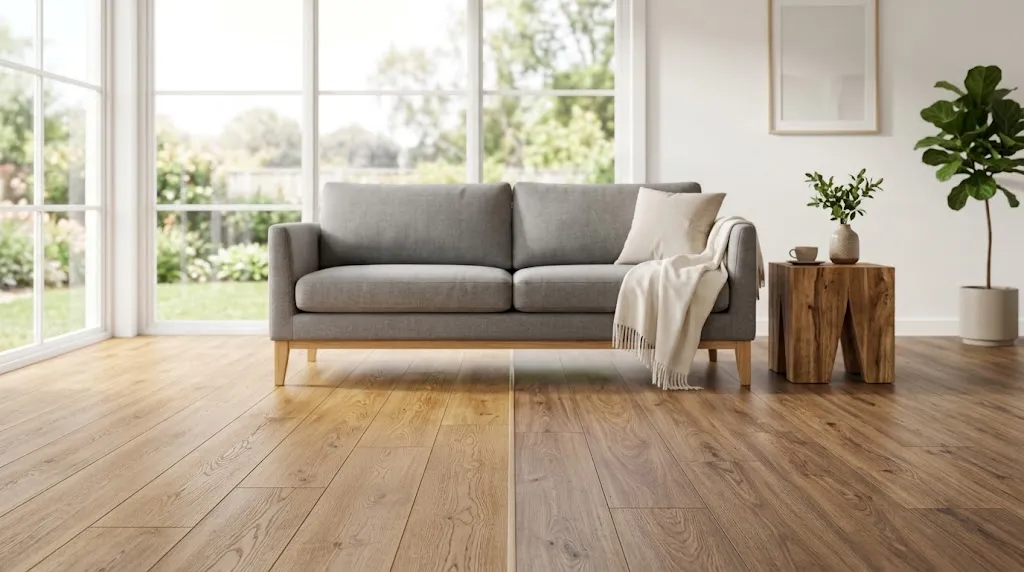

Standing in the flooring aisle, both options look almost identical. Wood grain, click together planks, a similar price tag. So how do you choose? This guide to LVP vs laminate flooring breaks it down by water, wear, cost, looks and installation, so you can pick with confidence. The short version: LVP wins wherever moisture shows up, and laminate can win on price in dry rooms. But the details matter, so we'll go through them one by one.
Quick Answer: LVP vs Laminate Flooring
If you only have thirty seconds, pick LVP for kitchens, bathrooms, basements and laundry rooms. Pick laminate for dry areas where budget matters most. That's the honest answer to LVP vs laminate flooring for most homes. Now the fine print.
Choose LVP if...
- You've got moisture, spills or pets to deal with.
- You want a floor that's quieter and warmer underfoot.
- The room is a kitchen, bathroom, basement or laundry room.
Choose laminate if...
- The room stays dry, like a bedroom or home office.
- You want the lowest price per square foot.
- A harder, scratch resistant surface matters more to you than waterproofing.
What Is LVP Flooring?
LVP stands for luxury vinyl plank. It's a synthetic floor made mostly of PVC, printed with a wood grain and topped with a clear wear layer. Think of it as a very convincing photo of oak that happens to shrug off water.
How luxury vinyl plank is built (SPC vs WPC cores)
Most modern LVP has a rigid core. SPC, short for stone plastic composite, is dense and hard, which helps it resist dents and temperature swings. WPC has a softer, foamier core that feels cushier underfoot but dents more easily. Many planks come with a pad already attached. The wear layer, measured in mil, tells you how much abuse the floor can take. For busy homes, 12 mil is a decent minimum, and 20 mil and up is better.
Where LVP works best
Anywhere moisture is a risk: kitchens, bathrooms, basements, laundry rooms and mudrooms. It's also a favorite in rentals and busy family homes, because it's quiet and forgiving.
What Is Laminate Flooring?
Laminate is a different animal. The core is high density fiberboard, with a photographic layer on top and a hard clear coat over that. It's been around since the 1970s, and it's improved a lot since then. Some newer products even advertise water resistant cores.
How laminate is built (fiberboard core and photo layer)
Four layers do the work: a backing, the fiberboard core, the printed photo layer and the wear layer. Durability is rated AC1 to AC5, and AC3 to AC5 suits most homes. The fiberboard is the weak spot. Once it soaks up water, it swells, and it doesn't shrink back.
Where laminate works best
Bedrooms, living rooms, home offices and hallways. Dry, low risk rooms where you want a wood look on a tighter budget.
LVP vs Laminate Flooring: Side by Side Comparison
Here's how the two stack up on the things people ask about most.
Comparison table: cost, waterproofing, durability, comfort, look, DIY difficulty, resale
| Category | LVP | Laminate |
|---|---|---|
| Waterproof | Yes, the plank itself | No, water resistant at best |
| Durability | Softer surface, forgiving | Hard surface, resists scratches, can chip |
| Comfort | Warmer, quieter, softer | Harder, can sound hollow |
| Look | Convincing wood, stone and tile looks | Very realistic wood grain and texture |
| Material cost per sq ft | $2 to $7 | $1 to $5 |
| DIY difficulty | Easy | Easy |
| Resale appeal | Strong in wet areas | Decent, seen as budget by some buyers |
Which one wins in each category
In the LVP vs laminate flooring matchup, LVP takes water, comfort and resale. Laminate takes price and scratch resistance. Looks and DIY difficulty are close to a tie.
Is LVP or Laminate More Waterproof?
LVP, and it isn't close. But "waterproof" gets used loosely, so let's be clear about what it means.

Waterproof vs water resistant, explained
Waterproof means the material itself doesn't absorb water. LVP qualifies. Water resistant means the floor holds out for a while and then gives up. Most laminate lives here. Even the good ones have edges and seams that let water in.
What happens after a leak or spill
Spill on LVP? Wipe it up, done. Spill on laminate? Wipe it up fast. A minute or two is fine, an hour isn't. A dishwasher leak that sits overnight can swell laminate edges for good. (We've seen it. It looks like tiny mountain ranges along every seam.) And with LVP, water can still slip under click seams and sit on the subfloor, so a big leak still needs real cleanup.
Best choice for kitchens, bathrooms and basements
LVP, no contest. For dry rooms, either works.
Durability: Scratches, Dents and Heavy Traffic
Pets and kids
Laminate's hard surface resists claw scratches well. LVP is softer, so a dog making a fast turn can leave marks, though a thicker wear layer helps. Accidents, though? LVP handles them. Laminate doesn't like anything that sits.
Furniture and appliance weight
Thin LVP can dent under a heavy dresser or fridge feet, while rigid core SPC holds up better. Laminate resists dents but can chip if something heavy drops. Felt pads under every leg, either way.
Expected lifespan of each
Commonly quoted numbers are 15 to 25 years for LVP and 10 to 20 for laminate. Both depend on the wear layer, the room and how well the subfloor was prepped. Treat those as ballparks.
Cost Breakdown: LVP vs Laminate Flooring
Cost is where LVP vs laminate flooring gets closer than people expect. Laminate is usually cheaper on the shelf. But once you count installation, underlayment and what happens if water hits, the gap shrinks.
Material cost per square foot
LVP often runs $2 to $7 per square foot, and laminate more like $1 to $5. Better products in both categories cost more. Paying for a thicker wear layer is usually worth it.
Installation cost and labor
Labor for either is commonly $2 to $5 per square foot, depending on the room, subfloor prep and old floor removal. Small rooms can trigger minimum job charges.
Long term cost, repairs and replacement
A cheap floor that needs replacing after a leak isn't cheap. Repairing LVP usually means swapping one plank. With laminate, water damage can mean tearing out a whole run.
Look and Feel Underfoot
Wood look realism and texture
Laminate has beaten vinyl at wood realism for years, with deep embossing that follows the grain. LVP has caught up, and honestly, good LVP looks great. It also does stone and tile looks that laminate can't match as well.
Sound, comfort and warmth
LVP is quieter and warmer. Laminate, especially without a good underlayment, can sound hollow and clicky when you walk. Not a dealbreaker. But you'll notice it.
Style options and colors
Both come in oak, hickory, walnut, gray and white washed tones, and both offer wide and long plank styles.
Installation: Which Is Easier to Install?
Click lock installation for both
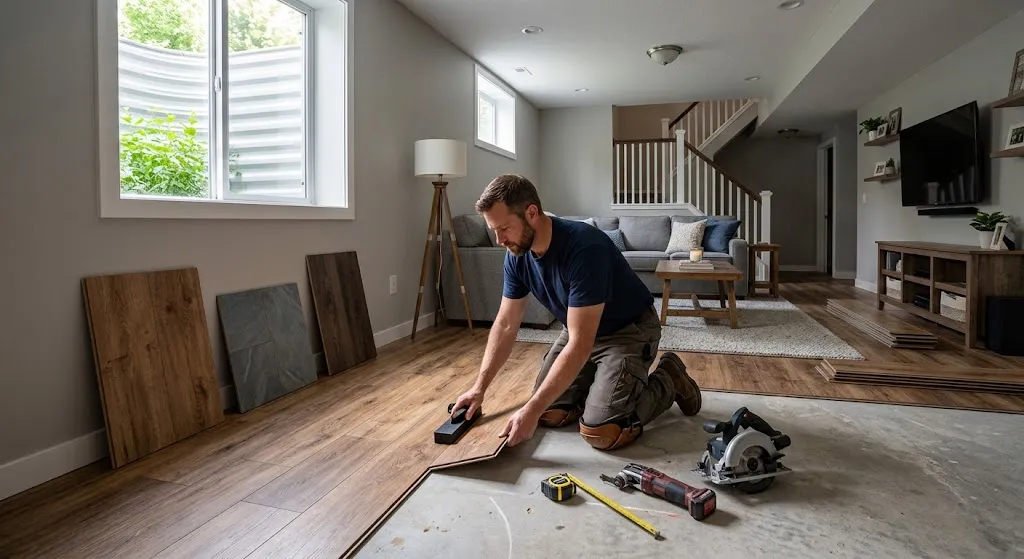
Both are usually floating floors that click together, and both go over most flat subfloors. Leave a gap of about 1/4 to 3/8 inch at the walls for expansion. We walk through the whole process in our LVP flooring installation guide.
Subfloor prep and underlayment
Flat and dry beats everything. Aim for about 3/16 inch of variation over 10 feet, or follow the manufacturer's number. Many LVP planks have a pad attached. Laminate often needs a separate underlayment, and over concrete it needs a moisture barrier too.
DIY or hire a pro?
Both are DIY friendly. If the subfloor is rough, the room has odd angles or you'd rather not move the fridge, hire it out.
Repair and Maintenance
Replacing a damaged plank
With a click lock floor, you can lift planks from the nearest wall and swap the damaged one. It's a bit of work, but doable for both. Glue down LVP is harder to repair.
Cleaning and care tips
Sweep or vacuum with a soft head. Damp mop with a pH neutral cleaner, and wring the mop well.
What to avoid, such as steam mops
Steam mops. Heat and moisture can damage both floors. Skip wax, oil soaps and abrasive pads too.
Resale Value and Home Appeal
What buyers prefer
Buyers often like LVP in kitchens and baths, since waterproof is a selling point. Laminate can be seen as a budget choice, though good laminate looks fine in a bedroom.
Which one adds more value
Neither adds the value of real hardwood. But a clean, modern LVP floor in wet areas tends to read as an upgrade, while damaged laminate reads as a problem. Your local market matters, so ask a realtor if you're selling soon.
Best Flooring by Room
Kitchen
LVP. Spills, dishwashers and dropped pans all come with the territory.
Bathroom
LVP. Laminate isn't a good match for a room with steam and standing water.
Laundry room
LVP or tile. Washers leak, and heavy machines need a floor that won't dent. Our comparison of LVP vs tile for laundry rooms covers it in detail.
Basement
LVP, ideally rigid core, with a moisture test on the slab first.
Bedrooms and living areas
Either one. This is where laminate makes the most sense, especially if the budget is tight.
Common Mistakes When Choosing Between LVP and Laminate
Choosing between LVP vs laminate flooring goes wrong in a few predictable ways.
Trusting the "water resistant" label
It's not the same as waterproof. Check the core, not the sticker.
Skipping moisture testing
Concrete slabs and old wood subfloors hide moisture. A quick test now beats a warped floor later.
Buying by look instead of core and wear layer
Two planks can look identical and perform completely differently. Check the core type, wear layer thickness and warranty before you fall for a color.
LVP vs Laminate Flooring FAQs
Is LVP better than laminate flooring?
In wet or busy areas, yes. In dry rooms it's closer, and laminate can win on price.
Is laminate flooring waterproof?
No. Some products are water resistant, and a few have water resistant cores, but the edges can still swell.
Which is cheaper, LVP or laminate?
Laminate, usually, by a dollar or two per square foot.
Which lasts longer?
LVP often lasts longer in rooms prone to moisture. In dry rooms it's about even if the wear layer is decent.
Can you install LVP over laminate?
Sometimes. The laminate has to be flat, dry and tight. Many manufacturers prefer you remove it, so check first. Thin LVP can also show bumps through.
Final Verdict: Which Should You Choose?
The LVP vs laminate flooring decision comes down to where the floor lives. Wet room or busy home, go with LVP. Dry room and tight budget, laminate makes sense. That's it, mostly.























Sign in to leave a comment.