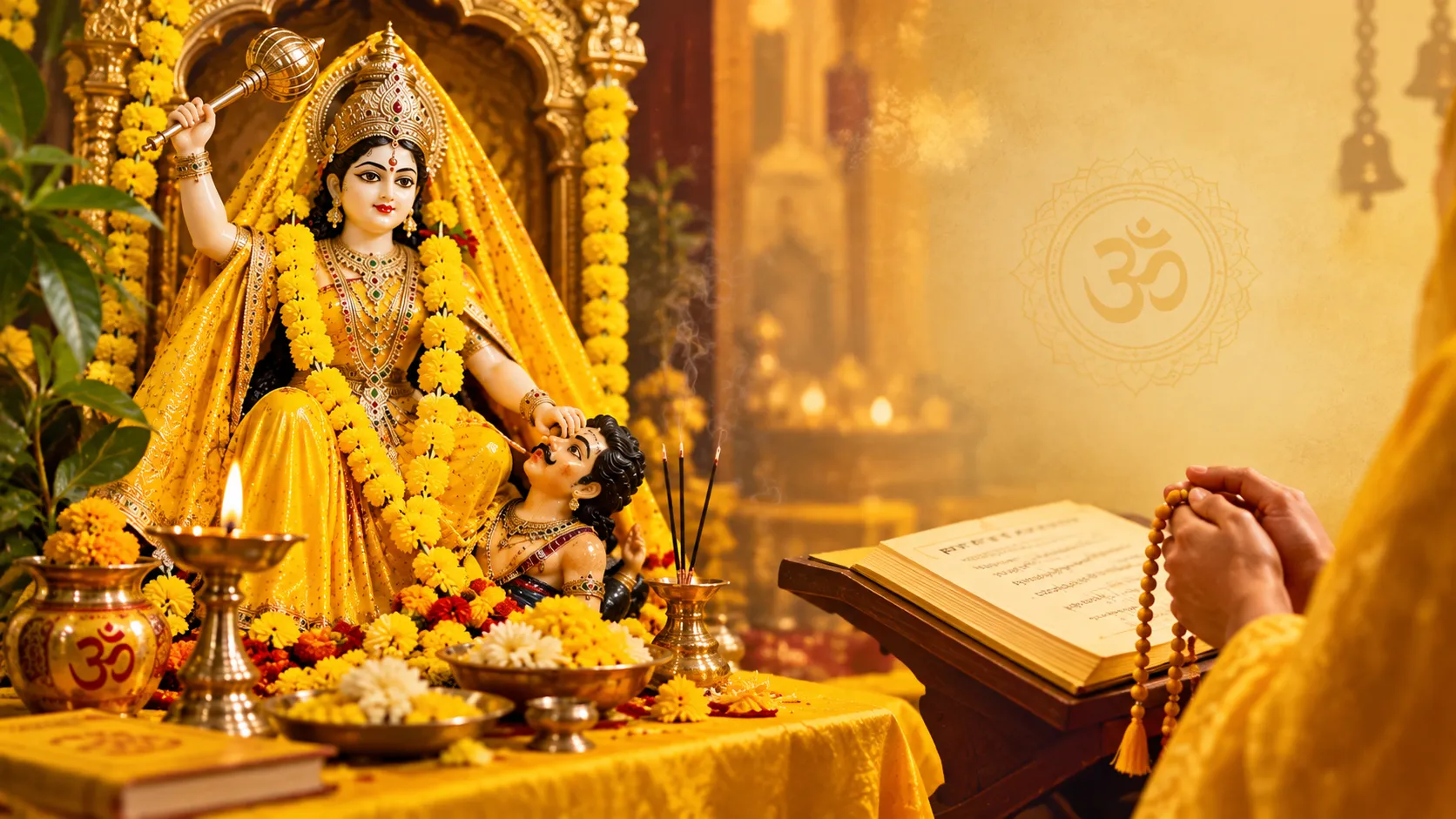

Maa Baglamukhi is traditionally worshipped as a powerful form of Shakti associated with protection, strength, stability, and the ability to overcome difficult circumstances. For devotees seeking spiritual support during challenging periods, a baglamukhi protection puja can be a meaningful form of worship focused on protection and inner peace.
Many people turn to Maa Baglamukhi when they feel surrounded by negativity, conflict, uncertainty, or obstacles. A protection puja is performed with the intention of seeking divine blessings and maintaining a sense of courage and spiritual stability.
Along with traditional prayers, devotees may also include a protection mantra in their worship. However, the exact mantra and ritual procedure can vary according to the tradition and type of puja. The practice should be approached with devotion rather than as a guaranteed solution to every problem.
What Is Baglamukhi Protection Puja?
A baglamukhi protection puja is a form of Maa Baglamukhi worship performed with the intention of seeking protection from negative influences, difficult circumstances, and unwanted obstacles.
Maa Baglamukhi is one of the ten Mahavidyas and is traditionally associated with the power to restrain harmful forces and opposition. Her worship is therefore often connected with situations where devotees seek strength and protection.
The purpose of the puja can vary from person to person. Some devotees may perform it for:
- Spiritual protection
- Peace of mind
- Strength during difficult circumstances
- Protection from negative influences
- Support during periods of conflict
- Greater confidence and stability
The intention of the worship can be clearly established through the sankalp before the main ritual begins.
How Does Maa Baglamukhi Puja Support Protection?
Traditional worship of Maa Baglamukhi focuses on spiritual strength and the ability to remain steady in challenging situations.
Protection From Negative Influences
Devotees may perform a protection puja when they feel affected by negativity or difficult surroundings. The worship provides an opportunity to seek divine blessings while maintaining a positive and disciplined mindset.
Strength During Difficult Situations
Challenges can create fear, stress, or uncertainty. Devotional practices can help devotees approach such periods with greater faith and inner strength.
Support for Peace and Stability
Protection is not only about external circumstances. Many devotees also seek mental calmness and emotional stability through prayer. Regular worship can become a peaceful part of a personal spiritual routine.
What Is the Role of a Protection Mantra?
A protection mantra is a sacred prayer or mantra used within spiritual practice with the intention of seeking protection, strength, or divine support.
Maa Baglamukhi worship includes traditional mantras associated with the goddess. Some forms are simple devotional prayers, while others belong to specialized mantra practices.
Because pronunciation and ritual context can be important, devotees should follow the mantra recommended by their priest or spiritual teacher. Advanced mantra practices should not be attempted simply by copying instructions from an online source.
For everyday devotion, the focus can remain on sincere prayer, concentration, and respect for Maa Baglamukhi.
Maa Baglamukhi Protection Puja Process
The exact puja process depends on the tradition and type of ceremony. A general devotional structure may include the following steps.
1. Prepare the Worship Space
Begin by cleaning the area where the puja will be performed. Keep the space organized and peaceful.
Place an image or idol of Maa Baglamukhi in the designated area and arrange the required puja materials before beginning.
2. Take Sankalp
Sankalp establishes the intention of the worship. For a protection-focused puja, the devotee may seek blessings for safety, peace, strength, and protection from negative influences.
In a formal ceremony, the priest can guide the devotee through the appropriate sankalp procedure.
3. Invoke Maa Baglamukhi
The ritual then proceeds with traditional prayers and invocation of Maa Baglamukhi.
The exact method can vary depending on the form of puja being performed. A priest may perform specific prayers and rituals according to the established tradition.
4. Make Traditional Offerings
Flowers, fruits, water, incense, diya, and other appropriate offerings may be included depending on the puja.
Yellow is traditionally associated with Maa Baglamukhi, and yellow flowers or other yellow offerings may be used in her worship according to the tradition being followed.
5. Perform Mantra and Prayer
Appropriate prayers or mantras are recited during the worship. The devotee can focus on the intention of protection, peace, strength, and spiritual well-being.
For specialized mantra practices, it is advisable to follow the instructions of a knowledgeable practitioner.
6. Complete the Puja
The ritual may conclude with aarti and final prayers. The devotee can express gratitude to Maa Baglamukhi and seek continued blessings for peace and protection.
Can Baglamukhi Puja Be Performed for Family Protection?
Devotees may choose to dedicate their prayers to the well-being and protection of their family.
During the sankalp, the intention of the worship can be expressed clearly. The prayer may focus on peace within the household, strength during difficult periods, and general spiritual well-being.
However, a puja should not be presented as a replacement for practical safety measures. If there is a real-world threat or emergency, appropriate practical and professional help should always be sought.
Spiritual worship can complement a person's faith and emotional resilience, but it should not replace necessary action.
When Should You Perform Protection Puja?
The appropriate timing can depend on the tradition, purpose of the worship, and guidance of the priest.
Some devotees prefer to perform regular worship on a consistent schedule, while others arrange a puja during a particularly challenging period.
If the ritual is being performed as a formal Maa Baglamukhi Puja, an experienced priest can help select the appropriate date and procedure according to the relevant tradition.
For simple home prayer, choosing a quiet and peaceful time can make it easier to concentrate.
What Materials Are Used in Protection Puja?
The required materials depend on the type of ceremony. Basic devotional worship may include:
- Maa Baglamukhi image or idol
- Yellow flowers
- Turmeric
- Diya
- Incense
- Water
- Fruits
- Traditional offerings
- Puja utensils
A formal ceremony may require additional materials. If you are booking a puja, ask the priest or service provider whether the samagri is included.
This is particularly useful when arranging an online puja because the service provider may already organize the required materials.
Should You Book Baglamukhi Protection Puja Online?
Online puja booking can be convenient for devotees who cannot travel to a temple or arrange a priest locally.
Before booking, check the details of the service carefully. Confirm:
- Who will perform the puja
- Where the ritual will be conducted
- What type of puja is included
- Whether samagri is included
- Whether your name can be included in the sankalp
- Whether live participation is available
- Whether havan is included
- What you receive after the ceremony
A clear description of the service makes it easier to understand what you are paying for and avoids confusion.
Protection Puja vs. Regular Devotional Puja
A regular devotional puja may focus broadly on worship, gratitude, and seeking blessings. A protection puja, on the other hand, is performed with a more specific intention related to safety, strength, peace, or overcoming difficult influences.
The underlying devotional practice can still be similar. The main difference is the intention established during the sankalp and the specific prayers or rituals selected by the priest.
If you are unsure which type of ceremony is suitable, discuss your purpose with a knowledgeable priest before booking.
What Should You Expect From a Protection Puja?
It is important to maintain realistic expectations. A Maa Baglamukhi Puja is a spiritual and devotional practice. It can provide a meaningful opportunity for prayer, reflection, faith, and emotional strength, but it should not be treated as a guaranteed way to prevent every negative event.
For example, if you are concerned about physical safety, legal problems, financial difficulties, or another real-world issue, take appropriate practical steps alongside your spiritual practice.
The value of the puja can lie in helping you approach difficult situations with greater calmness, faith, and determination.
Final Thoughts
A baglamukhi protection puja is traditionally performed by devotees seeking spiritual protection, strength, peace, and support during challenging circumstances. Through prayer, sankalp, traditional offerings, and appropriate mantra practice, devotees can express their faith and seek Maa Baglamukhi's blessings.
A protection mantra may form part of the worship, but the appropriate mantra and puja process depend on the tradition being followed. Simple devotional practices can be incorporated into home worship, while specialized rituals are best performed with guidance from an experienced priest.
Whether your intention is personal peace, family well-being, or spiritual safety, approach the puja with sincerity and realistic expectations. Combine spiritual practice with practical action whenever a real-world challenge requires it. This balanced approach allows Maa Baglamukhi worship to remain a meaningful part of your spiritual routine.




















Sign in to leave a comment.