Language learning should never feel like a worksheet wearing a disguise. For children, the most powerful lessons can begin with a bright picture, a playful character, or a story that makes them wonder what happens next. That is where colorful bilingual storytelling changes the experience. Instead of treating a second language as a list of unfamiliar words, stories give children a reason to listen, look, repeat, and understand.
With Spanish-English books, young readers can encounter new vocabulary in meaningful situations while enjoying turning the page.
Stories Give Words a Purpose
Imagine a child meeting a new word in isolation. It may be repeated once, memorized briefly, and forgotten by tomorrow. Now imagine that same word appearing beside a bright illustration, a familiar character, and an exciting event in a story. Suddenly, the word has a purpose.
Spanish-English books create this kind of natural context by presenting Spanish and English together. Children can compare words, carefully notice sentence patterns, and connect language with pictures and actions. This makes learning feel less like studying and more like discovering clues inside a story. Repeated exposure also helps young readers become more comfortable with vocabulary, comprehension, pronunciation, and sentence structure.
Color Makes Comprehension More Natural
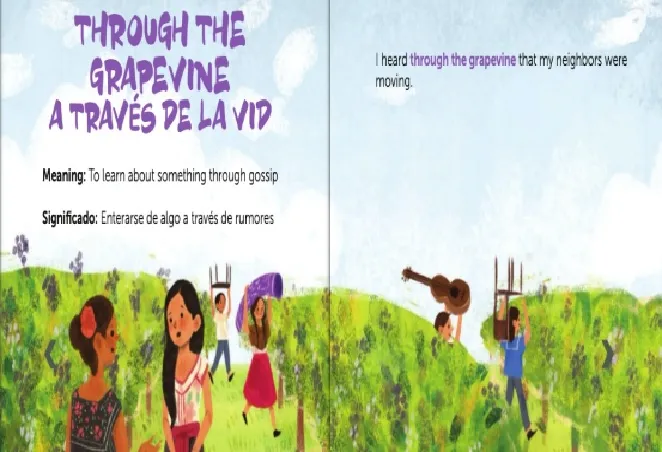
For early readers, pictures are not simply decoration. They are another way of communicating. Colorful illustrations can show emotions, explain unfamiliar ideas, reveal what characters are doing, and help children predict what might happen next. When a new Spanish word appears alongside a clear image, children have an extra pathway to understanding its meaning.
This visual support is useful for beginners and English language learners. Instead of stopping every few seconds to translate, children can use the story and artwork together to make sense of unfamiliar language. Over time, this can build confidence and encourage children to read more independently.
A Story Can Carry More Than Vocabulary
Meaningful language learning goes beyond knowing what a word means. Stories can introduce children to friendship, family, kindness, diversity, healthy habits, nature, science, community, and a sense of belonging. Folktales and multicultural stories can also introduce different traditions, perspectives, and places.
That experience gives language a human connection. A child is not simply learning a Spanish word for “friend”; they may be reading about characters working together. They are not only learning vocabulary related to nature; they may be exploring a coral reef or discovering life in a desert. The language becomes connected to ideas children can remember and discuss.
Building Bridges Between Two Languages
The beauty of bilingual storytelling is that both languages can share the same page. This gives children a bridge when one language feels easier than the other. They can look at the Spanish text, connect it with the English text, and gradually recognize words and phrases without depending on constant translation.
For families raising bilingual children, this approach can also help maintain a home language while strengthening English literacy. Shared reading gives parents, grandparents, siblings, and children opportunities to talk, ask questions, compare expressions, and enjoy a story together. The result is not just stronger language skills, but richer communication across generations.
Learning Can Continue Beyond the Page
A bilingual story can serve as a starting point for many activities. After reading, children might retell the story, point out characters, describe an illustration, discuss a lesson, or identify words. Teachers can use stories for vocabulary practice, comprehension, partner work, discussion, and culturally responsive activities.
Audio-supported resources can add another layer. PENPal-compatible books allow children to hear pronunciation while following printed words, supporting listening skills, speaking confidence, and independent practice. Bilingual dictionaries, multilingual posters, teaching resources, nonfiction books, and story collections can further extend learning at home or in the classroom.
Choosing Stories That Invite Curiosity
The strongest bilingual resources are those children actually want to open again. A collection combining vibrant artwork, age-appropriate language, diverse characters, engaging plots, folktales, fairy tales, and nonfiction gives young readers reasons to keep exploring.
Different ages and interests can be supported through picture books, baby and toddler sets, older learner collections, classroom sets, and themed nonfiction. Whether a child loves animals, family adventures, sports, nature, or imaginative tales, the right story can make practice feel purposeful.
A colorful page can do more than capture attention. It can make a new word understandable, turn reading into conversation, and help two languages feel like parts of one exciting adventure. When children see, hear, and experience language through stories, learning becomes memorable because it is connected to meaning.
Make storytime part of the language journey. Explore bilingual stories, choose themes that spark curiosity, and give children opportunities to read, listen, talk, and imagine in both languages. The goal is simple: make every new word belong. With Spanish-English books, children can build literacy, confidence, cultural awareness, and a lasting love of reading, one colorful story at a time.


























Sign in to leave a comment.