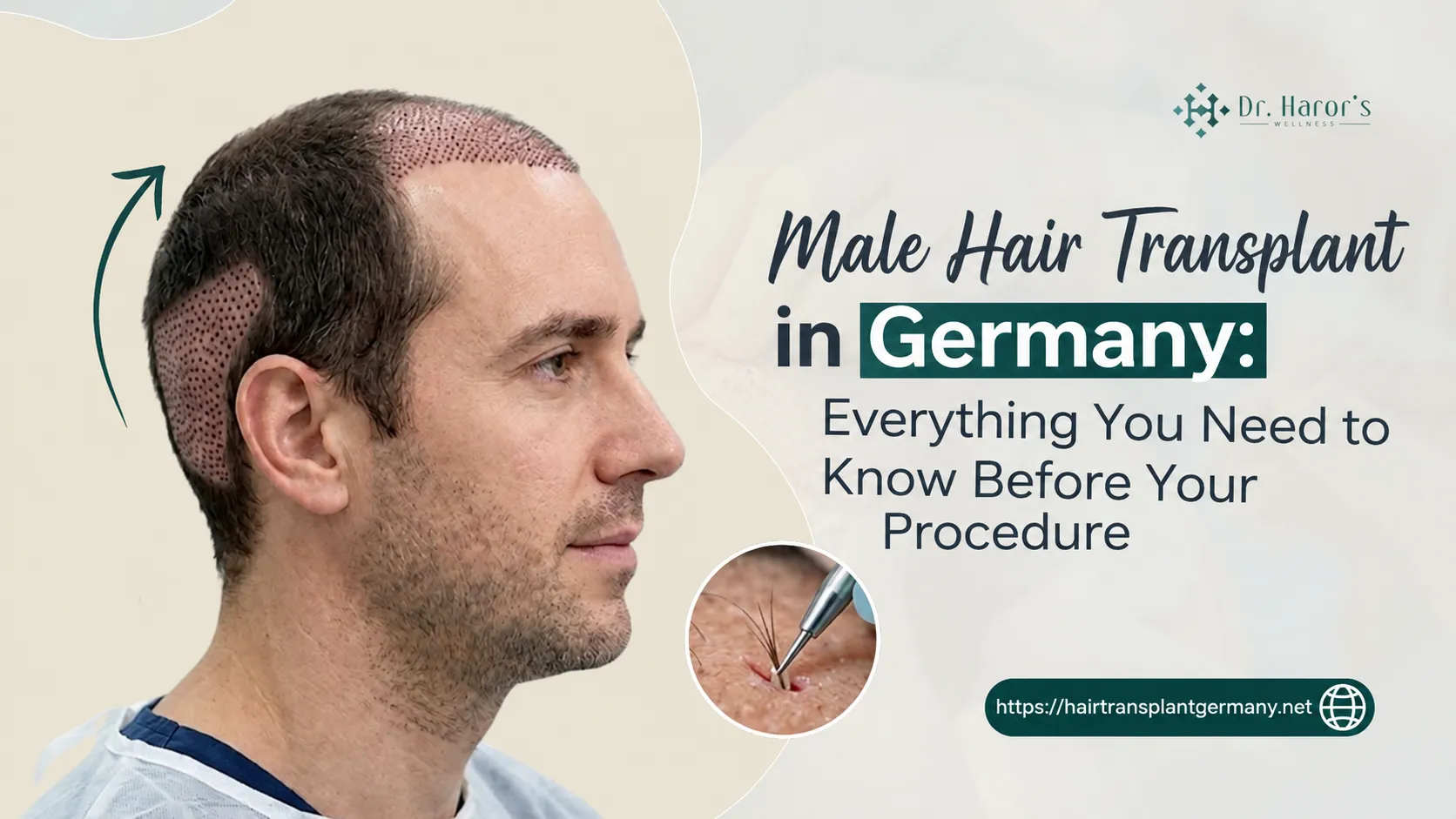

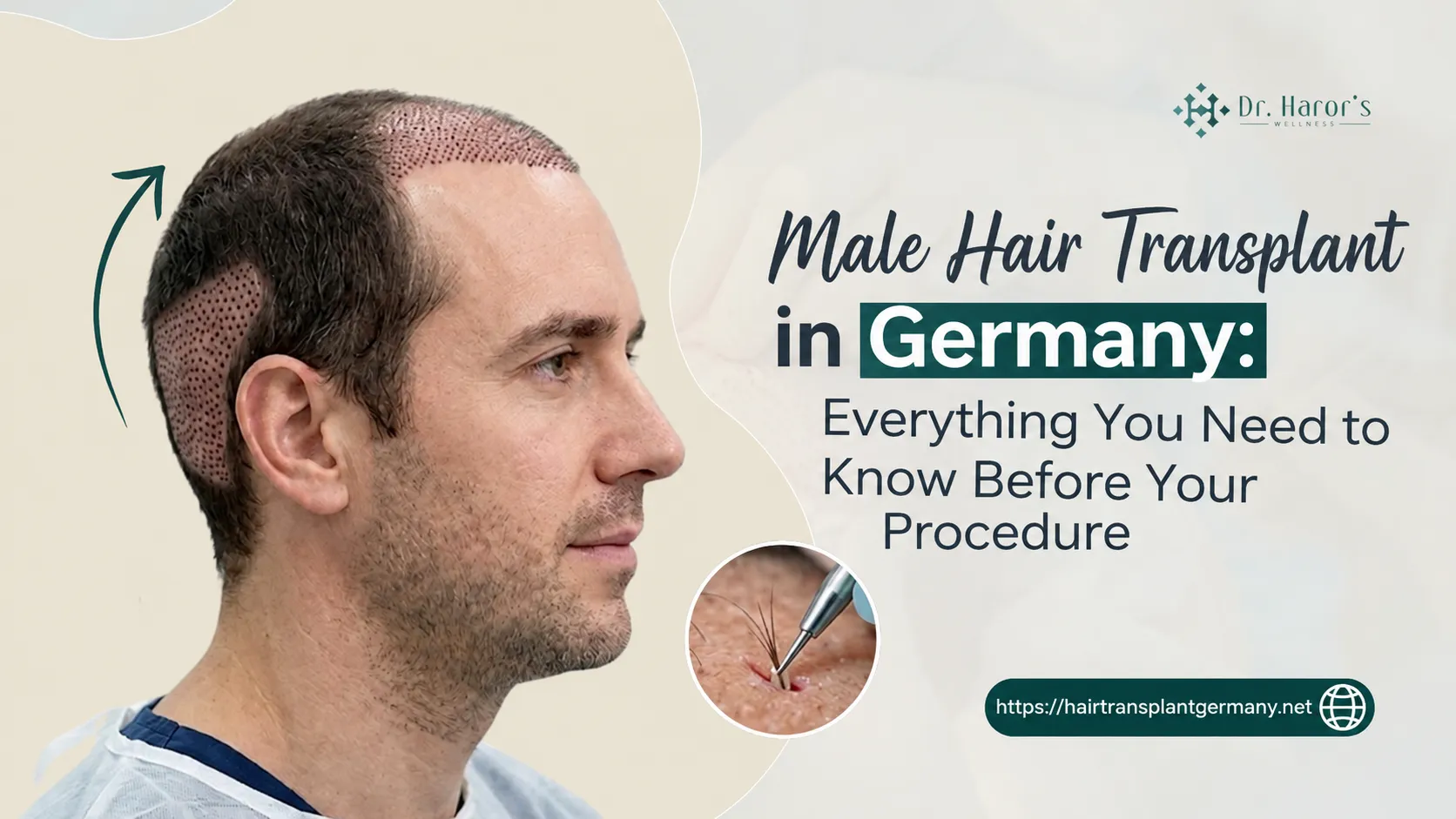
Hair loss in men is common, but that doesn't make it easy to live with. Thinning at the temples or a bare crown can change how you see yourself in photos and mirrors. Creams, shampoos, and other short-term fixes slow the process for some men, but they rarely bring back what's gone. For many, a surgical option is the only lasting answer, and a male hair transplant in Germany is one of the routes men consider.
Before you commit, it's worth knowing how the surgery works, which technique suits you, what recovery feels like, and how long the final result takes.
What Is a Male Hair Transplant?
A hair transplant is a surgical procedure that moves healthy follicles from the back and sides of your scalp to areas where hair has thinned or disappeared. Those donor follicles resist DHT, the hormone behind androgenetic alopecia, which is the most common cause of male pattern baldness. Because they keep that resistance after being moved, they continue to grow in their new location and blend with the hair around them.
That's the main difference between surgery and any short-term male hair loss treatment. Medication works only while you use it. A transplant relocates hair that's built to last.
Who Is a Good Candidate?
Not every man with hair loss needs surgery, and not everyone is ready for it. Surgeons generally look for patients who:
- are at least 25 years old
- have enough healthy donor hair
- have a hair loss pattern that has settled down
- are in good general health
- hold realistic expectations about the result
Before recommending a male hair transplant in Germany or anywhere else, the surgeon examines your scalp, hair density and quality, the extent of balding, your age, your medical history, and how your hair loss is likely to progress. If your donor supply is limited or you have a scalp condition, you may need a different male hair loss treatment first.
Benefits of a Hair Transplant
- It's a long-term answer to thinning and baldness.
- Results look natural because the procedure uses your own follicles.
- Transplanted follicles stay DHT-resistant, so they tend to remain active for years.
- It can add density, rebuild a hairline, and balance the face.
- You'll likely rely less on fibers, sprays, and other cover-ups.
- With proper care, results can last a lifetime.
- Many men feel more confident once the hair has grown in.
Hair Transplant Techniques Compared
FUT (Follicular Unit Transplantation)
FUT is the older method. The surgeon removes a thin strip of scalp from the donor area, splits it into individual follicular units under magnification, and places them in the recipient zone. Its strength is volume: FUT can deliver a large number of grafts in a single session, which helps men with advanced baldness. The trade-off is a thin linear scar across the back of the head, which can be seen if you wear your hair very short.
FUE (Follicular Unit Extraction)
With FUE, each follicle is taken out one at a time using a tiny punch tool, then implanted in the thinning area. There's no linear scar, only small dot-like marks that usually fade into the surrounding hair. Recovery tends to be quicker than with FUT. FUE is a popular choice for a male hair transplant in Germany, though very large sessions can be limited by how many grafts can comfortably be extracted at once.
Sapphire FUE
This is FUE with a different tool for the recipient incisions. Instead of steel, the surgeon uses blades with sapphire tips. The finer, smoother blades allow smaller incisions and more precise control over angle and direction, which helps the finished result look natural. Sapphire FUE can suit many stages of male pattern baldness, depending on scalp quality and donor condition.
DHI (Direct Hair Implantation)
DHI uses a pen-like implanter to place each follicle directly, without creating channels first. It gives the surgeon close control over depth, angle, and direction. It's also a delicate technique that demands a lot of skill, so the surgeon's experience matters more here than with most other methods.
The Procedure, Step by Step
- Consultation and planning. The surgeon studies your hair loss, checks the donor area, discusses your goals, recommends a technique, and designs your hairline.
- Preparing the recipient area. Small incisions are made where the new hair will go (skipped with DHI).
- Harvesting. Follicles are collected from the donor area using the chosen method.
- Implantation. The prepared grafts are placed one by one into the treated zone.
- Aftercare. You leave with written instructions on washing, sleeping, medication, and follow-up visits.
Depending on how many grafts you need, the procedure can take several hours.
Possible Side Effects
Most side effects are mild and short-lived, though they vary from person to person. Expect some of the following:
- swelling, redness, itching, tenderness, and mild pain
- small scabs around the implanted follicles
- temporary numbness or tightness in the scalp
- shock loss, where transplanted or nearby existing hairs shed for a while (this is normal)
Rarely, men experience infection, heavy bleeding, noticeable scarring, or a hairline that looks unnatural. Following your surgeon's aftercare plan and attending follow-ups lowers these risks considerably.
Hair Transplant Results Timeline
| Time after surgery | What to expect |
| 0–2 weeks | Scabs and redness heal; transplanted hairs may still be visible |
| 1–3 months | Shock loss is possible as hairs shed |
| 3–4 months | New growth appears, thin and uneven |
| 5–6 months | Hair thickens and density improves |
| 9–12 months | Most of the visible result is in place and looks more natural |
| 12–18 months | Final density, especially at the crown |
Patience is part of the process. Many men feel discouraged around month two or three, right before growth picks up.
Final Thoughts
A male hair transplant in Germany can be a lasting solution for men with pattern baldness, but the outcome depends heavily on choosing the right technique and, above all, the right surgeon. Compare surgery against every other male hair loss treatment, think about long-term results rather than quick fixes, and ask to see real before-and-after cases.
If you'd like expert guidance, Dr. Haror's Wellness offers consultations with hair transplant doctors who review your hair loss pattern and donor area before recommending a treatment plan that fits you.


























Sign in to leave a comment.