

A hairline that creeps back a little more each year, a crown that has gone thin, a bald patch you spot every time you pass a mirror. Most men deal with some version of this sooner or later. Hair oils, serums and styling products can make what's left look fuller, but they can't bring back follicles that have stopped working for good. If you're after something longer-lasting, a male hair transplant in Jaipur is one option worth looking into. This guide explains how the procedure works, who it suits, what recovery feels like, and where male hair loss treatment without surgery fits in.
What Is a Male Hair Transplant?
In simple terms, a surgeon takes healthy follicles from a part of your scalp that resists balding, usually the back or the sides, and plants them in the thinning or bald areas. Once they settle in, those follicles keep growing hair. How well it turns out depends on a few things: the quality of your donor hair, what's causing the hair loss, how carefully the surgery is planned, and how your scalp heals.
Who Is a Good Candidate?
Surgery isn't the answer for every man who's losing hair. Doctors generally look favourably on someone who:
- has a receding hairline, a thinning crown or classic pattern baldness
- has enough healthy donor hair at the back and sides
- has hair loss that has mostly settled down instead of racing ahead
- is in good general health and expects realistic results
A proper medical check matters here, especially if you're young or your hair loss showed up suddenly with no obvious reason. If the loss is still progressing, your doctor may suggest starting with male hair loss treatment first and coming back to surgery later.
Techniques Used for a Male Hair Transplant in Jaipur
Not every clinic uses the same method, and each one has its own trade-offs. Here's how the main techniques differ.
FUT (Follicular Unit Transplantation)
The surgeon removes a thin strip of scalp from the donor area, then separates it into individual follicular units ready for planting. It can suit some patients, but it does leave a linear scar. Your surgeon should talk you through whether it makes sense given your donor capacity, your hairstyle and what you want from the result.
FUE (Follicular Unit Extraction)
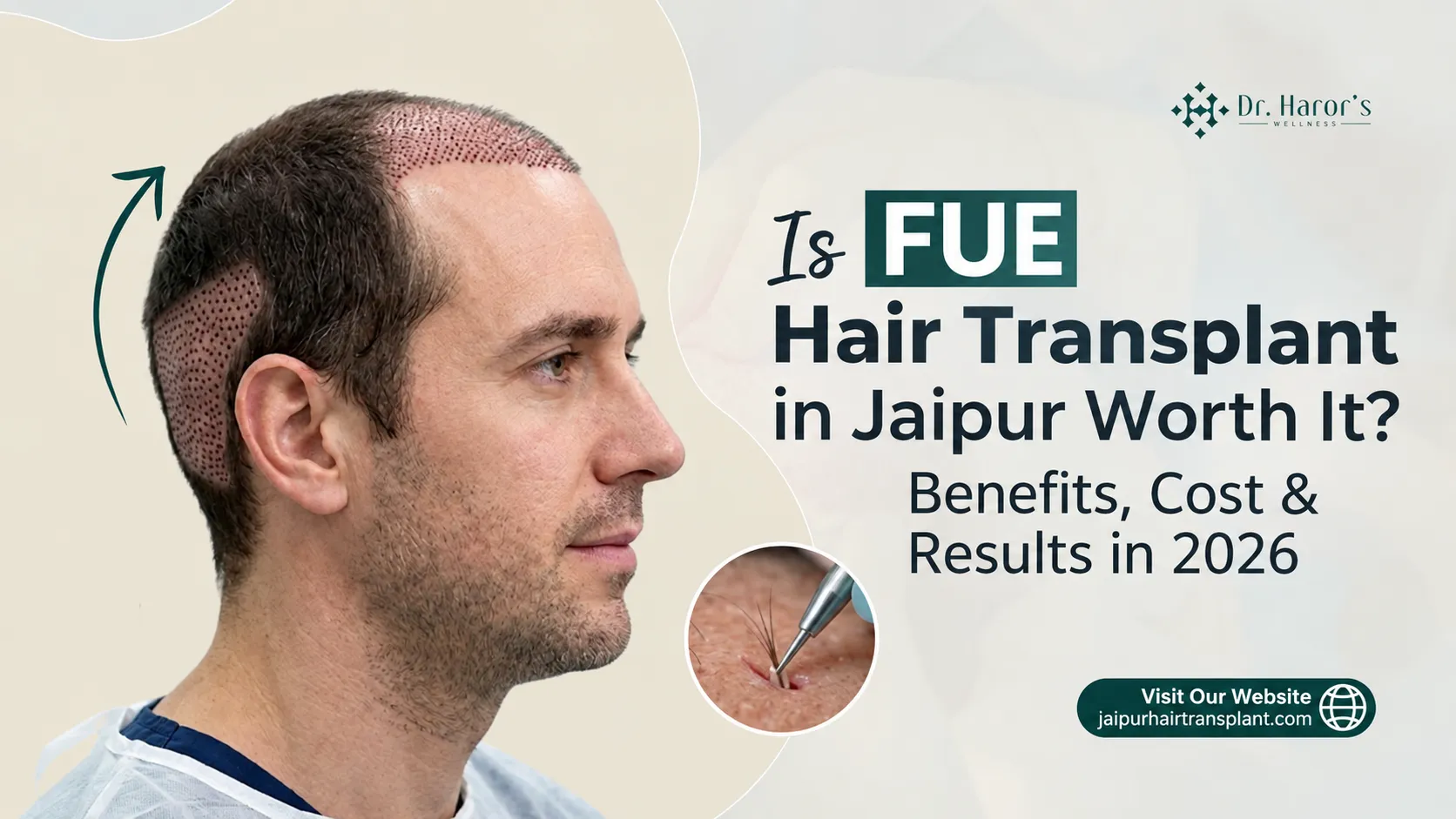
With FUE, follicular units are taken out one at a time and placed in the recipient area. There's no long linear scar, and recovery is often quicker than with strip harvesting. Tiny scars can still remain, though, and the final outcome leans heavily on how well the surgery was planned and carried out.
Sapphire FUE
This is a variation of FUE where the small channels for the grafts are made with sapphire blades. The idea is more precise site creation and tidy graft placement. Whether it's right for you depends on your needs and your surgeon's skill. Sapphire blades don't automatically give better results than other tools.
DHT (Direct Hair Transplantation)
In DHT, the extracted grafts go straight into the recipient area using specialised implantation tools. The focus is on careful handling and placement. It's worth asking the surgeon exactly how it's done, how the grafts are kept healthy in the meantime, and whether it fits your pattern of hair loss.
URHT (Ultra Receptive Hair Transplantation)
Developed by Dr. Navnit Haror, URHT is an advanced approach built around instant, zero-touch implantation. The aim is to keep graft handling to a minimum so more grafts survive. It's designed to deliver natural-looking growth, better coverage and faster growth than conventional methods.
What to Check Before You Book
Before you book a male hair transplant in Jaipur, look into the surgeon's credentials, their experience, and how hands-on they'll actually be during your procedure. Use the consultation to talk about the condition of your scalp, how many grafts you're likely to need, the density that's realistic for you, the risks, and the total cost. Ask to see before and after photos, and find out exactly what the quote covers, including medication and aftercare.
Recovery and Results: What to Expect
In the first days, some redness, mild swelling and scabbing in the treated area is normal. The transplanted hairs usually fall out within the first few weeks, which sounds alarming but is part of the process. New growth tends to start around the third or fourth month and keeps improving after that. Full results can take 12 months or even longer.
Can Male Hair Loss Be Treated Without Surgery?
Yes. Male hair loss treatment isn't limited to surgery. It also includes medication prescribed and monitored by a specialist. Either way, a doctor needs to decide whether you're suited to a transplant at all. If male pattern baldness runs in your family and your donor hair is limited, medication may well be the better route for you.
Final Thoughts
For men dealing with pattern baldness, a male hair transplant in Jaipur can be an effective solution. The more you know about the techniques, the likely costs and what recovery involves, the better prepared you'll be and the more realistic your expectations will be. If you're thinking about hair restoration, Dr. Haror's Wellness can walk you through your options and explain what goes into planning the treatment. Talk to the team about your concerns, find out what suits you, and take your time before you decide.
#HairTransplant #HairTransplantJaipur #MaleHairTransplant #HairRestoration #HairLossTreatment #FUE #FUT #SapphireFUE #DHT #URHT #UltraReceptiveHairTransplant #MalePatternBaldness #RecedingHairline #HairLossSolutions #BaldnessTreatment #HairGrowth #HairTransplantRecovery #HairTransplantResults #MensHairCare #DrHarorsWellness #DrNavnitHaror #Jaipur #JaipurClinic


















Sign in to leave a comment.