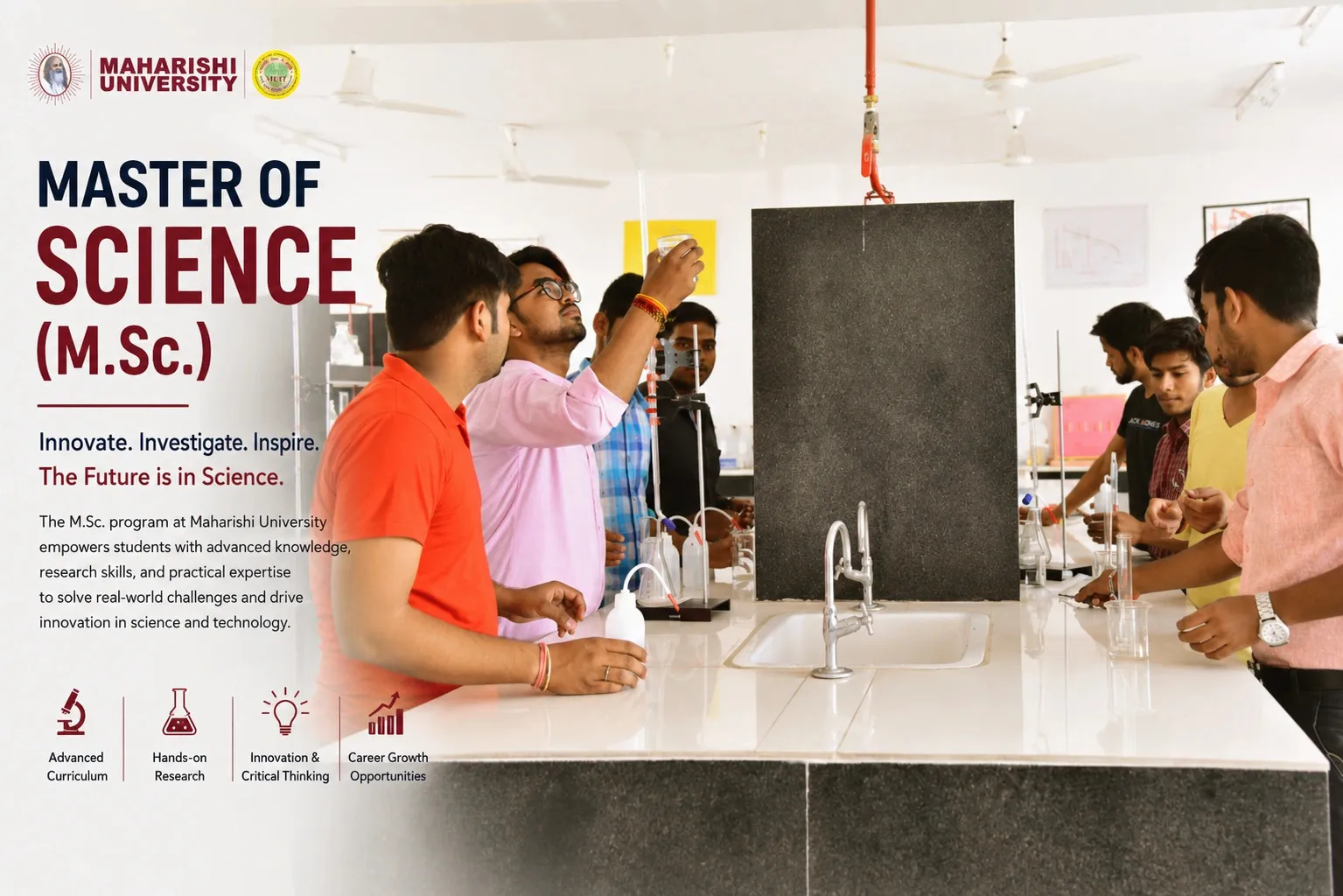

A Master of Science (MSc) is one of the most respected postgraduate degrees for students who wish to gain advanced knowledge, practical expertise, and research skills in their chosen scientific discipline. The Master of Science Career Scope has expanded significantly over the years due to rapid advancements in technology, healthcare, biotechnology, environmental science, data analytics, and research. Today, MSc graduates have access to a wide range of career opportunities in both the public and private sectors.
If you are planning to pursue an MSc, understanding its career prospects can help you make an informed decision about your future.
What Is the Master of Science Career Scope?
The Master of Science Career Scope extends across industries that require scientific knowledge, analytical thinking, and technical expertise. An MSc programme equips students with advanced subject knowledge, research methodology, laboratory experience, and problem-solving skills that are highly valued by employers.
Graduates can pursue careers in research, education, pharmaceuticals, healthcare, biotechnology, environmental management, information technology, manufacturing, agriculture, and government organisations.
Top Career Opportunities After MSc
An MSc degree opens doors to numerous professional roles depending on your specialisation. Some of the most popular career options include:
1. Research Scientist
Research scientists conduct experiments, analyse data, and contribute to scientific discoveries in universities, laboratories, research institutions, and private organisations.
2. Laboratory Analyst
Laboratory analysts perform scientific testing, quality control, and sample analysis in healthcare, pharmaceutical, food processing, and industrial laboratories.
3. Data Analyst
Graduates with backgrounds in mathematics, statistics, computer science, or data science can build successful careers as data analysts, helping organisations make data-driven decisions.
4. Lecturer or Academic Professional
Students interested in teaching can work as lecturers or educators after qualifying according to institutional requirements. Many also pursue research alongside teaching.
5. Quality Control Officer
Manufacturing companies, pharmaceutical industries, food processing units, and biotechnology firms hire MSc graduates to ensure product quality and compliance with industry standards.
6. Environmental Consultant
Graduates specialising in environmental science can work on sustainability projects, pollution control, environmental assessments, and conservation initiatives.
7. Clinical Research Associate
Healthcare organisations and pharmaceutical companies recruit MSc graduates to support clinical trials, medical research, and drug development projects.
Industries That Hire MSc Graduates
The Master of Science Career Scope covers a broad range of industries, including:
- Pharmaceutical companies
- Biotechnology organisations
- Healthcare and hospitals
- Information technology firms
- Educational institutions
- Government departments
- Agricultural and food industries
- Environmental agencies
- Manufacturing companies
- Research laboratories
- Chemical industries
- Data analytics and consulting firms
The growing demand for scientific professionals ensures diverse employment opportunities across multiple sectors.
Higher Studies After MSc
Students who wish to continue their academic journey have several options after completing an MSc.
Popular higher education choices include:
- PhD in the chosen specialisation
- MPhil (where available)
- Research fellowships
- Professional certification programmes
- Interdisciplinary postgraduate diplomas
- International research programmes
A doctoral degree further enhances career prospects in research, academia, and specialised scientific fields.
Skills That Improve Career Growth
An MSc programme develops valuable professional skills that contribute to long-term career success, such as:
- Scientific research techniques
- Analytical and critical thinking
- Laboratory and technical expertise
- Data analysis
- Communication and presentation skills
- Project management
- Problem-solving abilities
- Team collaboration
- Report writing
These competencies make graduates suitable for leadership and specialised technical roles.
Why Choose an MSc for Career Growth?
The Master of Science Career Scope continues to grow as industries increasingly seek professionals with specialised scientific knowledge. An MSc not only improves employability but also prepares students for research, innovation, leadership, and higher education.
With advancements in artificial intelligence, biotechnology, renewable energy, healthcare, environmental sustainability, and data science, skilled MSc graduates are expected to remain in demand across emerging sectors.
Apply Now for Master of Science
📞 Call Us: +91-9870200541
📧 Email: [email protected]
🌐 Apply Online: MUIT Lucknow Admission Portal
🏫 Visit Website: MUIT Lucknow Official Website
FAQs
1. What is the Master of Science Career Scope?
Master of Science Career Scope includes opportunities in research, healthcare, biotechnology, education, pharmaceuticals, environmental science, IT, manufacturing, and government sectors.
2. What are the top jobs after completing an MSc?
Popular career options include Research Scientist, Laboratory Analyst, Data Analyst, Lecturer, Clinical Research Associate, Quality Control Officer, and Environmental Consultant.
3. Can I pursue higher studies after an MSc?
Yes. MSc graduates can pursue PhD programmes, research fellowships, professional certifications, and other advanced academic qualifications.
4. Which industries recruit MSc graduates?
Pharmaceutical companies, biotechnology firms, hospitals, research institutions, educational organisations, IT companies, manufacturing industries, environmental agencies, and government departments regularly hire MSc graduates.
5. Is an MSc a good choice for long-term career growth?
Yes. An MSc provides advanced subject knowledge, research experience, and specialised skills that improve career prospects across various scientific and professional fields.
























Sign in to leave a comment.