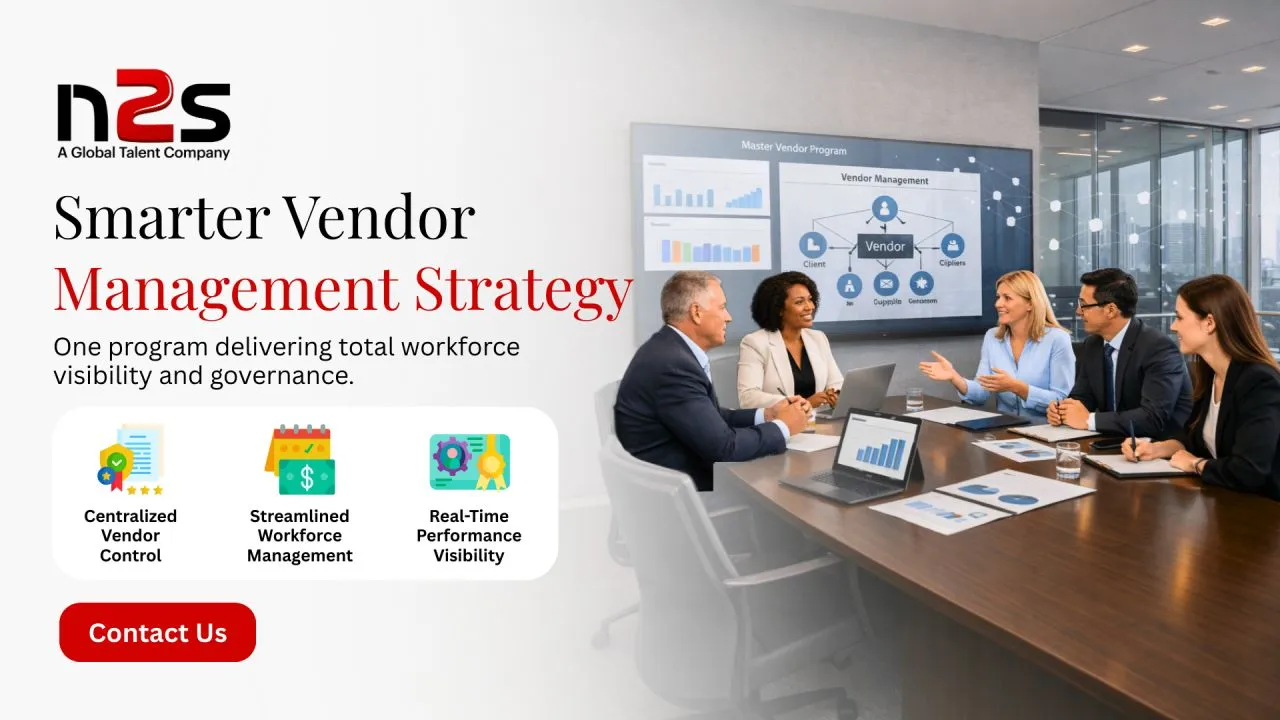

Managing a large contingent workforce is becoming more difficult for businesses. Companies often work with multiple staffing suppliers across different departments locations and skill areas. While this can provide access to more talent it can also create challenges around supplier management costs compliance reporting and workforce visibility.
A Master Vendor Program offers a more organized approach.
Instead of managing numerous staffing suppliers directly a business works with one primary staffing partner that coordinates the wider supplier network. This model can simplify contingent workforce management while giving businesses greater control over hiring performance costs and compliance.
As contingent labor becomes a more important part of modern workforce planning the Master Vendor Program is evolving from a basic supplier arrangement into a strategic workforce solution.
What Is a Master Vendor Program
A Master Vendor Program is a workforce management model where one staffing provider acts as the primary supplier for an organizations contingent workforce requirements.
The master vendor receives staffing requirements from the client and works with a network of approved staffing suppliers when additional sourcing support is required.
This creates a centralized structure for managing contingent hiring.
The master vendor may be responsible for
- Receiving and managing job requirements
- Sourcing qualified candidates
- Coordinating secondary staffing suppliers
- Managing candidate submissions
- Supporting onboarding
- Monitoring supplier performance
- Managing workforce reporting
- Supporting compliance processes
- Helping control contingent labor costs
The exact structure can vary depending on the organizations workforce needs and program design.
Why Businesses Are Looking at Master Vendor Programs
The contingent workforce has become more complex. Businesses now use temporary workers contractors consultants freelancers and project based professionals alongside permanent employees.
Industry research shows that contingent workforce management is expanding beyond traditional temporary staffing. Organizations are increasingly looking at direct sourcing services procurement independent contractors skills intelligence analytics automation and other workforce channels as part of broader workforce strategies.
This means businesses need better visibility and stronger coordination across their external workforce.
A Master Vendor Program can provide that centralized structure.
How a Master Vendor Program Works
The process is relatively straightforward.
A hiring manager identifies a workforce requirement and submits the request through the agreed process.
The master vendor reviews the requirement and begins sourcing suitable candidates. The primary supplier may use its own talent network first. If additional candidates are needed the master vendor can distribute the requirement to approved secondary suppliers.
Candidates are then screened and submitted to the client.
Once a candidate is selected the master vendor can support onboarding timesheet management reporting and ongoing workforce administration depending on the program structure.
This approach reduces the need for hiring managers to communicate with multiple staffing agencies for the same requirement.
Key Benefits of a Master Vendor Program
Centralized Supplier Management
Managing ten or twenty staffing suppliers individually can consume significant time for procurement and HR teams.
A master vendor provides a central point of contact. This makes communication simpler and allows businesses to manage supplier relationships through a more structured process.
Faster Access to Talent
A strong master vendor can combine its internal talent pool with a wider network of approved staffing suppliers.
This gives organizations broader access to candidates without requiring hiring managers to contact multiple agencies themselves.
Better Cost Control
Centralized workforce management makes it easier to monitor rates supplier fees overtime and overall contingent labor spending.
Businesses can also establish consistent rate structures and review supplier performance using measurable data.
Improved Workforce Visibility
One of the biggest challenges with contingent labor is knowing exactly how many external workers are engaged where they are working and how much the organization is spending.
A centralized program can bring workforce information together and provide better visibility for HR procurement finance and business leaders.
Stronger Compliance
Contingent workforce management involves several areas of risk including worker classification onboarding documentation payroll processes and employment requirements.
A structured Master Vendor Program can help establish consistent processes and accountability across the supplier network.
Better Supplier Performance
A master vendor can track supplier performance using metrics such as response time candidate quality fill rates hiring manager satisfaction and retention.
This creates a more measurable approach to supplier management.
The Role of Technology in Modern Master Vendor Programs
Technology is changing how contingent workforce programs operate.
Modern workforce management programs increasingly use Vendor Management Systems and other digital tools to manage requisitions candidate submissions timesheets approvals reporting and supplier performance.
Artificial intelligence is also becoming part of contingent workforce management. AI can support candidate matching workforce analytics demand forecasting supplier evaluation and other decision making processes.
The important change is that technology is moving beyond simple administration. Businesses increasingly want workforce data that can help them make better decisions about talent costs skills and future workforce requirements.
Master Vendor and MSP Are Not the Same
Master Vendor and Managed Service Provider are sometimes used interchangeably but they are not always the same.
A Master Vendor is generally a primary staffing supplier that manages contingent workforce requirements and may coordinate secondary suppliers.
An MSP typically provides broader program management and governance across multiple staffing suppliers. The MSP may not directly supply workers and can operate as an independent program manager.
The right model depends on the organizations goals.
Businesses that want a primary staffing partner with supplier coordination may benefit from a Master Vendor approach. Organizations looking for independent supplier management and broader workforce program governance may consider an MSP model.
Some businesses may also use a blended approach.
Why Supplier Governance Matters
A Master Vendor Program should not simply become a single supplier arrangement.
The success of the program depends on maintaining a healthy supplier network and measuring performance consistently.
The master vendor should be evaluated on factors such as
- Time to fill
- Candidate quality
- Supplier response time
- Fill rate
- Retention
- Hiring manager satisfaction
- Cost savings
- Compliance performance
- Workforce diversity
- Supplier utilization
Regular performance reviews can help identify areas that need improvement and ensure the program continues to deliver value.
The Future of Contingent Workforce Management
The future of contingent workforce management will be increasingly data driven.
Organizations are looking beyond simply filling temporary positions. They want to understand which skills they need where those skills are located how much they cost and how effectively external workers contribute to business objectives.
AI automation analytics direct sourcing and integrated workforce technology are expected to play a larger role in these decisions.
At the same time human expertise will remain important. Technology can help identify patterns and improve processes but experienced workforce professionals are still needed to understand business requirements manage relationships and make informed talent decisions.
How to Choose the Right Master Vendor
Choosing the right master vendor requires more than comparing staffing rates.
Businesses should evaluate
- Industry experience
- Talent sourcing capabilities
- Supplier network strength
- Technology capabilities
- Compliance processes
- Reporting and analytics
- Recruitment speed
- Candidate quality
- Geographic coverage
- Ability to scale
- Communication and account management
A strong partner should understand the organizations workforce strategy rather than simply respond to individual job requirements.
Why Net2Source for Master Vendor Solutions
Net2Source provides Master Vendor solutions designed to help organizations simplify and strengthen contingent workforce management.
By acting as a centralized staffing partner Net2Source can help businesses coordinate staffing requirements manage supplier relationships improve workforce visibility and support more consistent hiring processes.
The approach combines staffing expertise technology workforce analytics and supplier management to help organizations build a more efficient contingent workforce program.
For companies managing multiple staffing suppliers or looking to gain better control over contingent labor Net2Source can provide a structured workforce solution that can scale with changing business requirements.
Contingent workforce management is becoming a strategic priority for organizations that need flexibility access to specialized skills and better control over workforce costs.
A well designed Master Vendor Program can simplify supplier management improve visibility speed up hiring and create greater accountability across the contingent workforce.
As workforce technology continues to evolve businesses that combine centralized supplier management with data analytics automation and strong human expertise will be better positioned to manage the changing world of work.
The goal is not simply to manage more workers. It is to create a contingent workforce program that is easier to manage more transparent and better aligned with business objectives.






















Sign in to leave a comment.