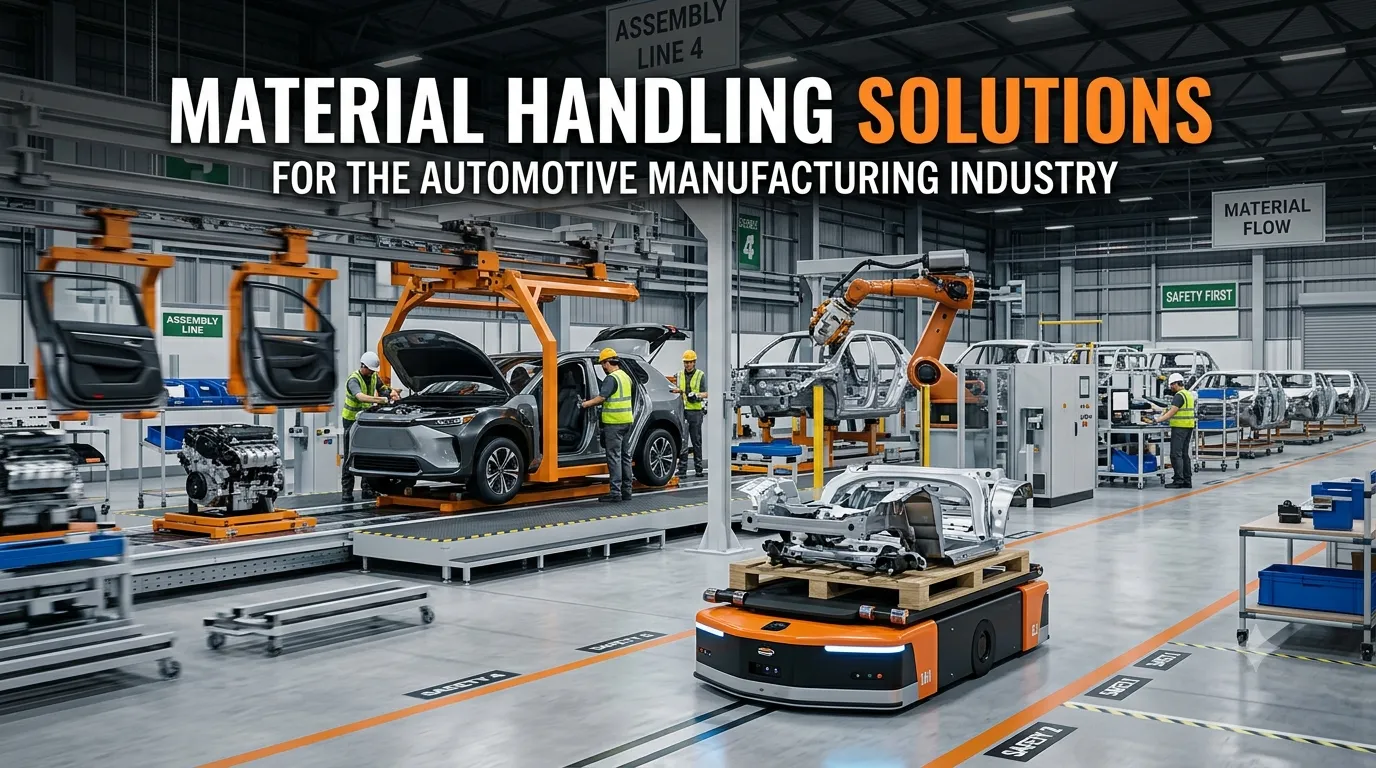

The automotive manufacturing industry operates in one of the most demanding production environments in the world. From stamping and welding to assembly and battery production, manufacturers must move heavy components safely, efficiently, and consistently throughout the facility. Even minor inefficiencies in material movement can create production bottlenecks, increase labor costs, and impact delivery schedules.
This is why modern material handling solutions have become a critical investment for automotive manufacturers. Whether producing traditional vehicles, electric vehicles (EVs), or commercial transportation equipment, companies need reliable systems that support productivity, workplace safety, and operational flexibility.
In this article, we explore how advanced material handling systems support automotive production and why customized lifting and positioning equipment is becoming essential for modern manufacturing facilities.
Why Material Handling Matters in Automotive Manufacturing
Automotive manufacturing involves moving a wide range of components, including:
- Vehicle frames and chassis
- Engines and transmissions
- Battery packs and modules
- Doors, hoods, and body panels
- Tires and wheel assemblies
- Production tooling and fixtures
- Raw materials and finished products
Many of these components are heavy, oversized, or difficult to maneuver manually. Without proper handling equipment, facilities often experience increased safety risks, worker fatigue, product damage, and slower production cycles.
Effective material handling solutions help manufacturers optimize workflows, reduce manual lifting, and maintain consistent production output while improving workplace ergonomics.
Common Material Handling Challenges in Automotive Plants
As automotive production becomes more automated and complex, manufacturers face several material handling challenges:
Heavy Component Movement
Automotive parts often weigh hundreds or thousands of pounds. Moving these components safely between workstations requires specialized lifting and transport equipment.
Production Line Bottlenecks
When materials do not arrive at the right location at the right time, assembly operations slow down. Delays in material movement can affect multiple stages of production.
Worker Safety Concerns
Manual handling of heavy parts increases the risk of musculoskeletal injuries, strains, and workplace accidents.
Space Constraints
Many automotive facilities operate within limited floor space. Material handling systems must maximize efficiency without disrupting existing workflows.
EV Manufacturing Requirements
The rapid growth of electric vehicle production has created new challenges related to handling battery packs, battery modules, and high-value electrical components.
Addressing these challenges requires specialized industrial material handling equipment solutions designed specifically for automotive environments.
Types of Material Handling Solutions Used in Automotive Manufacturing
Modern automotive facilities rely on various material handling technologies to improve efficiency and safety.
Industrial Cranes
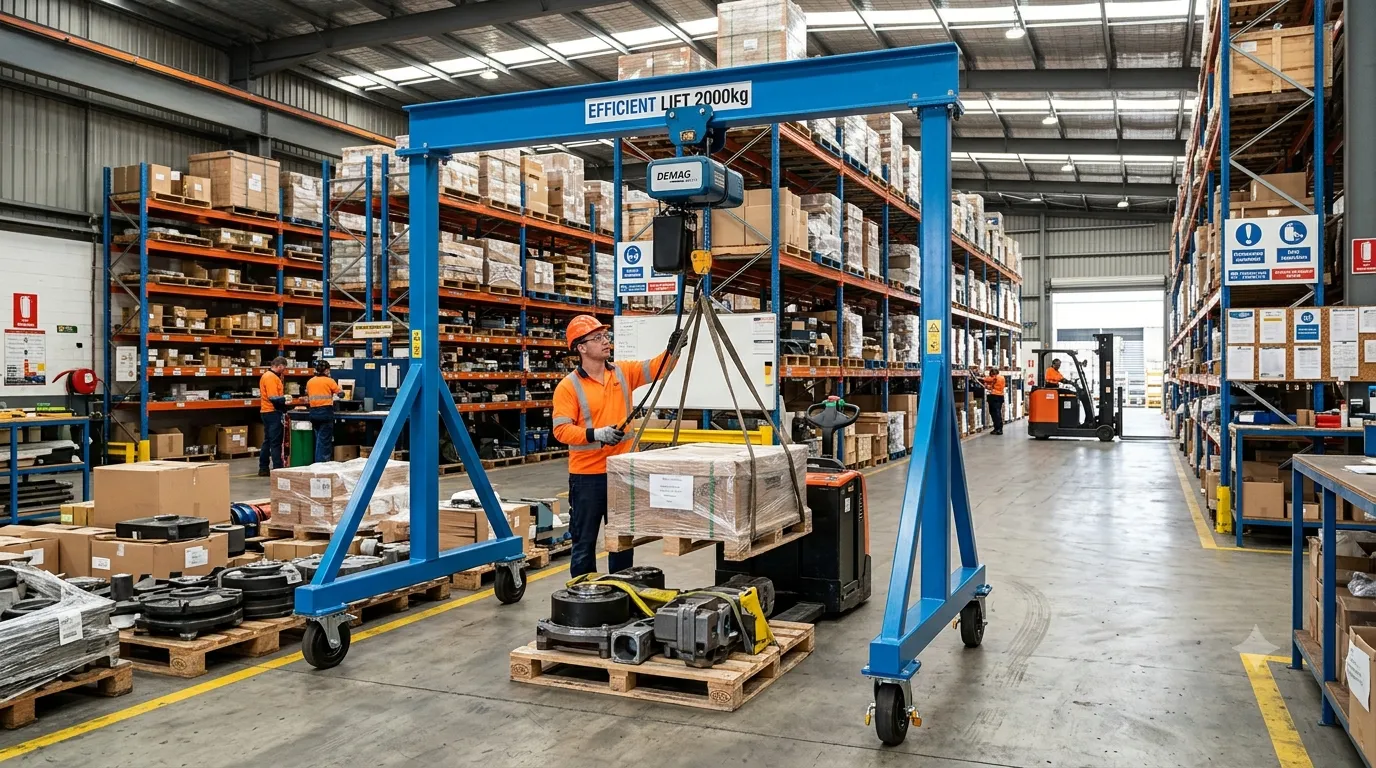
Overhead cranes, jib cranes, and workstation cranes help move engines, transmissions, dies, and large assemblies throughout the production process.
These lifting systems reduce manual handling and provide precise load positioning, making them ideal for assembly operations and maintenance activities.
Lift Tables
Hydraulic and electric lift tables allow operators to position components at optimal working heights. This improves ergonomics and reduces repetitive bending, lifting, and reaching.
Lift tables are commonly used for:
- Engine assembly
- Battery installation
- Component inspection
- Packaging operations
Automated Guided Systems
Many facilities are adopting automated material handling solutions such as automated guided vehicles (AGVs) and autonomous mobile robots (AMRs).
These systems transport materials between workstations with minimal human intervention, helping manufacturers reduce labor requirements while maintaining continuous production flow.
Pallet Inverters and Upenders
Automotive manufacturers often need to rotate, reposition, or invert large parts during production and shipping processes.
Upenders and pallet inverters improve efficiency by allowing operators to safely rotate loads while minimizing product damage.
Custom Positioning Equipment
Complex automotive components often require specialized handling systems designed around unique production requirements.
This is where custom material handling solutions provide significant value by supporting specific manufacturing processes and facility layouts.
The Growing Role of Automation in Automotive Material Handling
Automation continues to reshape the automotive industry. Manufacturers are increasingly investing in smart factories that integrate robotics, sensors, data analytics, and automated transportation systems.
Advanced automated material handling solutions offer several advantages:
- Faster material movement
- Improved inventory accuracy
- Reduced labor dependency
- Enhanced worker safety
- Greater production flexibility
- Lower operational costs
For example, automated systems can deliver parts directly to assembly stations based on real-time production demand. This minimizes unnecessary transportation while ensuring components are available when needed.
As EV production expands across North America, automation is becoming even more important due to the complexity and weight of battery systems.
Why Custom Material Handling Solutions Deliver Better Results
Every automotive manufacturing facility operates differently. Production volumes, floor layouts, product types, and workflow requirements vary significantly from one plant to another.
Off-the-shelf equipment may not always provide the best solution.
Custom material handling solutions allow manufacturers to design equipment that matches their exact operational needs. Customized systems can be engineered for:
- Unique load sizes and weights
- Specific production processes
- Limited facility space
- Specialized safety requirements
- Future production expansion
By tailoring equipment to the application, manufacturers often achieve higher productivity, improved worker ergonomics, and better long-term return on investment.
Benefits of Modern Material Handling Solutions
Investing in advanced material handling systems delivers measurable benefits across automotive operations.
Improved Workplace Safety
Mechanical lifting and automated transport systems significantly reduce manual handling risks and workplace injuries.
Increased Productivity
Efficient material flow minimizes downtime and supports faster production cycles.
Enhanced Product Quality
Controlled lifting and positioning reduce the likelihood of component damage during handling.
Reduced Labor Costs
Automation and ergonomic equipment allow workers to focus on higher-value tasks instead of manual material movement.
Greater Operational Flexibility
Modern systems can adapt to changing production requirements and support new vehicle programs.
Better Employee Ergonomics
Proper lifting and positioning equipment helps create safer and more comfortable working environments.
Future Trends in Automotive Material Handling
Several emerging trends are shaping the future of automotive manufacturing:
- Increased adoption of collaborative robotics
- Growth of autonomous material transport systems
- Expansion of EV battery manufacturing facilities
- Integration of Industry 4.0 technologies
- Real-time material tracking and monitoring
- Greater focus on sustainability and energy efficiency
Manufacturers that invest in modern industrial material handling equipment solutions today will be better positioned to remain competitive as production demands continue to evolve.
Choosing the Right Material Handling Partner
Selecting the right material handling provider is just as important as choosing the equipment itself.
Manufacturers should look for partners that offer:
- Engineering expertise
- Industry-specific experience
- Equipment customization capabilities
- Long-term service support
- Compliance with safety standards
- Proven success in automotive applications
Working with an experienced supplier ensures that material handling systems align with production goals and operational requirements.
Conclusion
The automotive industry depends on efficient, safe, and reliable movement of materials throughout the manufacturing process. As production environments become more complex and automation continues to expand, advanced material handling solutions play an increasingly important role in maintaining productivity and competitiveness.
From cranes and lift tables to automated material handling solutions and fully custom material handling solutions, manufacturers have access to technologies that improve workflow efficiency, worker safety, and product quality. By investing in the right industrial material handling equipment solutions, automotive manufacturers can build more resilient operations and prepare for the future of vehicle production.
Request a Quote
Looking for reliable material handling equipment for your automotive manufacturing operation? Air Technical Industries designs and manufactures custom lifting, positioning, transport, and ergonomic handling solutions engineered for demanding industrial environments. Contact our team today to discuss a solution tailored to your application.






















Sign in to leave a comment.