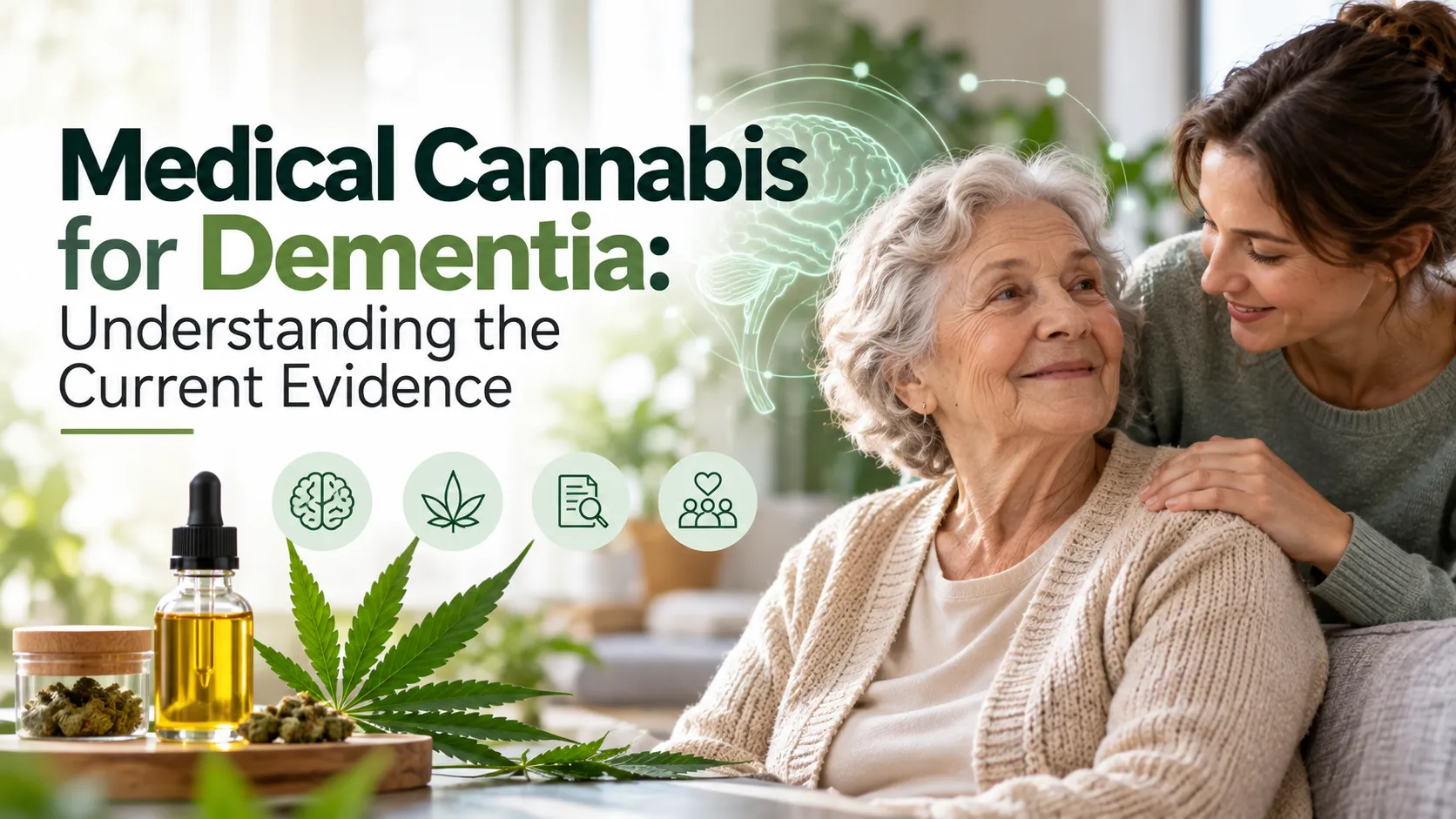

Dementia is a group of conditions that can affect memory, thinking, communication, behaviour, and the ability to manage everyday activities. Because symptoms can be complex and vary considerably between individuals, treatment usually involves a combination of approaches rather than a single medicine.
Interest in medical cannabis for dementia has increased as researchers investigate whether cannabis-based medicines could have a role in managing certain symptoms. However, it is important to distinguish scientific interest from established treatment recommendations.
What Is Dementia?
Dementia is not one specific disease. It is an umbrella term for symptoms associated with progressive changes in brain function.
Depending on the type and stage of dementia, a person may experience:
- Memory problems
- Difficulty concentrating
- Changes in communication
- Problems with planning or decision-making
- Changes in mood or behaviour
- Difficulty completing familiar tasks
- Sleep problems
- Changes in movement or coordination
Different types of dementia can affect people in different ways, so treatment needs to be individualized.
Why Is Medical Cannabis Being Considered?
Cannabis-based medicines contain compounds such as cannabidiol (CBD) and tetrahydrocannabinol (THC). Researchers have investigated these compounds for a range of potential therapeutic applications.
The interest surrounding dementia is partly related to symptoms that can accompany neurological conditions, including pain, sleep difficulties, anxiety, and behavioural changes.
However, this does not mean that medical cannabis has been established as a treatment for dementia itself.
The NHS currently states that medical cannabis is only likely to benefit a very small number of patients and identifies specific situations where it may be considered, including MS-related spasticity, chemotherapy-related nausea and vomiting, and certain severe forms of epilepsy. Dementia is not listed among these routine NHS indications.
Does Medical Cannabis Treat Dementia?
There is currently not enough evidence to describe medical cannabis as a treatment or cure for dementia.
Dementia management generally focuses on treating the underlying condition where possible, managing symptoms, maintaining independence, and providing appropriate support.
Cannabis-based medicines should therefore not be viewed as a replacement for established dementia care.
If a person with dementia is considering a cannabis-based medicine, the decision would need to take account of their overall health, existing medicines, symptoms, and potential risks.
Safety Is Particularly Important
Older adults and people with neurological conditions may take several medicines at the same time. Cannabis-based medicines can potentially interact with other medicines, and NHS guidance notes that CBD and THC can affect how other medicines work. Side effects can include dizziness, tiredness, changes in mood or behaviour, and other effects depending on the medicine.
This makes professional supervision especially important.
Unregulated cannabis products purchased online should not be treated as equivalent to prescribed medicinal products. The NHS warns that the quality and contents of many products sold online are uncertain.
A Specialist Consultation Comes First
In the UK, cannabis-based medicinal products can be prescribed legally by doctors on the GMC specialist register in appropriate circumstances.
A specialist would consider the person's condition, symptoms, current medication, previous treatments, potential benefits, and possible risks before deciding whether a cannabis-based medicine is appropriate.
A consultation does not automatically result in a prescription.
Medical Cannabis as Part of a Wider Care Plan
Dementia care can involve medication, physical activity, occupational support, cognitive and social activities, nutritional support, and assistance with everyday tasks.
Where symptoms such as pain or sleep problems are present, they should be assessed individually rather than assuming that cannabis-based treatment is appropriate.
This broader approach helps ensure that treatment decisions remain focused on the person's overall wellbeing.
What Does the Current Evidence Mean?
The current evidence does not support making broad claims that medical cannabis improves dementia or slows its progression.
NHS England notes that evidence for cannabis-based medicinal products varies considerably between indications and that many products remain unlicensed. Prescribers are expected to consider clinical evidence, safety, other medicines, and alternative licensed treatments.
For people researching medical cannabis for dementia, this distinction between research interest and established clinical treatment is important.
Final Thoughts
Medical cannabis for dementia remains an area where further research is needed. Although cannabis-based compounds are being investigated for various symptoms and neurological conditions, they are not currently an established treatment for dementia itself.
Anyone considering a cannabis-based medicine should discuss the decision with an appropriate specialist, particularly when other medicines are already being taken.
The safest approach is to consider medical cannabis within the wider context of evidence-based dementia care rather than as a standalone solution.























Sign in to leave a comment.