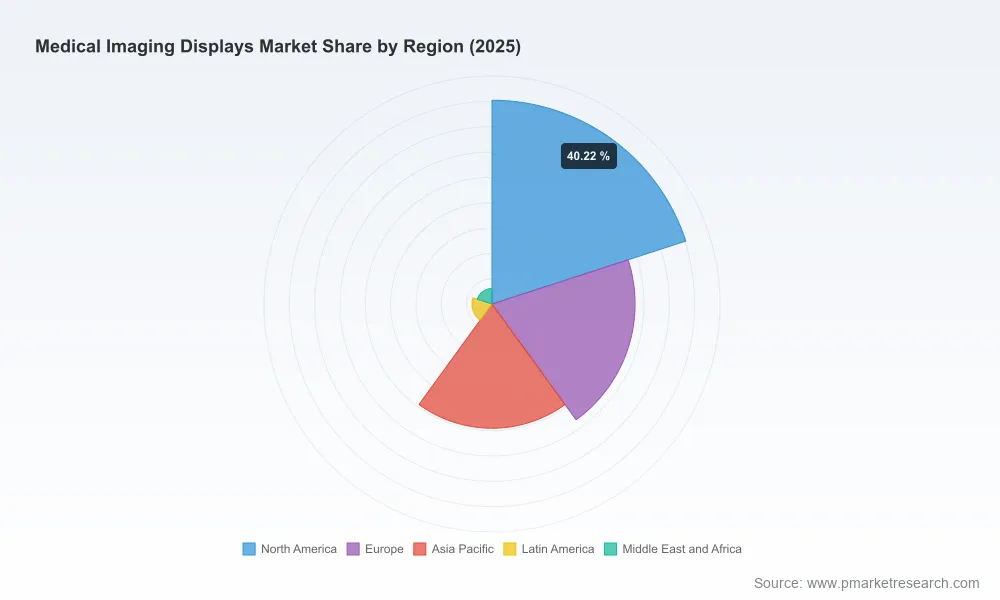

The Evolving Landscape of Medical Imaging Displays: Strategic Trends and Commercial Opportunities
Market Outlook and Core Challenges
The medical imaging displays market has transitioned from a steady growth phase into a period of accelerated transformation. Revenue across the global sector reached approximately USD 3,450 Million in 2025, building on a compound trajectory that saw the market expand from around USD 2,500 Million in 2020. The pace has quickened, with the sector projected to grow at a 6.5% CAGR through 2032, ultimately surpassing USD 5,300 Million by the close of the forecast period. This expansion is not uniform across all dimensions, but rather reflects a structural shift toward higher-resolution panels, broader clinical application scope, and sustained investment in diagnostic and interventional environments. The underlying growth signals a market that is moving beyond basic replacement cycles and entering an upgrade era driven by image fidelity, workflow integration, and procedural precision.
Despite the positive revenue trajectory, three structural challenges are reshaping competitive dynamics and demand patterns. First, pricing pressure is intensifying as display OEMs navigate a bifurcation between premium high-resolution systems and cost-competitive mid-tier panels. Hospitals and imaging centers are increasingly scrutinizing total cost of ownership rather than unit price alone, which pushes manufacturers to justify premium positioning through calibration reliability, longevity, and workflow connectivity rather than screen specifications alone. Second, the distinction between primary diagnostic displays and clinical or surgical review panels is blurring in practice, even as procurement categories remain separate. Buyers want versatile equipment that can handle multiple modalities without compromising grayscale accuracy or color consistency, forcing suppliers to design more flexible product architectures while maintaining strict adherence to clinical display standards. Third, supply chain volatility and component constraints continue to influence lead times and production planning. While conditions have improved relative to earlier disruptions, semiconductor availability, panel sourcing, and logistics variability still create incremental risk for manufacturers and procurement teams, particularly when new product introductions are timed around regulatory cycles or hospital budget windows.
These challenges are not merely operational frictions; they are strategic inflection points. The market is rewarding manufacturers that can deliver consistent image quality across display sizes, integrate calibration and management software into broader enterprise workflows, and navigate procurement realities without diluting clinical performance. For buyers, the challenge is to balance standardization with the need for modality-specific capabilities, while ensuring that capital allocation aligns with reimbursement realities and utilization patterns. The next phase of market development will be defined less by raw screen size and more by how reliably displays convert image data into confident clinical decisions.
Key Demand Drivers Shaping the Market
The momentum in medical imaging displays is underpinned by a set of interconnected drivers that are reshaping product requirements, procurement behavior, and competitive positioning. Technological innovation remains the most visible catalyst. There is a clear migration toward higher-resolution panels, particularly in the 2MP to 5MP range, which continues to dominate demand as radiology workflows require sharper detail for detection and characterization tasks. At the same time, above-5MP configurations are gaining traction in specialized applications where fine structural detail, subtle contrast distinctions, and dense image data place a premium on display precision. The practical impact is that resolution upgrades are no longer isolated hardware decisions; they are becoming part of a broader image quality strategy that includes grayscale calibration, uniformity control, and consistent presentation across devices. DICOM Part 14 Grayscale Standard Display Function compliance illustrates this dynamic well. Displays used for primary diagnosis must deliver predictable image presentation, which means manufacturers are differentiating not just through resolution, but through calibration accuracy, measurement consistency, and software-driven quality assurance that reduces variability across reading environments.
Regulatory and clinical standards are equally important in shaping demand. Medical displays intended for diagnostic use are subject to FDA 510(k) clearance as Class II devices, reinforcing the importance of demonstrated safety and effectiveness for clinical interpretation. This regulatory baseline creates a meaningful barrier to casual market entry and protects incumbents with established clearance portfolios, but it also raises the stakes for product launches, especially when displays are integrated into broader radiology workspaces or enterprise imaging environments. In that context, recent industry moves highlight how the market is shifting toward connected interpretation workflows. For example, GE HealthCare secured FDA 510(k) clearance in March 2026 for View, a next-generation diagnostic viewer designed to support anywhere-access for radiologists within the Genesis Radiology Workspace. This type of development signals that the display is increasingly part of a larger interpretation ecosystem where access, viewer performance, and clinical integration can be as decisive as panel specifications. Similarly, LG Electronics received FDA clearance and launched a 5MP diagnostic monitor for digital mammography and breast tomosynthesis, underscoring continued demand for modality-specific display solutions in breast imaging. These launches point to a market where regulatory clearance, application fit, and workflow compatibility are converging.
On the demand side, hospital investment behavior is a critical enabler. Capital expenditure trends in U.S. hospitals have shown renewed willingness to invest in imaging-related technology, with capital spending as a percentage of depreciation reaching a median of 123.4% in FY24 according to HFMA and Fitch Ratings data from February 2026. This indicates that many institutions are not merely maintaining aging equipment but are actively funding upgrades and technology refresh cycles. Radiology services remain central to this spending because displays support interpretation for CPT-coded procedures reimbursed through the Medicare Physician Fee Schedule, with separate professional and technical components reinforcing the economic importance of accurate, efficient reading environments. In practice, this means that display procurement is tied not only to image quality, but also to throughput, reader confidence, and the ability to support consistent interpretation across shifts and locations. The demand signal is further strengthened by procedural expansion in surgical and interventional settings, where visualization quality influences decision-making in the operating room and procedural suite.
Supply chain and cost structure dynamics continue to shape competitive behavior. Manufacturers are balancing the need for premium clinical performance with pressure to manage component costs, assembly complexity, and post-sale calibration support. The market is also seeing convergence across display categories, with companies increasingly offering multi-modality platforms that can serve diagnostic radiology, surgical visualization, and clinical review with appropriate calibration modes. This convergence helps address buyer preferences for fewer SKUs and simpler fleet management, but it also raises the bar for software, calibration, and integration capabilities. In parallel, the broader technology environment is influencing product roadmaps, particularly around HDR performance and advanced clarity for clinical procedures. Sony's August 2025 introduction of new 27-inch and 43-inch medical monitors with VESA Display HDR 1000 certification reflects this direction, showing that high dynamic range and display clarity are becoming relevant even beyond traditional radiology reading rooms. Taken together, these drivers indicate a market where image performance, regulatory compliance, workflow connectivity, and capital readiness are reinforcing one another.
Competitive Landscape and Leading Strategies
The competitive field in medical imaging displays is defined by a mix of specialist display manufacturers, diversified electronics players, and diagnostic system integrators, each with distinct strategic positioning. Concentration in the market remains meaningful, with the top three players accounting for roughly 45.2% of revenue and the top five reaching about 60.5%. This structure suggests a market where scale, established clinical credibility, and broad distribution matter, but also one where differentiated product positioning and application focus can support strong competitive niches. The landscape is not simply a contest of panel specifications; it is increasingly a contest of how well companies can align displays with clinical workflows, calibration discipline, and enterprise imaging needs.
Among the leading specialists, Barco NV stands out for its emphasis on high-resolution diagnostic radiology displays and multi-modality solutions, including its Coronis series for breast imaging and general radiology. Its profile reflects a long-standing focus on diagnostic-grade image consistency and modality coverage, which appeals to sites that prioritize reading accuracy across diverse examinations. EIZO Corporation has built recognition around the RadiForce series, with particular strength in precise grayscale calibration and high-resolution options for radiology. This positions the company around a core clinical requirement: dependable image presentation that reduces variability and supports diagnostic confidence. Double Black Imaging, based in the United States, focuses on radiology and mammography diagnostic displays with calibration software and large-format multi-modality monitors. Its strategy illustrates how calibration tools and large-format flexibility can be combined to serve sites that want broader modality support in a single display class.
Broader electronics and imaging players are competing through different levers. LG Electronics has moved into FDA-cleared diagnostic monitors, including 5MP models for breast imaging and high-resolution IPS displays for radiology, showing how consumer-grade display expertise can be adapted into regulated clinical markets when paired with appropriate clearances and application focus. Sony Corporation is expanding its presence in clinical and surgical visualization with high-clarity medical monitors, including recent VESA Display HDR 1000 certified models, indicating a strategy that targets image quality attributes important in procedural environments as well as clinical review. FSN Medical Technologies and Advantech Co., Ltd. represent additional layers of specialization, with FSN emphasizing medical-grade displays for surgical, diagnostic, and clinical applications and Advantech contributing medical computing platforms and displays for point-of-care and diagnostic imaging. These offerings broaden the field beyond pure display panel competition into integrated visualization and computing environments.
Coil Actuator for Robot Market
System integrators such as Siemens Healthineers and GE HealthCare occupy a different strategic position. Rather than competing solely as standalone display vendors, they embed displays within broader diagnostic systems and enterprise imaging solutions. Siemens Healthineers integrates medical imaging displays within its wider diagnostic ecosystem and offers compatible high-performance monitors, while GE HealthCare supplies diagnostic viewers and displays as part of radiology workspaces and enterprise imaging offerings. This integration strategy creates value through workflow cohesion, compatibility, and the ability to align displays with larger capital investments in imaging infrastructure. It also makes the display portion of the purchase decision less isolated, since it can be evaluated in the context of overall system performance and enterprise interoperability. FSN Medical Technologies and STERIS plc further reinforce the surgical and operating room angle, where visualization systems are tied to procedural workflows and operating environment requirements rather than traditional reading room configurations.
Recent developments illustrate how these strategies are evolving in practice. GE HealthCare's FDA-cleared diagnostic viewer expansion reflects an emphasis on access, interpretation workflow, and workspace integration, suggesting a competitive shift toward software-enabled reading environments that supplement display hardware. Sony's HDR-certified monitor launch shows a focus on clinical clarity and display performance attributes that are relevant in surgical and procedural contexts. LG's 5MP breast imaging monitor demonstrates continued commitment to modality-specific solutions where image detail and clearance readiness support adoption in mammography and tomosynthesis workflows. These moves indicate that differentiation is increasingly multidimensional: resolution and panel quality remain important, but regulatory readiness, workflow integration, calibration strength, application specialization, and visualization performance in procedural settings are all shaping competitive advantage.
The market is also showing signs of both consolidation and fragmentation. Concentration at the top suggests that larger players with established credibility, regulatory portfolios, and global reach can defend strong positions, especially where buyers value reduced supply risk and standardized fleet management. At the same time, segmentation by region and application remains meaningful enough to support specialized players that can win in focused niches, whether by modality, clinical setting, or geography. New entry remains challenging because of regulatory requirements, the need for calibration expertise, and the preference of many procurement groups for vendors with demonstrated clinical track records. Still, opportunities exist for companies that can bridge display hardware with software-driven quality management, enterprise connectivity, or procedural visualization needs. The evolution to watch is whether more conventional display manufacturers can extend into integrated interpretation and visualization ecosystems, or whether system-level players and specialist display vendors will continue to dominate distinct segments of the market.
Forward Trends and Commercial Implications
Looking ahead to the next three to five years, several interlocking trends are likely to define where value is created in medical imaging displays. One of the most consequential is the continued move toward higher-resolution and higher-performance panels combined with stronger software-based calibration and quality assurance. Resolution gains will remain important, especially where reading tasks depend on fine detail and subtle contrast distinctions, but the differentiator will increasingly be the consistency and manageability of image presentation across devices and sites. Displays that support reliable grayscale behavior, automated calibration workflows, and fleet-level quality monitoring will be better positioned to justify premium positioning and reduce the operational burden of compliance and recalibration. This trend creates commercial opportunity for vendors that can package hardware with disciplined calibration software and remote management tools, while also giving procurement teams a stronger basis for standardizing across departments and locations.
A second major trend is the deepening integration of displays into connected radiology workspaces and enterprise imaging environments. As interpretation workflows become more distributed and access expectations rise, displays are less likely to be evaluated in isolation and more likely to be judged as part of a broader ecosystem that includes viewers, image routing, access flexibility, and integration with enterprise IT. This is especially relevant for organizations seeking to support remote reading, cross-site collaboration, and consistent interpretation across shifts. The commercial implication is that success will depend not only on panel performance but also on compatibility, integration effort, and the ability to deliver a reading experience that aligns with operational goals. Vendors that can provide clear interoperability, simplified deployment, and workflow-aligned features are likely to capture more attention in procurements where total interpretation efficiency matters as much as display quality.
A third trend is the gradual expansion of advanced display attributes into surgical and procedural settings. While diagnostic radiology remains a core demand base, surgical and interventional applications are driven by visualization requirements that can value clarity, contrast performance, and dynamic range in different ways. This opens the door for product strategies that extend high-performance display attributes beyond traditional reading rooms into operating rooms and interventional suites, particularly where procedural precision and team visualization are important. The opportunity is meaningful, but so is the uncertainty. Procurement cycles in surgical environments can differ from radiology, clinical evidence requirements may vary, and integration with existing OR systems can be complex. Companies entering or expanding in this space will need to demonstrate procedural fit and workflow alignment, not just attractive specifications.
Potential risks and uncertainties should also be factored into planning. Reimbursement dynamics and hospital capital budgets remain sensitive to financial pressure, which can slow replacement cycles or shift spending toward higher-priority capital items. Regulatory requirements continue to raise the bar for diagnostic displays, meaning that any new entry or major product shift must account for clearance timelines and clinical validation expectations. In addition, the market's increasing emphasis on software-enabled workflows and integration could favor players with broader ecosystem capabilities, potentially intensifying competition for specialist display vendors that lack complementary software or system-level relationships. Supply chain conditions, while improved, still introduce variability in timing and cost planning, and any renewed disruption could affect product availability and launch sequencing. These risks do not negate the growth outlook, but they do suggest that timing, positioning, and execution discipline will separate stronger outcomes from weaker ones.
Strategic Implications for Decision-Makers
For manufacturers, the priority should be to reinforce differentiation through image consistency, calibration discipline, and workflow compatibility rather than pursuing resolution claims in isolation. Product roadmaps that combine clinically credible display performance with software-driven quality management and enterprise-friendly integration are better positioned to defend premium positioning and reduce buyer concern about variability across fleets. It is also important to align product launches with regulatory timelines and procurement cycles, since clearance and deployment readiness can be as important as technical specification in competitive evaluations. Companies should consider where modality-specific solutions still command strong value, and where multi-modality platforms can simplify procurement without compromising clinical performance in key reading tasks.
For investors, the market signals a landscape where scale and clinical credibility matter, but targeted application strength and workflow integration can also support durable positions. Attention should be paid to which players are successfully extending from standalone displays into broader interpretation ecosystems, and which are building defensible niches in surgical, breast imaging, or point-of-care visualization. The concentration structure suggests that leadership positions are valuable, yet the presence of distinct application and regional segments means that specialized strategies can still generate meaningful returns if execution and clearance readiness are strong. Monitoring the pace of hospital capital investment, reimbursement stability, and the timing of product clearances will be useful indicators for assessing near-term demand intensity and competitive momentum.
PW Consulting Health Care Research Center
For procurement leaders and healthcare organizations, the practical challenge is to align display procurement with interpretation needs, fleet management realities, and total cost of ownership rather than focusing narrowly on unit economics. Standardization can reduce complexity and support consistent image presentation, but it should be balanced against modality-specific requirements and procedural use cases where different display attributes may be necessary. Procurement strategies that include calibration support, fleet monitoring, and compatibility with existing enterprise imaging infrastructure can lower operational risk and improve long-term consistency. Given the range of product approaches and the evolving integration of displays into broader interpretation workflows, detailed segment-level intelligence can help clarify where standardization makes sense and where application-specific investment is justified. For organizations seeking a deeper, customized view of segment dynamics, competitive positioning, and procurement-specific implications, the full PW Consulting report provides a more detailed breakdown of the market structure and strategic options.
Worldwide Casting Tip And Nozzle Market
For detailed analysis of this topic, please visit the official page: Medical Imaging Displays Market
Lacy Lee
Senior Marketing Manager
[email protected]
PW Consulting: www.pmarketresearch.com























Sign in to leave a comment.