
Introduction
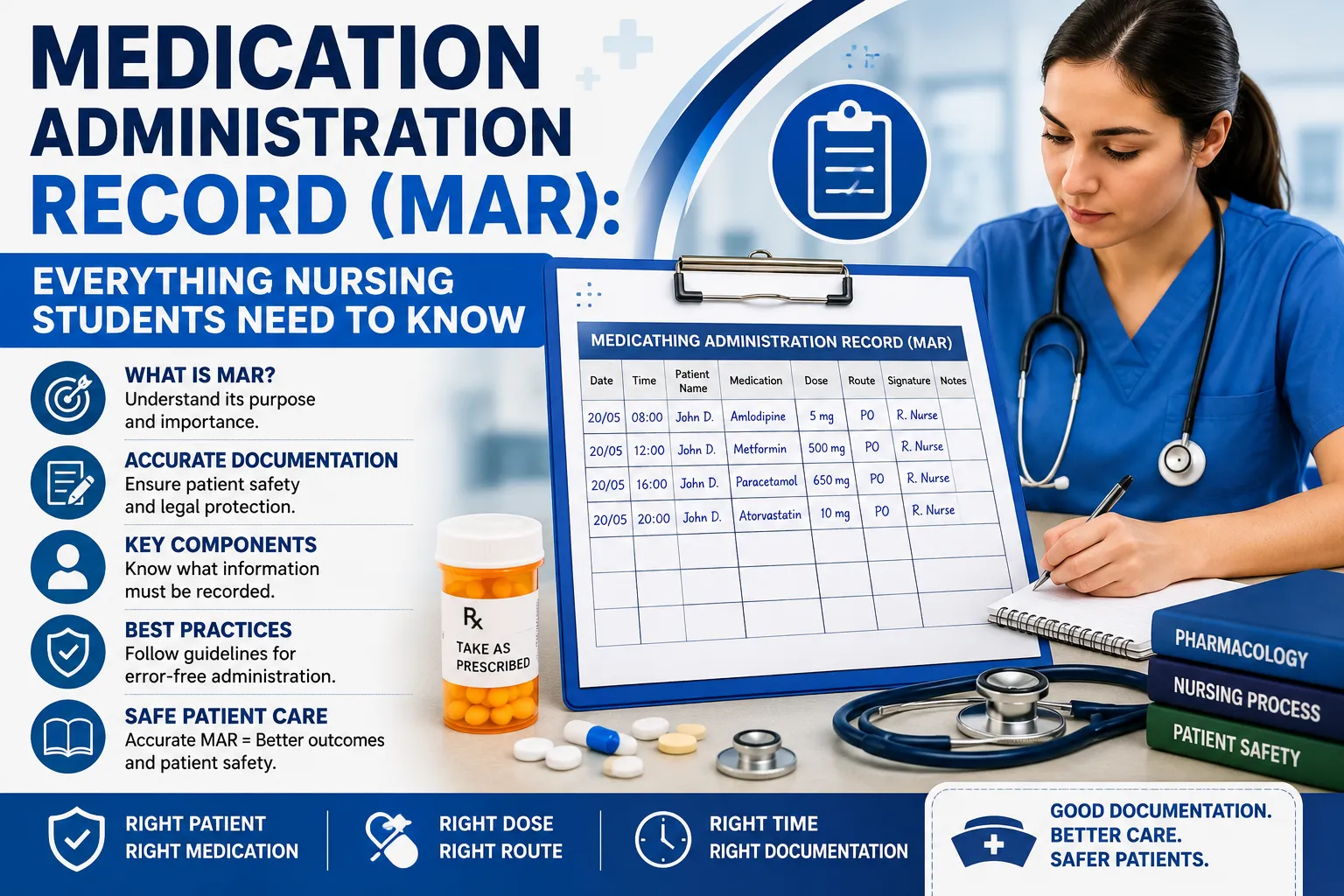
A Medication Administration Record (MAR) is one of the most important documents used in healthcare settings. It helps nurses, healthcare professionals, and carers accurately record every medication administered to a patient. Proper documentation ensures patient safety, reduces medication errors, and supports effective communication among medical teams.
For nursing students, understanding how to complete and interpret a Medication Administration Record (MAR) is an essential skill. Whether you are preparing for clinical placements, practical exams, or academic assignments, mastering MAR documentation is crucial for building a successful nursing career.
If you need expert guidance with nursing assignments, case studies, or clinical documentation, AssignProSolution provides professional academic support designed to help students achieve excellent grades while strengthening their understanding of nursing concepts.
What is a Medication Administration Record (MAR)?
A Medication Administration Record (MAR) is a legal medical document used to track all medications prescribed and administered to a patient. It contains detailed information about medication schedules, dosages, routes of administration, and documentation of each dose given.
The MAR serves as an official record that ensures medications are administered safely, correctly, and on time.
Healthcare professionals rely on MAR documentation to:
- Monitor medication administration
- Prevent missed doses
- Reduce medication errors
- Improve patient safety
- Maintain legal documentation
- Support continuity of patient care
Why is a Medication Administration Record Important?
The Medication Administration Record (MAR) plays a significant role in modern healthcare. Accurate documentation benefits both patients and healthcare providers.
1. Improves Patient Safety
Recording every medication reduces the chances of duplicate doses, missed medications, or incorrect administration.
2. Prevents Medication Errors
The MAR helps nurses verify the following:
- Right patient
- Right medication
- Right dose
- Right route
- Right time
These are commonly known as the Five Rights of Medication Administration.
3. Supports Team Communication
Doctors, nurses, and pharmacists rely on the Medication Administration Record to stay informed about the patient's medication history.
4. Provides Legal Protection
Since MAR is an official healthcare document, accurate records provide legal evidence of medications administered.
5. Enhances Quality Patient Care
Complete medication records help healthcare providers make informed treatment decisions and improve patient outcomes.
Components of a Medication Administration Record (MAR)
A standard Medication Administration Record (MAR) includes several important sections.
Patient Information
- Patient name
- Hospital ID
- Date of birth
- Age
- Ward or room number
Medication Details
- Medication name
- Generic name
- Brand name
- Dosage
- Frequency
- Route of administration
- Prescription date
Administration Information
- Date
- Time
- Nurse initials
- Signature
- Comments
- Missed dose reason
- Adverse reactions
Additional Notes
- Allergies
- Special instructions
- PRN medications
- Observation notes
Types of Medication Administration Records
Healthcare facilities may use different MAR systems depending on their technology.
Paper MAR
Traditional handwritten medication records are still used in some healthcare facilities.
Electronic Medication Administration Record (eMAR)
Modern hospitals increasingly use electronic systems that improve accuracy and reduce documentation errors.
Benefits include:
- Real-time updates
- Barcode scanning
- Automated reminders
- Reduced paperwork
- Better patient tracking
How Nurses Use a Medication Administration Record
Before administering medication, nurses carefully review the MAR to confirm all necessary details.
The general process includes:
- Verify patient identity.
- Review the doctor's prescription.
- Check allergies.
- Confirm medication details.
- Administer medication safely.
- Record administration immediately.
- Monitor the patient for side effects.
This process ensures safe medication practices and improves patient care.
Common Medication Administration Errors
Despite strict protocols, medication errors can still occur.
Common mistakes include:
- Wrong patient
- Wrong medication
- Wrong dosage
- Wrong timing
- Wrong administration route
- Missing documentation
- Duplicate medication
- Failure to record adverse reactions
Proper use of the Medication Administration Record (MAR) significantly reduces these risks.
Best Practices for Maintaining a Medication Administration Record
Healthcare professionals should always follow recommended documentation practices.
Some important guidelines include:
- Document immediately after administration.
- Never guess medication information.
- Use clear and accurate handwriting if using paper MAR.
- Double-check medication orders.
- Follow hospital documentation policies.
- Report medication errors promptly.
- Keep patient information confidential.
Following these practices helps maintain accurate medical records and ensures patient safety.
Challenges in Medication Administration Documentation
Although MAR systems improve healthcare documentation, nurses may encounter several challenges.
These include:
- Heavy workload
- Time constraints
- Incomplete prescriptions
- Communication gaps
- Technical issues with eMAR systems
- Similar medication names
- Human error
Regular training and attention to detail help overcome these challenges.
Tips for Nursing Students
Learning the Medication Administration Record can initially seem difficult, but consistent practice makes it easier.
Useful tips include:
- Study medication abbreviations.
- Practise reading sample MAR charts.
- Understand common medication routes.
- Learn dosage calculations.
- Review hospital documentation guidelines.
- Focus on patient safety principles.
- Practise clinical case studies.
Strong documentation skills improve confidence during clinical placements.
Role of Technology in Medication Administration Record
Digital healthcare systems have transformed medication documentation.
Electronic MAR systems now offer features such as the following:
- Barcode medication verification
- Automatic alerts
- Drug interaction checks
- Digital signatures
- Secure patient records
- Cloud-based documentation
These technologies reduce errors and improve workflow efficiency in hospitals.
Why Nursing Students Should Learn MAR Documentation
Understanding the Medication Administration Record (MAR) is essential because it prepares students for real-world clinical responsibilities.
It helps students:
- Improve documentation skills
- Develop patient safety awareness
- Build confidence during internships
- Understand medication management
- Meet academic requirements
- Prepare for professional nursing practice
Employers also value graduates who have strong medication documentation skills.
How AssignProSolution Helps Nursing Students
Preparing nursing assignments on topics such as the Medication Administration Record (MAR) requires thorough research, proper formatting, and accurate clinical knowledge.
AssignProSolution provides academic assistance for nursing students by offering:
- Nursing assignment help
- Case study support
- Clinical documentation guidance
- Care plan assistance
- Referencing support
- Proofreading and editing
- Plagiarism-free content
- Timely delivery
Whether you need help understanding MAR documentation or completing nursing coursework, AssignProSolution supports students with high-quality academic resources.
Conclusion
The Medication Administration Record (MAR) is a vital component of safe and effective healthcare. It ensures accurate medication documentation, minimises medication errors, and promotes better communication among healthcare professionals. Every nursing student should develop a strong understanding of MAR documentation to succeed in both academic and clinical settings.
By learning proper documentation techniques and following best practices, future nurses can contribute to safer patient care and improved healthcare outcomes. For students seeking reliable academic support, AssignProSolution offers expert assistance with nursing assignments, helping learners build confidence and achieve academic success.
FAQs
1. What is a Medication Administration Record (MAR)?
A Medication Administration Record (MAR) is a document used to record all medications administered to a patient, ensuring accurate and safe medication management.
2. Why is MAR important in nursing?
It improves patient safety, prevents medication errors, supports legal documentation, and ensures continuity of care.
3. What information is included in a MAR?
A MAR includes patient details, medication name, dosage, route, administration time, the nurse's signature, and notes on any reactions or missed doses.
4. What is the difference between MAR and eMAR?
A paper MAR is manually completed, while an eMAR is an electronic system that offers features like barcode scanning, automated alerts, and digital records.
5. How can AssignProSolution help nursing students?
AssignProSolution provides expert assistance with nursing assignments, case studies, care plans, proofreading, and academic writing to help students perform well in their nursing studies.



















Sign in to leave a comment.