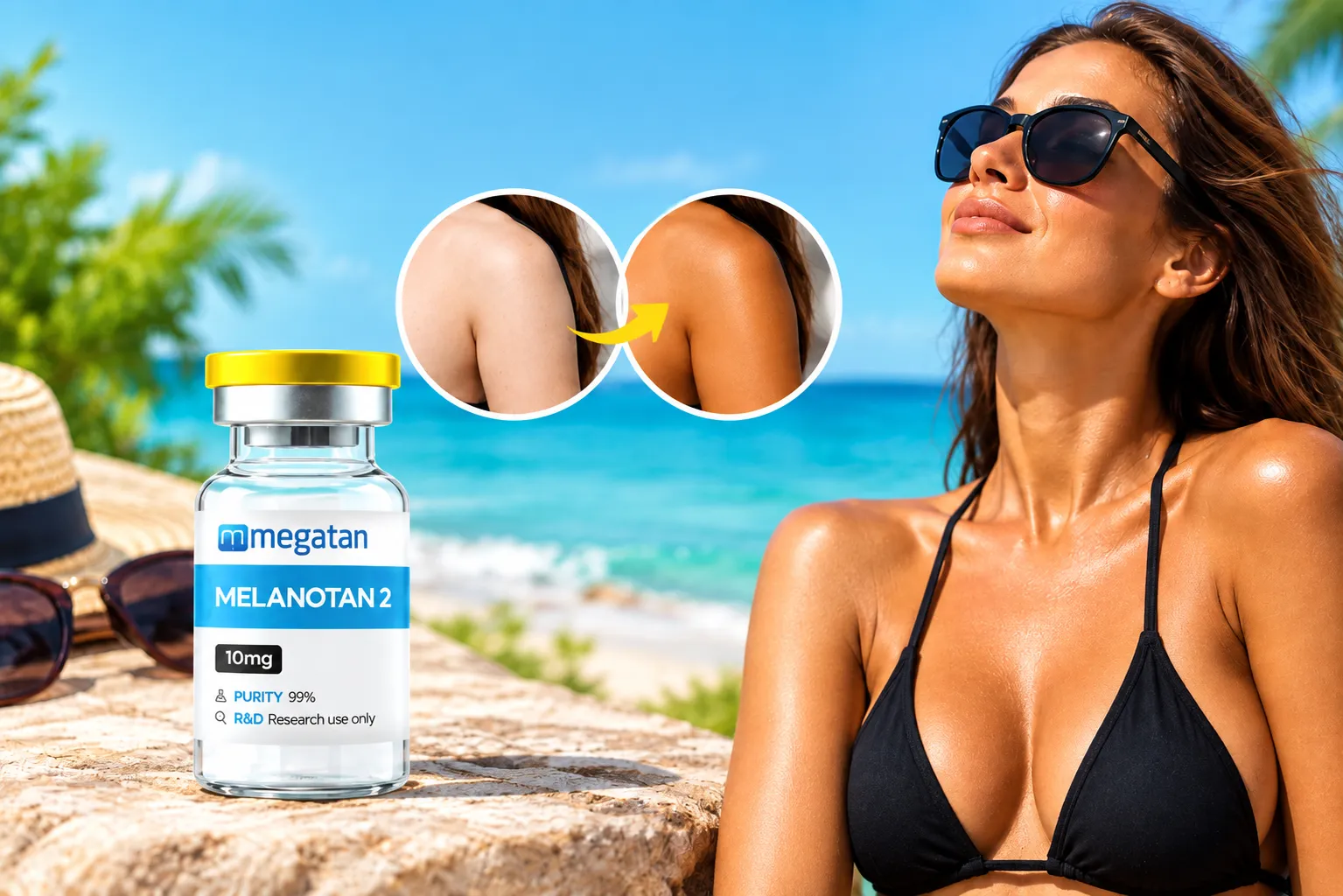

One thing is back in people's search bars this summer, and that is: Melanotan 2 injections. Not because anything new happened. Mostly because of TikTok, tanning season, and a lot of before-and-after photos that skip the fine print.
If you're new to this and want straight answers, here they are.
What Is Melanotan 2?
It's a synthetic peptide. It tells your skin to make more melanin, which is what darkens your skin naturally in the sun.
So instead of tanning from UV rays, you're tanning from an injection that triggers the same pigment response.
It was first developed in the 1980s for skin cancer research. It was never approved as a medicine. That hasn't changed.
Why Is Everyone Talking About It Again?
Three reasons, really:
- Summer always brings a tanning-related search spike
- Influencers post results without mentioning downsides
- Reddit and tanning forums keep the anecdotes circulating
None of this means it got safer. It just got more visible.
Is It Legal?
In the UK, yes and no.
You won't get in trouble for owning it. But it's not licensed for human use, so it can't legally be sold as something you inject into your body. That's why sellers label it "not for human consumption"; it's a legal loophole, not a safety label.
Does It Actually Work?
Yes, for most people, it does darken skin.
But here's the thing worth understanding: it works by changing your hormone pathways, not by sitting on your skin like a lotion. That's a different kind of "working."
How Do People Actually Dose It?
There's no official dosing guide, because there's no approved product to base one on.
What you'll find instead is a patchwork of "starter doses" shared on forums and by sellers; usually based on trial and error from other users, not clinical testing.
That means two people buying the same vial could be working off completely different advice. No doctor signed off on any of it. No regulator checked the maths. It's self-administered guesswork with a hormone that affects your whole body, not just your skin.
What Side Effects Come Up?
Most commonly:
- Nausea
- Flushing
- Appetite changes
Less commonly, but worth knowing:
- Blood pressure spikes
- New moles appearing
- Existing moles changing shape or colour
That last one matters most. Mole changes are usually a red flag doctors want checked early. With Melanotan 2, you're potentially causing that exact change yourself.
How Is This Different from Normal Self-Tanners?
Self-tanning lotions work on the surface. They fade off in a week or two.
Melanotan tanning injections work from the inside, through your hormones. Nothing about that washes off.
Same end goal. Completely different mechanism.
Does It Still Work If You Avoid the Sun Completely?
Yes, but that's not necessarily a good thing.
Melanotan 2 darkens skin whether or not you go outside. Some people take that as permission to skip sun safety altogether.
Here's the catch: a darker tan from Melanotan 2 doesn't give you the same UV protection as a tan built up gradually through actual sun exposure. So if you go outside afterwards assuming you're "covered," you're not. You can still burn. You can still rack up UV damage. The injection changes your colour, not your skin's real defences.
What Do Dermatologists Say?
Caution, consistently.
The concern isn't dramatic; it's specific. Melanin production and mole behaviour are linked. Dermatologists have flagged that synthetic MSH-based products can make it harder to catch early skin cancer signs, because the products themselves can cause the same changes doctors are trained to watch for.
If a mole changes after starting anything like this, that's a "see your GP this week" situation, not a "wait and see" one.
Who Should Avoid This Completely?
Some groups face a meaningfully higher risk and should steer well clear:
- Anyone with a personal or family history of melanoma or skin cancer
- Anyone with a lot of existing moles or atypical mole patterns
- Pregnant or breastfeeding people, since the hormonal effects haven't been studied for this
- Anyone on blood pressure medication, given the reported spikes
- Under-18s, full stop; this isn't a product that's ever been tested on younger skin or bodies
If any of these apply, this is a straightforward "not worth the risk" situation, not a judgement call.
What About Buying It Online?
Here's the honest bit: if you buy tanning injections online, you genuinely don't know what's in the vial.
It's unregulated. No standard manufacturing checks. No guaranteed purity. No dosage accuracy you can rely on. You're trusting a seller's word, not a regulator's testing.
How Much Does It Cost, and Is That a Red Flag?
Prices online vary a lot; often between £15 and £40 per vial, depending on the seller and dose strength.
That range alone tells you something. When a product isn't regulated, there's no standard price because there's no standard product. One seller's vial might be diluted. Another's might be stronger than labelled. You're not comparing products; you're comparing guesses.
If a price looks suspiciously cheap, that's not a bargain. That's usually a sign of even less quality control than the industry's already low baseline.
Are There Safer Ways to Tan?
Yes, a few:
- Gradual self-tan lotions: better formulas than a few years ago, natural-looking
- Professional spray tans: controlled, consistent, done by someone trained
- Tinted moisturisers or bronzers: instant, temporary, zero internal risk
All of these work on the surface. None of them touch your hormones.
How Do You Spot a Dodgy Seller?
If you're still set on researching Melanotan tanning injections, a few warning signs are worth knowing, even to understand how unregulated this space is:
- No batch testing or lab results shared, ever
- Vague or missing ingredient sourcing
- Reviews that read suspiciously like adverts
- No mention of side effects anywhere on the site
- Pressure-driven language like "limited stock" or "selling out fast"
None of this makes buying safer. It just tells you how much due diligence sellers expect you to do yourself, in a space where there's genuinely no one checking their work for you.
Bottom Line
Melanotan 2 injections promise an easy shortcut: skip the sun, keep the tan. The appeal makes sense.
But the facts haven't moved since the 1980s. It's still unlicensed. Long-term safety still isn't established. And the mole concern is real, not internet paranoia.
If you're seriously considering Melanotan tanning injections, talk to a GP or dermatologist first, especially if skin cancer runs in your family. That's a five-minute conversation that tells you more than any forum thread will.



























Sign in to leave a comment.