

Mathematics is an important part of a child’s academic journey, but many children find calculations challenging. Difficulty with numbers can sometimes lead to math anxiety, making children hesitant to participate in class or attempt unfamiliar problems.
One approach that parents often explore is abacus training, which introduces children to numbers through visual and hands-on learning. With regular practice, children can gradually develop stronger calculation habits and improve their confidence with numbers.
Programs such as SIP Abacus use structured abacus-based learning to help children practise calculations progressively. Alongside traditional learning and math classes online, abacus education can provide children with additional opportunities to practise mental calculation.
But how does it work, and can it really help children become more comfortable with mathematics?
What Is Mental Arithmetic?
Mental arithmetic is the ability to perform calculations without writing down every step or relying on a calculator.
For example, a child may learn to calculate:
25 + 17 = 42
or
80 − 35 = 45
mentally.
Mental arithmetic is more than simply calculating quickly. It involves number sense, concentration, memory, logical thinking, and the ability to break a problem into manageable parts.
Children develop these skills through repeated practice. An effective learning method should therefore focus not only on speed but also on understanding and accuracy.
Understanding Math Anxiety in Children
Math anxiety refers to feelings of nervousness, stress, or apprehension associated with mathematics. A child experiencing math anxiety may know how to solve a problem but become uncomfortable when asked to calculate under pressure.
Some common signs may include:
- Avoiding mathematics homework
- Feeling nervous before a math test
- Taking unusually long to begin calculations
- Frequently saying, “I am bad at math”
- Losing confidence after making mistakes
- Avoiding participation during mathematics lessons
It is important to remember that struggling with mathematics does not automatically mean a child has math anxiety. Children learn at different rates, and occasional frustration with difficult topics is normal.
A supportive learning environment can help children view mistakes as part of the learning process rather than as evidence that they cannot do mathematics.
How Can Abacus Training Support Mental Arithmetic?
Abacus training introduces children to calculations using a physical or visual representation of numbers.
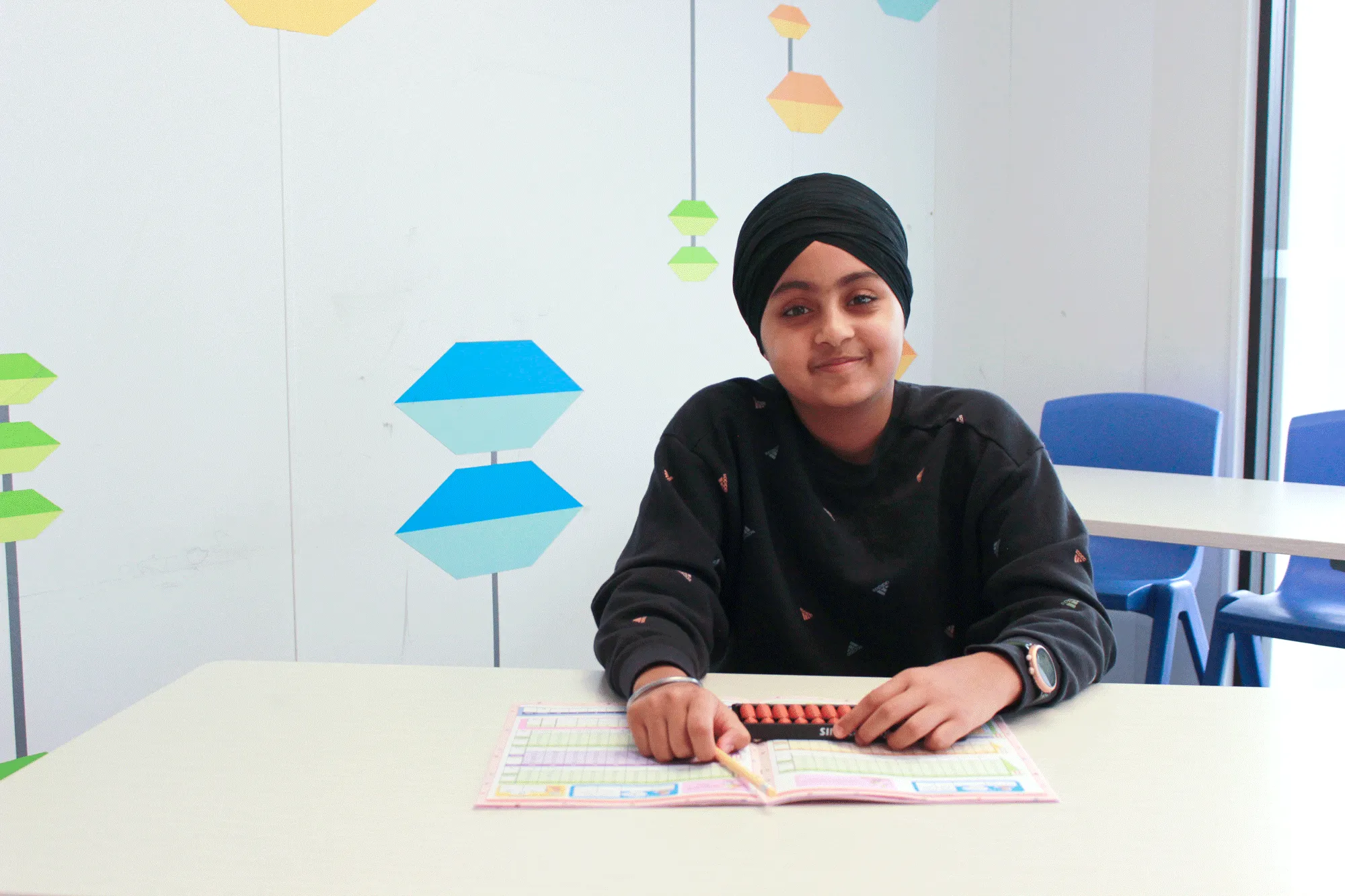
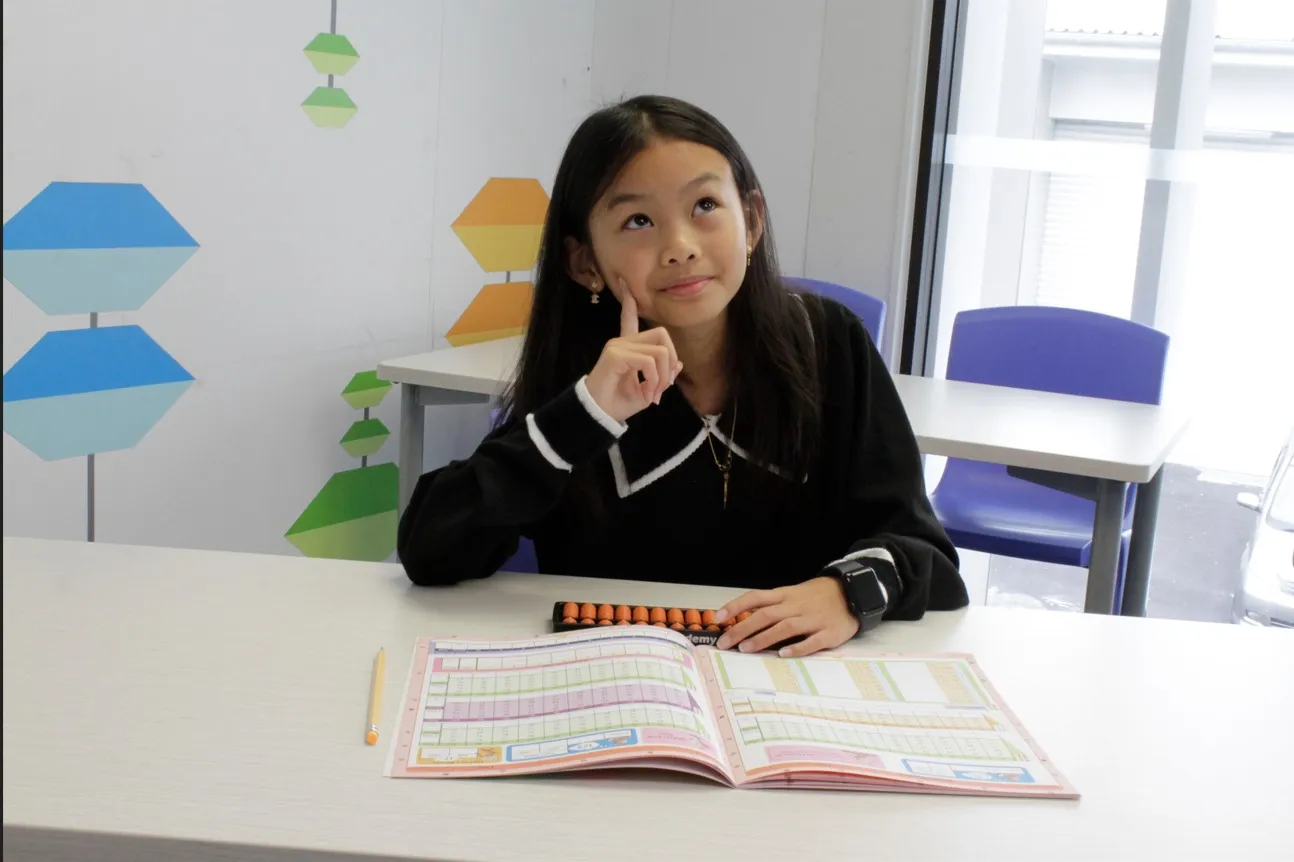
Initially, children manipulate beads to represent quantities and perform calculations. With practice, learners may begin visualising the abacus mentally. This can support the development of mental arithmetic skills.
The learning process generally progresses from:
Physical abacus → Visualisation → Mental calculation
This progression can make abstract numbers more concrete for young learners.
However, abacus learning should be viewed as a skill-building approach rather than a shortcut to mathematical understanding. Children still benefit from learning mathematical concepts, reasoning, estimation, and problem-solving alongside calculation practice.
Benefits of Abacus Classes for Children
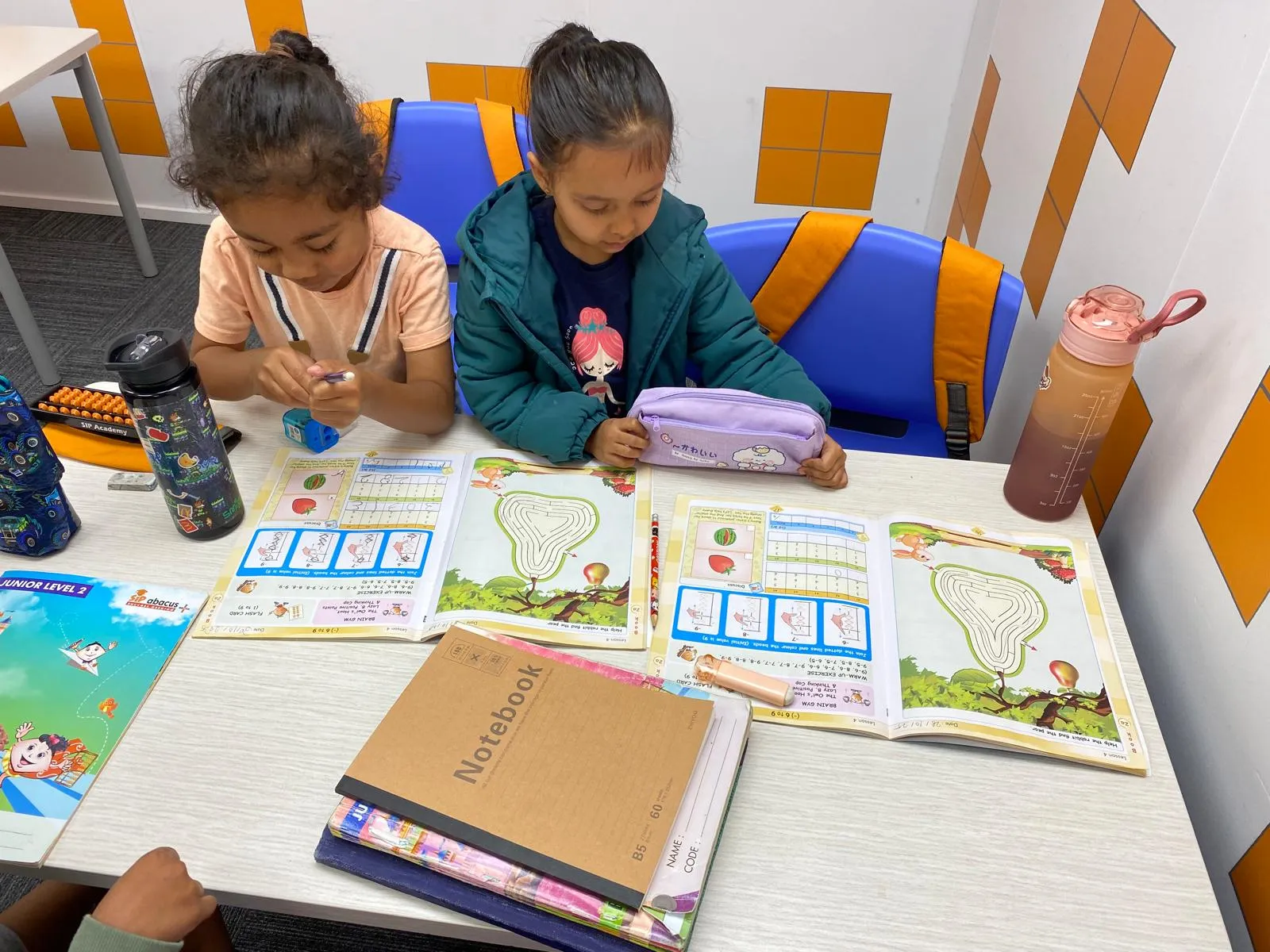
Well-structured abacus classes can give children regular opportunities to practise calculations in a systematic manner.
1. Regular Calculation Practice
Consistent practice can help children become more familiar with addition, subtraction, multiplication, and division.
2. Concentration
Abacus activities require children to pay attention to numbers and follow calculation steps, providing opportunities to practise sustained concentration.
3. Number Confidence
When children repeatedly solve appropriately challenging problems, successful experiences can contribute to greater confidence.
4. Mental Calculation
As learners progress, they may transition from manipulating physical beads to visualising the abacus. This is where mental arithmetic becomes an increasingly important part of the learning process.
5. Structured Learning
A progressive curriculum can introduce increasingly challenging calculations rather than expecting children to master complex problems immediately.
Abacus Training and Math Anxiety: Can They Work Together?
For children who feel uncomfortable with mathematics, the learning environment matters.
A child who repeatedly encounters problems that are too difficult may become frustrated. Conversely, activities that are appropriately challenging can provide opportunities for gradual improvement.
Abacus training can be one component of such a learning approach because calculations can be introduced progressively.
Parents should focus on improvement rather than simply asking how quickly a child can calculate. Accuracy, understanding, consistency, and confidence are equally important.
It is also useful to avoid comparing children with siblings, classmates, or other learners. Each child develops mathematical skills at a different pace.
Choosing Math Classes Online
Technology has changed the way children learn. Math classes online can provide additional flexibility for families who prefer learning from home.
Online mathematics programs can be particularly useful when they include:
- Age-appropriate lessons
- Qualified or trained instructors
- Interactive activities
- Regular practice
- Feedback on mistakes
- Clearly structured progression
- Opportunities for parents to monitor learning
Parents considering online learning should also look at screen-time balance and ensure children have opportunities for offline practice.
For younger learners, combining digital instruction with physical activities can create a more varied learning experience.
How SIP Abacus Approaches Abacus Learning
SIP Abacus is an abacus education brand that provides structured abacus-based learning programs for children.
When considering any abacus program, parents should look beyond the brand name and examine practical factors such as curriculum structure, instructor support, class format, practice requirements, and how progress is assessed.
The goal should be to help children develop useful mathematical habits rather than focusing exclusively on calculation speed.
Parents can also discuss their child's individual learning needs with the program provider before enrolling.
Abacus Classes vs. Traditional Math Learning
Abacus education and traditional mathematics education do not necessarily need to compete with each other.
Traditional mathematics lessons cover concepts such as geometry, fractions, algebra, measurement, mathematical reasoning, and problem-solving.
Abacus classes, meanwhile, can provide additional practice with numerical calculations.
A balanced learning experience can therefore combine:
Conceptual understanding + calculation practice + problem-solving + regular revision
This broader approach helps children understand that mathematics is not simply about answering questions quickly.
Tips for Helping Children Build Math Confidence
Parents can support mathematical confidence at home with simple habits.
Make Practice Short and Consistent
Short, regular practice sessions may be easier for children to manage than long sessions once a week.
Celebrate Progress
Instead of focusing only on correct answers, recognise improvements in accuracy, concentration, and persistence.
Avoid Negative Statements About Mathematics
Children can absorb adults' attitudes toward math. Statements such as “I was never good at math either” may unintentionally reinforce negative beliefs.
Encourage Questions
Children should feel comfortable asking why an answer is correct rather than simply memorising procedures.
Combine Different Learning Methods
Abacus activities, school mathematics, games, worksheets, and math classes online can complement one another when used appropriately.
Frequently Asked Questions About Abacus Training and Mental Arithmetic
1. What is abacus training?
Abacus training teaches children to perform calculations using an abacus and, progressively, visualise the instrument while calculating mentally.
2. Can abacus classes improve mental arithmetic?
Regular abacus classes provide structured calculation practice and may help children develop mental calculation skills as they progress from physical manipulation to visualisation.
3. Can abacus training eliminate math anxiety?
Abacus training should not be considered a guaranteed treatment for math anxiety. However, a supportive, appropriately paced learning environment may help some children develop greater confidence with numerical tasks.
4. At what age can children start abacus classes?
The appropriate age varies according to the child's developmental readiness and the program's curriculum. Parents should check the specific age recommendations of the program they are considering.
5. Are math classes online effective for children?
Math classes online can be useful when lessons are age-appropriate, interactive, structured, and supported by regular practice and feedback. The quality of teaching and the child's engagement are important factors.
6. Is abacus learning only about speed?
No. While calculation speed may develop through practice, effective abacus education should also encourage accuracy, concentration, number familiarity, and confidence.
7. How does SIP Abacus help children learn?
SIP Abacus provides structured abacus-based learning designed to help children practise numerical calculations progressively. Parents should evaluate the specific course format and curriculum to determine whether it matches their child's learning requirements.
Final Thoughts
Developing mathematical confidence takes time. Mental arithmetic can become easier with consistent practice, while an encouraging learning environment can help children approach numerical problems with less hesitation.
Abacus training, traditional option. Ultimately, the right learning approach should match the child's individual needs, pace, mathematics education, and math classes online can each play a different role in a child's learning journey. The most important factor is to ensure that learning remains age-appropriate, progressive, and focused on both skill development and understanding.
For parents exploring abacus classes, programs such as SIP Abacus may be worth considering as one option. Ultimately, the right learning approach should match the child's individual needs, pace, and interests.























Sign in to leave a comment.