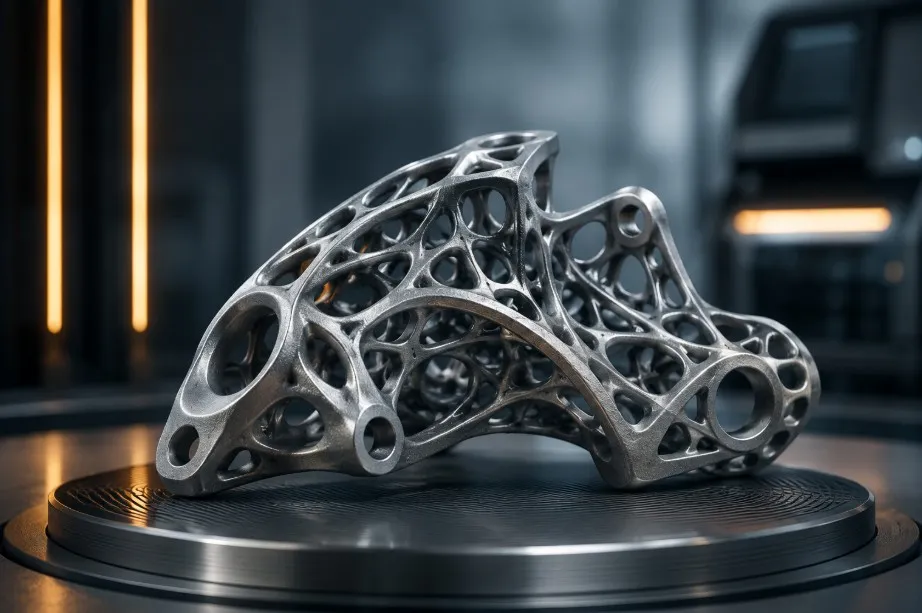
Many modern products and components are designed to require metal parts that go far beyond simple shapes and joints. Think of curved components, hidden internal channels, or custom features designed for one specific purpose. Making these parts with traditional methods can be slow, costly, and difficult. That is where product manufacturers and architects prefer a metal 3D printing service to add accuracy and detail to their work.
Metal 3D printing offers a way to create such components by building them layer by layer from a CAD design. A Metal 3D Printing Service can support both early prototypes and selected final-use parts.
Let's look into it in detail.
What Is Metal 3D Printing?
Metal 3D printing is an additive manufacturing process in which a metal part is created from a digital design. Compared to traditional manufacturing and design methods, instead of cutting away material from a larger block, the part is built layer by layer. Thus, it adds precision and reduces waste generation.
Custom Metal 3D Printing uses Selective Laser Melting (SLM) technology for metal printing. The process can produce durable and precise parts while supporting complex geometries and structures.
The general process includes:
- Creating or preparing a CAD model
- Selecting a suitable metal material
- Preparing the design for printing
- Building the part layer by layer
- Checking the finished component against the required specifications
This approach is especially helpful when a project requires a custom shape or a design that can be difficult to produce using conventional manufacturing methods.
Benefits of 3D Printing With Metal
There are several reasons why businesses are considering 3D Printing with Metal for their projects.
1. Create Complex Designs
One of the biggest advantages of metal 3D printing is the ability to produce complex geometries, curves, and shapes more easily than before. Designs can include detailed shapes, internal features, and structures that were once difficult to create through conventional methods.
For example, conformal cooling channels can be incorporated into certain designs, helping manufacturers create parts with features that are difficult to achieve through traditional machining.
2. Useful for Rapid Prototyping
A new product often goes through several design changes before the final version is ready. Producing a physical prototype can help engineers check the design and make improvements at the right time.
Metal 3D printing can support faster creation of models, allowing businesses to move from a digital concept to a physical part for evaluation and further development.
3. Custom Parts
Not every project needs a standard metal component. Sometimes, the required part has a specific shape, size, or design. Traditional manufacturing often fails to produce complex designs; therefore, 3D metal printing emerged as a modern alternative,
A Metal 3D Printing Service can provide customised parts based on the customer's CAD design and project requirements. Faster, easier, and more precise.
4. Suitable for Production-Ready Parts
Metal 3D printing is not just limited to model printing. Depending on the design and requirements, the technology can also be used to produce parts intended for final use.
This makes it useful for projects that require both design flexibility and functional metal components.
Applications of Metallic 3D Printing
Metallic 3D Printing can be useful for different types of engineering and manufacturing projects ranging from automotive to the manufacturing sector. Its ability to produce complex and customised components makes it suitable for applications where precision and design flexibility are important.
Some examples include:
- Creating complex mechanical components
- Designing lightweight metal parts
- Custom engineering components
- Working or testing models
- Production-ready parts
- Components with complex internal structures
- Parts requiring conformal cooling channels
For instance, a company developing a new mechanical component can use metal 3D printing to create a prototype, check its design, and make changes before moving further with production.
Metal Materials Used for Manufacturing
Choosing the right material is an important part of any metal manufacturing project. The material needs to match the requirements of the finished component.
Custom Metal 3D Printing works with different industrial materials through its metal manufacturing capabilities. These include:
- Steel
- Stainless steel
- Aluminium alloys
- Brass
- Copper
- Bronze
- Zinc alloys
The company also provides CNC machining alongside metal 3D printing. This gives customers another manufacturing option depending on the design and production requirements of their parts.
What to Consider Before Choosing a Metal 3D Printing Service
If you are looking for 3D Metal Printing Services Nearby, do not choose a provider only because it offers metal printing. First, check whether the service matches your actual project requirements.
Consider factors such as:
- The type of metal required
- Complexity of the design
- Required dimensions and tolerances
- Whether you need a prototype or production part
- Available printing technology
- Quality checking process
- Design and CAD support
- Delivery requirements
Having a clear CAD model or project concept can also make it easier to discuss your requirements with the printing service provider.
Conclusion
Metal 3D printing has made it easier to turn complex digital designs into physical metal components. From rapid prototypes to production-ready parts, the technology offers flexibility for projects where precision, customisation, and complex geometries matter.
Whether you are exploring 3D Printing with Metal for a prototype or looking for a reliable solution for custom metal components, it is important to choose a service that understands your design and manufacturing requirements.
With SLM technology, custom metal printing, CAD support, and CNC machining capabilities, Custom Metal 3D Printing provides solutions for a wide range of metal manufacturing needs.
Visit: https://custommetal3dprinting.com/



















Sign in to leave a comment.