
Strategic Intelligence for the Micro Turbine Market: Navigating the 2026 Growth Horizon
As we move deeper into the decade, the global energy landscape is undergoing a rapid structural shift. Decentralized power generation, combined heat and power (CHP) optimization, and the urgent reduction of carbon intensity are no longer optional initiatives—they are foundational business imperatives. In this evolving environment, micro turbines have emerged as a versatile, high-efficiency technology capable of bridging the gap between centralized grid reliability and the flexibility required by modern industrial and commercial operations.
PW Consulting's latest Micro Turbine Market research is designed to serve as a strategic compass for executives, investors, and operational leaders who must make high-stakes decisions in 2026 and beyond. Rather than offering a superficial overview, this report delivers actionable intelligence rooted in rigorous historical analysis, transparent forecasting methodologies, and a granular examination of competitive forces. This article previews the depth and strategic value contained within the full research, highlighting how the findings can directly inform capital allocation, technology partnerships, and regional expansion strategies.
A Market Trajectory Defined by Structural Momentum
The numbers surrounding the micro turbine sector tell a clear story: sustained, compounding growth driven by real operational demand rather than speculative hype. Over the five-year historical window from 2020 through 2025, the market has demonstrated consistent upward momentum, advancing from a baseline of approximately 163.15 million USD in 2020 to an estimated 215.0 million USD in 2025. This trajectory reflects a steady acceleration in adoption across multiple use cases, underpinned by tightening emissions regulations, rising energy costs, and the growing economic attractiveness of on-site generation.
Looking forward, the forecast period spanning 2026 through 2032 signals continued expansion, with the market projected to reach roughly 344.8 million USD by the end of the horizon. The implied compound annual growth rate of 9.44 percent positions micro turbines among the more resilient segments within the broader distributed energy ecosystem. For enterprise strategists, this growth rate is not merely a top-line indicator; it represents a signal of deepening market penetration, increasing standardization of deployment practices, and a growing recognition of micro turbines as a core component of site-level energy resilience.
What makes this trajectory particularly valuable for decision-makers in 2026 is the interplay between historical consistency and forward-looking acceleration. The early forecast years suggest incremental but meaningful gains, while later years point to inflection points driven by capacity expansions, fuel-flexible technology maturation, and evolving incentive structures. Understanding where these inflection points occur—and which segments capture the disproportionate share of new value—is essential for timing investments, evaluating supplier roadmaps, and aligning internal engineering priorities with external market realities.
Mapping the Competitive Landscape: Who Is Winning, and Why
A market growing at this pace inevitably attracts a diverse field of participants, each pursuing different technological niches, geographic footholds, and application-specific value propositions. The competitive environment detailed in our research reveals an ecosystem that is still relatively fragmented at the top, yet increasingly disciplined in how leading players articulate their differentiation. In 2025, the top three players collectively accounted for approximately 24.6 percent of total market revenue, while the top five reached about 26.2 percent. This concentration pattern indicates that while scale players are establishing meaningful presence, substantial room remains for specialized innovators and regional specialists to capture value through tailored engineering, fuel flexibility, or application-specific optimization.
Several organizations stand out for the strategic clarity of their offerings. Ansaldo Energia S.p.A., headquartered in Genoa, Italy, has carved a focused position around its AE-T100 microturbines, which are engineered for combined heat and power and combined cooling, heat, and power applications. Their emphasis on operating across natural gas, biogas, and blends containing up to 80 percent hydrogen, while achieving efficiency levels near 90 percent, reflects a deliberate alignment with decarbonization mandates and industrial customers seeking to future-proof their fuel supply. This type of product strategy signals a broader competitive theme: manufacturers that can offer high-efficiency performance without locking users into a single fuel pathway are gaining credibility in procurement discussions.
Capstone Green Energy Corporation, based in Van Nuys, California, represents another influential force in the space. Its microturbine generators spanning the 30 kW to 1000 kW range are designed for distributed energy applications and built on air-bearing technology, which reduces mechanical complexity and maintenance demands. The company's recent activity illustrates how commercial traction is building in real time. Late 2025 saw repeat and new orders from leading Mexican food manufacturers, including a major follow-on order totaling 5.8 MW secured in August, alongside additional systems ordered in November and December for CHP-powered operations. Earlier in the autumn, a deployment was announced with Valparaiso Community Schools for high-efficiency CHP systems. These moves demonstrate that demand is not confined to a single vertical; it is emerging across industrial processing, institutional facilities, and community-scale energy projects.
Gas Turbine Market
Other participants are pursuing distinctly different niches. Bladon Micro Turbine, operating from Warwick, UK, focuses on 12 kW micro turbine gensets tailored for off-grid and bad-grid environments, as well as telecom backup power, using diesel, kerosene, or hydrotreated vegetable oil fuels. This positions the company in reliability-critical, remote-use scenarios where grid dependence is a liability. FlexEnergy Solutions, from Centennial, Colorado, takes a higher-capacity lens with natural gas microturbine generators ranging from 250 kW up to 10 MW, serving off-grid and grid-parallel applications where larger block sizes deliver meaningful economies. Meanwhile, Turtle Turbines in India specializes in micro steam turbines up to 300 kW and compact cogeneration systems that target waste heat recovery within process industries—an application-driven play that underscores how micro turbine technologies are extending beyond gas-fired generation into broader thermal recovery strategies.
Further diversifying the ecosystem, Advanced Microturbines Srl, also based in Genoa, develops microturbines and turboexpanders in the 30 W to 50 kW range designed for energy recovery from gas or water decompression, serving both off-grid and network-connected applications. In Germany, pyropower GmbH has advanced externally fired micro gas turbines for pyrolysis-based CHP systems, generating electricity from thermal energy in decentralized setups. This breadth of technological approaches—ranging from fuel-flexible gas turbines to waste-heat recovery, steam-based cogeneration, and externally fired thermal conversion—shows that the micro turbine definition has broadened into an umbrella of compact, high-value generation and recovery solutions. For buyers and investors, this diversity means that “best fit” is rarely a generic answer; it is a function of fuel availability, thermal requirements, site constraints, and incentive alignment.
Technology Segmentation and Application Realities
Beyond the headline growth figures, the strategic questions facing 2026 decision-makers revolve around where value is being created within the market. Power rating is one of the most operationally meaningful ways to segment demand, because it dictates not only the type of end user but also the economic logic of deployment. Our research examines how smaller-scale units in the 12 kW to 50 kW band perform as a revenue category, how the 50 kW to 250 kW tier serves a broad middle ground of commercial and light industrial loads, and how the 250 kW to 500 kW segment supports more substantial on-site generation requirements. Each band carries distinct installation, maintenance, and integration considerations, and each responds differently to customer priorities such as redundancy, fuel availability, and thermal recovery potential.
Application segmentation is equally critical. The combined heat and power category represents a substantial share of market activity, reflecting the enduring appeal of simultaneously producing electricity and usable thermal energy from a single fuel input. This model remains especially attractive where process heat, space heating, or cooling demand can be matched with on-site generation, improving overall system efficiency and reducing waste. The standby power category, meanwhile, captures demand from facilities that prioritize resilience—data centers, telecommunications sites, healthcare facilities, and remote operations where grid interruptions carry high costs. The coexistence of these two application themes illustrates an important strategic reality: micro turbines are not a single-use technology. Their value proposition shifts depending on whether the primary objective is efficiency optimization, energy cost management, or operational continuity.
The report goes deeper into how these segments interact with site-level economics and engineering requirements. Capital intensity remains a central consideration, with installed costs for microturbine CHP systems generally falling within a range that varies by capacity and configuration. Decision-makers need to understand not only the upfront capital picture but also how financing structures, available incentives, and operational savings combine to shape payback periods and internal rate of return. This is precisely where strategic research adds value: by connecting segment definitions to the economic logic that drives procurement and deployment choices in the real world.
Regulatory Tailwinds, Incentives, and the Fine Print That Matters
Market growth does not occur in a vacuum. Policy frameworks and incentive structures can materially alter the economics of micro turbine adoption, and 2025 has produced a mix of supportive provisions alongside regulatory nuances that require careful navigation. The fuel cell and microturbine tax credit pathway, for example, provides a maximum credit of 500 USD per half kilowatt of power capacity, offering a meaningful offset for qualifying installations. At a broader level, the Inflation Reduction Act has extended investment tax credit and production tax credit availability for microturbines, with a 30 percent ITC accessible for systems under 1 MW AC or thermal capacity when prevailing wage requirements are met. These provisions can substantially improve project economics, particularly for commercial and industrial users seeking to manage capital exposure while transitioning toward more efficient on-site generation.
Micro Turbine Market
At the same time, incentive landscapes are not static. Certain energy credit provisions for microturbine energy property have faced phase-out considerations for construction beginning after December 31, 2024, with subsequent amendments affecting eligibility. In parallel, legislative updates have eliminated the greenhouse gas emissions requirement for fuel cell projects eligible for the investment tax credit beginning after December 31, 2025. Such shifts matter because they influence project timelines, technology selection, and the relative attractiveness of different deployment models. Strategists who rely on a static view of incentives risk misjudging near-term opportunity or underestimating the urgency of moving qualified projects into development before parameters change.
These policy dynamics are not peripheral details; they are integral to evaluating where micro turbines can compete most effectively in 2026. Our report integrates this environment into the broader market narrative, helping readers understand how incentive availability intersects with regional conditions, application type, and technology choice. Rather than presenting incentives in isolation, the analysis situates them within the operational and financial decision-making process that ultimately determines whether a project advances, delays, or takes a different technical form altogether.
From Insight to Execution: What the Full Report Delivers
This preview is deliberately selective. It is designed to demonstrate the analytical standards and strategic framing that define the full market research, while preserving the detailed quantitative breakdowns that buyers, investors, and engineering leaders need to make confident decisions. In the complete report, readers will find a comprehensive examination of market size evolution across historical and forecast periods, an in-depth look at segmentation patterns across power ratings and applications, and a structured view of regional performance that illuminates where demand is forming and why.
The study also includes detailed company profiles that go beyond summary descriptions to assess strategic positioning, technological focus, and commercial traction. Recent developments are integrated directly into the competitive narrative, allowing readers to connect project announcements, order flow, and commissioning activity to broader market momentum. By tracing how key players are translating technology into installed base and recurring demand, the report provides a practical lens for evaluating supplier credibility, partnership potential, and long-term market influence.
Importantly, the report is built to support decision-making rather than simply describe trends. It connects market structure to the questions that matter most in 2026: which applications are scaling fastest, which power ratings are gaining relative share, how competitive concentration is evolving, and what regulatory and cost factors are likely to shape adoption over the forecast horizon. For organizations evaluating procurement strategies, expansion plans, technology roadmaps, or investment theses, this depth transforms high-level information into usable intelligence.
Why This Research Matters for 2026 and Beyond
The micro turbine market is entering a phase in which strategic timing and precision matter more than ever. A near-10 percent compound growth trajectory, expanding application diversity, and an incentive environment that can either accelerate or constrain project economics all point to the same conclusion: leaders who understand the underlying structure of the market will be better positioned to capture value, manage risk, and align technology choices with operational goals. Superficial market narratives are insufficient in this environment. Executives need a clear view of how segments are performing, how competitors are differentiating, and where the most consequential opportunities are forming across regions and use cases.
The full PW Consulting Micro Turbine Market research is built for that purpose. It provides the detailed segmentation, competitive assessment, and forward-looking analysis necessary to turn market awareness into strategic action. For teams responsible for energy strategy, capital planning, procurement, or investment evaluation, the report offers a structured foundation for decisions that will shape operational resilience and growth through 2032 and beyond.
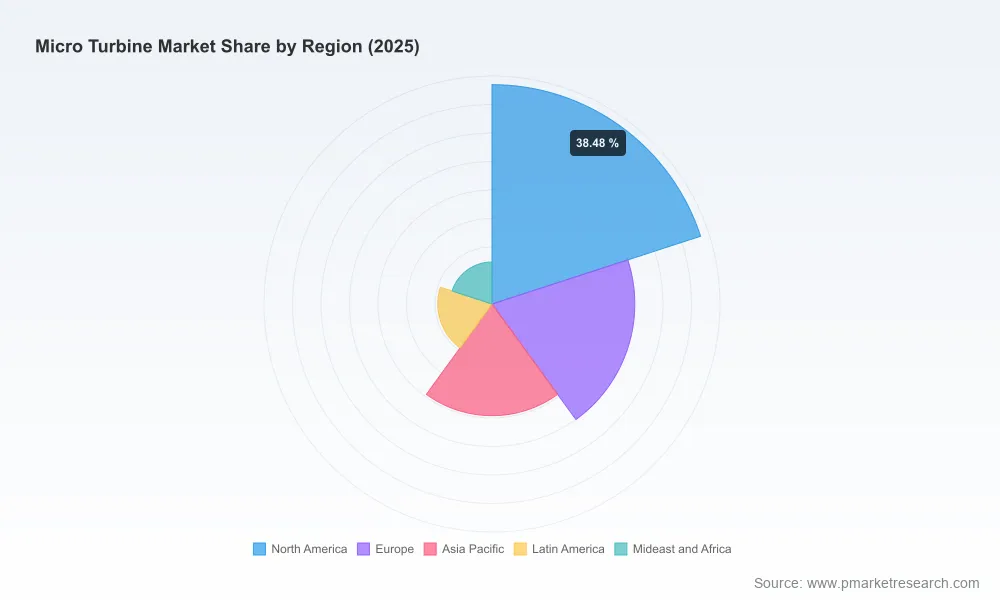
The specific regional revenue breakdowns, application-level splits, power-rating comparisons, and complete competitive performance metrics are reserved for the full report, where they are presented with the analytical context required for sound decision-making. Readers seeking the comprehensive data set, the full company-by-company assessment, and the detailed forecast architecture are encouraged to access the complete research to obtain the full intelligence package.
For detailed analysis of this topic, please visit the official page: Micro Turbine Market
Lacy Lee
Senior Marketing Manager
[email protected]
PW Consulting: www.pmarketresearch.com




























Sign in to leave a comment.