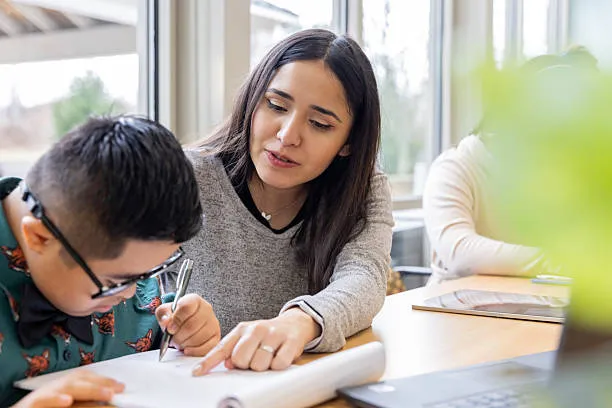

Middle school is an important stage in a student's academic journey. Coursework becomes more demanding, study habits become increasingly important, and students begin preparing for the expectations of high school. Middle school tutoring can provide personalized academic support that helps students strengthen core skills, understand challenging concepts, and become more confident learners.

Why Middle School Is a Critical Learning Stage
Middle school is when students transition from foundational learning to more advanced academic concepts. Strong skills developed during these years can make future coursework easier to manage.
Students may need support with new subjects, changing workloads, organization, and the growing expectations of independent learning. Personalized tutoring can help address these challenges before they become long-term academic obstacles.
Building Strong Foundations in Math
Math skills developed during middle school often become the foundation for Algebra, Geometry, and higher-level mathematics.
Tutoring can help students strengthen areas such as:
- Fractions and decimals
- Ratios and proportions
- Pre-algebra
- Algebra fundamentals
- Problem-solving
- Graphing
- Geometry concepts
- Mathematical reasoning
Rather than simply completing homework, effective instruction focuses on helping students understand why a particular method works.
Supporting Reading and Writing Skills
Strong literacy skills affect performance across nearly every subject. Students need to understand what they read, organize information, communicate ideas clearly, and develop well-structured written responses.
Personalized support can help students improve:
- Reading comprehension
- Vocabulary
- Grammar
- Essay writing
- Written organization
- Critical reading
- Communication skills
Developing these abilities during middle school can help students approach high school assignments with greater confidence.
Science Tutoring for Middle School Students
Middle school science introduces students to increasingly complex concepts in areas such as biology, earth science, physical science, and environmental science.
Students may need help understanding scientific vocabulary, interpreting diagrams, analyzing information, or connecting different concepts.
A tutor can break difficult material into manageable sections and encourage students to explain scientific ideas in their own words.
Developing Better Study Habits
Academic success is not only about understanding individual subjects. Students also need to learn how to manage their time, organize assignments, prepare for tests, and study effectively.
Tutoring can help students develop habits such as:
- Using planners and calendars
- Breaking large assignments into smaller tasks
- Creating organized study notes
- Reviewing material consistently
- Preparing for tests in advance
- Checking work carefully
- Learning from mistakes
- Managing homework time
These skills can become valuable throughout high school and beyond.
Homework Help That Encourages Independence
Homework support should help students learn rather than simply provide answers.
A tutor can guide students through challenging assignments, explain confusing concepts, and help them develop strategies for approaching similar problems independently.
This creates a balance between immediate academic assistance and long-term skill development.
Helping Students Prepare for High School
The transition from middle school to high school can bring greater academic expectations. Students may encounter more advanced coursework, increased homework, and less day-to-day guidance.
Tutoring can help students prepare by strengthening foundational knowledge and developing the organizational skills needed to manage a more demanding schedule.
Students who enter high school with stronger academic habits may feel better prepared to handle new challenges.
Personalized Tutoring for Different Learning Needs
Every student learns differently. Some students need additional repetition, while others benefit from visual explanations, practical examples, or more challenging material.
A personalized approach allows tutoring sessions to be adjusted according to:
- Academic strengths
- Learning gaps
- Learning preferences
- Current coursework
- Personal goals
- Study habits
- Individual pace
This flexibility can make academic support more effective than a one-size-fits-all approach.
Building Confidence Alongside Academic Skills
Struggling with schoolwork can affect a student's confidence. When students repeatedly encounter concepts they do not understand, they may become frustrated or reluctant to participate.
One-on-one tutoring provides a supportive environment where students can ask questions, make mistakes, and practice without the pressure of keeping up with an entire classroom.
As students develop stronger skills and recognize their progress, academic confidence can grow naturally.
Supporting Executive Function Skills
Middle school students are increasingly expected to manage their own assignments, deadlines, materials, and study schedules.
Some students need additional help developing these executive function skills.
Tutoring and academic coaching can support:
- Planning
- Organization
- Time management
- Prioritization
- Focus
- Task completion
- Study planning
These abilities can be just as important as subject knowledge when students are preparing for high school.
In-Home and Online Tutoring Options
Families have different schedules and learning preferences. Flexible tutoring options can make it easier to incorporate academic support into everyday routines.
In-home tutoring provides personalized instruction in a familiar environment, while online tutoring offers additional flexibility. The most appropriate format depends on the student's needs, learning preferences, schedule, and family circumstances.
How to Choose the Right Middle School Tutor
Choosing a tutor should involve more than looking for someone who knows the subject. The tutor should also understand the developmental and academic needs of middle school students.
Parents may want to consider:
- Experience working with middle school students
- Knowledge of the student's subjects
- Ability to explain difficult concepts clearly
- Patient and supportive communication
- Flexible teaching strategies
- Experience addressing learning gaps
- Ability to encourage independence
- Compatibility with the student's personality
A strong tutor should help students feel supported while encouraging them to take increasing responsibility for their learning.
When Should Parents Consider Tutoring?
Tutoring does not have to begin only after a student receives a poor grade. Early support can help prevent small challenges from becoming larger academic problems.
Middle school tutoring may be beneficial when a student:
- Frequently struggles with homework
- Has difficulty understanding core concepts
- Is falling behind in one or more subjects
- Has difficulty organizing assignments
- Experiences test anxiety
- Needs stronger study habits
- Is preparing for advanced coursework
- Wants to improve academic performance
- Has lost confidence in a particular subject
Identifying challenges early can make it easier to create a practical plan for improvement.
How Personalized Tutoring Supports Long-Term Success
The purpose of effective tutoring extends beyond improving the next test score. Students should gradually develop the ability to approach challenging work independently.
Through personalized instruction, students can strengthen academic knowledge while also developing critical thinking, problem-solving, organization, communication, and self-management skills.
These abilities can support students as they progress into high school, college, and future academic or professional environments.
Frequently Asked Questions
1. What subjects can middle school students receive tutoring for?
Middle school students can receive support in subjects such as math, reading, writing, science, and other core academic areas. Tutoring can be adapted to the student's current coursework and specific learning needs.
2. Can tutoring help students who are already performing well?
Yes. Tutoring is not only for students who are struggling. Students who are doing well can use personalized instruction to strengthen foundational skills, prepare for advanced coursework, improve study habits, or challenge themselves academically.
3. Can a tutor help with homework and test preparation?
Yes. A tutor can provide guidance with homework, review difficult concepts, practice relevant skills, and help students develop a structured approach to preparing for tests.
4. How can tutoring help prepare a student for high school?
Tutoring can strengthen foundational academic skills while helping students develop organization, time management, study strategies, and independent learning habits. These skills can make the transition to high school more manageable.
5. Is personalized tutoring available online and in person?
Tutoring programs may be available through both in-person and online formats. The appropriate option depends on the student's learning preferences, academic needs, family schedule, and desired learning environment.
Conclusion
Middle school is more than a period between elementary school and high school. It is a critical opportunity for students to develop the academic knowledge, study habits, organizational skills, and confidence they will need in the years ahead.
Effective middle school tutoring provides personalized support based on each student's strengths, challenges, learning pace, and goals. Whether a student needs help with math, reading, writing, science, homework, or study skills, individualized instruction can make difficult academic work more manageable.
With the right guidance and consistent practice, middle school students can strengthen their foundations, become more independent learners, and enter high school with greater confidence and readiness for future academic challenges.






















Sign in to leave a comment.