
Navigating the Worldwide Millimeter Filters Market: Strategic Trends and Commercial Opportunities
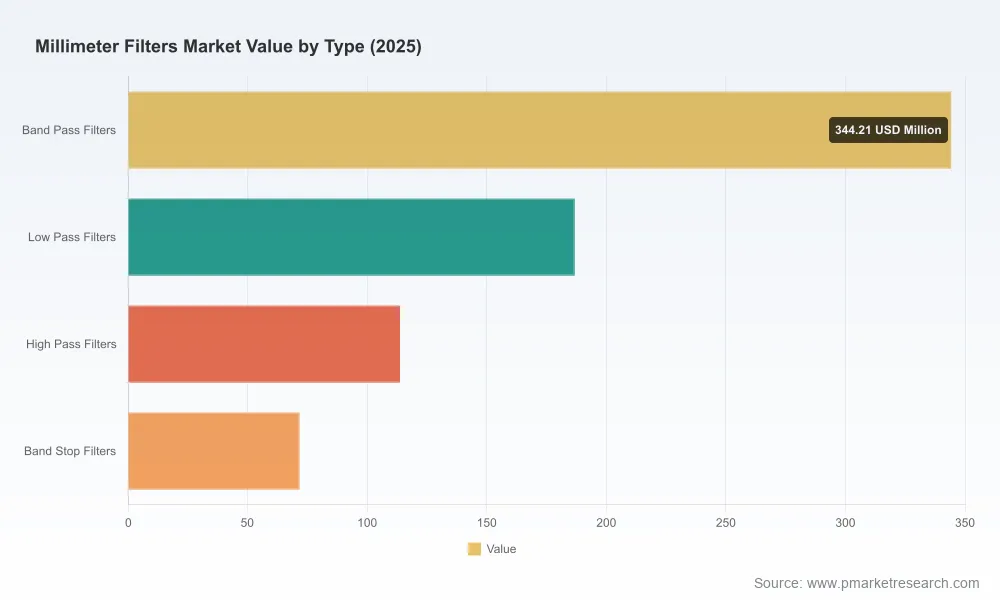
The global millimeter wave filter market has entered a phase of sustained expansion, driven by the relentless demand for higher frequency communication and sensing technologies. Valued at approximately 452.4 million USD in 2020, the market has climbed steadily to reach 716.44 million USD in 2025. Projections indicate this momentum will continue through the forecast period ending in 2032, with the market expected to surpass 1.4 billion USD by the final year. This trajectory represents a compound annual growth rate of 10.45 percent, signaling robust health and significant scaling potential across the sector. Such growth is not merely incremental; it reflects a fundamental shift in how industries approach signal processing at extremely high frequencies.
However, rapid expansion brings complex challenges that industry participants must navigate carefully. The first major hurdle involves the technical integration of filtering components into increasingly miniaturized systems without compromising performance. As devices shrink, maintaining thermal stability and signal integrity across wide temperature ranges becomes critical. The second challenge lies in the regulatory environment. Export controls on advanced computing and semiconductor items have introduced new parameters for microwave and millimeter wave components, effective since April 2024. These restrictions create compliance complexities for suppliers operating across borders, potentially fragmenting supply chains and affecting market access.
Finally, the supply chain for critical raw materials presents a strategic vulnerability. Concentration in the gallium-nitride wafer supply chain introduces risk for component manufacturers. Disruptions or pricing volatility in these foundational materials can ripple through the entire value chain, impacting production timelines and cost structures. Companies that fail to secure resilient supply networks may find themselves unable to meet the surging demand generated by telecommunications infrastructure and defense applications. These intersecting pressures define the current landscape, requiring strategic agility from all market participants.
Key Drivers Shaping Market Dynamics
Technological Innovation and Miniaturization
Technological breakthroughs are the primary engine propelling the millimeter filters market forward. The push for smaller form factors that do not sacrifice performance is reshaping product development. Manufacturers are increasingly adopting substrate-integrated waveguide designs and surface-mount technologies to reduce footprint sizes by significant margins. Innovations now allow components to be twenty to forty times smaller than conventional alternatives while maintaining sharp roll-off and high rejection rates. These advancements are essential for enabling the dense antenna arrays required in modern 5G networks and sophisticated radar systems. The ability to integrate filtering directly into compact modules reduces overall system weight and power consumption, addressing key constraints in aerospace and mobile communications.
Policy and Regulatory Environment
Government policies and regulatory frameworks are actively shaping market boundaries and opportunities. Beyond the export controls on advanced computing and semiconductor items that include specific parameters for millimeter wave components, broader infrastructure policies are stimulating demand. National initiatives to expand broadband coverage and enhance defense capabilities drive procurement cycles for high-frequency filters. In telecommunications, the rollout of frequency bands above 24 GHz necessitates specialized filtering solutions to manage interference and ensure signal clarity. Meanwhile, defense sectors face stringent performance requirements due to evolving electronic warfare threats, forcing suppliers to adhere to rigorous validation standards. Compliance with these regulations is no longer optional; it is a barrier to entry and a competitive differentiator for firms that can navigate the complexities efficiently.
Radio Frequency Filters Market
Demand-Side Shifts in Telecommunications and Defense
On the demand side, the proliferation of telecommunications infrastructure and satellite communication networks is creating a sustained pull for millimeter wave components. The deployment of fifth-generation networks relies heavily on frequency bands that require precise filtering to separate channels and minimize noise. Satellite operators are increasingly adopting higher frequency ranges for backhaul and inter-satellite links, driving demand for lightweight, temperature-stable filters capable of operating in harsh space environments. Simultaneously, the defense sector continues to invest in radar and electronic warfare systems that operate across wide frequency ranges up to 140 GHz. Automotive radar systems for advanced driver-assistance features are another growing application vertical, demanding reliable components that can withstand vibration and temperature fluctuations typical of vehicular use.
Supply Chain and Cost Structure Evolution
Changes in supply chain dynamics and cost structures are influencing manufacturing strategies. The concentration of gallium-nitride wafer supply introduces strategic risk, prompting manufacturers to diversify sourcing or invest in alternative material technologies. Cost pressures are mounting as customers demand high performance at competitive prices, forcing suppliers to optimize production processes. Modular design approaches and standardized interfaces are helping reduce customization costs while maintaining flexibility. Companies that can balance low insertion loss with cost-effective manufacturing are gaining traction, particularly in high-volume telecommunications segments. The interplay between material scarcity, regulatory compliance costs, and the need for high-volume production is redefining the economics of the market.
Competitive Landscape and Leading Strategies
The market is characterized by a mix of established players and specialized innovators, with a moderate level of concentration. The top three companies hold approximately 42.5 percent of the market, while the top five account for 58.8 percent. This structure suggests that while leading firms dominate significant share, there is room for niche players and new entrants to carve out positions through technological differentiation. Knowles Precision Devices (DLI) operates from the United States, offering catalog and custom 5G mmWave filters for FR2 bands including 26 GHz, 28 GHz, and 39 GHz. Their solutions feature bandwidths of 3 GHz, rejection greater than 50 dB, and surface-mount packages that are twenty times smaller than alternatives, with temperature stability ranging from -55°C to +125°C. Off-the-shelf designs are available up to 42 GHz, providing flexibility for rapid deployment.
Reactel, Inc., also based in the United States, designs and manufactures high-performance RF, microwave, and millimeter wave filters, multiplexers, and multifunction assemblies covering DC to 67 GHz. Their focus spans aerospace, defense, telecommunications, and industrial markets, emphasizing application-specific solutions. Benchmark Lark Technology, another U.S. firm, provides compact, lightweight surface-mount mmWave bandpass filters using stripline and substrate-integrated waveguide designs for 5-40 GHz applications. Their mmW-STL and mmW-XFH series target 5G, satcom, and defense sectors, leveraging small footprints and temperature-stable performance. Millimeter Wave Products Inc. (MI-Wave) offers high-performance waveguide bandpass filters from approximately 8 GHz to 140 GHz, including Ka-, U-, V-, E-, and W-band models with low insertion loss and high rejection up to 60 dB, with custom options for radar, satcom, EW, and aerospace applications.
International players are also making significant inroads. Qualwave Inc., headquartered in China, manufactures millimeter wave filters including bandpass, band reject, high pass, low pass, and waveguide types for 5G communication, satellite, military radar, and automotive radar systems, emphasizing low insertion loss and high frequency accuracy. TERASi, based in Sweden, develops ultra-compact E-band waveguide filters using AirCore™ technology, achieving packages forty times smaller than conventional alternatives with less than 0.4 dB insertion loss and sharp roll-off for 5G radio systems. Wainwright Instruments GmbH in Germany specializes in RF and microwave bandpass filters, including evanescent mode ridge waveguide designs extending into millimeter wave frequencies, serving mobile communications, telemetry, and satellite applications. Mini-Circuits, a U.S. supplier, provides LTCC and thin-film mmWave filters covering 5G FR2 bands, low pass up to 30+ GHz, high pass up to 36 GHz, and waveguide bandpass up to 86 GHz.
Strategic positioning varies among these leaders. Some focus on high-volume standardization for telecommunications, while others emphasize custom engineering for defense and aerospace. Recent developments highlight this divergence. In April 2025, TERASi announced the development of ultra-compact E-band waveguide filters using AirCore™ technology, achieving a 40-times size reduction with insertion loss under 0.4 dB for 5G radio systems. Benchmark Lark Technology introduced new families of compact surface-mount XFH Series and STL Series mmWave bandpass filters for 5-40 GHz at IMS 2024, targeting small footprints for 5G, satcom, and defense. Reactel, Inc. announced the exhibition of a full line of application-specific RF, microwave, and mmWave filters, multiplexers, and multifunction assemblies up to 67 GHz at IMS 2026 in Boston.
The competitive landscape is evolving toward consolidation in high-volume segments and fragmentation in specialized applications. Large players may acquire niche innovators to gain access to proprietary technologies like AirCore™ or advanced waveguide designs. Simultaneously, new entrants are emerging in regions with growing semiconductor capabilities, challenging established supply chains. The trend suggests a market where technological leadership in miniaturization, frequency range, and thermal stability will determine market share, while compliance with export controls and supply chain resilience will become increasingly critical differentiators.
Future Trends and Predictions
Looking ahead to the next three to five years, several key trends are likely to shape the millimeter filters market. First, the demand for extreme miniaturization will intensify as devices become more integrated. Technologies that enable sub-millimeter footprints while maintaining high rejection and low insertion loss will see accelerated adoption. Filters that can be embedded directly into multilayer substrates or integrated with active components will become standard in next-generation telecommunications and automotive systems. This trend creates opportunities for suppliers who can offer turnkey solutions that reduce assembly complexity and improve overall system reliability.
Second, the expansion of satellite constellations and non-terrestrial networks will drive demand for filters capable of operating in harsh environments with strict weight and power constraints. Suppliers who can deliver temperature-stable, radiation-tolerant components with high reliability will capture significant share in the space economy. The growth of autonomous systems in automotive and industrial sectors will further increase the need for robust radar and sensing filters, particularly in the 77 GHz and higher bands. As these applications scale, economies of production will favor manufacturers with mature process capabilities and flexible customization options.
However, risks and uncertainties remain. Regulatory tightening on technology exports could fragment the market, forcing regional supply chains and increasing costs. Fluctuations in raw material availability, particularly for gallium-nitride wafers, may impact production schedules and pricing power. Additionally, rapid shifts in telecommunications standards could render certain filter specifications obsolete if manufacturers cannot adapt quickly. Companies must balance long-term architectural investments with the agility to respond to changing frequency allocations and performance requirements. Monitoring these dynamics will be essential for capturing growth while mitigating exposure.
Strategic Recommendations for Decision Makers
For manufacturers, prioritizing investment in miniaturization technologies and alternative material sourcing is crucial. Developing partnerships for critical raw materials can mitigate supply chain risks, while focusing on modular designs allows faster adaptation to evolving standards. Expanding capabilities into high-growth segments like E-band and W-band radar will position firms to capture emerging demand.
PW Consulting
Investors should evaluate companies based on their technological differentiation and supply chain resilience. Firms with proprietary manufacturing processes, strong IP portfolios, and diversified customer bases across telecommunications, defense, and satellite sectors are better positioned to withstand regulatory and material volatility. Due diligence on export compliance capabilities and regional manufacturing footprints will provide insight into long-term viability.
Procurement leaders need to assess supplier stability and technical support capabilities closely. Diversifying the supplier base to include both established integrators and innovative niche players can reduce dependency on single sources. Engaging early with suppliers on roadmap alignment ensures that filter specifications meet future system requirements. Access to detailed segmentation data and customized supply chain analysis can further inform sourcing strategies and risk mitigation plans.
Worldwide Millimeter Wave Therapeutic Device Market
Understanding the granular dynamics of this market requires deep segmentation analysis and real-time monitoring of competitive moves. Comprehensive research reports provide the detailed breakdowns necessary for precise planning and execution, enabling stakeholders to translate high-level trends into actionable strategies tailored to their specific operational contexts.
For detailed analysis of this topic, please visit the official page: Worldwide Millimeter Filters Market
Lacy Lee
Senior Marketing Manager
[email protected]
PW Consulting: www.pmarketresearch.com



























Sign in to leave a comment.