
Choosing the right centrifuge can make everyday lab work easier, especially when you need consistent sample preparation without wasting time. Mini centrifuges and microcentrifuges may look similar in size, but they serve different purposes. Understanding how they work, the tubes they support, and the speeds they offer can help you select equipment that matches your research needs.
What Is a Mini Centrifuge?
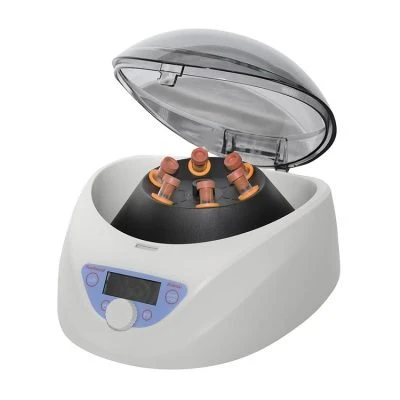
A mini centrifuge is a compact benchtop centrifuge designed mainly for quick spin-downs of small liquid samples. It helps collect droplets from the inside walls and caps of tubes, bringing the liquid to the bottom before the next step in your experiment.
Mini centrifuges are useful when you need a quick, simple operation rather than high-speed separation. They typically operate at a fixed speed or offer two speed settings, depending on the model.
Common uses include:
● Spinning down liquid collected on the walls of microtubes.
● Preparing samples before adding reagents or starting an experiment.
● Collecting small amounts of liquid at the bottom of tubes.
● Supporting routine molecular biology and other laboratory procedures.
A mini centrifuge for sample preparation can be especially useful when researchers frequently handle small volumes and need a fast way to prepare tubes for the next stage of testing.
What Is a Microcentrifuge?
A microcentrifuge is a type of benchtop centrifuge designed to process small-volume samples at a range of speeds, including high speeds and high relative centrifugal force (RCF). It commonly accommodates 1.5 mL and 2.0 mL microtubes, with some models supporting smaller tubes through suitable inserts or compatible rotors.
Unlike a typical mini centrifuge, a microcentrifuge can perform both routine spin-downs and more demanding separation tasks. Its speed and force capabilities make it useful for laboratory procedures that require specific separation conditions.
Common applications include:
● DNA and RNA purification using molecular biology kits.
● Pelleting DNA, RNA, and proteins.
● Processing samples for cell and molecular biology research.
● Separating sample components through controlled centrifugal force.
● Preparing small-volume samples for further analysis.
Microcentrifuges are available in refrigerated and non-refrigerated versions. Refrigerated models help control sample temperature during high-speed runs, which can be important when working with temperature-sensitive materials.
Mini Centrifuge vs. Microcentrifuge: Key Differences
Although both are benchtop centrifuges used with small samples, their operating capabilities and intended applications differ.
| Feature | Mini Centrifuge | Microcentrifuge |
| Main purpose | Quick spin-downs | Spin-downs and sample separation |
| Typical speed options | Fixed speed or two speeds | Multiple speed settings, depending on the model |
| Sample tubes | Small tubes, often 0.2 mL to 5 mL, depending on the rotor | Commonly 1.5 mL and 2.0 mL tubes, with compatible options for smaller tubes |
| Separation capability | Mainly basic spin-down tasks | Low to very high speeds and high RCF, depending on the model |
| Common applications | Routine sample preparation | DNA/RNA purification, protein work, and molecular biology |
| Refrigeration | Depends on the product category and model | Refrigerated and non-refrigerated models are available |
Remember that actual tube capacity, speed, and compatibility vary by model. Always check the product specifications before selecting a centrifuge.
When Should You Choose a Mini Centrifuge?
A mini centrifuge may be the right choice if your daily work involves quick, straightforward sample preparation. It can save time when you repeatedly collect droplets at the bottom of tubes before adding reagents, transferring samples, or beginning another procedure.
Consider a mini centrifuge if:
● You mainly need quick spin-downs rather than high-speed separation.
● Your laboratory frequently handles small-volume samples.
● You prefer simple operation with limited speed settings.
● You need compact equipment for routine tasks at the benchtop.
However, if your protocol requires a specific RCF, extended spinning, or separation of sample components, confirm whether a mini centrifuge can meet those requirements. A basic spin-down function is not a substitute for the separation performance required by some experiments.
When Is a Microcentrifuge the Better Option?
A microcentrifuge is generally more suitable when your research involves procedures that require controlled speed and centrifugal force. It gives you more flexibility when working with molecular biology samples and following protocols with specific separation requirements.
Consider a microcentrifuge if:
● You regularly process DNA, RNA, or protein samples.
● Your procedures require high speeds or high RCF.
● You use molecular biology purification kits.
● You need multiple operating speeds for different protocols.
● Your samples require temperature control during centrifugation.
If your laboratory works with temperature-sensitive samples, a refrigerated microcentrifuge may be worth considering. Compare its temperature range, maximum speed, rotor compatibility, and capacity with your actual laboratory requirements before making a decision.
What Should You Check Before Buying?
The right choice depends on more than the centrifuge's name or size. Before purchasing, consider these practical factors:
● Sample volume: Check the tube sizes and sample volumes used in your routine work.
● Speed and RCF: Match the centrifuge's performance to the requirements of your protocols.
● Rotor compatibility: Confirm that the supplied rotor supports your tubes and that suitable alternatives or inserts are available when needed.
● Temperature control: Consider refrigeration if your samples are sensitive to heat generated during spinning.
● Ease of use: Look for controls and operating settings that suit your team's daily workflow.
● Future needs: Consider whether upcoming experiments may require higher speeds or more flexible operating options.
Outcome:
The best centrifuge is the one that fits your samples, procedures, and daily workload. A mini centrifuge is a practical choice for quick spin-downs, while a microcentrifuge offers greater flexibility for high-speed sample processing and molecular biology applications.
Before choosing, review your most common protocols and identify the tube sizes, speeds, and RCF requirements you need. Also consider how related equipment, such as a thermo shaker, fits into your sample preparation workflow.
Comparing these requirements with available specifications can help you invest in reliable laboratory equipment without paying for features you do not need.


















Sign in to leave a comment.